Hong Kong carrier signals higher passenger surcharges after jet fuel prices surge amid widening Middle East war and disruption to global energy supply.
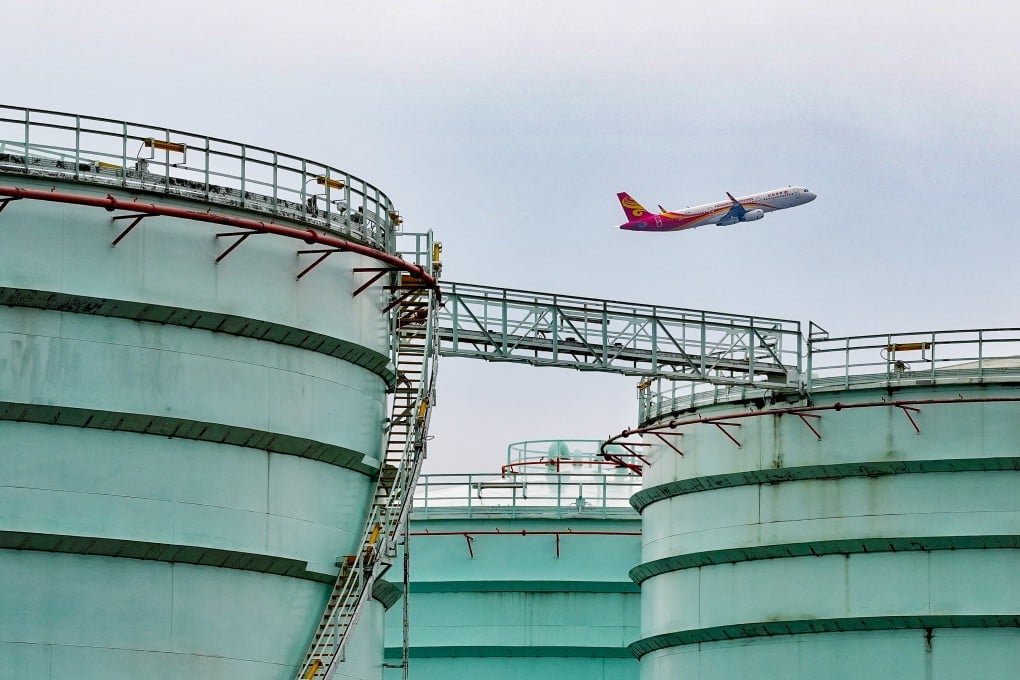
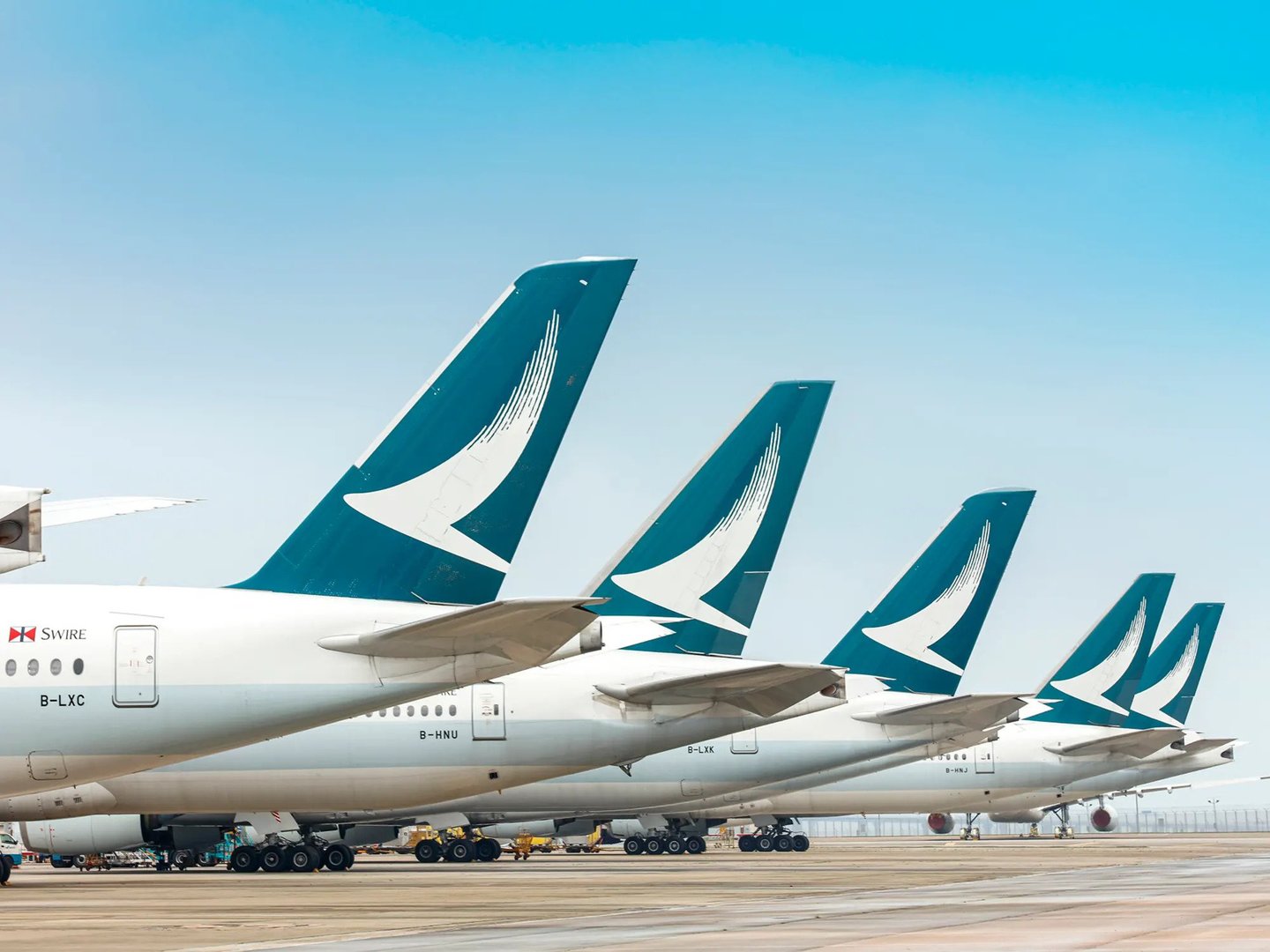
Cathay Pacific has indicated that it will raise fuel surcharges on passenger tickets after a sharp increase in oil and jet fuel prices triggered by the ongoing war in the Middle East.

The Hong Kong-based airline said surcharges would rise following a spike in fuel costs during March, reflecting mounting pressure on aviation companies worldwide as the conflict disrupts energy markets and key transport routes.

The carrier reviews its fuel surcharges regularly and adjusts them in response to fluctuations in global fuel prices.

Fuel is one of the largest operating expenses for airlines, and the surge in energy costs has quickly rippled through the aviation sector.

Jet fuel prices have climbed significantly in recent weeks as geopolitical tensions and military activity in the region have disrupted supply chains and shipping routes used to transport crude oil and refined products.

The conflict has also affected aviation operations more broadly.

Airlines across Asia and Europe have been forced to reroute flights to avoid airspace over parts of the Middle East, adding distance, fuel consumption and operational costs to long-haul routes between Asia and Europe.

These changes have intensified pressure on airlines already coping with volatile energy markets.

Cathay Pacific said its surcharge adjustments follow a standard industry practice in which carriers apply additional fees to offset rapid swings in fuel costs.

The airline typically reviews the level of its surcharges monthly, calculating the charges based on prevailing jet fuel prices and regulatory frameworks in relevant markets.

Previously, surcharges on long-haul flights from Hong Kong to destinations such as Europe and North America had been held steady before the latest spike in fuel costs.

Across the global aviation industry, airlines have warned that the conflict in the Middle East could continue pushing up ticket prices if energy markets remain volatile.

Jet fuel prices have surged to near multi-year highs amid supply disruptions and heightened geopolitical risk, forcing carriers to reconsider pricing strategies and operational planning.

The broader aviation market is experiencing mixed effects from the crisis.

While rising costs are placing pressure on airline finances, disruptions to traditional transit hubs in the Gulf have also shifted passenger demand toward alternative routes operated by Asian carriers.

For Cathay Pacific, the surcharge increase highlights the direct impact that geopolitical tensions and energy market volatility can have on the cost of international air travel, particularly on long-haul routes that depend heavily on stable fuel supply.
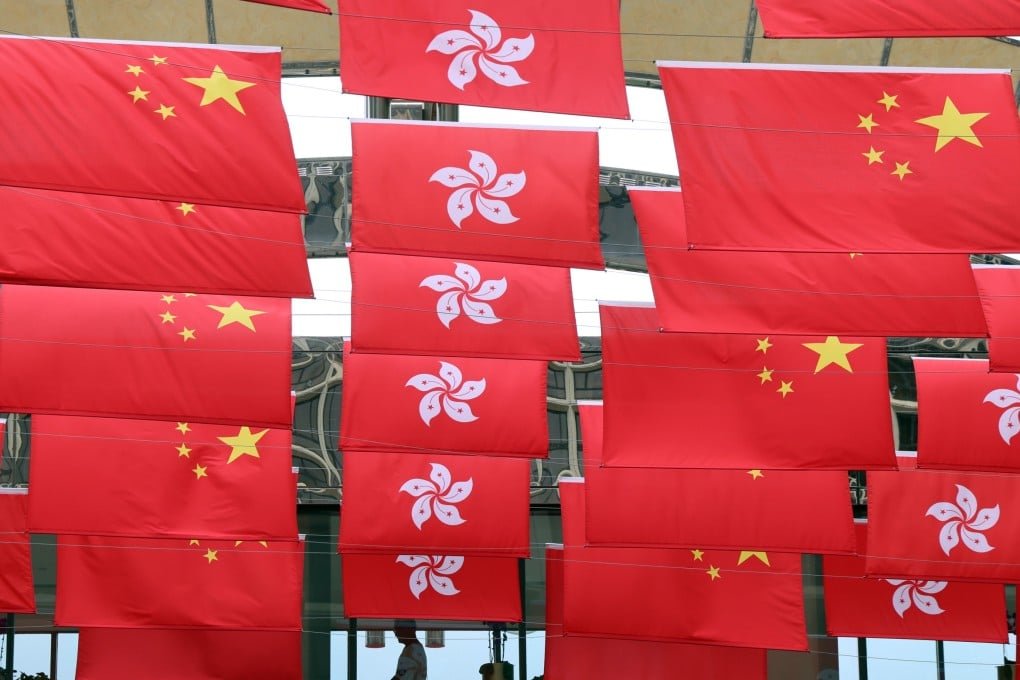
Survey highlights growing anxiety in Thailand over geopolitical tensions and the potential impact of the Iran conflict on fuel costs and national energy security.
A new public survey indicates rising concern among Thai citizens about the country’s diplomatic stance amid the escalating conflict involving Iran, as well as the potential economic fallout from surging global energy prices.

Respondents expressed particular anxiety over how geopolitical tensions in the Middle East could affect Thailand’s energy security and domestic fuel costs.

The conflict has unsettled global energy markets, prompting fears that disruptions to oil and natural gas shipments could ripple through Thailand’s economy.

The concerns are rooted in the strategic importance of the Strait of Hormuz, a narrow shipping corridor through which roughly a fifth of the world’s oil and a significant share of liquefied natural gas are transported.

Any disruption to traffic through the strait could sharply reduce global supply and push prices higher, affecting countries that rely heavily on imported fuel.

Thailand is among the economies most exposed to such volatility.

Analysts estimate that the country has one of the largest negative energy trade balances in Asia, with net energy imports equivalent to about six percent of national output.

This reliance makes the economy particularly sensitive to spikes in global oil and gas prices.

In response to the escalating regional tensions, Thai authorities have moved swiftly to strengthen national preparedness.

The government has monitored fuel shipments closely, boosted reserves, and activated energy-security measures designed to protect domestic supplies and maintain market stability.

Energy officials say Thailand’s reserves and supply chains are being carefully managed to ensure adequate availability even if global markets become more volatile.

The government has also pursued additional cargo purchases and contingency plans to diversify supply sources if disruptions intensify.

The survey results suggest that public awareness of these issues has grown as the conflict continues to dominate international headlines.

Many respondents said they are watching the situation closely, particularly because fuel costs have a direct impact on household budgets and the broader cost of living.

Experts note that Thailand’s leadership has emphasized stability and preparedness as the crisis unfolds.

By reinforcing strategic reserves and coordinating closely with energy agencies, authorities aim to ensure that the country remains resilient even as global markets respond to geopolitical shocks.
Maritime security agencies report multiple projectile strikes on cargo ships near Oman and the United Arab Emirates as tensions escalate along a vital global shipping corridor.
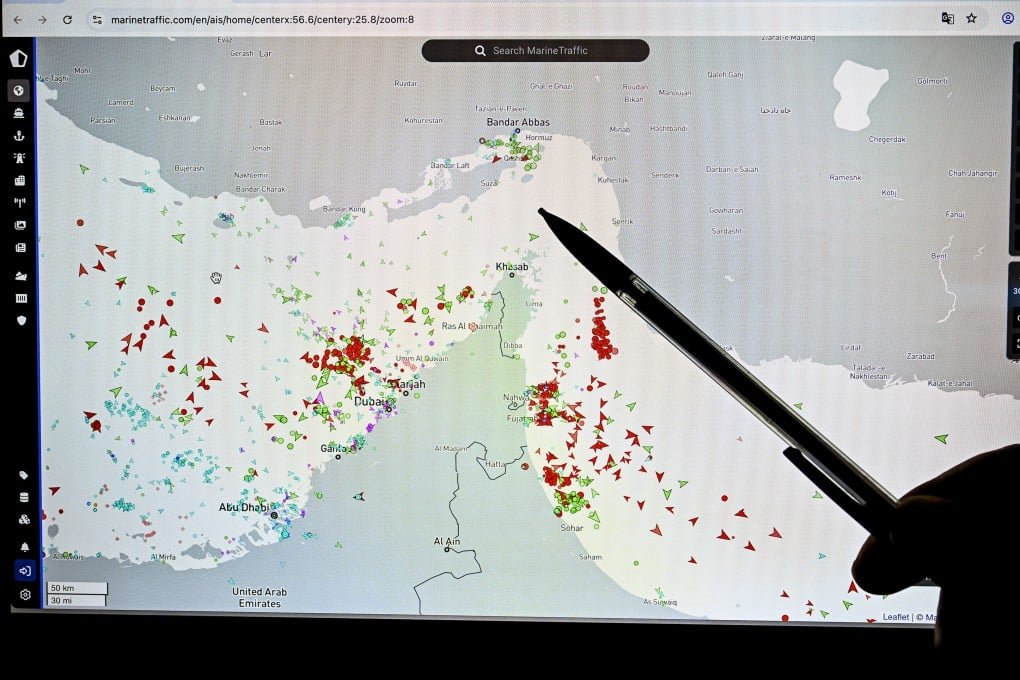
Three commercial vessels were struck in separate incidents near the Strait of Hormuz in the early hours of March 11, raising fresh concerns about maritime security along one of the world’s most strategically important shipping routes.

The United Kingdom Maritime Trade Operations centre reported that a cargo vessel caught fire after being hit by an unidentified object roughly eleven nautical miles off the coast of Oman.

Crew members aboard the vessel began evacuating after the strike, though the fire was later brought under control and emergency procedures were successfully carried out.

Maritime security specialists later identified the vessel as the Mayuree Naree, a Thai-flagged bulk carrier owned by Precious Shipping.

The ship was sailing through the strait after departing from Khalifa Port in the United Arab Emirates when an explosion occurred near the stern, causing damage to the engine room and triggering a fire onboard.

The vessel was carrying twenty-three crew members.

Most of the crew evacuated the ship in lifeboats during the emergency response, while several remained on board to assist with firefighting and safety operations.

Omani naval forces subsequently rescued a large number of the crew and transported them to shore while coordination efforts continued to ensure the safety of those remaining.

Two additional cargo vessels were also struck by projectiles in separate incidents within hours of the attack on the Thai-flagged ship.

The container vessel One Majesty, operated by Ocean Network Express and linked to Mitsui OSK Lines, sustained minor damage after being hit northwest of Ras Al Khaimah in the United Arab Emirates.

All crew members on board were reported safe and the ship continued towards a secure anchorage.

A third vessel, the bulk carrier Star Gwyneth, registered in the Marshall Islands, also reported damage to its hull after being struck by a projectile roughly fifty nautical miles northwest of Dubai.

Maritime risk analysts said the crew on that vessel were likewise unharmed.

The Strait of Hormuz remains one of the world’s most critical maritime chokepoints, connecting the Persian Gulf to global markets and carrying roughly one-fifth of the world’s oil and gas shipments.

Any disruption in the narrow passageway can rapidly affect global energy supply chains and international shipping activity.

Security analysts say the latest attacks form part of a growing pattern of incidents in the region.

Since tensions escalated across the Gulf in late February, at least ten maritime attacks or security incidents have been reported, prompting shipping companies and naval authorities to increase monitoring and caution for vessels transiting the corridor.

Authorities continue to investigate the origin of the strikes while regional and international maritime security organisations maintain heightened surveillance across the shipping lanes surrounding the Strait of Hormuz.
Flight suspensions across the Gulf and rerouted aviation corridors push ticket prices sharply higher, with some fares rising as much as ninefold.
Air travel between Asia and Europe has entered a period of sharp disruption, with ticket prices soaring and routes rapidly shifting as large sections of Middle Eastern airspace remain closed.

The upheaval has forced airlines and passengers to seek alternatives to the Gulf corridor, traditionally one of the world’s most important aviation pathways.

As a result, some fares on long-haul routes have surged dramatically.

Market data cited by industry analysts shows that certain one-way economy tickets have increased by as much as nine hundred percent as travellers compete for limited seats on flights that bypass the Middle East.

The surge has been driven by the suspension or reduction of services by several major Middle Eastern carriers following regional security developments that led to widespread airspace closures.

Gulf aviation hubs such as Dubai, Abu Dhabi and Doha normally handle a significant share of the roughly one hundred and twenty-five million passengers travelling annually between Europe and Asia.

With many of those routes disrupted, the supply of available seats has tightened rapidly.

Asian airlines have consequently emerged as key alternatives.

Carriers including Cathay Pacific Airways and Singapore Airlines are operating flights that avoid the affected airspace, attracting travellers seeking to leave the region or reach Europe without transiting through the Gulf.

The shift has been particularly visible in Southeast Asia.

In Thailand, aviation authorities report that eight Middle Eastern airlines operating in the country have cancelled their services, removing thousands of seats from international schedules.

The sudden drop in capacity has quickly pushed up prices on remaining long-haul flights.

Thai Airways International has experienced especially strong demand.

One-way fares from Bangkok to London have climbed to more than seventy thousand baht, with seats reportedly fully booked through the coming week as travellers scramble to secure available flights.

The disruption extends beyond pricing.

Airlines worldwide have been forced to reroute aircraft, cancel flights and reorganize schedules as the closure of multiple airspaces across the Gulf interrupts the most direct connection between Europe and Asia.

Industry data indicates that tens of thousands of flights have been cancelled or diverted since the crisis escalated, stranding passengers and creating cascading operational challenges across global networks.

Aviation analysts note that the current price spikes may prove temporary if airspace reopens and Gulf carriers restore their extensive long-haul networks.

For now, however, the abrupt shift in travel patterns has concentrated demand on a limited number of routes, leaving passengers facing higher fares and fewer choices when planning journeys between the two continents.
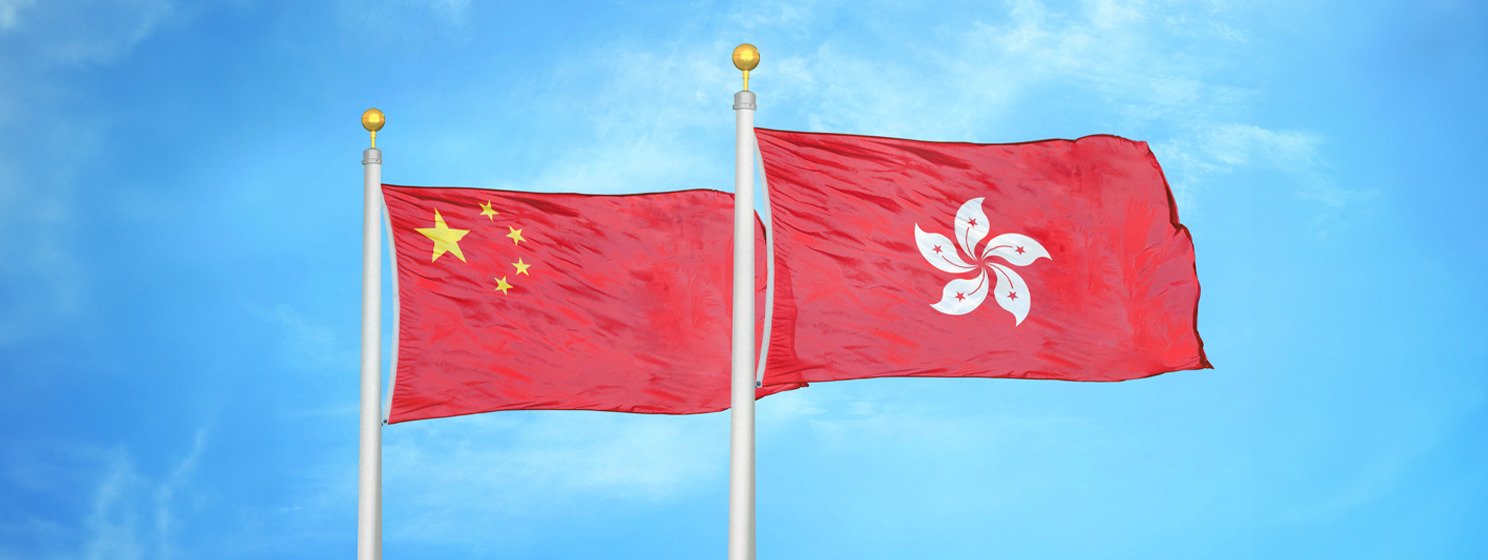
Officials and scholars debate how the city could implement Beijing’s ethnic unity framework while operating under the “one country, two systems” model.
Hong Kong is examining how it might adapt policies to align with mainland China’s emerging ethnic unity promotion law, a measure designed to strengthen a shared national identity among the country’s diverse ethnic groups.

The legislation in mainland China aims to promote a stronger sense of belonging to what authorities describe as the “community of the Chinese nation,” encouraging cultural exchange, education and social integration among different ethnic groups across the country.

The law is part of a broader national strategy emphasizing unity, equality and mutual understanding among China’s officially recognised ethnic communities.

Hong Kong, as a Special Administrative Region, operates under the constitutional framework of “one country, two systems,” which allows it to maintain a legal system and governance model distinct from mainland China.

Under this arrangement, national laws generally do not automatically apply in the city unless they are incorporated into Hong Kong’s own legal framework.

The region’s Basic Law guarantees a degree of autonomy and preserves its common-law legal structure and separate administrative system.

Officials and policy experts in Hong Kong have therefore been discussing how the objectives of the mainland’s ethnic unity initiative might be reflected locally through education, cultural programmes and public policy rather than through the direct adoption of the same legislation.

Hong Kong’s social composition presents a unique context for such discussions.

Although the majority of residents are ethnic Chinese, the city also has longstanding communities of South Asian, Southeast Asian and other international residents.

These groups form a visible minority population within the territory and contribute to its reputation as a multicultural global financial centre.

Scholars say that any local approach would likely emphasize promoting mutual understanding among communities while reinforcing national identity through schools, public outreach programmes and civic education.

Similar approaches have previously been used in other national initiatives that encourage public awareness of Chinese culture and history.

Hong Kong authorities have increasingly aligned certain policies with broader national frameworks in recent years, including legislation related to national symbols and security.

For example, the city enacted a law protecting the Chinese national anthem and later introduced additional security legislation under Article 23 of its Basic Law, reflecting a broader trend of institutional alignment between the city and the mainland.

Policy analysts note that the implementation of ethnic unity principles in Hong Kong is likely to take place through administrative guidance, education initiatives and community programmes rather than direct legislative replication.

The process illustrates how the city continues to navigate the balance between maintaining its distinctive system and participating in nationwide policy priorities.
Authorities detain parent after young boy allegedly tossed household items from apartment window, raising renewed safety concerns in dense residential areas.
Police have taken a mother into custody after her young son allegedly threw objects from the window of a high-rise apartment, damaging a parked vehicle below and prompting renewed warnings about the dangers of unattended children in residential towers.

The incident occurred when residents reported items falling from an upper-floor flat in a densely populated housing block.

Witnesses said several objects were thrown from the apartment window, striking a car parked near the building and causing visible damage to the vehicle’s bodywork.

Officers responding to the scene traced the source of the objects to a unit in the building and discovered that a young boy had been left alone in the apartment.

Authorities said the child had allegedly tossed household items from the window while unsupervised.

Police subsequently detained the boy’s mother on suspicion of neglect after determining that the child had been left unattended at the time of the incident.

Investigators are examining whether the circumstances constituted a breach of child safety obligations and whether additional legal action may follow.

No injuries were reported as a result of the falling objects, though officials noted that such incidents can pose serious risks in high-density urban environments where pedestrians and vehicles frequently pass beneath residential buildings.

Authorities used the case to reiterate warnings to parents and guardians about the importance of supervising young children in high-rise homes.

Items dropped from height can cause significant injury or property damage even if the objects themselves appear small.

The damaged vehicle’s owner has been informed of the incident, and arrangements for compensation are expected to be addressed as the investigation proceeds.

Officials said the case highlights ongoing concerns about child safety in densely populated cities, where the combination of tall residential buildings and unsupervised children can quickly create dangerous situations.
Regional leaders focus on digitalisation, data-driven enforcement and technology as key tools for modernising trade management across Asia-Pacific.
Customs leaders from across the Asia-Pacific region gathered in Hong Kong for a major conference organised under the framework of the World Customs Organization, placing the transition to “smart customs” at the centre of discussions on the future of global trade management.

The meeting brought together more than one hundred heads of customs administrations and senior officials from across the region, alongside representatives of international organisations, to examine how digital technologies and data-driven systems can strengthen border management while facilitating legitimate trade.

The conference is considered the highest-level annual gathering of customs authorities in the Asia-Pacific region.

Officials said the concept of “smart customs” reflects a broader shift toward technology-enabled border governance, integrating tools such as artificial intelligence, advanced data analytics, blockchain verification and automated inspection systems to improve efficiency and security in global supply chains.

Participants exchanged experiences and explored strategies to accelerate the adoption of these technologies across regional customs administrations.

Hong Kong Customs, which currently serves as the World Customs Organization’s vice-chair for the Asia-Pacific region for the 2024-2026 term, hosted the conference and played a leading role in shaping its agenda.

Senior officials emphasised that the gathering provided a platform for customs authorities to coordinate policies, share expertise and strengthen cooperation in addressing emerging challenges in international trade.

During the discussions, delegates reviewed initiatives aimed at simplifying trade procedures and enhancing cross-border logistics through digital platforms.

Among the concepts highlighted were blockchain-based systems designed to validate shipping documents and improve transparency across supply chains, as well as broader efforts to integrate digital infrastructure across customs authorities in the region.

The shift toward technology-driven customs systems is being driven by the rapid expansion of e-commerce, increasingly complex global supply networks and the need to balance trade facilitation with effective enforcement against smuggling, fraud and illicit goods.

Modern customs strategies increasingly rely on integrated digital platforms and coordinated data sharing among agencies to manage growing trade volumes.

Officials at the conference stressed that closer regional collaboration would be essential to ensure that digital customs initiatives are interoperable across borders.

Greater coordination, they said, would help reduce administrative burdens for traders while improving the ability of authorities to detect risks in international shipments.

The World Customs Organization, an intergovernmental body representing more than one hundred eighty customs administrations worldwide, has been promoting digitalisation and modernisation of customs systems as part of broader efforts to support secure and efficient global trade.

Participants concluded that the continued development of “smart customs” frameworks will play a crucial role in strengthening supply-chain resilience and enabling faster, more transparent trade flows across the Asia-Pacific region.
Academic accused of posing as a student and photographing pupils during visit to Australian schools faces investigation after guilty plea in local court
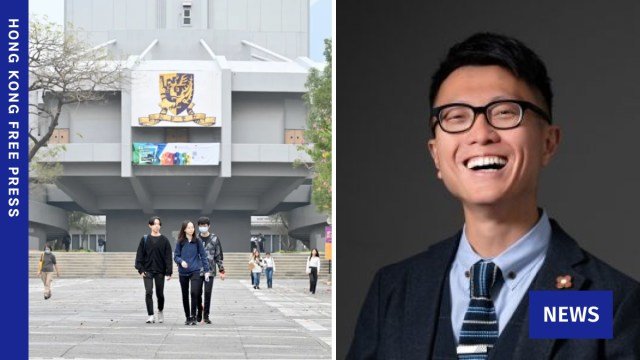
The Chinese University of Hong Kong has suspended a professor after he was arrested in Sydney for allegedly posing as a school student and photographing pupils at several elite boys’ schools, prompting a formal investigation by the university into the conduct of the faculty member.

The academic, identified as 46-year-old Johnny Li Siu-hang, was detained by police after staff at Sydney Grammar School noticed an adult wearing the school’s uniform attempting to mingle with students near Hyde Park.

A teacher reportedly intervened and removed the man from the group before authorities were alerted.

Investigators later determined that Li had spent several days visiting multiple schools across Sydney, including Saint Ignatius’ College Riverview, Sydney Boys High School, Trinity Grammar School and Sydney Grammar School.

During that period he allegedly purchased uniforms from school outfitters and entered campuses while dressed as a pupil.

Police said electronic devices seized during the investigation contained photographs of at least thirty-six students taken across the campuses.

Officers also recovered additional uniforms, a mobile phone, USB drives and a laptop from the hotel room where Li had been staying while in the city.

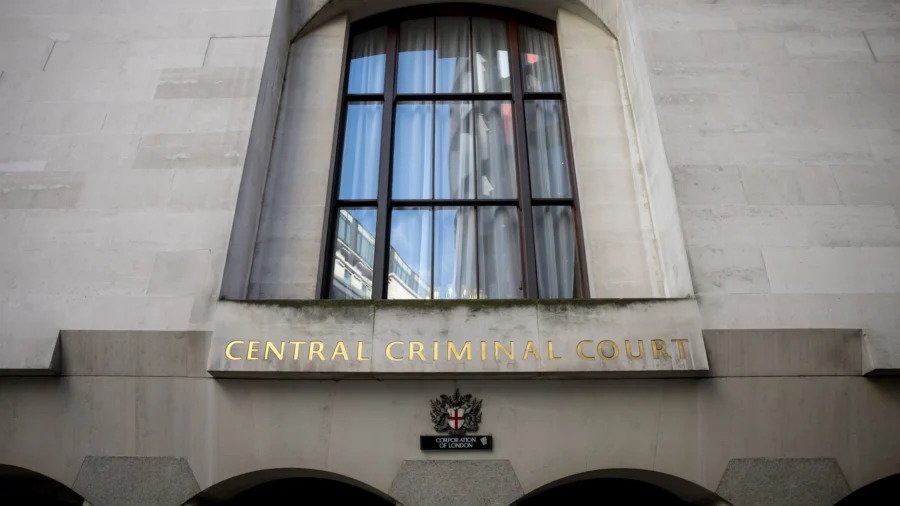
The case was heard in a Sydney court, where the professor pleaded guilty to one count of stalking or intimidation and two counts of trespassing.

The court imposed an eighteen-month conditional release order, allowing him to return to Hong Kong after the proceedings concluded.

In response to the incident, the Chinese University of Hong Kong said it had suspended the professor’s duties and would establish a committee to investigate the matter according to institutional procedures.

The university stated that it regards the conduct of faculty members as a serious matter and would take firm action should any breach of professional standards be confirmed.

Authorities indicated that Li had arrived in Australia in late February for what was described as a holiday.

Court documents also noted that the academic told police he regarded dressing in school uniforms and photographing students as a hobby, an explanation that the presiding magistrate described as troubling during the hearing.

The case has drawn significant attention in both Australia and Hong Kong, raising concerns about campus security and professional conduct in higher education institutions.

The university’s internal inquiry will determine whether disciplinary measures, including possible dismissal, are warranted once the investigation is completed.
Investment bank boosts temporary hiring in Asia’s financial hub to handle rising capital-markets activity and a wave of new listings.
Morgan Stanley has begun hiring contract staff in Hong Kong to manage a sharp increase in dealmaking activity, as the city’s capital markets experience a powerful rebound after several subdued years.

People familiar with the matter said the Wall Street bank has brought in temporary personnel to support teams working on equity capital markets transactions, advisory mandates and other deal-related operations.

The additional staff are intended to help existing teams cope with the sudden surge in workload as new listings and share sales accelerate across the region.

The hiring reflects a broader revival in Hong Kong’s financial markets, where investment banking activity has gathered momentum amid a strong pipeline of corporate fundraising.

Companies from mainland China and across Asia are increasingly turning to the city to raise capital through initial public offerings and follow-on share sales.

Market data indicates that equity capital market activity in Hong Kong has risen sharply over the past year, with total issuance reaching tens of billions of dollars as global investors return to the market.

Major international banks have taken leading roles in underwriting many of the largest transactions, reinforcing Hong Kong’s status as a central gateway for Asian capital flows.

Executives at Morgan Stanley have previously indicated that the pipeline of potential listings in Hong Kong is unusually strong.

Dozens of companies are preparing public offerings, and several hundred additional firms are exploring fundraising opportunities in the market, suggesting sustained deal flow in the months ahead.

The use of contract employees allows banks to scale up operations quickly during periods of intense market activity without committing to long-term permanent hiring.

Temporary staff are often deployed in roles supporting deal execution, regulatory documentation, compliance reviews and operational coordination for large transactions.

Investment banks across the region have been adjusting staffing levels as the pace of deals fluctuates with market conditions.

When capital markets revive after a downturn, banks frequently rely on short-term hiring to manage the workload generated by multiple transactions running simultaneously.

Hong Kong’s renewed dealmaking momentum has also underscored the city’s continuing role as a bridge between mainland Chinese companies and international investors.

For global banks such as Morgan Stanley, the resurgence in activity represents both a commercial opportunity and a sign that Asia’s largest financial hub remains central to regional capital raising.
Property group buys back and cancels 175,000 shares, adjusting total voting capital as part of ongoing shareholder return strategy.
Hongkong Land has repurchased and cancelled 175,000 of its ordinary shares, the company confirmed in a regulatory filing, as part of its continuing share buyback programme aimed at enhancing shareholder value and managing capital efficiently.

The transaction forms part of the property group’s ongoing strategy to return capital to investors while maintaining a balanced financial structure.

Following the cancellation of the repurchased shares, the company updated its total voting capital to reflect the reduced number of shares in circulation.

Share buybacks are a common corporate tool used by listed companies to reduce the total number of outstanding shares.

By cancelling repurchased stock, companies can increase earnings per share and potentially strengthen the value of remaining holdings for investors.

Hongkong Land, a major Asian property developer and investment company, holds a significant portfolio of premium commercial and residential real estate across key regional markets.

The firm is best known for its extensive holdings in Hong Kong’s Central district, one of the world’s leading financial and business hubs.

The latest repurchase represents a relatively small portion of the company’s overall share capital but demonstrates the continuation of its disciplined capital management policy.

Companies typically carry out buybacks periodically depending on market conditions, share price levels and available cash reserves.

After the cancellation, the company’s updated voting capital will be used as the basis for shareholder voting rights and regulatory reporting requirements.

Such adjustments are routinely disclosed to ensure transparency for investors and compliance with stock exchange regulations.

Market analysts say share repurchase programmes can signal management confidence in the long-term outlook of a company’s business operations and financial position.

For property groups operating in major financial centres, capital discipline remains a key focus as real estate markets navigate changing economic conditions.

Hongkong Land has stated in previous disclosures that its share buyback activities are designed to support long-term shareholder returns while maintaining financial flexibility for future investment opportunities.
New cross-sector initiative allows banks, insurers and investment firms to test generative AI tools under regulatory supervision.
Hong Kong’s financial regulators have introduced a new programme designed to accelerate the responsible use of generative artificial intelligence across the city’s financial sector, as authorities seek to strengthen the territory’s position as a global hub for financial technology.

The initiative, known as GenA.I. Sandbox++, was jointly launched by the Hong Kong Monetary Authority, the Securities and Futures Commission, the Insurance Authority and the Mandatory Provident Fund Schemes Authority in collaboration with the technology campus Cyberport.

The programme expands an earlier regulatory sandbox introduced in 2024 and significantly broadens its scope across multiple segments of the financial industry.

Under the new framework, banks, investment firms, insurers and pension administrators will be able to test artificial intelligence applications in a supervised and risk-controlled environment.

Participants will receive regulatory guidance, technical support and access to advanced computing infrastructure at Cyberport’s artificial intelligence supercomputing centre, enabling them to develop and refine new technology-driven services.

The expanded sandbox covers sectors including banking, securities and capital markets, asset and wealth management, insurance, pension administration and stored-value payment services.

Authorities say the broader structure reflects the rapid spread of artificial intelligence tools throughout the financial system and the need for coordinated oversight across different regulatory domains.

Officials involved in the programme say the initiative is intended to encourage innovation while maintaining strong safeguards.

The sandbox focuses on several high-impact applications, including fraud detection, risk management systems and customer service technologies powered by generative AI.

Another element of the project involves exploring “AI versus AI” strategies, in which artificial intelligence tools are deployed to monitor and mitigate risks created by other AI systems.

Regulators believe this approach will be essential as financial institutions increasingly integrate machine learning technologies into decision-making processes.

Authorities say the programme forms part of Hong Kong’s broader Fintech 2030 strategy aimed at strengthening the city’s competitiveness as an international financial centre.

By bringing regulators, financial institutions and technology developers together, officials hope the initiative will accelerate responsible innovation and foster collaboration across the financial ecosystem.

Applications for participation in the GenA.I. Sandbox++ programme are open to regulated financial institutions across Hong Kong’s markets.

Through testing and collaboration, regulators aim to help firms translate experimental artificial intelligence ideas into practical financial services while ensuring that new technologies meet regulatory and risk-management standards.
Asia’s leading entertainment market adapts to artificial intelligence disruption, streaming upheaval and geopolitical tensions reshaping film financing and distribution.
Hong Kong’s annual Filmart market has opened against a backdrop of sweeping technological disruption and rising geopolitical tension, as industry leaders gather to navigate a rapidly transforming global entertainment landscape.

The event, one of Asia’s largest film and television marketplaces, brings together producers, distributors, investors and streaming platforms from dozens of countries.

This year’s discussions have focused heavily on how artificial intelligence, shifting streaming economics and global political friction are reshaping the way films and television projects are financed, produced and distributed.

Artificial intelligence has emerged as one of the most debated issues among industry executives attending the market.

Film companies are increasingly experimenting with AI tools for tasks ranging from script development to visual effects and dubbing, raising questions about both creative opportunities and the future role of human talent in production.

At the same time, the global streaming boom that reshaped the entertainment business over the past decade is entering a period of consolidation.

Major platforms are becoming more selective about the projects they finance, prompting producers to explore new partnerships and co-production structures in order to secure funding.

Geopolitical tensions have also influenced discussions at the market.

Trade disputes, regulatory barriers and evolving political relationships between major economies are affecting cross-border investment in film and television projects.

Industry participants say these pressures are encouraging greater regional collaboration across Asia and the Middle East while reshaping traditional distribution patterns.

Hong Kong continues to position itself as a bridge between the Chinese mainland and the wider international film industry.

Organizers say the territory’s role as a financial hub and cultural meeting point allows producers and investors from different markets to negotiate deals and form partnerships even amid broader global uncertainty.

The market has also highlighted the growing importance of Asian content in the global entertainment economy.

Film and television projects from South Korea, Japan, mainland China and Southeast Asia are attracting increasing attention from international distributors seeking new audiences.

Executives attending Filmart say the convergence of technological change and geopolitical pressure is forcing the industry to rethink long-standing business models.

While the challenges are significant, many participants view the transformation as an opportunity to develop new production techniques, new financing structures and new global audiences.

As Filmart continues its program of screenings, panels and deal-making sessions, the gathering is serving as a barometer for how the international screen industry is adapting to a period of profound change.
Authorities conduct searches and launch probe into the Hong Kong arm of a major Chinese brokerage as scrutiny intensifies in the city’s financial sector.
Hong Kong authorities have opened an investigation into the local unit of Chinese brokerage Citic Securities, with regulators conducting searches as part of a widening probe into activities within the city’s financial industry.

Officials executed enforcement actions targeting the Hong Kong arm of Citic Securities, one of China’s largest investment banks, according to people familiar with the matter.

Investigators also carried out searches connected to another mainland-linked brokerage operating in the city as authorities gathered evidence in the ongoing inquiry.

The operation marks a significant step by regulators overseeing Hong Kong’s financial markets, which are regarded as among the most closely monitored in Asia.

Authorities have not publicly disclosed the precise allegations under examination, and the investigation remains at an early stage.

Citic Securities plays a prominent role in cross-border finance between mainland China and international markets, with its Hong Kong subsidiary acting as a key gateway for Chinese companies seeking global investors.

The firm is active in equity offerings, investment banking and brokerage services throughout the region.

Hong Kong maintains a network of regulatory bodies responsible for ensuring market integrity and preventing financial misconduct.

These agencies possess wide powers to conduct searches, obtain documents and question individuals during investigations tied to market activity or compliance concerns.

Regulators in the city have increasingly emphasized strong oversight of financial institutions as global capital flows through Hong Kong continue to expand.

Enforcement actions and investigations are seen by authorities as essential tools for maintaining investor confidence in the territory’s markets.

Industry observers say the probe reflects heightened vigilance by regulators seeking to uphold transparency and compliance standards across the financial sector.

Financial institutions operating in Hong Kong are required to follow strict rules covering market conduct, disclosure and anti-corruption safeguards.

The investigation is ongoing and officials have declined to provide further details while inquiries continue.

Citic Securities has not publicly commented on the matter.

Hong Kong remains one of the world’s leading financial hubs, and regulators say consistent enforcement of market rules is vital to preserving the city’s reputation as a trusted center for international finance.
Trump administration just pass the Save America Act.
THE SAVE AMERICA ACT!

1. ALL VOTERS MUST SHOW VOTER I.D. (IDENTIFICATION!).
2. ALL VOTERS MUST SHOW PROOF OF CITIZENSHIP IN ORDER TO VOTE.
3. NO MAIL-IN BALLOTS (EXCEPT FOR ILLNESS, DISABILITY, MILITARY, OR TRAVEL!).
4. NO MEN IN WOMEN’S SPORTS.
5. NO TRANSGENDER MUTILATION SURGERY FOR CHILDREN.
Thirty-two member nations agree to the largest emergency drawdown in history as energy markets react to supply shocks linked to the Iran conflict and the closure of the Strait of Hormuz.
The International Energy Agency has announced an unprecedented decision to release four hundred million barrels of crude oil from strategic emergency reserves, marking the largest coordinated drawdown in the organization’s history.

The move was unanimously approved by all thirty-two member countries in response to severe disruptions in global oil supply following the conflict involving Iran and the near-complete closure of the Strait of Hormuz, one of the world’s most critical energy shipping routes.

The agency confirmed that the release will be carried out according to national schedules tailored to each country’s circumstances.

Executive Director Fatih Birol said the coordinated intervention reflects strong solidarity among member states and is intended to calm global markets after oil prices surged sharply.

The extraordinary measure was agreed after crude prices climbed above one hundred dollars per barrel amid fears that prolonged disruptions in Middle Eastern energy flows could destabilize the global economy.

The Strait of Hormuz, which connects the Persian Gulf to international markets, normally carries close to one fifth of the world’s daily oil supply.

Since the outbreak of hostilities, threats against commercial shipping and tanker traffic have led to a dramatic reduction in movement through the waterway.

The disruption has removed significant volumes of oil and liquefied natural gas from global markets, intensifying pressure on prices and raising concerns about renewed inflation and volatility in financial markets.

Birol emphasized that while the emergency release aims to cushion the immediate shock to energy markets, the restoration of normal shipping through the Strait of Hormuz remains the most important factor for stabilizing supply.

Without the reopening of the route, he warned, global energy flows will continue to face substantial strain.

The scale of the intervention exceeds all previous coordinated releases by the agency.

The largest prior action occurred in two thousand twenty-two, when member countries released one hundred eighty-two million barrels in response to the energy shock triggered by the war in Ukraine.

That earlier decision initially pushed prices higher, as traders interpreted the move as evidence of a deeper crisis, though it later helped steady the market.

Emergency reserves were first established in nineteen seventy-four following the Arab oil embargo, which exposed the vulnerability of Western economies to supply disruptions.

Today, member states collectively hold roughly one point two billion barrels of government-controlled strategic stocks, along with an additional six hundred million barrels maintained by industry under government obligations.

The latest decision emerged after urgent consultations between the Group of Seven finance ministers and energy officials.

Economists had warned that the rapid escalation in oil prices, rising roughly forty percent since the beginning of military operations against Iran, could trigger a new wave of inflation and send global stock markets into sharp decline if left unchecked.

Although the coordinated reserve release is expected to inject substantial volumes into the market, analysts caution that the measure may only provide temporary relief if the disruption in the Persian Gulf persists.

Energy markets remain highly sensitive to developments around the Strait of Hormuz, whose reopening is widely viewed as the key step toward restoring stability in global oil supply.
City moves to increase student capacity and international recruitment while leveraging world-ranked universities to attract global talent.
Hong Kong is intensifying efforts to position itself as a leading international education hub, expanding global recruitment, increasing student capacity and strengthening the role of universities in the city’s innovation-driven economic strategy.

Education leaders say the initiative builds on the city’s strong academic reputation but requires further expansion of infrastructure and accommodation to meet growing demand from overseas students.

Universities across the city are attracting increasing international interest, supported by Hong Kong’s globally ranked institutions and English-language instruction that makes the territory accessible to students from around the world.

Despite its strong academic standing, Hong Kong’s higher education system remains relatively compact.

Policymakers and university leaders have indicated that expanding campus facilities and student housing will be essential if the city is to accommodate larger numbers of international students and researchers seeking to study in the region.

Government policy has increasingly aligned with this goal.

Officials have introduced measures to raise the proportion of non-local students admitted to universities, promote the “Study in Hong Kong” brand internationally and expand student hostel capacity to support incoming students.

These initiatives are designed to reinforce the city’s reputation as a global centre for post-secondary education and talent development.

Hong Kong’s academic credentials remain a central pillar of the strategy.

Several universities in the city consistently rank among the world’s leading institutions, including the University of Hong Kong and other members of the territory’s network of public universities, strengthening the city’s appeal as an international study destination.

Authorities also view the education hub drive as closely connected to the broader economic transformation of Hong Kong.

By attracting international students, researchers and academic partnerships, policymakers aim to support innovation sectors such as technology, data science and biomedical research while deepening links with the Greater Bay Area innovation ecosystem.

Education specialists note that global competition for international students has intensified in recent years, prompting governments and universities worldwide to strengthen recruitment strategies.

Hong Kong’s combination of academic excellence, global connectivity and proximity to mainland China’s technology centres places it in a distinctive position to attract talent seeking opportunities in Asia.

With additional investment in campus development, student accommodation and international partnerships, Hong Kong authorities believe the city can further build on its established reputation and evolve into one of the world’s most influential centres for higher education and global academic exchange.
Chinese automaker strengthens its position in the city’s electric vehicle sector, ranking second among Chinese brands and third across all manufacturers.
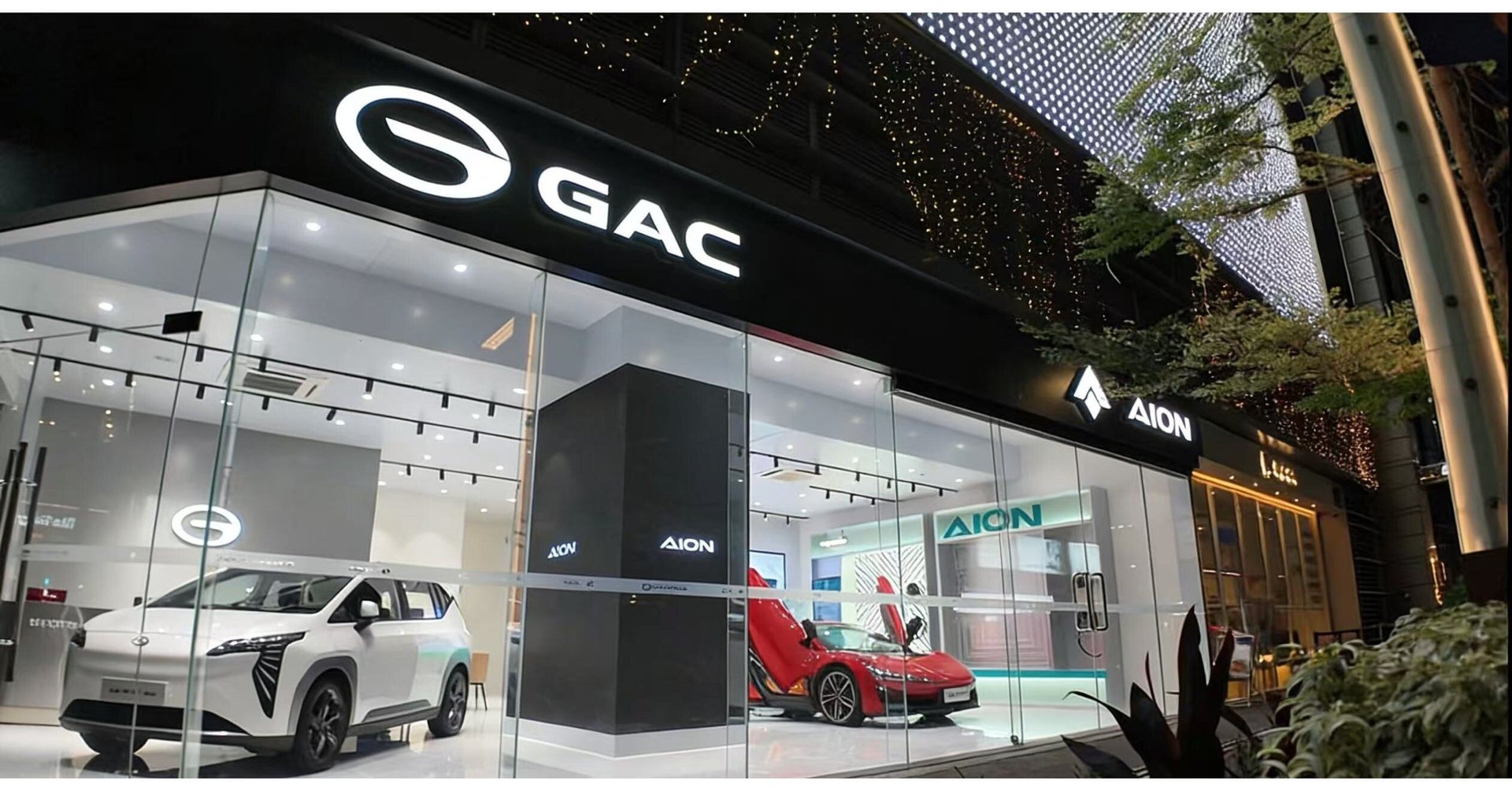
GAC has strengthened its foothold in Hong Kong’s rapidly expanding electric vehicle market, achieving third place overall in the city’s EV sales rankings while also securing second position among Chinese automotive brands.

The milestone reflects growing consumer acceptance of the company’s electric vehicle lineup, particularly models produced under its AION brand.

Vehicles such as the AION V, AION UT, AION ES and HYPTEC HT have been introduced to meet a range of consumer needs, offering different configurations and capabilities aimed at both private drivers and fleet customers.

The company’s performance follows the rollout of its "Hong Kong ACTION" strategy, launched in twenty twenty five as part of GAC’s broader "One GAC two point zero" global expansion plan.

The initiative focuses on strengthening the brand’s presence in the city through product launches, dealership networks, service infrastructure, energy systems and mobility solutions designed specifically for the local market.

Executives have positioned Hong Kong as a strategic gateway for overseas growth, describing the city as a key benchmark market in the company’s international development.

The strategy emphasises localisation, aiming to integrate products, services and infrastructure with local consumer needs while expanding the availability of electric mobility solutions.

The brand’s progress in Hong Kong also reflects the rising competition among electric vehicle makers seeking to expand across Asia’s urban markets.

With strong government support for electrification and increasing charging infrastructure, the city has become an important testing ground for manufacturers introducing new EV technologies and models.

GAC Aion, the electric vehicle arm of GAC Group, has grown rapidly since its establishment and now ranks among the leading producers of battery electric vehicles in China, manufacturing hundreds of thousands of units annually.

Industry observers say the company’s latest ranking in Hong Kong demonstrates both increasing consumer interest in Chinese developed EV technology and the effectiveness of the company’s international expansion strategy.

With continued product launches and local partnerships, GAC aims to further expand its share of the city’s electric vehicle market and strengthen its global presence.
Financial and technology authorities in both cities launch initiative to digitise cross-border cargo information and streamline trade finance.
Hong Kong and Shanghai authorities have agreed to collaborate on placing cargo trade data on blockchain infrastructure, a move aimed at accelerating cross-border trade finance and reducing the heavy reliance on paper documentation that still dominates global commerce.

The initiative follows the signing of a memorandum of understanding between the Hong Kong Monetary Authority, the Shanghai Data Bureau and the National Technology Innovation Center for Blockchain.

Under the agreement, the institutions will jointly research and develop digital infrastructure that connects cargo information, trade documentation and financial systems across both cities.

The project will explore the creation of a cross-border platform that links cargo trade data with financing channels using blockchain technology.

By integrating digital cargo records and electronic bills of lading with financial services, the system aims to streamline the verification of trade documents, accelerate loan processing and improve transparency in international trade transactions.

Officials say the collaboration will build on existing financial technology initiatives in Hong Kong, including the Commercial Data Interchange, a data infrastructure designed to facilitate secure sharing of corporate information among financial institutions.

The platform may also connect with digital trade tools and initiatives developed under Project Ensemble, Hong Kong’s broader programme exploring tokenised financial infrastructure.

Trade finance remains one of the most paperwork-intensive areas of global commerce, often requiring multiple intermediaries and several days to process documentation before credit can be extended to exporters and importers.

By synchronising cargo information and financial data on a distributed ledger, regulators hope to shorten approval times and reduce operational risks associated with fragmented or manually verified data.

The partnership reflects a broader effort by both cities to modernise the digital infrastructure underpinning cross-border commerce.

Shanghai has been strengthening its capabilities in data integration and technology development, while Hong Kong continues to position itself as a gateway connecting mainland supply chains with global financial markets.

Authorities say the collaboration is designed to promote practical applications of blockchain technology in cargo trade and finance, creating a secure and efficient data environment that supports international trade flows and financial connectivity between mainland China and global markets.
Carrier adjusts ticket levies across routes to offset rising jet fuel costs amid global energy volatility.
Hong Kong Airlines has announced plans to increase fuel surcharges on its flights by as much as thirty five percent, reflecting the mounting pressure on airline operating costs as global oil prices climb.

The carrier said the adjustment will apply to tickets issued in the coming period and will affect both short-haul and long-haul routes departing from Hong Kong.

Fuel surcharges are levied on a per-sector basis and are incorporated into the final ticket price regardless of fare class, meaning the increase will be reflected directly in the cost paid by passengers.

Airlines periodically review fuel surcharges to respond to fluctuations in aviation fuel prices, which represent one of the largest operating expenses in the industry.

Jet fuel costs can account for roughly a quarter or more of total airline expenditures, making sudden swings in energy markets a significant factor in airline profitability and pricing strategies.

Hong Kong Airlines said the revised surcharge levels were necessary following a sharp rise in fuel costs driven by global oil price volatility.

The adjustments are intended to help offset the additional expense faced by carriers as energy markets tighten and aviation demand continues to recover across Asia.

Fuel surcharges are a common mechanism used by airlines worldwide to manage sudden increases in operating costs.

Rather than adjusting base ticket prices frequently, carriers often apply or modify these surcharges to reflect changes in fuel prices while maintaining flexibility in their fare structures.

Under Hong Kong’s aviation framework, airlines may set their own fuel surcharge levels for flights departing the city based on commercial and market conditions.

The approach allows carriers to respond rapidly to shifts in global fuel prices while maintaining transparency in how surcharges are applied to tickets.

The increase comes at a time when many airlines in the region are confronting higher fuel bills as well as currency pressures and strong travel demand.

Industry analysts say carriers are likely to continue monitoring energy markets closely, adjusting surcharges or ticket pricing where necessary to maintain operational stability while meeting passenger demand for international travel.
New cross-sector initiative allows banks, insurers and capital-market firms to test artificial intelligence tools under regulatory supervision.
Hong Kong’s financial regulators have broadened a regulatory sandbox for generative artificial intelligence, extending the programme beyond banking to include multiple segments of the financial industry as the city accelerates its push to become a hub for responsible AI innovation.

The initiative, known as GenAI Sandbox++, was launched jointly by the Hong Kong Monetary Authority, the Securities and Futures Commission, the Insurance Authority and the Mandatory Provident Fund Schemes Authority in collaboration with Cyberport, the city’s technology incubator.

The framework builds on an earlier sandbox introduced in twenty twenty four that initially focused on banks, expanding its scope to cover securities and capital markets, asset and wealth management, insurance, pension services and stored-value facilities.

Regulators say the expanded programme will allow financial institutions to test and refine artificial intelligence applications in a controlled environment while receiving supervisory guidance and technical support.

Participants will also gain access to high-performance computing resources at Cyberport’s artificial intelligence supercomputing centre, enabling firms to develop and evaluate new AI tools before deploying them at scale.

The sandbox prioritises areas where authorities believe AI could deliver immediate benefits, including risk management, fraud detection and improvements to customer experience.

Potential applications range from automated insurance underwriting and claims processing to tools that verify suitability requirements when distributing investment products and intelligent customer-service systems.

The expansion reflects a coordinated effort by Hong Kong’s financial watchdogs to encourage innovation while maintaining robust oversight of emerging technologies.

By bringing multiple regulators into a single framework, the initiative aims to foster collaboration among banks, brokers, insurers, pension trustees and financial technology companies.

Officials say the programme forms part of Hong Kong’s broader strategy to strengthen its position as a global financial centre while supporting responsible adoption of advanced technologies.

By enabling institutions to experiment with artificial intelligence under regulatory supervision, authorities hope to accelerate digital innovation without compromising market stability or consumer protection.

Applications for the expanded sandbox are open to financial institutions and technology partners, with regulators encouraging firms across the financial ecosystem to participate in developing new artificial intelligence solutions for the sector.
Airline partners with West Kowloon Cultural District Authority to showcase Hong Kong’s artistic heritage on a specially designed aircraft.
Cathay Pacific has unveiled a new aircraft livery titled “Spirit of Hong Kong,” created in collaboration with the West Kowloon Cultural District Authority to celebrate the city’s artistic energy and cultural heritage on the global stage.

The design transforms a Cathay Pacific aircraft into a flying tribute to Hong Kong’s vibrant creative scene, incorporating visual elements inspired by the city’s performing arts, architecture and contemporary culture.

The project is intended to highlight Hong Kong’s role as a dynamic international center where art, tradition and innovation converge.

Developed jointly by the airline and the West Kowloon Cultural District Authority, the livery features motifs reflecting the city’s cultural landscape, including references to theatre, music and design.

The West Kowloon Cultural District is home to major arts venues such as the Xiqu Centre, dedicated to traditional Chinese opera, and the M Plus museum, which focuses on visual culture and contemporary art.

Cathay Pacific said the aircraft will serve as a cultural ambassador, carrying the imagery of Hong Kong’s creative industries to destinations around the world.

The airline emphasized that aviation plays an important role in connecting global audiences with the city’s cultural offerings and international events.

The unveiling forms part of broader efforts to promote Hong Kong as a cultural hub within Asia.

In recent years, authorities and cultural institutions have invested heavily in major arts infrastructure and international programming designed to strengthen the city’s reputation in film, visual arts, music and design.

Officials involved in the project say the collaboration reflects the close relationship between Hong Kong’s aviation sector and its cultural institutions.

By placing cultural storytelling directly onto an aircraft, the partners hope to inspire travellers and reinforce the city’s identity as a place where heritage and modern creativity intersect.

The aircraft bearing the “Spirit of Hong Kong” livery is expected to operate on Cathay Pacific’s international routes, bringing the imagery of the city’s artistic life to passengers and aviation enthusiasts worldwide.

Organisers say the initiative demonstrates how cultural promotion and international connectivity can work together to showcase Hong Kong’s distinctive character and creative vitality.
Institution marks one hundred and fifteen years of academic heritage by launching a new Shanghai initiative aimed at strengthening research and innovation links.
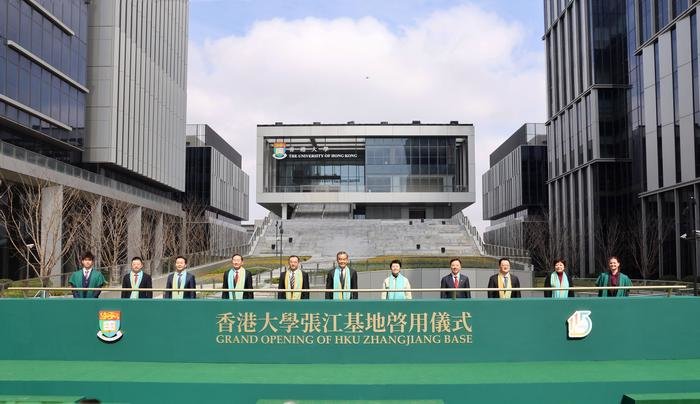
The University of Hong Kong has launched a new strategic platform in Shanghai as part of a broader effort to deepen academic collaboration and research partnerships across mainland China, marking a significant step during celebrations of the institution’s one hundred and fifteen year history.

University leaders said the initiative is designed to strengthen connections with universities, research institutions and industry partners in the Yangtze River Delta region, one of China’s most dynamic economic and technological hubs.

By establishing a stronger presence in Shanghai, the university aims to expand opportunities for joint research, innovation projects and academic exchange.

The launch forms part of a wider strategy by the University of Hong Kong to enhance its global engagement while reinforcing its role as a bridge between international scholarship and mainland China’s rapidly developing research ecosystem.

Officials say the platform will support collaboration in fields such as biomedical science, artificial intelligence, finance, public policy and sustainability.

The University of Hong Kong, founded in nineteen eleven, is one of Asia’s most established higher-education institutions and has played a prominent role in regional academic development.

Its graduates and researchers have contributed to advances in medicine, engineering, social sciences and public administration across Asia and beyond.

University representatives noted that Shanghai’s position as a major financial and innovation center offers an ideal environment for expanding partnerships between academia and industry.

The city hosts leading research laboratories, multinational companies and technology startups, providing fertile ground for collaborative projects and knowledge exchange.

The Shanghai platform will also facilitate student engagement initiatives, visiting scholar programmes and joint conferences aimed at strengthening intellectual exchange between Hong Kong and mainland China.

Administrators say the initiative reflects a growing trend among global universities seeking deeper integration with Asia’s expanding innovation networks.

As the University of Hong Kong commemorates its one hundred and fifteen year milestone, the launch underscores its ambition to remain a leading institution in global higher education while building stronger research links within the region’s evolving scientific and technological landscape.
New cross-border entry policy aims to accelerate global talent recruitment and strengthen scientific collaboration in the Greater Bay Area.
Authorities overseeing the Shenzhen–Hong Kong Science and Technology Innovation Cooperation Zone have introduced new entry arrangements allowing overseas researchers to travel to the innovation hub without traditional visa requirements, a move designed to strengthen international scientific collaboration and attract global talent.

The measure applies to researchers and technical specialists working in the Hetao Shenzhen–Hong Kong Science and Technology Innovation Cooperation Zone, a flagship cross-border technology platform jointly developed by Shenzhen and Hong Kong.

The zone operates under a "one zone, two parks" structure, with research facilities on both sides of the Shenzhen River intended to integrate the scientific strengths of the two cities.

Officials say the visa-free entry arrangement is part of a broader package of policies aimed at easing the movement of researchers, technology entrepreneurs and innovation professionals across the border.

The new system is expected to simplify travel procedures for international experts participating in research projects, laboratories and technology companies based within the zone.

The initiative complements a series of immigration facilitation measures introduced to support cross-border innovation.

Among them are multi-year, multiple-entry permits and fast-track processing arrangements designed to help research staff and high-tech enterprises move personnel between Hong Kong and mainland China more efficiently.

The Hetao cooperation zone is one of the major innovation platforms in the Guangdong–Hong Kong–Macao Greater Bay Area strategy.

Covering hundreds of hectares across Shenzhen and Hong Kong, the project aims to create a world-class research cluster focusing on areas such as artificial intelligence, robotics, biomedical technology, new materials and microelectronics.

Policymakers say reducing administrative barriers to international mobility is essential for the success of large-scale scientific initiatives.

By allowing overseas researchers to enter the innovation zone more easily, authorities hope to accelerate the exchange of ideas, strengthen global research partnerships and improve the commercialization of scientific discoveries.

Technology companies and universities involved in the project have welcomed the policy, noting that international talent mobility is a critical factor in building globally competitive research ecosystems.

The simplified entry procedures are expected to enable research teams to recruit foreign experts more quickly and conduct cross-border projects with fewer bureaucratic obstacles.

As development of the cooperation zone continues, officials say further policies aimed at facilitating talent recruitment, cross-border data exchange and research funding may be introduced to enhance the zone’s role as a leading technology innovation hub in Asia.
Chief executive increases stake in property giant through market purchase, signaling confidence in the company’s long-term prospects.
The chief executive of Hongkong Land has increased his personal stake in the company through a share purchase on the Singapore Exchange, reinforcing investor attention on the regional property group’s leadership confidence in its future performance.

Regulatory filings disclosed that the chief executive acquired additional shares in Hongkong Land Holdings, a major Asian property investment and development company with secondary listing on the Singapore Exchange.

The transaction was reported under disclosure rules governing share-based transactions involving senior executives and individuals responsible for managerial decisions.

The purchase adds to the executive’s existing holdings in the company and reflects a growing trend among corporate leaders who buy shares in their own firms as a signal of alignment with shareholder interests.

Insider purchases are often closely watched by investors because they can indicate internal confidence in a company’s strategic direction and long-term growth prospects.

Hongkong Land is one of Asia’s most established property groups, with a portfolio that includes prime office and luxury retail assets across key gateway cities such as Hong Kong, Singapore and major mainland Chinese urban centers.

The group owns and manages more than eight hundred thousand square metres of commercial property in Asia, including a dominant portfolio in Hong Kong’s Central district.

The company has recently undertaken several initiatives aimed at strengthening its investment platform and expanding revenue streams.

Among them is the development of new real-estate investment vehicles and ongoing share repurchase programmes designed to enhance shareholder value.

Market analysts note that executive share purchases can carry symbolic importance during periods of market volatility or strategic transition, particularly in sectors such as real estate where investor sentiment is influenced by interest rates and economic outlook.

Hongkong Land’s shares trade on multiple exchanges, with the Singapore listing providing regional investors with direct access to the company’s equity.

The firm is part of the Jardine Matheson group and remains one of the most prominent property investors operating across Asia’s financial hubs.

The latest disclosure highlights continued engagement by the company’s leadership in the ownership structure of the firm, a move that investors frequently interpret as a sign of management’s commitment to long-term corporate performance.
Golden jubilee edition of Asia’s historic film festival will begin with Anthony Chen’s drama and conclude with Philip Yung’s transgender-themed feature.
The Hong Kong International Film Festival will mark its fiftieth anniversary with a programme that opens with Anthony Chen’s drama “We’re All Strangers” and concludes with Philip Yung’s feature “Cyclone,” organisers confirmed as they unveiled the lineup for the milestone edition.

Running from April one to April twelve across major venues in the city, the festival’s golden jubilee edition celebrates half a century of Hong Kong’s role as a gateway for global cinema and a major platform for Asian filmmakers.

Founded in nineteen seventy six, the festival has grown into one of the longest-running and most influential film events in Asia, presenting hundreds of titles each year to international audiences.

Anthony Chen’s “We’re All Strangers,” which previously screened in competition at the Berlin International Film Festival, has been selected as the opening film.

The drama is expected to set the tone for the anniversary event, highlighting the festival’s continued commitment to showcasing internationally acclaimed directors and contemporary storytelling.

The closing film will be Philip Yung’s “Cyclone,” a drama that premiered at the Rotterdam International Film Festival and explores themes surrounding gender identity and personal transformation.

Its selection underscores the festival’s tradition of presenting diverse narratives and socially engaged filmmaking from across the region.

Organisers say the fiftieth edition will feature an extensive lineup of international and Asian cinema, bringing together filmmakers, actors and industry professionals for screenings, discussions and masterclasses.

The programme is designed to honour the festival’s history while also introducing new voices and emerging talents to audiences.

The Hong Kong International Film Festival has long served as a bridge between East and West, regularly presenting world premieres of Hong Kong and Asian films alongside Asian premieres of major international productions.

Each year the event attracts filmmakers and cinephiles from around the world, helping to reinforce the city’s reputation as a global cultural and cinematic hub.

Special retrospective programmes, filmmaker conversations and industry events will accompany the screenings, reflecting the festival’s aim of celebrating both the heritage and future of cinema.

Organisers say the golden jubilee edition will emphasise the evolution of Asian film culture and the continuing influence of Hong Kong’s creative community.

As the festival reaches its fiftieth year, industry figures view the milestone as a testament to the enduring vitality of Hong Kong’s film scene and its importance within the international cinematic landscape.
Insurance Authority authorises CNNC Captive Insurance, marking the first captive licence of the year and raising Hong Kong’s total to seven.
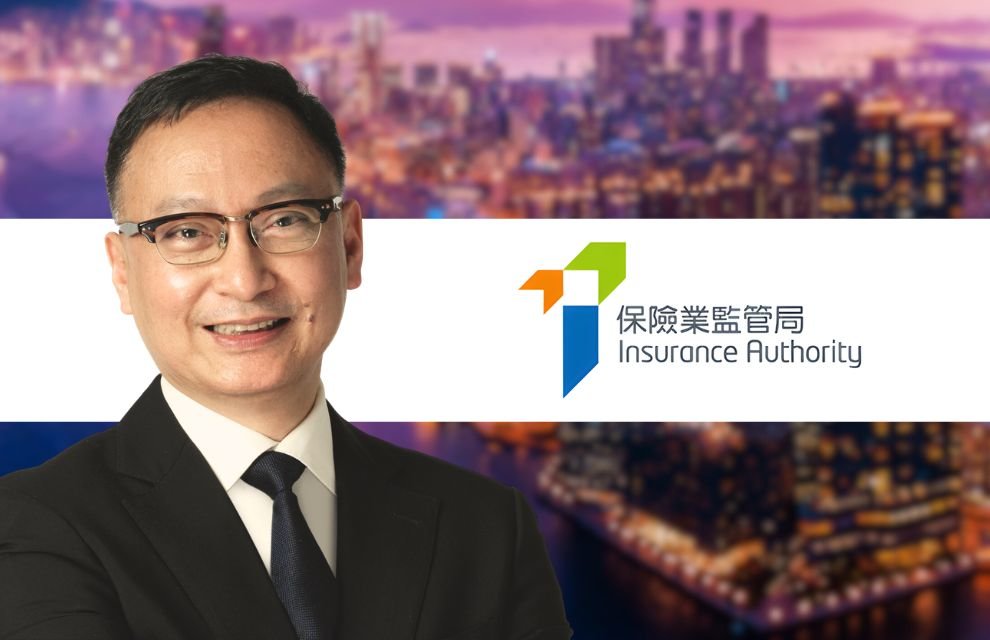
Hong Kong’s Insurance Authority has authorised the first captive insurance company of 2026, approving the formation of CNNC Captive Insurance Limited, a corporate-owned insurer established by the China National Nuclear Corporation.

The approval increases the number of captive insurers domiciled in Hong Kong to seven, reflecting the city’s efforts to strengthen its position as a regional hub for specialised insurance and risk management services.

Captive insurers are companies created by large corporations to insure risks within their own corporate group rather than selling policies to the wider public.

Regulators said the authorisation demonstrates continued interest from major enterprises in using Hong Kong as a base for managing internal insurance programmes.

Captive structures allow multinational firms and state-owned groups to retain specific risks on their balance sheets while gaining access to reinsurance markets and tailored coverage structures.

Industry officials note that captives have become an increasingly important component of enterprise risk management for global corporations.

By consolidating insurance coverage within a dedicated entity, companies can achieve greater control over risk financing, improve claims management and standardise policies across international operations.

The newly authorised company is expected to provide insurance coverage for risks associated with the China National Nuclear Corporation’s operations and affiliated entities.

Such arrangements are typical for captive insurers, which are designed primarily to insure the exposures of their parent group and subsidiaries.

Hong Kong’s regulatory framework allows captive insurers to conduct general insurance business subject to defined restrictions, ensuring that the companies remain focused on covering group-related risks rather than entering the broader retail insurance market.

Recent approvals suggest that Hong Kong’s captive insurance sector has begun to gain momentum after several years of limited activity.

Over the past year, several major corporations have established captive insurers in the city, signalling growing confidence in the jurisdiction’s regulatory environment and its role as a gateway for risk management solutions serving Asia-Pacific markets.

Officials at the Insurance Authority say they intend to continue promoting the development of the captive insurance sector, particularly among companies based in mainland China and across Asia.

The regulator argues that Hong Kong offers a combination of financial expertise, regulatory transparency and international connectivity that can support the growth of specialised insurance vehicles.

As multinational companies increasingly seek sophisticated approaches to managing operational risk, the expansion of Hong Kong’s captive insurance market is expected to create new opportunities for insurers, reinsurers and financial services providers operating across the region.
Financial Secretary emphasizes Hong Kong’s unique role as a global financial hub connecting mainland China with international markets and innovation.
Hong Kong’s finance chief has rejected the notion that the city serves merely as a financial testing ground for mainland China, saying its global role is far broader and rooted in its longstanding strengths as an international financial centre.

Financial Secretary Paul Chan said Hong Kong occupies a distinctive position linking China with global markets, enabling the city to serve simultaneously as a gateway for international capital entering the mainland and as a platform for Chinese companies seeking access to global investors.

He stressed that the city’s economic system, legal framework and international connectivity give it a role that goes well beyond policy experimentation.

Chan highlighted Hong Kong’s advantages under the "one country, two systems" framework, which allows the city to maintain a free-market economy, an internationally recognised legal system and deep financial connections with both mainland China and overseas markets.

These features, he said, position Hong Kong as a bridge between East and West rather than simply a laboratory for financial reforms.

The finance chief pointed to the city’s strong financial infrastructure, including its stock exchange, capital markets and wealth-management sector, as evidence of its enduring global relevance.

Hong Kong remains one of the world’s leading financial centres and continues to serve as a major hub for international investment flows.

Chan noted that the city has expanded its role in recent years through initiatives linking mainland and Hong Kong financial markets.

These mechanisms allow investors from both sides to access a broader range of financial products and deepen cross-border capital flows, reinforcing Hong Kong’s importance in the global financial system.

Beyond traditional finance, Hong Kong is also positioning itself as a centre for emerging sectors such as green finance, digital assets and financial technology.

Authorities have introduced policies to encourage innovation and attract international firms, while also strengthening cooperation with the mainland in areas such as research, technology and financial services.

The government has also announced major investment plans aimed at building new economic drivers, including technology zones and innovation hubs designed to integrate Hong Kong more closely with regional development in the Greater Bay Area.

Chan said these initiatives reflect a broader strategy to ensure the city continues to evolve as a comprehensive global financial centre, combining international expertise, strong regulatory standards and access to the mainland’s vast economic opportunities.

He emphasized that Hong Kong’s future lies in leveraging its dual advantages: deep integration with China’s economic development and a trusted international business environment that attracts global capital and talent.

With global markets undergoing significant shifts, the finance chief said Hong Kong’s openness, resilience and international orientation would allow it to continue playing a central role in global finance while serving as a vital connector between China and the rest of the world.
A historic luxury residence linked to a prominent Singapore property clan is offered for sale as the city’s high-end real estate market continues to adjust.
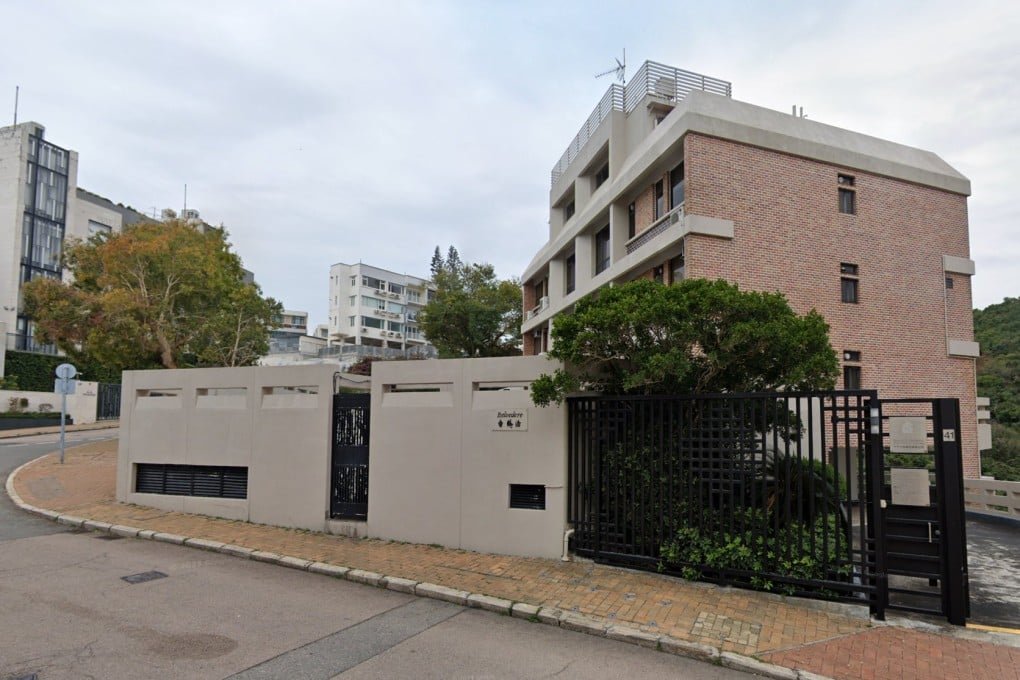
A rare luxury estate in Hong Kong linked to a prominent Singapore property family has been placed on the market through a tender process with an asking price of about thirty eight point four million dollars, drawing attention in a market where large heritage homes rarely change hands.

The property, located in one of Hong Kong’s most prestigious residential districts, is being offered for sale by a member of a Singapore-based property dynasty whose investments span hotels, offices and residential developments across Asia and beyond.

Estates of this scale are seldom offered publicly, making the tender a notable event in the city’s elite real estate market.

The residence sits on a sizeable plot in a neighbourhood known for its concentration of ultra-wealthy homeowners, diplomats and business leaders.

Such homes are prized not only for their location but also for their scarcity, as strict planning controls and limited land supply make new large-scale residential developments extremely rare in the territory.

Industry observers say the decision to offer the estate through a tender reflects both the prestige of the property and the expectation that wealthy buyers may compete for ownership.

In Hong Kong’s luxury market, tender sales are commonly used for distinctive properties where sellers prefer to invite confidential bids rather than list a fixed price.

The listing comes at a time when Hong Kong’s property sector is undergoing a period of adjustment following several years of high interest rates and economic uncertainty.

Prices in some segments of the market have softened from earlier peaks, leading certain owners to reassess portfolios and consider strategic asset sales.

Despite these broader pressures, ultra-prime homes in Hong Kong remain highly sought after by wealthy families, investors and business leaders seeking prestige addresses and long-term wealth preservation.

Prime residential districts such as The Peak, Deep Water Bay and Repulse Bay continue to rank among the most expensive housing locations in Asia.

Property analysts say rare listings like this estate tend to attract interest from regional buyers including investors from mainland China, Southeast Asia and global family offices.

Large houses with expansive grounds are particularly appealing because comparable properties are rarely available in the dense urban environment of Hong Kong.

The tender process allows prospective buyers to submit confidential bids within a defined period, after which the seller may choose the most favourable offer or withdraw the property if expectations are not met.

The approach is often used when owners believe a property’s uniqueness may command a premium beyond typical market benchmarks.

Whether the estate ultimately changes hands will depend on buyer appetite and broader market sentiment, but the listing itself highlights the enduring allure of Hong Kong’s most exclusive residential properties even during a period of recalibration in the wider property market.
Markets across Asia recover as easing oil prices boost investor confidence following signals that the conflict with Iran may be nearing an end.
Hong Kong equities rebounded after a sharp bout of volatility as global oil prices retreated following signals from United States President Donald Trump that the war involving Iran could be approaching an end.

The Hang Seng Index and other Asian markets moved higher after crude oil prices dropped, easing fears that prolonged disruptions to global energy supplies would drive inflation and undermine economic growth.

Investors interpreted Trump’s remarks about the potential conclusion of hostilities as a sign that the geopolitical shock gripping financial markets might soon begin to fade.

Energy prices had surged in recent weeks amid the outbreak of conflict involving Iran, the United States and Israel, with traders concerned that fighting near the Strait of Hormuz could threaten a vital route for global oil shipments.

Roughly a fifth of the world’s oil supply normally passes through the narrow waterway, making it one of the most strategically important energy corridors on the planet.

The prospect of a rapid de-escalation helped calm markets, pushing crude prices lower and encouraging investors to return to risk assets such as equities.

Hong Kong stocks, which had been pressured by the earlier spike in oil and broader regional uncertainty, benefited from the shift in sentiment.

Market participants said the easing in oil prices reduced immediate concerns about rising costs for businesses and consumers.

Lower energy prices can help limit inflationary pressure, supporting corporate profitability and economic growth expectations across Asia.

Financial markets have experienced significant turbulence since the conflict erupted, with oil prices surging and global stock markets swinging sharply as traders assessed the potential economic consequences.

Analysts warned that prolonged disruptions to oil flows could lift inflation worldwide and slow economic activity.

President Trump has repeatedly emphasized that his administration is working to bring the conflict to a swift conclusion while safeguarding global energy security and international trade routes.

His comments suggesting that the war could end soon were seen by investors as a sign that diplomatic and strategic efforts may be gaining traction.

The market rebound in Hong Kong reflected broader improvements in global risk appetite, as traders cautiously welcomed indications that tensions in the Middle East might stabilize in the near term.

Despite the recovery, analysts noted that markets remain sensitive to developments in the region.

Any renewed disruption to energy supply routes or escalation of hostilities could quickly reverse gains and reignite volatility across global financial markets.
Major Hong Kong trade fairs highlight strong demand for diamonds and high-end gems as thousands of exhibitors gather to track industry trends.
Diamonds emerged as the dominant theme at Hong Kong’s major jewellery exhibitions this year, underscoring the enduring global appetite for high-value gemstones and reaffirming the city’s role as a central hub for the international jewellery trade.

The twin industry events — the Hong Kong International Diamond, Gem and Pearl Show and the Hong Kong International Jewellery Show — brought together thousands of exhibitors and buyers from across the world.

The gatherings transformed the city into a focal point for global sourcing, networking and trend discovery within the luxury jewellery market.

Industry participants highlighted strong interest in both classic white diamonds and fancy coloured stones, which dominated display halls and buyer discussions throughout the exhibitions.

Traders reported that high-quality diamonds remain among the most sought-after assets in the luxury sector, reflecting their reputation for rarity, durability and long-term value.

The diamond-focused show, held at AsiaWorld-Expo, presented an extensive collection of loose stones, pearls and precious gemstones.

Buyers from jewellery houses, manufacturers and retailers attended the event to secure raw materials and identify emerging design directions in the global market.

Alongside diamonds, exhibitors showcased a wide spectrum of high-end jewellery featuring emeralds, rubies and pearls, often combined with elaborate gold craftsmanship and modern design techniques.

Some displays included exceptional pieces such as multi-carat diamond necklaces and gemstone-studded bracelets designed to demonstrate the artistry and technical mastery shaping contemporary jewellery.

Organisers said the fairs continue to reinforce Hong Kong’s standing as a premier global marketplace for precious stones and fine jewellery.

The events bring together producers, designers, traders and collectors from dozens of countries, reflecting the city’s strategic role at the crossroads of Asian and international luxury markets.

Beyond the brilliance of individual stones, the exhibitions also served as a barometer of broader industry trends.

Market participants noted rising interest in responsibly sourced materials, innovative jewellery design and laboratory-grown diamonds, which are gaining traction among environmentally conscious consumers.

Design trends on display pointed toward bold visual expression, with sculptural settings, unconventional gemstone combinations and modern interpretations of classic jewellery styles.

Pearls in organic shapes, vibrant coloured gemstones and statement pieces also attracted attention among buyers seeking distinctive creations.

Despite evolving tastes and technological advances, diamonds remained the centrepiece of the exhibitions, reflecting their continued status as the cornerstone of the global jewellery industry.

As the shows concluded, industry leaders said Hong Kong’s exhibitions once again demonstrated the city’s ability to convene the international jewellery community, offering a platform where tradition, innovation and global commerce converge.
A subsidiary of CK Hutchison launches international arbitration following Panama’s takeover of two strategic Panama Canal ports.
A Hong Kong-based port operator has begun international arbitration proceedings seeking two billion dollars in compensation after Panama seized control of two key terminals at either end of the Panama Canal.

Panama Ports Company, a subsidiary of the Hong Kong conglomerate CK Hutchison Holdings, said it is pursuing damages through international arbitration after losing control of the Balboa and Cristobal ports, two facilities that sit on the Pacific and Atlantic entrances to the canal.

The company described Panama’s actions as an unlawful takeover of assets and operations that it had managed for decades.

The dispute follows a ruling by Panama’s Supreme Court declaring the company’s concession to operate the ports unconstitutional.

Acting on that ruling, the Panamanian government ordered the occupation of the terminals and assumed control of their operations, triggering an immediate response from the Hong Kong operator.

Panama Ports Company has run the Balboa and Cristobal facilities since nineteen ninety seven, playing a central role in the handling of cargo passing through one of the world’s most important maritime corridors.

The concession was renewed in two thousand twenty one for an additional twenty five years before the recent court decision overturned the agreement.

The ports occupy a strategic position along the canal, a critical route for global trade linking the Atlantic and Pacific oceans.

Their operations have drawn growing geopolitical attention in recent years as international competition for control over major maritime infrastructure intensified.

The dispute also intersects with a broader commercial transaction involving CK Hutchison’s global port network.

The company had previously announced plans to sell a large portion of its international port assets, including the two Panama terminals, to a consortium led by a major American investment firm as part of a multibillion dollar deal that has since stalled amid political scrutiny and regulatory uncertainty.

The canal ports became a subject of heightened international discussion after United States President Donald Trump publicly warned that China should not exert influence over such a strategic global waterway.

His administration emphasized safeguarding open and secure maritime trade routes as a priority for global commerce.

In statements issued after the takeover, the Hong Kong operator accused Panama of occupying port facilities and seizing property and documents without adequate transparency.

The company said it intends to pursue all available legal avenues and will seek full compensation for what it describes as severe breaches of investor protections.

The Panamanian government has previously indicated that the port concession’s cancellation followed legal findings about the constitutionality of the agreement, while officials continue to review the dispute as the arbitration process unfolds.

The case now moves into international arbitration, setting the stage for a complex legal battle over ownership rights, investment protections and the future control of two of the most strategically important commercial ports along the Panama Canal.
Industry group pledges cooperation with government initiatives aimed at reinforcing Hong Kong’s status as a global shipping, trade and financial centre.
The Hong Kong Shipowners Association has voiced strong support for national policy initiatives designed to reinforce Hong Kong’s position as a leading international centre for shipping, finance and trade.

The maritime industry body welcomed the priorities outlined in the national development plan and government policy agenda, which emphasize the importance of maintaining Hong Kong’s global standing as a key hub connecting international markets.

Industry leaders said the measures highlight the central role shipping continues to play in Hong Kong’s economic success and international outlook.

Hong Kong’s maritime sector includes shipowners, ship managers, operators and a wide network of service providers ranging from finance and insurance to legal and logistics services.

Together they form a major pillar of the city’s economy and underpin its long-standing role as a gateway for global commerce.

The association said it intends to deepen cooperation with both domestic and international partners in order to capitalize on Hong Kong’s strategic advantages as the global economy evolves.

The city’s location, financial system and extensive maritime expertise were cited as key strengths that can help maintain its competitiveness in an increasingly complex global shipping environment.

Industry leaders also welcomed plans to increase support for innovation, technology and talent development in Hong Kong.

Maritime executives say the sector is undergoing rapid transformation as digital systems, new fuels and environmental regulations reshape the shipping industry.

Global decarbonization targets are pushing shipping companies to adopt cleaner technologies and new operational models, while digitalization is changing the way fleets are managed and ports are operated.

The association said collaboration between government and industry will be essential to ensure that Hong Kong remains at the forefront of these changes.

Maritime groups have also pointed to the importance of attracting and training new professionals to sustain the sector’s growth.

Talent development and skills training have become a major focus as the industry seeks expertise in technology, sustainability and modern logistics.

The association said the national initiatives provide a framework for strengthening Hong Kong’s maritime ecosystem while supporting the broader goal of maintaining the city’s role as a bridge between mainland China and the international trading system.

As global shipping continues to adapt to new environmental standards and technological advances, the industry body said it will work closely with authorities and international partners to ensure Hong Kong’s maritime sector remains dynamic, competitive and connected to the world.
A surge of buying via the Stock Connect programme highlights the growing influence of mainland capital in Hong Kong’s equity market.
Mainland Chinese investors purchased a record HK$37.2 billion worth of Hong Kong shares in a single session through the Stock Connect trading link, marking the largest daily inflow since the programme began linking mainland and Hong Kong markets.

The surge in buying reflects a rapid shift in investor sentiment and underscores the rising influence of mainland capital in the city’s financial markets.

The purchases were executed through the so-called southbound channel of Stock Connect, which allows investors in Shanghai and Shenzhen to trade shares listed in Hong Kong.

Data compiled from market transactions show the record inflow surpassed the previous high of HK$35.9 billion recorded in August, highlighting how quickly investor activity can swing between heavy selling and strong buying.

The latest inflow comes after mainland investors had staged a wave of selling in Hong Kong stocks just days earlier, demonstrating the volatility that often characterises cross-border trading flows.

Analysts say the reversal illustrates how investors in mainland markets frequently react swiftly to changing global conditions and domestic policy signals.

Despite broader market turbulence linked to geopolitical tensions and a global sell-off triggered by surging oil prices and concerns about conflict involving Iran, mainland buyers moved aggressively into Hong Kong equities.

Their activity helped cushion losses in the city’s market even as global stocks faced pressure.

Overall, mainland investors have already purchased about HK$188.7 billion worth of Hong Kong shares through Stock Connect since the start of the year.

That total amounts to roughly sixty percent of the volume recorded during the same period a year earlier, suggesting sustained demand for Hong Kong-listed companies despite periods of volatility.

Hong Kong’s market occupies a unique position as an international financial hub and gateway between China and global capital.

Through programmes such as Stock Connect, mainland investors can access companies listed in Hong Kong that may not be available through domestic exchanges, including many large technology and financial groups.

Policy signals from Beijing have also supported sentiment toward domestic markets and home-grown technology companies during the country’s annual legislative meetings, where leaders reaffirmed support for economic growth and innovation.

Market analysts say the record inflow illustrates how mainland investors are becoming an increasingly decisive force in Hong Kong trading activity.

Their growing participation has reshaped liquidity patterns in the city’s exchange and may continue to influence price movements as cross-border capital flows expand.

The episode also highlights the fast-moving nature of modern financial markets, where large inflows and outflows can occur within days as investors respond to economic signals, geopolitical developments and shifting expectations for global growth.
The banking giant tightens office attendance rules, requiring employees who work directly with clients to return full-time to the workplace.
HSBC has decided to end remote-working arrangements for many client-facing employees in Hong Kong, requiring staff who deal directly with customers and business partners to work primarily from the office.

The move marks a significant shift from the flexible arrangements introduced during and after the pandemic, when many financial institutions experimented with hybrid working models.

HSBC had previously allowed certain employees in Hong Kong to work remotely for several days each week under different flexible arrangements.

The new policy, however, removes work-from-home privileges for roles where regular interaction with clients is considered essential.

Executives say the decision reflects the importance of in-person engagement in relationship-driven banking businesses such as wealth management, corporate banking and advisory services.

Managers argue that face-to-face contact with clients strengthens trust, improves communication and supports faster decision-making in a competitive financial environment.

Hong Kong is HSBC’s largest market and a central hub for its global operations.

The bank employs roughly thirty thousand people in the city, making workplace policies there closely watched across the financial industry.

The updated rules are expected to affect a significant share of staff involved in customer-facing functions across the bank’s local operations.

The change also aligns HSBC with a broader shift among major global financial institutions that are tightening return-to-office expectations after several years of remote-work flexibility.

Banks have increasingly argued that in-person collaboration is critical for mentoring younger employees, maintaining corporate culture and supporting complex financial transactions.

Within HSBC, hybrid working rules have historically varied across departments, with local management setting attendance expectations.

Some business units previously required employees to spend a majority of their time either in the office or meeting clients in person.

Industry analysts say the decision reflects the evolving balance between operational flexibility and business demands in sectors where personal relationships remain central to commercial success.

In wealth management and corporate banking in particular, regular in-person meetings are still viewed as a key element of maintaining client confidence.

For employees, the change signals a more traditional working pattern returning to parts of the banking sector after the pandemic reshaped workplace expectations.

While some roles may continue to retain limited flexibility, client-facing teams in Hong Kong will now largely operate from offices as HSBC emphasizes direct engagement with customers.

The policy shift underscores how major financial institutions are reassessing hybrid work models and recalibrating them around operational priorities, client service and competitive positioning in global banking.
Correspondence shared by Claire Lai offers a rare look into the reflections, faith and resilience of the jailed media entrepreneur during his ongoing legal battle.
Letters written from prison by media entrepreneur Jimmy Lai are offering a rare glimpse into the reflections and convictions of one of Hong Kong’s most prominent detained figures, revealing a mixture of personal faith, resilience and reflection on the city’s political transformation.

The letters, shared publicly by his daughter Claire Lai, provide insight into the private thoughts of the seventy-six-year-old founder of the now-closed Apple Daily newspaper as he continues to face legal proceedings in Hong Kong.

Written during his time in custody, the correspondence describes how Lai has relied heavily on religious faith and spiritual discipline while enduring long periods of confinement.

In the letters, Lai writes about prayer, scripture and the importance of maintaining a clear conscience despite adversity.

He reflects on the meaning of sacrifice and the moral responsibilities of individuals who believe they are called to defend fundamental freedoms.

Claire Lai said the correspondence was shared to give the public a fuller understanding of her father’s state of mind and to highlight what she describes as his unwavering commitment to his beliefs.

According to her account, Lai continues to read extensively, pray daily and draw strength from Christian teachings during his imprisonment.

Jimmy Lai, a businessman who built a major media empire in Hong Kong after fleeing mainland China as a teenager, became a prominent supporter of democratic activism in the city.

His newspaper Apple Daily was known for its outspoken political stance and wide readership before it ceased publication after authorities froze its assets.

The letters portray Lai as someone determined to maintain dignity and spiritual focus despite the uncertainty of his situation.

In several passages he reflects on forgiveness, humility and the idea that personal suffering can serve as a witness to deeper convictions.

Observers say the correspondence illustrates how the case surrounding Lai has become emblematic of the wider debate about civil liberties, media freedom and political authority in Hong Kong.

International attention on his detention has intensified as his trial continues to unfold.

For Claire Lai, the letters serve not only as a personal connection with her father but also as a testament to what she describes as the endurance of conscience under pressure.

She has said the writings demonstrate that, even in isolation, Lai remains focused on faith and the principles that shaped his life.

The release of the correspondence adds a deeply personal dimension to one of Hong Kong’s most closely watched legal cases, offering a portrait of a man seeking meaning and strength while awaiting the outcome of proceedings that could shape the final chapter of his public life.
A wave of Chinese capital flowing through cross-border trading channels is boosting Hong Kong’s biotech sector, raising questions about whether foreign investors are missing a renewed rally.
Chinese mainland investors are increasingly powering a rebound in Hong Kong’s biotechnology stocks, sending share prices higher and reshaping the balance of capital flowing into the city’s equity market.

Recent trading activity shows strong buying of pharmaceutical and biotech companies listed in Hong Kong through the southbound Stock Connect programme, which allows qualified mainland investors to purchase shares traded in the territory.

The influx has helped lift sector indices tracking innovative drug developers and biotechnology companies, with several biotech shares rising sharply as domestic investors increased their positions.

The renewed interest reflects growing confidence among mainland investors in China’s drug development industry, particularly as companies expand internationally through licensing agreements and partnerships with global pharmaceutical groups.

These deals are increasingly viewed as evidence that Chinese research pipelines are maturing and entering a commercial phase capable of generating global revenue streams.

Hong Kong has become the primary offshore trading venue for many of these companies.

The city’s stock exchange introduced special listing rules several years ago allowing pre-revenue biotechnology firms to raise capital, creating a large cluster of drug developers seeking funding for clinical research and commercialization.

As a result, Hong Kong now hosts dozens of biotech listings and dedicated market indices tracking the sector’s performance.

Mainland capital is playing a particularly visible role in the latest rally.

Strong inflows through Stock Connect have helped reshape Hong Kong’s broader equity market in recent years, with mainland investors contributing significantly to trading volumes and market momentum.

Despite the strong domestic demand, participation by overseas investors remains relatively subdued compared with earlier cycles.

Some global funds reduced exposure to Chinese biotechnology ventures during recent periods of geopolitical tension, regulatory scrutiny and volatility in the global healthcare sector.

Market analysts say this gap could present both risk and opportunity.

A rally driven primarily by mainland demand may prove vulnerable to changes in domestic sentiment, but it could also attract renewed interest from international funds if confidence in Chinese biotechnology innovation continues to improve.

Hong Kong’s biotech market itself is emerging from a challenging period that followed a global downturn in healthcare equities and a slowdown in venture funding.

After several years of subdued listings and falling valuations, improved licensing activity and stronger trading performance have helped restore investor interest in the sector.

For now, mainland investors appear to be leading the latest phase of the rebound, highlighting how regional capital flows are increasingly shaping Hong Kong’s biotechnology market and the broader landscape of global pharmaceutical investment.
Property giant says strengthening rental conditions in Hong Kong’s Central district could lift profits beyond earlier expectations
Hongkong Land has indicated that a gradual recovery in Hong Kong’s prime office rental market could push the company’s earnings above its earlier guidance, as demand strengthens in the city’s financial district.

The property group, one of the largest commercial landlords in Hong Kong’s Central district, said that rising office rents and improved leasing activity in its premium portfolio are beginning to support a stronger financial outlook.

Executives noted that recent increases in prime office rents may translate into higher income than previously anticipated.

The company owns some of the most prominent office towers in Central, a district that hosts major financial institutions, law firms and multinational corporations.

Rental shifts in this market have an outsized impact on Hongkong Land’s performance, as a large share of its revenue is derived from these prime properties.

Hong Kong’s office market has faced several years of pressure following a surge in new supply and weaker leasing demand.

During that period, rents in key commercial districts fell significantly and vacancy levels rose across the city.

However, recent data and leasing activity suggest conditions may be stabilising, particularly in the highest-quality buildings that attract global finance and wealth management tenants.

Property analysts say the Central district has begun to see early signs of recovery after a prolonged downturn.

Demand from financial institutions and investment firms has contributed to a modest rebound in leasing activity, while a broader revival in capital markets has encouraged companies to secure premium office space in the city’s traditional business hub.

Hongkong Land executives said that the improving trend in spot rents could provide an additional boost to earnings if sustained through the coming quarters.

Even relatively small changes in rental levels can have a significant impact on the company’s income because of the scale and concentration of its office portfolio.

The group, part of the Jardine Matheson conglomerate, manages a portfolio of office and retail properties across Asia but remains most closely associated with Hong Kong’s Central district.

The company has spent recent years managing the effects of declining rents while investing in renovations and repositioning key properties.

Despite the challenges of recent years, market indicators suggest the prime segment of Hong Kong’s office sector is moving toward a turning point.

Analysts note that improving financial-market activity and renewed demand for top-tier workspace are helping lift sentiment in Central, where premium properties have historically commanded some of the highest office rents in the region.

If the upward trend in leasing continues, Hongkong Land believes the strengthening rental environment could lift its earnings beyond previously issued guidance, reinforcing expectations that the prime office market in Hong Kong is entering a period of gradual recovery.
Banking executive says geopolitical shifts and growing Chinese innovation sectors are reinforcing Hong Kong’s role as a regional hub for global capital
Hong Kong is attracting new inflows of wealth as geopolitical tensions reshape global investment patterns and China’s rapidly developing technology sector draws international attention, according to the chief executive of HSBC’s Hong Kong business.

The senior banking executive said that heightened global uncertainty, combined with growing interest in Chinese technology companies, has encouraged investors and wealthy families to move capital into Hong Kong.

The city’s established financial infrastructure and its position as a gateway between mainland China and global markets continue to make it an important destination for international wealth management.

Hong Kong’s financial system has long served as a bridge linking investors with opportunities in mainland China.

Bank executives say that role has become even more significant as competition between major economies intensifies and investors seek locations capable of navigating both global markets and Chinese economic growth.

According to HSBC, the city is well positioned to benefit from these shifts because of its strong legal framework, deep capital markets and long-standing expertise in cross-border finance.

These advantages have historically made Hong Kong one of the world’s leading financial centres and a preferred base for wealth management in Asia.

The executive also pointed to the rapid expansion of China’s technology sector as a major driver of interest from global investors.

Advances in areas such as artificial intelligence, digital platforms and advanced manufacturing have helped generate new opportunities that are increasingly being accessed through Hong Kong’s financial markets.

At the same time, geopolitical tensions and shifting trade relationships are influencing how capital moves across borders.

Some investors are restructuring portfolios and relocating assets to financial centres that offer both international connectivity and proximity to the Chinese economy.

HSBC, which generates a large share of its global profits in Asia, has been strengthening its presence in Hong Kong’s wealth management and banking sectors to capture this growth.

The bank views the city as a central platform for serving high-net-worth clients across Asia and connecting them with investment opportunities throughout the region.

Analysts say the continued flow of capital highlights Hong Kong’s enduring financial role despite broader geopolitical changes.

The city’s integration with mainland China, combined with its international financial system, positions it uniquely to benefit from both global and regional economic trends.

As global tensions reshape investment strategies and China’s technology industries continue to expand, financial institutions believe Hong Kong will remain a key destination for wealth management and cross-border capital in the years ahead.
Regional equities slide amid fears of inflation and supply disruption after crude prices spike following escalating conflict in the Middle East
Hong Kong stocks declined alongside other Asian markets after crude oil prices surged past one hundred dollars a barrel, triggering concerns about inflation and economic slowdown across energy-dependent economies.

The Hang Seng Index fell as investors reacted to a sharp jump in oil prices linked to escalating tensions in the Middle East.

The rise in energy costs has heightened worries about global supply disruptions and the potential economic impact on countries heavily reliant on imported oil.

Brent crude, the international benchmark, climbed roughly eighteen percent to about one hundred nine dollars per barrel.

The surge followed intensifying conflict in the region and fears that shipping through the Strait of Hormuz—a strategic passage that handles roughly one-fifth of global oil and gas shipments—could be severely disrupted.

The spike in energy prices prompted investors to reduce exposure to riskier assets across Asia.

Hong Kong’s equity market moved lower alongside regional peers as traders assessed the potential consequences for inflation, corporate costs and economic growth.

Other markets across the Asia-Pacific region also suffered losses.

Japan’s Nikkei index and South Korea’s Kospi both dropped sharply, while Singapore and mainland Chinese equities also declined as the oil rally rattled investor confidence.

Higher oil prices can quickly ripple through global economies, increasing transportation costs, raising manufacturing expenses and squeezing consumer spending.

Analysts say these pressures can weaken corporate earnings and push central banks to maintain higher interest rates, factors that typically weigh on stock markets.

The sell-off highlights the sensitivity of Asian markets to geopolitical shocks affecting energy supply.
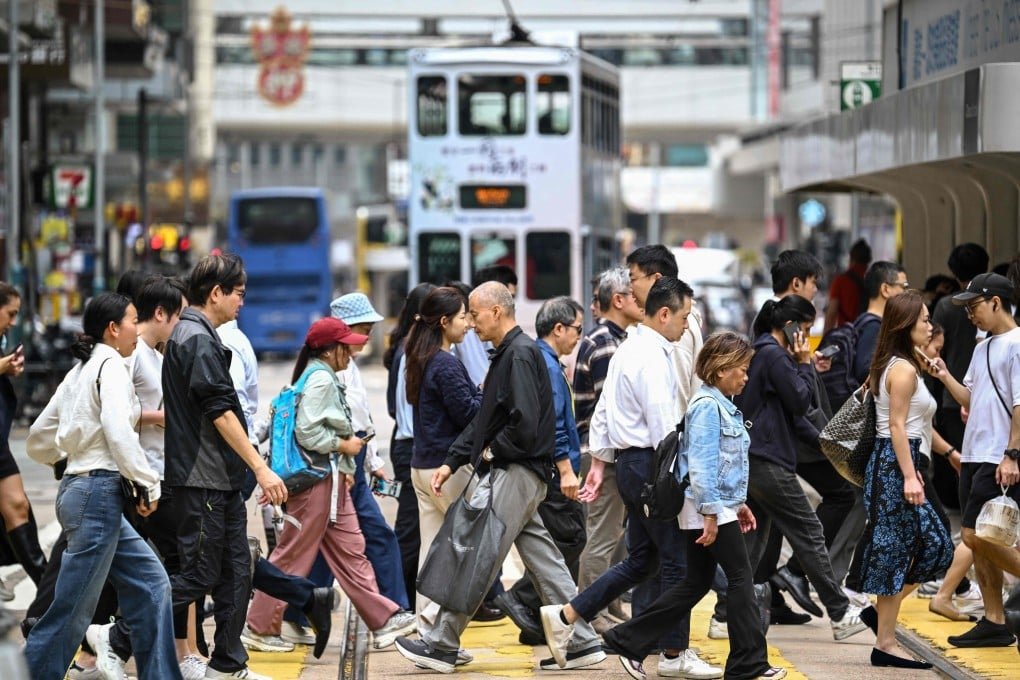
Many economies in the region rely heavily on imported oil from the Middle East, making them particularly vulnerable to sudden price spikes.

Investors have also sought traditional safe-haven assets amid the volatility.

Gold prices have risen while some funds have moved toward the U.S. dollar and government bonds, reflecting caution across global financial markets.

Despite the short-term market turbulence, analysts note that Hong Kong remains one of the world’s most important financial centres, with deep capital markets and strong international connections.

However, the latest market reaction underscores how geopolitical developments and commodity price swings can quickly reverberate through the region’s financial systems.
Chinese leadership sends a clear message that the city must move faster on economic transformation, efficiency and stability to reinforce its global role
China’s leadership has delivered a firm message to Hong Kong: the city must move faster in strengthening governance, accelerating economic reform and reinforcing its competitiveness as a global financial centre.

In recent remarks and policy discussions, officials in Beijing signalled growing expectations that Hong Kong should increase the pace of its development initiatives and administrative reforms.

The message reflects a broader strategy aimed at ensuring the territory remains a vital economic gateway connecting mainland China with international markets.

The call for urgency comes as Hong Kong works to revitalise growth following several challenging years that included pandemic disruptions, geopolitical tensions and shifts in global financial flows.

Chinese authorities have repeatedly emphasised that the city retains a unique position under the “one country, two systems” framework, giving it advantages that few global financial centres can match.

Officials argue that the next stage of Hong Kong’s development will depend on stronger coordination with mainland economic priorities.

These include deeper integration with the Guangdong-Hong Kong-Macao Greater Bay Area, the rapidly expanding regional economic zone linking southern Chinese cities with Hong Kong and Macao.

Beijing’s message also focuses on governance and efficiency.

Authorities have encouraged Hong Kong’s administration to accelerate policy implementation, streamline decision-making and deliver infrastructure and innovation initiatives more rapidly.

Supporters of this approach say quicker policy execution is essential for maintaining the city’s competitiveness in areas such as finance, technology and international trade.

Economic transformation is another central theme.

Policymakers in Beijing and Hong Kong have emphasised the need for the territory to expand beyond its traditional financial services base by strengthening sectors such as technology, innovation and advanced research.

These industries are seen as key drivers of future growth across the Greater Bay Area.

The leadership’s emphasis on speed and efficiency reflects broader efforts to reinforce stability and investor confidence.

Authorities say the national security framework introduced in recent years has restored order after a period of political turbulence, creating a more predictable environment for business and investment.

Supporters of the current direction argue that Hong Kong’s long-standing strengths—including an independent legal system, global financial expertise and strong connections with mainland China—continue to underpin its international status.

They say the push for faster reform aims not to change the city’s identity but to ensure it adapts quickly to evolving global economic competition.

As Hong Kong navigates the next phase of development, the message from Beijing is clear: the city remains a crucial international financial hub, but maintaining that position will require decisive governance, rapid policy implementation and deeper integration with the region’s expanding economic opportunities.
Spanish star claims dominant three-shot win while Dustin Johnson’s 4Aces secure team title in a dramatic final round at Hong Kong Golf Club
Jon Rahm delivered a commanding performance on the final day of the LIV Golf Hong Kong tournament, ending a lengthy personal title drought while helping the 4Aces GC secure a decisive team triumph at Hong Kong Golf Club.

Rahm finished the tournament at twenty-three under par, producing a closing round of sixty-four to pull clear of the field and claim a three-shot victory.

The win marked his first worldwide tournament victory in roughly eighteen months and ended a stretch in which he had repeatedly finished as runner-up in LIV Golf events.

Belgium’s Thomas Detry finished second on twenty under par after an impressive week, while other contenders including Harold Varner the Third and Thomas Pieters remained in pursuit but were unable to catch Rahm as he surged ahead during the decisive final round.

Rahm’s performance included a series of birdies during the closing stretch that helped secure a comfortable margin of victory.

The triumph was also significant for the team competition.

The 4Aces GC squad—captained by Dustin Johnson and featuring players including Thomas Pieters and Anthony Kim—captured the team title with a combined score of fifty-eight under par.

Smash GC finished second and Legion XIII, Rahm’s own team, took third place.

Rahm’s victory carried particular significance given the consistency he had shown earlier in the season.

The Spanish golfer had opened the twenty twenty six LIV campaign with consecutive runner-up finishes and had narrowly missed out on several previous titles before finally breaking through in Hong Kong.

Throughout the week the competition at the Fanling course produced several standout performances.

Early rounds saw strong challenges from players such as Carlos Ortiz and Dean Burmester, who briefly shared the lead before the final-round surge from Rahm shifted the balance of the tournament.

The event represented the third tournament of the twenty twenty six LIV Golf season and continued the league’s global schedule, which features competitions across multiple continents and a format combining individual and team championships.

Rahm’s return to the winner’s circle and the 4Aces’ team victory added a dramatic chapter to the early part of the season, reinforcing the competitive depth within the LIV Golf league as players prepare for upcoming events in Asia and beyond.
The landmark national security conviction of the media entrepreneur has intensified debate over the city’s role as an international financial and legal hub
The sentencing of media entrepreneur Jimmy Lai to twenty years in prison has become one of the most closely watched legal decisions in Hong Kong in recent years, triggering renewed debate over the territory’s global reputation and its status as an international business and financial centre.

Lai, the founder of the now-defunct newspaper Apple Daily, was convicted in late twenty twenty five of conspiracy to collude with foreign forces and conspiracy to publish seditious material.

In February twenty twenty six, a Hong Kong court handed down a twenty-year prison term, marking the most severe punishment issued under the city’s national security law since it was introduced in twenty twenty.

The case has drawn global attention because of Lai’s prominence and because it reflects broader political changes that have reshaped Hong Kong since the national security legislation came into force.

Authorities in Hong Kong and Beijing maintain that the prosecution demonstrates the functioning of the rule of law and the enforcement of national security protections designed to restore stability after years of political unrest.

Supporters of Lai, including family members and political allies abroad, argue that the charges are politically motivated and linked to his role as a vocal critic of China’s leadership and a supporter of the pro-democracy movement.

International organisations and several Western governments have raised concerns about the implications for press freedom and civil liberties in the territory.

Beyond the legal arguments, the outcome of the case has become a symbolic moment for Hong Kong’s international profile.

For decades the city has been known as a global financial hub built on a reputation for an independent judiciary, open media and a distinct legal system separate from mainland China under the "one country, two systems" framework.

Observers say the trial and sentencing have intensified scrutiny of whether Hong Kong can continue to maintain that reputation while operating under the national security framework introduced by Beijing in twenty twenty.

Critics argue that the case signals a tightening political environment that could affect perceptions of the city’s autonomy and institutional independence.

Officials in Hong Kong reject such claims, insisting that the legal proceedings followed established judicial procedures and that the security law targets specific criminal acts rather than legitimate journalism or business activity.

They maintain that the city’s courts remain independent and that the rule of law continues to underpin Hong Kong’s economic success.

The case also carries diplomatic implications.

Lai holds British citizenship, and his situation has been raised by foreign leaders during discussions with Chinese officials.

Analysts note that the decision by Lai’s legal team not to pursue further appeals may shift attention toward diplomatic channels as supporters seek possible avenues for his release.

For international investors and governments alike, the outcome has become part of a wider debate about Hong Kong’s future.

While the city remains one of the world’s leading financial centres, the Lai case underscores the increasingly complex intersection between politics, law and global perceptions of the territory’s role on the international stage.
The investor famous for predicting the 2008 financial crisis says many foreign shareholders in Chinese tech firms may not truly own the underlying businesses
Renowned investor Michael Burry has issued a cautionary assessment of Chinese technology stocks, warning that a structural feature commonly used by companies listed through Hong Kong could leave international investors with weaker legal claims than they assume.

Burry, widely known for anticipating the global financial crisis of 2008, argued that many foreign investors buying shares in major Chinese technology companies are not directly purchasing equity in the operating firms themselves.

Instead, the securities often represent ownership in offshore holding entities based in the Cayman Islands, structures that have little or no operational activity of their own.

In a series of public remarks and commentary, Burry described this arrangement as a potential vulnerability embedded within the financial architecture of numerous Chinese technology listings.

According to his analysis, the use of Cayman-registered entities creates a legal separation between the operating company in mainland China and the securities traded by global investors.

This arrangement could mean that the success of the underlying business does not necessarily translate into a direct claim on its assets or profits.

The structure, widely used by Chinese firms seeking international investment, has long been a feature of listings involving companies operating in sectors subject to domestic ownership restrictions.

Through this mechanism, commonly associated with variable interest entity frameworks, investors gain exposure to the economic performance of the company while ownership rights remain linked to offshore vehicles.

Burry highlighted what he sees as a widening gap between corporate growth and shareholder returns among some of the largest technology groups.

He pointed to examples in which revenues at major firms have expanded significantly over the past decade while stock performance has been comparatively muted.

In one case, he noted that revenue at a leading Chinese technology group increased nearly fivefold over a ten-year period, yet the share price delivered little overall return during the past five years.

He also observed that broader market indicators reflect the challenge.

The Hang Seng Index, a key benchmark for Hong Kong-listed companies, remains well below levels reached in earlier market cycles despite the expansion of major corporations during that time.

Beyond structural concerns, Burry warned that macroeconomic factors could further influence investor sentiment.

He suggested that heavy credit expansion and the possibility of government intervention in key industries may contribute to caution among international investors evaluating exposure to the Chinese technology sector.

The investor emphasised that such structural features do not automatically invalidate the value of Chinese technology companies themselves, many of which have built large global businesses.

However, he argued that investors should closely examine the legal frameworks underlying the securities they purchase and consider how those frameworks may affect their ultimate rights as shareholders.

His comments have renewed debate about the legal and financial architecture used by many Chinese firms to access global capital markets, particularly those listed in Hong Kong or traded through American depositary receipts.

Market analysts note that the structure has been widely accepted for years but continues to raise questions about transparency, investor protection and long-term valuation.
Organisers halt popular fundraising race aimed at supporting clean water projects, citing logistical challenges and event planning concerns
A Hong Kong charity has cancelled its upcoming "Race for Water" fundraising event just weeks before it was due to take place, leaving participants and supporters surprised after months of preparation.

The event, organised by the charity A Drop of Life, had been designed as a large-scale endurance race intended to raise funds for clean water initiatives in developing regions.

Participants typically compete in long-distance trail routes while carrying containers of water, symbolising the daily struggle faced by communities that must travel long distances to access safe drinking water.

The initiative has previously drawn more than a thousand participants and generated significant donations to support water and sanitation projects overseas.

Organisers confirmed that the event would not proceed this year, announcing the decision only weeks before the scheduled race date.

While the charity did not detail every operational factor behind the cancellation, the move follows mounting logistical and planning difficulties that can affect large public sporting events in the densely populated city.

The annual competition has become a prominent feature in Hong Kong’s charity sports calendar.

Participants typically run distances of around fifteen or thirty kilometres while carrying roughly five litres of water, a challenge designed to give runners a small insight into the hardships experienced by villagers in remote areas lacking reliable water supplies.

Funds raised through the race have historically been directed toward building water infrastructure in communities in countries such as Cambodia and Nepal.

Organisers said they remained committed to their broader mission of improving water access in vulnerable communities despite the cancellation.

The charity continues to run programmes aimed at providing clean water, sanitation facilities and hygiene education in regions affected by water scarcity.

Supporters of the initiative have expressed disappointment that the event will not go ahead this year, but many also voiced continued support for the charity’s work.

Organisers indicated that alternative fundraising efforts and future events may still be planned as part of the organisation’s ongoing campaigns.

Charity races and endurance challenges have become a popular way for Hong Kong organisations to raise funds and awareness for global humanitarian causes.

These events combine athletic participation with fundraising efforts, encouraging thousands of runners and walkers each year to contribute to projects ranging from poverty relief to access to clean water.

Although the "Race for Water" will not take place this year, organisers say the long-term goal remains unchanged: mobilising public support to bring reliable drinking water and sanitation facilities to communities that continue to struggle with severe shortages.
Spanish star leads earnings list after victory at Hong Kong Golf Club as full prize money payouts are revealed for the 2026 LIV Golf event
The 2026 LIV Golf Hong Kong tournament delivered one of the sport’s richest prize funds, awarding a total purse of thirty million dollars and highlighting the financial scale that continues to define the LIV Golf series.

Spain’s Jon Rahm claimed the individual title at Hong Kong Golf Club after finishing the tournament at twenty-three under par, securing the winner’s prize of four million dollars.

The victory marked Rahm’s first LIV Golf win since twenty twenty four and reinforced his position among the league’s leading competitors.

Belgium’s Thomas Detry finished second at twenty under par and earned two million two hundred fifty thousand dollars, while fellow Belgian Thomas Pieters secured third place and a payout of one million five hundred thousand dollars.

Harold Varner the Third finished fourth, taking home one million dollars.

Matthew Wolff placed fifth and received eight hundred thousand dollars, followed by Carlos Ortiz in sixth with seven hundred thousand dollars and Dean Burmester in seventh with six hundred thousand dollars.

A group of players tied for eighth place at fourteen under par—including Lucas Herbert, Sergio Garcia, Louis Oosthuizen, Elvis Smylie, Graeme McDowell and David Puig—each earned approximately four hundred eleven thousand six hundred sixty seven dollars.

The event continued LIV Golf’s standard payout structure in which all players receive prize money.

Competitors finishing near the bottom of the leaderboard still collected fifty thousand dollars, ensuring that every participant shared in the tournament’s financial rewards.

Beyond the individual competition, teams also competed for a separate purse of ten million dollars.

The 4Aces team—featuring Dustin Johnson, Anthony Kim, Thomas Detry and Thomas Pieters—won the team title with a score of fifty-eight under par and split a three million dollar prize.

Smash GC finished second and earned one million five hundred thousand dollars, while Legion XIII secured third place and received nine hundred thousand dollars.

Additional team payouts extended through all thirteen squads competing in the event.

LIV Golf Hong Kong represented the league’s third event of the twenty twenty six season and forms part of a stretch of tournaments staged across multiple countries.

Organizers say the combination of global venues and substantial prize money continues to drive strong participation from many of the world’s leading professional golfers.

The tournament’s financial scale reflects the broader strategy behind the LIV Golf circuit, which has sought to reshape professional golf by offering large purses and a team-based format alongside traditional individual competition.
City’s financial leader says external tensions have not derailed economic outlook as tourism and services continue to recover
Hong Kong’s economy remains on track to meet its annual growth target despite rising geopolitical tensions and the impact of conflict in the Middle East, the city’s finance chief has said, expressing confidence in the resilience of the financial hub.

Speaking on the economic outlook, Financial Secretary Paul Chan said authorities are closely monitoring global developments but do not expect the conflict to significantly derail Hong Kong’s growth trajectory.

The government has projected economic expansion of between two and three percent for the year, driven largely by services, tourism recovery and improving domestic demand.

Chan acknowledged that escalating tensions in the Middle East have contributed to volatility in energy prices and financial markets, factors that could influence global economic conditions.

However, he emphasized that Hong Kong’s diversified economy and strong financial system provide a solid foundation to manage external shocks.

Tourism and retail activity have continued to recover following earlier disruptions to global travel, helping to support consumption and service-sector activity across the city.

Officials say visitor arrivals have steadily increased, contributing to stronger spending in hospitality, transport and entertainment industries.

The government has also highlighted Hong Kong’s role as an international financial centre connecting mainland China with global markets.

Authorities believe continued cross-border financial cooperation and investment flows will provide important support for economic growth.

At the same time, policymakers remain cautious about potential risks from global uncertainty, including geopolitical tensions, interest rate trends and shifts in international trade patterns.

Chan said the government would maintain prudent fiscal management while introducing measures aimed at strengthening the city’s competitiveness.

Efforts to attract international investment, expand innovation industries and enhance financial services are among the strategies officials say will support Hong Kong’s longer-term economic prospects.

Despite the challenging global environment, the finance chief said the city’s economic fundamentals remain solid, adding that Hong Kong is well positioned to navigate external pressures while continuing its gradual economic recovery.
Prosecutors say former Hong Kong police officer and UK border official carried out covert intelligence gathering on activists living in Britain
Two men have gone on trial in London accused of conducting covert surveillance on members of the Hong Kong diaspora living in the United Kingdom.

Prosecutors allege the activities were carried out on behalf of authorities in Hong Kong and ultimately connected to China, targeting individuals who had relocated to Britain in recent years.

Bill Yuen, sixty five, a former superintendent in the Hong Kong police who later worked at the Hong Kong Economic and Trade Office in London, and Peter Wai, thirty eight, a UK Border Force officer and special constable, are charged under Britain’s National Security Act with assisting a foreign intelligence service.

Both men deny the allegations and have pleaded not guilty.

According to prosecutors, the two men were involved in what was described in court as a "shadow policing" operation.

They allegedly gathered intelligence and carried out surveillance on people regarded by Hong Kong authorities as persons of interest, including pro-democracy activists who had settled in the United Kingdom after political changes in the Asian financial hub.

The prosecution told the Central Criminal Court that Yuen’s role at the Hong Kong trade office went beyond administrative responsibilities.

He is accused of directing intelligence-gathering tasks and coordinating activities linked to the monitoring of activists and political figures.

Wai, meanwhile, is alleged to have used his positions within the UK Border Force and as a special constable to access official databases and gather information.

Prosecutors say he also operated a private security company that was used as a cover for surveillance activities.

Investigators presented evidence including phone messages that reportedly showed the pair tracking the movements of former Hong Kong legislator Nathan Law, who moved to Britain after political unrest in the territory.

The prosecution said the defendants also showed interest in British political figures and government officials.

The alleged activities are said to have taken place between December two thousand twenty three and May two thousand twenty four.

In addition to assisting a foreign intelligence service, the men are accused of foreign interference offences, including an incident in which prosecutors say they attempted to force entry into a residence while presenting themselves as legitimate law enforcement officers.

Both defendants strongly deny wrongdoing, and the trial is expected to run for approximately nine weeks while the court hears evidence and testimony.

The case unfolds against a broader backdrop of heightened scrutiny in the United Kingdom over alleged foreign interference and surveillance targeting overseas communities.

British authorities have increasingly focused on protecting diaspora groups and political activists living in the country as geopolitical tensions continue to influence domestic security concerns.
Lawmakers and consumer advocates urge authorities to examine petrol pricing after motorists complain about rising costs
Pressure is mounting in Hong Kong for authorities to review the city’s fuel pricing practices after motorists and consumer advocates raised concerns about what they describe as steep and potentially unfair increases at petrol stations.

The issue has drawn attention from lawmakers who say the government should take a closer look at how retail fuel prices are determined.

Critics argue that pump prices in Hong Kong often remain high even when global oil prices fall, leading to suspicions that the local market may not be passing on cost reductions to consumers quickly enough.

Motorists have complained that the pace of price increases appears to outstrip declines, a pattern some observers have described as a "rockets and feathers" effect in which prices rise rapidly but fall slowly.

This has intensified calls for a clearer explanation of how fuel retailers calculate their pricing.

Several legislators have urged the government to conduct a comprehensive review of the fuel market, including the structure of supply, competition among retailers and the transparency of pricing mechanisms.

They argue that stronger oversight could help ensure that consumers are treated fairly and that the market operates efficiently.

Hong Kong’s fuel market is relatively concentrated, with a small number of major suppliers controlling a significant share of petrol station operations.

While authorities have previously said the market remains competitive, critics contend that the limited number of operators could make it easier for prices to remain elevated.

Government officials have acknowledged public concern and indicated that authorities will continue monitoring fuel price movements and market behavior.

Past reviews have concluded that the fuel sector operates within the framework of a free market, but officials have also noted that consumer transparency remains an important consideration.

Consumer groups say a fresh examination of pricing practices could help rebuild public confidence and clarify whether fuel costs in the city accurately reflect global market trends.

With transportation expenses affecting both households and businesses, the debate over fuel prices has become an increasingly prominent issue in local economic discussions.
Thai Public Voices Rising Concern Over Government’s Iran War Stance and Energy Price Shock
Three Commercial Vessels Attacked Near Strait of Hormuz, Thai-Flagged Ship Damaged and Crew Evacuated
Airfares Between Asia and Europe Surge as Middle East Airspace Closures Disrupt Global Travel
Hong Kong Weighs Path to Align With Mainland China’s Ethnic Unity Promotion Law
Cathay Pacific Plans Fuel Surcharge Increase as Middle East Conflict Drives Up Energy Costs
Mother Arrested After Child Throws Objects From High-Rise Flat, Damaging Parked Car
Hong Kong Hosts Asia-Pacific Customs Conference Highlighting Shift Toward ‘Smart Customs’
Hong Kong University Suspends Professor After Sydney Arrest Over School Impersonation Incident
Morgan Stanley Adds Contract Staff in Hong Kong as Deal Flow Surges
Hongkong Land Cancels Repurchased Shares in Latest Capital Management Move
Hong Kong Regulators Launch ‘GenA.I. Sandbox++’ to Accelerate Financial Innovation
Hong Kong Filmart Confronts Technology Shifts and Geopolitical Strains in Global Screen Industry
Hong Kong Watchdog Opens Investigation Into Citic Securities’ Local Unit
Global Energy Agency Announces Record Release of 400 Million Barrels to Stabilize Oil Markets Amid Hormuz Disruption
Hong Kong Strengthens Global Education Hub Ambitions as Universities Expand International Reach
GAC Climbs Hong Kong EV Rankings, Securing Third Place Overall in Competitive Market
Hong Kong and Shanghai Partner to Place Cargo Trade Data on Blockchain
Hong Kong Airlines Raises Fuel Surcharges by Up to 35% as Oil Prices Surge
Hong Kong Regulators Expand Generative AI Sandbox Across Financial Services
Cathay Pacific Reveals ‘Spirit of Hong Kong’ Aircraft Livery Celebrating City’s Cultural Identity
University of Hong Kong Expands Mainland Presence With Strategic Platform in Shanghai
Shenzhen–Hong Kong Innovation Zone Introduces Visa-Free Access for Overseas Researchers
Hongkong Land CEO Boosts Personal Holdings With Share Purchase on Singapore Exchange
‘We’re All Strangers’ and ‘Cyclone’ to Open and Close Landmark 50th Hong Kong International Film Festival
Hong Kong Approves First Captive Insurer of 2026 as Corporate Risk Market Expands
Hong Kong Is More Than China’s Financial Testing Ground, Finance Chief Paul Chan Says
Singapore Property Family Puts Rare Hong Kong Estate Up for Thirty Eight Million Dollar Tender
Hong Kong Stocks Rebound as Oil Prices Slide After Trump Signals Iran War Could End Soon
Diamonds Take Centre Stage at Hong Kong Jewellery Shows as Global Buyers Return
Hong Kong Port Operator Seeks Two Billion Dollars in Arbitration After Panama Seizes Canal Terminals
Hong Kong Shipowners Association Backs National Measures to Strengthen City’s Maritime Role
Mainland Investors Pour Record Funds Into Hong Kong Stocks Through Cross-Border Trading Link
HSBC Ends Work-From-Home Option for Client-Facing Staff in Hong Kong
Letters From Hong Kong Prison Reveal Jimmy Lai’s Faith and Resolve
Mainland Investors Drive Surge in Hong Kong Biotech Shares as Global Funds Lag
Hongkong Land Signals Earnings May Beat Guidance as Prime Office Rents Rebound
HSBC Hong Kong Chief Says Global Tensions and China’s Tech Rise Are Steering Wealth to the City
Hong Kong Shares Fall as Oil Surges Past $100 and Middle East Tensions Shake Asian Markets
Beijing Signals Urgency for Hong Kong to Accelerate Reform and Strengthen Governance
Jon Rahm and 4Aces GC End Title Droughts With Commanding Victory at LIV Golf Hong Kong
Jimmy Lai’s 20-Year Sentence Raises Questions About Hong Kong’s Global Standing
Michael Burry Warns Investors of Structural Risks in Chinese Tech Linked to Cayman ‘Shell’ Companies
Hong Kong Charity Cancels ‘Race for Water’ Fundraiser Weeks Before Scheduled Event
Jon Rahm Tops $4 Million Payout as LIV Golf Hong Kong Distributes $30 Million Prize Pool
Hong Kong Economy Remains on Course for Growth Target Despite Middle East Conflict, Finance Chief Says
Two Men Face Trial in London Over Alleged Surveillance of Hong Kong Diaspora
Calls Grow for Hong Kong to Review Fuel Pricing Amid Claims of Unfair Cost Increases
Takuya Kimura Cameo Dropped From Hong Kong Film Project, Reports Say
Hong Kong Police Increase Security Around Consulates Amid Escalating Middle East Conflict
Hong Kong Considers Ferry Fare Adjustments to Sustain Struggling Operators