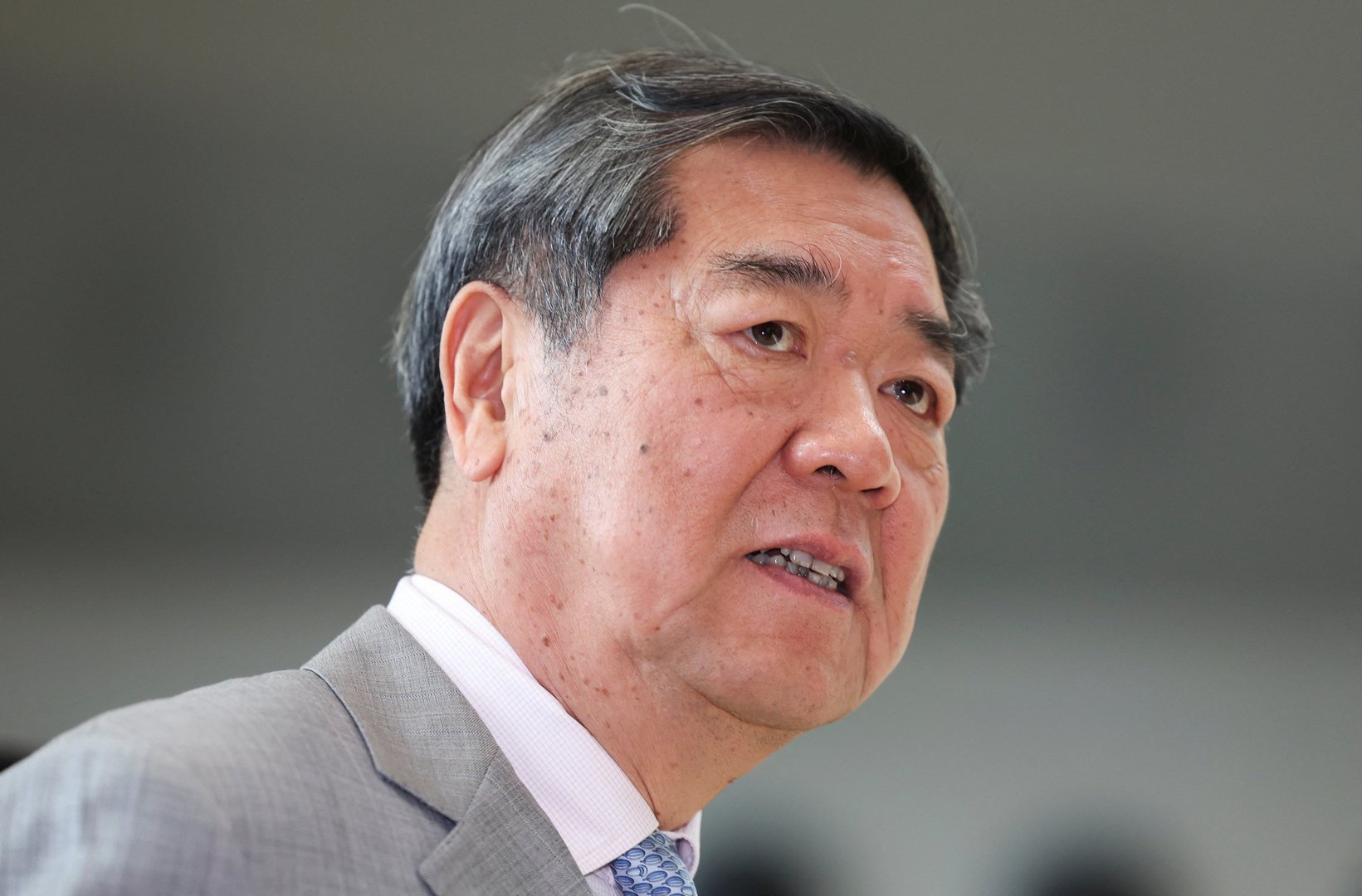
He Lifeng tells summit the city must strengthen ties with China’s economy as Hong Kong’s listings surge to US$26.8 billion in 2025
China’s Vice Premier He Lifeng addressed the Global Financial Leaders’ Investment Summit in Hong Kong on Tuesday, asserting that the city must bolster economic and financial cooperation with the mainland to secure its future as a global financial centre.
Speaking via video link, He declared that “Hong Kong is destined for significant historical development opportunities.
Its future is bright.”
He said that by aligning more closely with China’s development plans and incentivising deeper financial integration, Hong Kong could more effectively reclaim its standing in world capital markets.
“I hope Hong Kong can grasp the opportunities and proactively deepen its connection with the country’s development plans,” he added.
The comments come as Hong Kong’s capital markets display notable strength in 2025. According to Dealogic data, the city welcomed 80 initial public offerings in the first ten months of the year, raising US$26.8 billion—nearly triple the comparable period in 2024—and overtaking both New York and Nasdaq (excluding special purpose acquisition companies) as the global top venue for new listings.
Hong Kong’s rebound follows years of reputational challenge stemming from extended COVID-19 border closures and the introduction of national security legislation in 2020. Chief Executive John Lee emphasised at the summit that the resurgence of listings and investor activity signalled a stronger foundation for the city’s financial system.
He Lifeng’s address emphasised three key priorities for Hong Kong: deepening financial reform and innovation, expanding opening-up and cooperation, and integrating with the nation’s wider economic strategy.
He encouraged the city to leverage its status as a bridge between Chinese capital markets and global investors and to embrace the advantages of the Greater Bay Area and other national initiatives.
As the mainland and Hong Kong enhance capital-market linkages, regulatory coordination and cross-border financing mechanisms, the vice-premier’s rhetoric signals Beijing’s intent to enlist Hong Kong more fully in its broader growth and global-finance agenda.
With global investor attention in the city renewed, the prospects for Hong Kong’s next chapter are shaped by both domestic reform and international confidence.
Speaking via video link, He declared that “Hong Kong is destined for significant historical development opportunities.
Its future is bright.”
He said that by aligning more closely with China’s development plans and incentivising deeper financial integration, Hong Kong could more effectively reclaim its standing in world capital markets.
“I hope Hong Kong can grasp the opportunities and proactively deepen its connection with the country’s development plans,” he added.
The comments come as Hong Kong’s capital markets display notable strength in 2025. According to Dealogic data, the city welcomed 80 initial public offerings in the first ten months of the year, raising US$26.8 billion—nearly triple the comparable period in 2024—and overtaking both New York and Nasdaq (excluding special purpose acquisition companies) as the global top venue for new listings.
Hong Kong’s rebound follows years of reputational challenge stemming from extended COVID-19 border closures and the introduction of national security legislation in 2020. Chief Executive John Lee emphasised at the summit that the resurgence of listings and investor activity signalled a stronger foundation for the city’s financial system.
He Lifeng’s address emphasised three key priorities for Hong Kong: deepening financial reform and innovation, expanding opening-up and cooperation, and integrating with the nation’s wider economic strategy.
He encouraged the city to leverage its status as a bridge between Chinese capital markets and global investors and to embrace the advantages of the Greater Bay Area and other national initiatives.
As the mainland and Hong Kong enhance capital-market linkages, regulatory coordination and cross-border financing mechanisms, the vice-premier’s rhetoric signals Beijing’s intent to enlist Hong Kong more fully in its broader growth and global-finance agenda.
With global investor attention in the city renewed, the prospects for Hong Kong’s next chapter are shaped by both domestic reform and international confidence.