Beijing expands capabilities in aerospace and underwater domains as it seeks to close the technological gap with the West
China is rapidly advancing across multiple high-tech fronts—from reusable-rocket development to deep-sea exploration and polar research—reflecting a concerted effort to close the technological gap with established Western leaders.
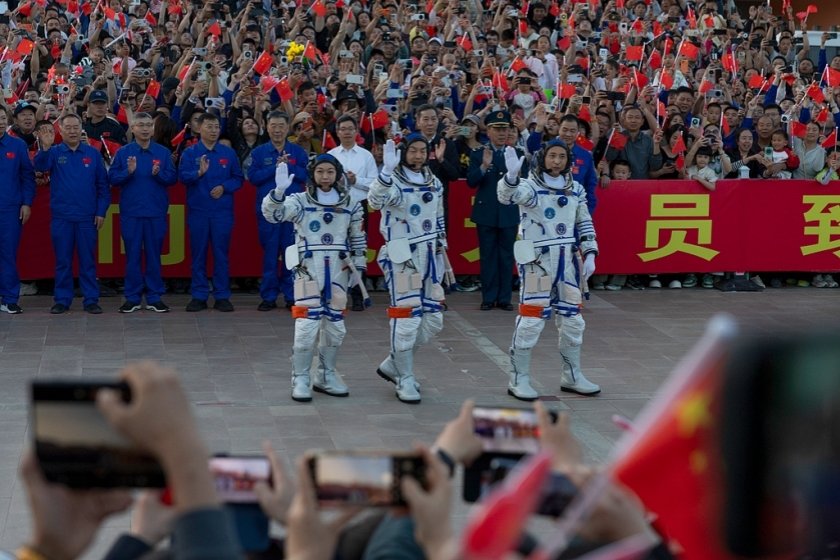
In the aerospace sector, Chinese private and state-backed firms are making significant strides.
A recent test of the Tianlong-3 reusable rocket included a full-scale first-stage thrust test that surpassed 1,000 tonnes, signifying a material leap in logistically scalable launch capability.
Analysts at the United States Space Force have voiced concern at Beijing’s speed, particularly in sectors that underpin modern military and commercial space operations.
Under the sea, China’s 14th Five-Year Plan emphasises deep-sea technologies and strategic presence in the Arctic, with the concept of an “Ice Silk Road” among the new infrastructural aims.
China is deploying autonomous underwater vehicles, seafloor monitoring systems and support platforms to assert its ambitions in the global marine technology domain.
The navigation-satellite sector presents a parallel front: after the “Yinhe incident” exposed vulnerability to external positioning systems, China developed its BeiDou system and is now promoting global uptake.
Beijing sees satellite navigation, launch logistics and maritime technology as interconnected pillars in its drive for national-security autonomy and industrial leadership.
These efforts come amid broader geopolitical dynamics.
As Beijing invests billions into dual-use technologies—combining commercial applications with strategic objectives—the West is watching closely.
The rapid development of reusable rockets, large satellite constellations and deep-sea infrastructure highlight China’s ambition to shift from technology buyer to technology architect.
In short, China’s comprehensive push into aerospace, navigation and ocean technology reflects a long-term strategy: to reshape competitive advantage, assure independent access to critical domains and assert a more multipolar technological order.
In the aerospace sector, Chinese private and state-backed firms are making significant strides.
A recent test of the Tianlong-3 reusable rocket included a full-scale first-stage thrust test that surpassed 1,000 tonnes, signifying a material leap in logistically scalable launch capability.
Analysts at the United States Space Force have voiced concern at Beijing’s speed, particularly in sectors that underpin modern military and commercial space operations.
Under the sea, China’s 14th Five-Year Plan emphasises deep-sea technologies and strategic presence in the Arctic, with the concept of an “Ice Silk Road” among the new infrastructural aims.
China is deploying autonomous underwater vehicles, seafloor monitoring systems and support platforms to assert its ambitions in the global marine technology domain.
The navigation-satellite sector presents a parallel front: after the “Yinhe incident” exposed vulnerability to external positioning systems, China developed its BeiDou system and is now promoting global uptake.
Beijing sees satellite navigation, launch logistics and maritime technology as interconnected pillars in its drive for national-security autonomy and industrial leadership.
These efforts come amid broader geopolitical dynamics.
As Beijing invests billions into dual-use technologies—combining commercial applications with strategic objectives—the West is watching closely.
The rapid development of reusable rockets, large satellite constellations and deep-sea infrastructure highlight China’s ambition to shift from technology buyer to technology architect.
In short, China’s comprehensive push into aerospace, navigation and ocean technology reflects a long-term strategy: to reshape competitive advantage, assure independent access to critical domains and assert a more multipolar technological order.