Tencent, AgiBot and other firms appoint young research leaders as competition intensifies in artificial intelligence and robotics.
Chinese technology companies are increasingly elevating millennials and even Gen Z researchers to chief scientist roles, signalling a generational shift in leadership as the country intensifies its push into artificial intelligence and robotics.
Among the most closely watched appointments is Vinces Yao Shunyu, who turns 28 this year.
A former OpenAI researcher, Yao joined Tencent Holdings in December as chief AI scientist under the chief executive’s office, reporting directly to company president Martin Lau Chi-ping.
His arrival underscores Tencent’s ambition to strengthen its core AI research capabilities amid fierce global competition.
A graduate of Princeton University and Tsinghua University, Yao was a core contributor to OpenAI’s early AI agent projects, including systems known as Operator and Deep Research.
In January, his first paper co-authored after joining Tencent was published, arguing that “context learning” should be placed at the centre of future model design to optimise artificial intelligence systems.
Tencent continues to retain veteran expertise alongside its younger recruits.
Zhang Zhengyou, a renowned computer vision specialist who joined the company in 2018 after two decades at Google, remains chief scientist.
Zhang received the Helmholtz Prize in 2013 for the Zhang Camera Calibration Method, a widely used technique that significantly advanced three-dimensional computer vision.
Other companies have followed a similar pattern.
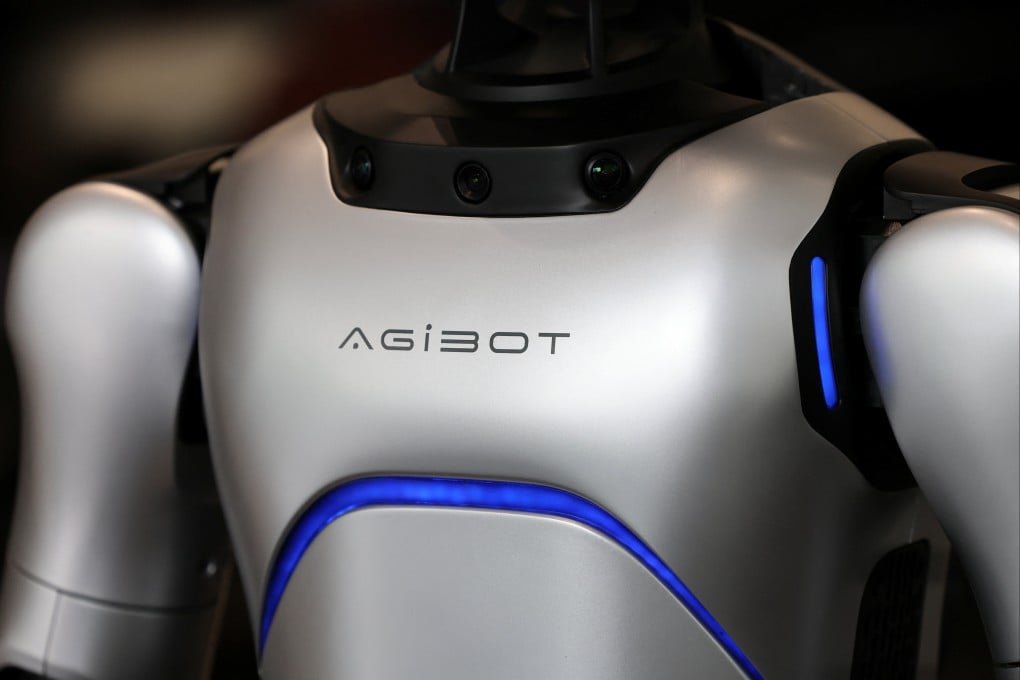
PrimeBot, the robotics arm under Shanghai-listed Swancor Advanced Materials and now controlled by robotics unicorn AgiBot, named Peking University professor Dong Hao as chief scientist in early January.
Born after 1990, Dong is a tenured associate professor at Peking University’s School of Computer Science and earned his doctorate at Imperial College London.
AgiBot itself appointed Luo Jianlan, 33, as chief scientist last year.
Luo previously worked at Google X and Google DeepMind, collaborating closely with prominent AI researcher Sergey Levine, co-founder of San Francisco-based start-up Physical Intelligence.
The wave of appointments reflects China’s broader strategy to cultivate world-class research talent at a younger age, empowering emerging scientists to steer breakthroughs in foundation models, embodied intelligence and robotics.
Industry analysts note that younger leaders, often trained abroad and experienced in leading-edge laboratories, are being entrusted with greater autonomy as companies seek to accelerate innovation cycles and compete with global peers.
The trend suggests that generational renewal is becoming a defining feature of China’s next phase of technological development, particularly in disciplines where rapid iteration and experimental thinking are central to progress.
Among the most closely watched appointments is Vinces Yao Shunyu, who turns 28 this year.
A former OpenAI researcher, Yao joined Tencent Holdings in December as chief AI scientist under the chief executive’s office, reporting directly to company president Martin Lau Chi-ping.
His arrival underscores Tencent’s ambition to strengthen its core AI research capabilities amid fierce global competition.
A graduate of Princeton University and Tsinghua University, Yao was a core contributor to OpenAI’s early AI agent projects, including systems known as Operator and Deep Research.
In January, his first paper co-authored after joining Tencent was published, arguing that “context learning” should be placed at the centre of future model design to optimise artificial intelligence systems.
Tencent continues to retain veteran expertise alongside its younger recruits.
Zhang Zhengyou, a renowned computer vision specialist who joined the company in 2018 after two decades at Google, remains chief scientist.
Zhang received the Helmholtz Prize in 2013 for the Zhang Camera Calibration Method, a widely used technique that significantly advanced three-dimensional computer vision.
Other companies have followed a similar pattern.
PrimeBot, the robotics arm under Shanghai-listed Swancor Advanced Materials and now controlled by robotics unicorn AgiBot, named Peking University professor Dong Hao as chief scientist in early January.
Born after 1990, Dong is a tenured associate professor at Peking University’s School of Computer Science and earned his doctorate at Imperial College London.
AgiBot itself appointed Luo Jianlan, 33, as chief scientist last year.
Luo previously worked at Google X and Google DeepMind, collaborating closely with prominent AI researcher Sergey Levine, co-founder of San Francisco-based start-up Physical Intelligence.
The wave of appointments reflects China’s broader strategy to cultivate world-class research talent at a younger age, empowering emerging scientists to steer breakthroughs in foundation models, embodied intelligence and robotics.
Industry analysts note that younger leaders, often trained abroad and experienced in leading-edge laboratories, are being entrusted with greater autonomy as companies seek to accelerate innovation cycles and compete with global peers.
The trend suggests that generational renewal is becoming a defining feature of China’s next phase of technological development, particularly in disciplines where rapid iteration and experimental thinking are central to progress.