Four-day Asia-Pacific ophthalmology conference wraps with over eleven thousand experts advancing global eye care collaboration and innovation
The four-day Asia-Pacific Academy of Ophthalmology (APAO) Congress concluded successfully in Hong Kong last week, marking a major milestone for the international ophthalmic community.
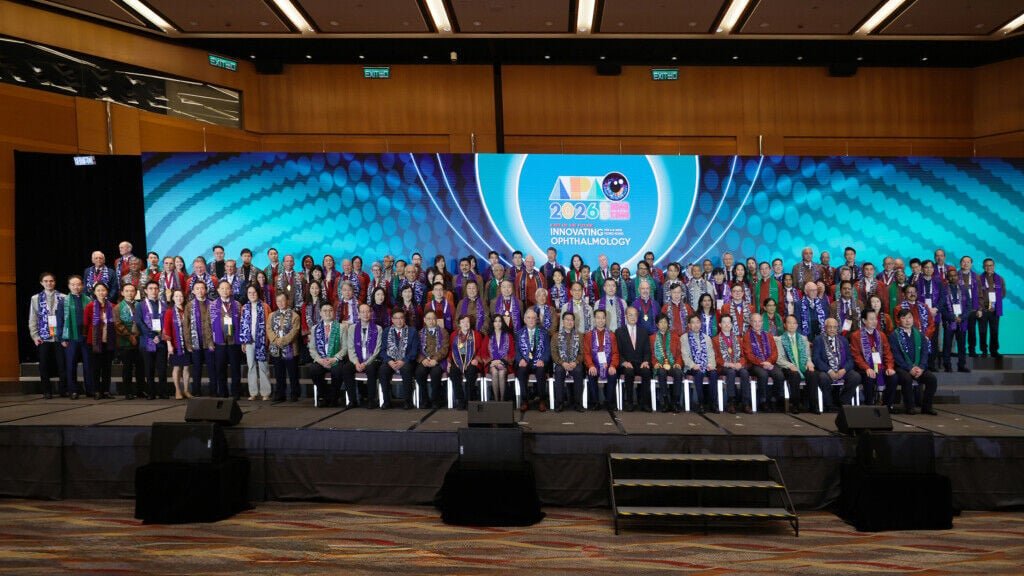
The event, which ran from February five to eight, 2026, brought together more than eleven thousand ophthalmologists, vision scientists and eye care professionals from 111 countries and regions, reaffirming Hong Kong’s role as a global hub for clinical and scientific exchange in eye health.
Organised by the APAO and co-hosted with the Hong Kong Ophthalmological Society and the College of Ophthalmologists of Hong Kong, the congress featured an extensive agenda under the theme “Eyes on the Future: Innovating Ophthalmology.” Participants engaged in over 1,200 specialised sessions spanning 19 subspecialties, covering foundational clinical areas such as cataract, cornea, glaucoma and retina, as well as emerging topics like artificial intelligence, digital innovation and virtual health.
More than 1,000 distinguished speakers delivered presentations, lectures and discussions aimed at advancing the clinical application and translational impact of cutting-edge technologies.
Delegates explored both established and novel approaches to diagnosis, treatment and research, generating insight that contributed to a dynamic and collaborative scientific environment.
A highlight of the congress was the formation of Hong Kong’s first Interdisciplinary Myopia Control Expert Task Force, involving four major local ophthalmic organisations.
The task force will integrate academic research, clinical services and public education to propose comprehensive myopia control strategies to the Hong Kong Special Administrative Region government, promoting cost-effective, long-term solutions that leverage advancements such as wearable technology and AI-assisted therapies.
To further strengthen regional cooperation, multiple societies from the Chinese mainland and Hong Kong signed a memorandum of understanding aimed at deepening long-term collaboration in ophthalmology.
The congress also witnessed the establishment of new international bodies including the Global Ophthalmic Artificial Intelligence and Technology Society and the Asia-Pacific Stem Cell and Gene Therapy Society, which aim to accelerate innovation and the clinical translation of advanced treatments across the region and beyond.
APA O 2026’s successful conclusion underscored the value of sustained global collaboration in combating visual impairment and advancing ophthalmic science, while showcasing Hong Kong’s capacity to host major international scientific forums that shape the future of eye care.
The event, which ran from February five to eight, 2026, brought together more than eleven thousand ophthalmologists, vision scientists and eye care professionals from 111 countries and regions, reaffirming Hong Kong’s role as a global hub for clinical and scientific exchange in eye health.
Organised by the APAO and co-hosted with the Hong Kong Ophthalmological Society and the College of Ophthalmologists of Hong Kong, the congress featured an extensive agenda under the theme “Eyes on the Future: Innovating Ophthalmology.” Participants engaged in over 1,200 specialised sessions spanning 19 subspecialties, covering foundational clinical areas such as cataract, cornea, glaucoma and retina, as well as emerging topics like artificial intelligence, digital innovation and virtual health.
More than 1,000 distinguished speakers delivered presentations, lectures and discussions aimed at advancing the clinical application and translational impact of cutting-edge technologies.
Delegates explored both established and novel approaches to diagnosis, treatment and research, generating insight that contributed to a dynamic and collaborative scientific environment.
A highlight of the congress was the formation of Hong Kong’s first Interdisciplinary Myopia Control Expert Task Force, involving four major local ophthalmic organisations.
The task force will integrate academic research, clinical services and public education to propose comprehensive myopia control strategies to the Hong Kong Special Administrative Region government, promoting cost-effective, long-term solutions that leverage advancements such as wearable technology and AI-assisted therapies.
To further strengthen regional cooperation, multiple societies from the Chinese mainland and Hong Kong signed a memorandum of understanding aimed at deepening long-term collaboration in ophthalmology.
The congress also witnessed the establishment of new international bodies including the Global Ophthalmic Artificial Intelligence and Technology Society and the Asia-Pacific Stem Cell and Gene Therapy Society, which aim to accelerate innovation and the clinical translation of advanced treatments across the region and beyond.
APA O 2026’s successful conclusion underscored the value of sustained global collaboration in combating visual impairment and advancing ophthalmic science, while showcasing Hong Kong’s capacity to host major international scientific forums that shape the future of eye care.