Global summit in Hong Kong signals a rebound in investor sentiment—but also marks shifting opportunities for international firms
A sense of relief pervaded this week’s 2025 Global Financial Leaders’ Investment Summit in Hong Kong, as a truce in the Sino-American trade war and a rebound in Chinese markets set a calmer tone.
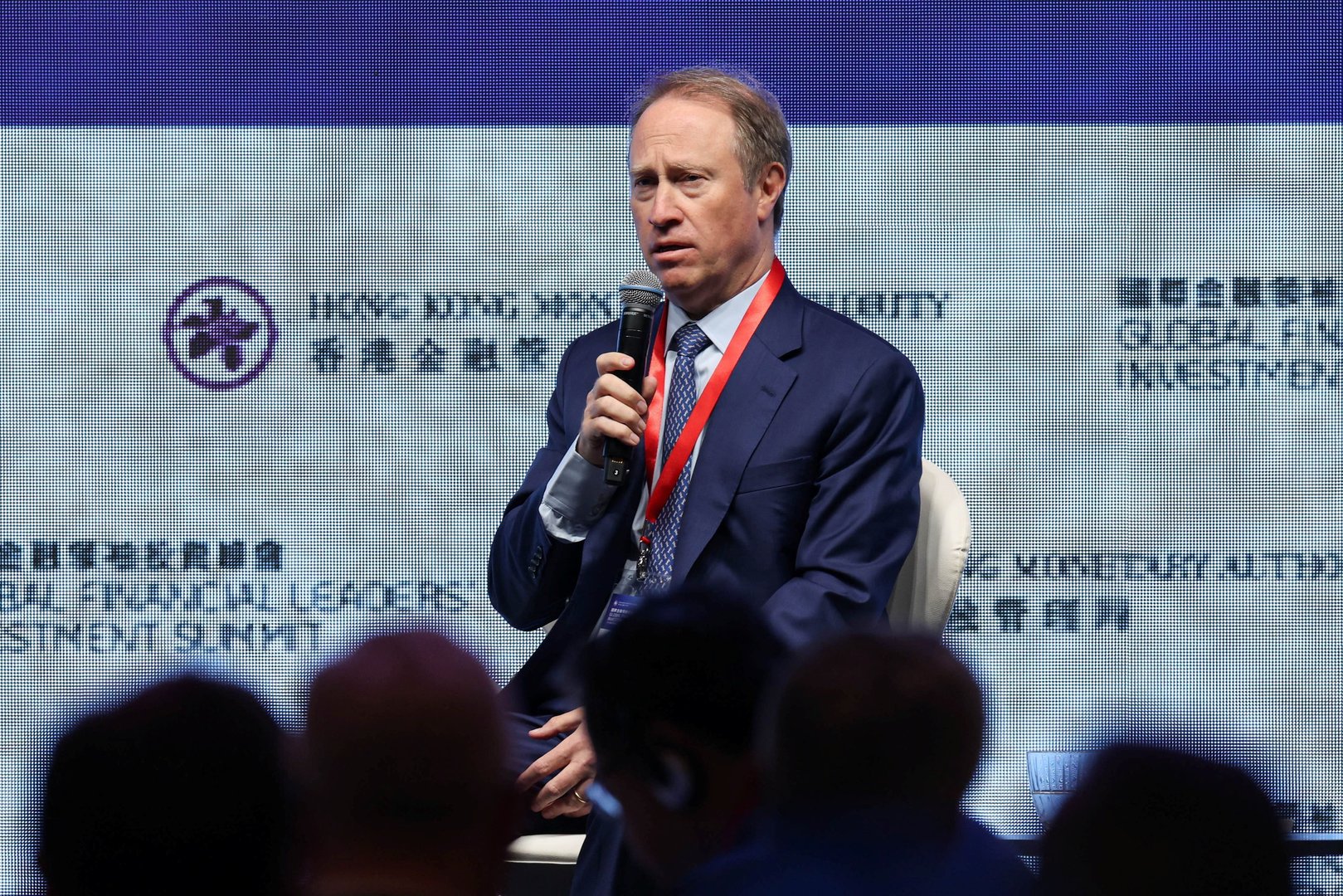
Senior executives from major global firms met in the city to discuss trade, private markets and energy, gathering at the Rosewood hotel and even watching a robot demonstrate boxing at a welcome dinner.
Despite the upbeat atmosphere, the event underscored that the window of opportunity for global firms in Hong Kong may be changing.
Four years ago, when the summit was first held, the aim was to announce that Hong Kong was once again open for business after a period of pandemic isolation and political unrest.
Today, delegates no longer needed to tread lightly around China, but the question has evolved from “Can we be present?” to “How much business can we capture?”
In remarks and commentary during the summit, Chinese authorities reiterated their commitment to strengthening Hong Kong’s role as a financial centre, including through boosting offshore yuan liquidity.
The city’s benchmark Hang Seng Index posted one of the world’s best performances this year, with a gain of 28 per cent, while mainland China’s CSI 300 Index rose by nearly 20 per cent.
Many Western firms remain active in China: cross-border claims by U.S. banks on Chinese residents are near record highs.
Yet the nature of participation is evolving.
The lion’s share of initial public offerings in Hong Kong are now secondary listings of Chinese issuers already traded in New York or mainland exchanges.
These generate lower fees, and the domestic push has shifted more business to Chinese financial firms—one local securities house now sponsors nearly a third of new listings, up from 5 per cent a decade ago.
Challenges persist.
Hong Kong remains heavily dependent on mainland China’s economic fortunes.
The International Monetary Fund expects China’s gross domestic product growth to slow to around 4.2 per cent next year, down from 4.8 per cent this year.
The city’s property market remains weak and consumption sluggish, feeding questions about the depth of opportunity.
For now, Hong Kong is not fading—it is repositioning.
The city remains a gateway for global finance into the Chinese economy, but its role appears more limited than before.
To thrive, multinational banks and asset managers may need to look beyond Hong Kong and the mainland to capture new growth.
The message from this year’s summit appears clear: the era of unlimited access may be over, but a new form of engagement is underway.
Senior executives from major global firms met in the city to discuss trade, private markets and energy, gathering at the Rosewood hotel and even watching a robot demonstrate boxing at a welcome dinner.
Despite the upbeat atmosphere, the event underscored that the window of opportunity for global firms in Hong Kong may be changing.
Four years ago, when the summit was first held, the aim was to announce that Hong Kong was once again open for business after a period of pandemic isolation and political unrest.
Today, delegates no longer needed to tread lightly around China, but the question has evolved from “Can we be present?” to “How much business can we capture?”
In remarks and commentary during the summit, Chinese authorities reiterated their commitment to strengthening Hong Kong’s role as a financial centre, including through boosting offshore yuan liquidity.
The city’s benchmark Hang Seng Index posted one of the world’s best performances this year, with a gain of 28 per cent, while mainland China’s CSI 300 Index rose by nearly 20 per cent.
Many Western firms remain active in China: cross-border claims by U.S. banks on Chinese residents are near record highs.
Yet the nature of participation is evolving.
The lion’s share of initial public offerings in Hong Kong are now secondary listings of Chinese issuers already traded in New York or mainland exchanges.
These generate lower fees, and the domestic push has shifted more business to Chinese financial firms—one local securities house now sponsors nearly a third of new listings, up from 5 per cent a decade ago.
Challenges persist.
Hong Kong remains heavily dependent on mainland China’s economic fortunes.
The International Monetary Fund expects China’s gross domestic product growth to slow to around 4.2 per cent next year, down from 4.8 per cent this year.
The city’s property market remains weak and consumption sluggish, feeding questions about the depth of opportunity.
For now, Hong Kong is not fading—it is repositioning.
The city remains a gateway for global finance into the Chinese economy, but its role appears more limited than before.
To thrive, multinational banks and asset managers may need to look beyond Hong Kong and the mainland to capture new growth.
The message from this year’s summit appears clear: the era of unlimited access may be over, but a new form of engagement is underway.