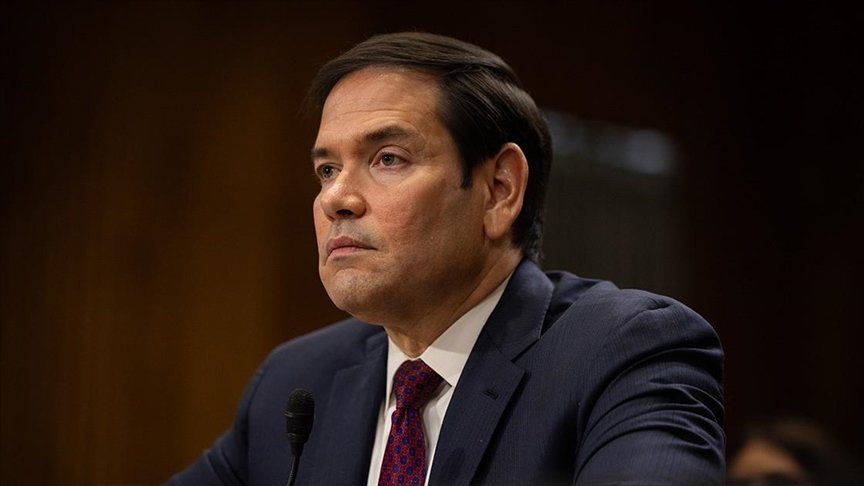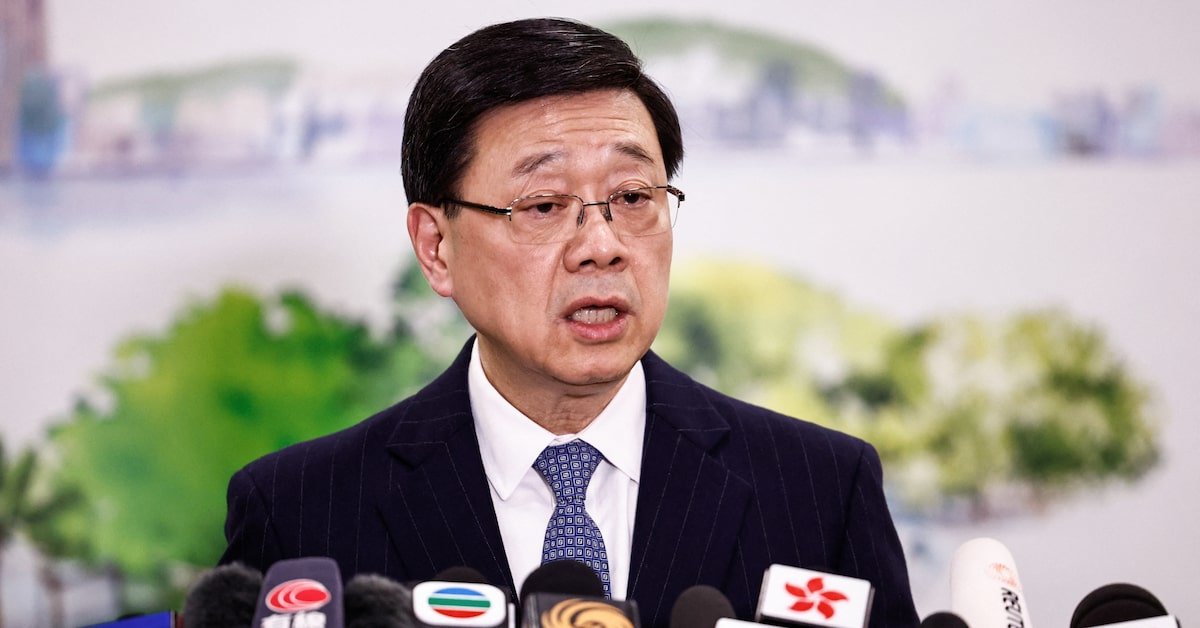
John Lee asserts Jimmy Lai’s long imprisonment under the national security law was deserved, arguing his actions damaged public order and invited foreign sanctions
Hong Kong’s leader, John Lee, publicly defended the 20-year prison sentence imposed on prominent pro-democracy media tycoon Jimmy Lai, saying the punishment was warranted in light of the harm Lai’s activities allegedly caused to Hong Kong and China.

Lee made the remarks on Tuesday as international criticism intensified following Lai’s sentencing under the city’s national security law, emphasising that the verdict upholds local legal principles and addresses threats to social stability.

Lee said Lai had sought foreign intervention and sanctions against China and the Hong Kong Special Administrative Region, conduct he described as seriously damaging to the territory’s interests and public welfare.

He asserted that Lai used his former newspaper, Apple Daily, to foment division, incite hatred and undermine national security, arguing that the sentence demonstrated the rule of law and delivered justice for the broader community.

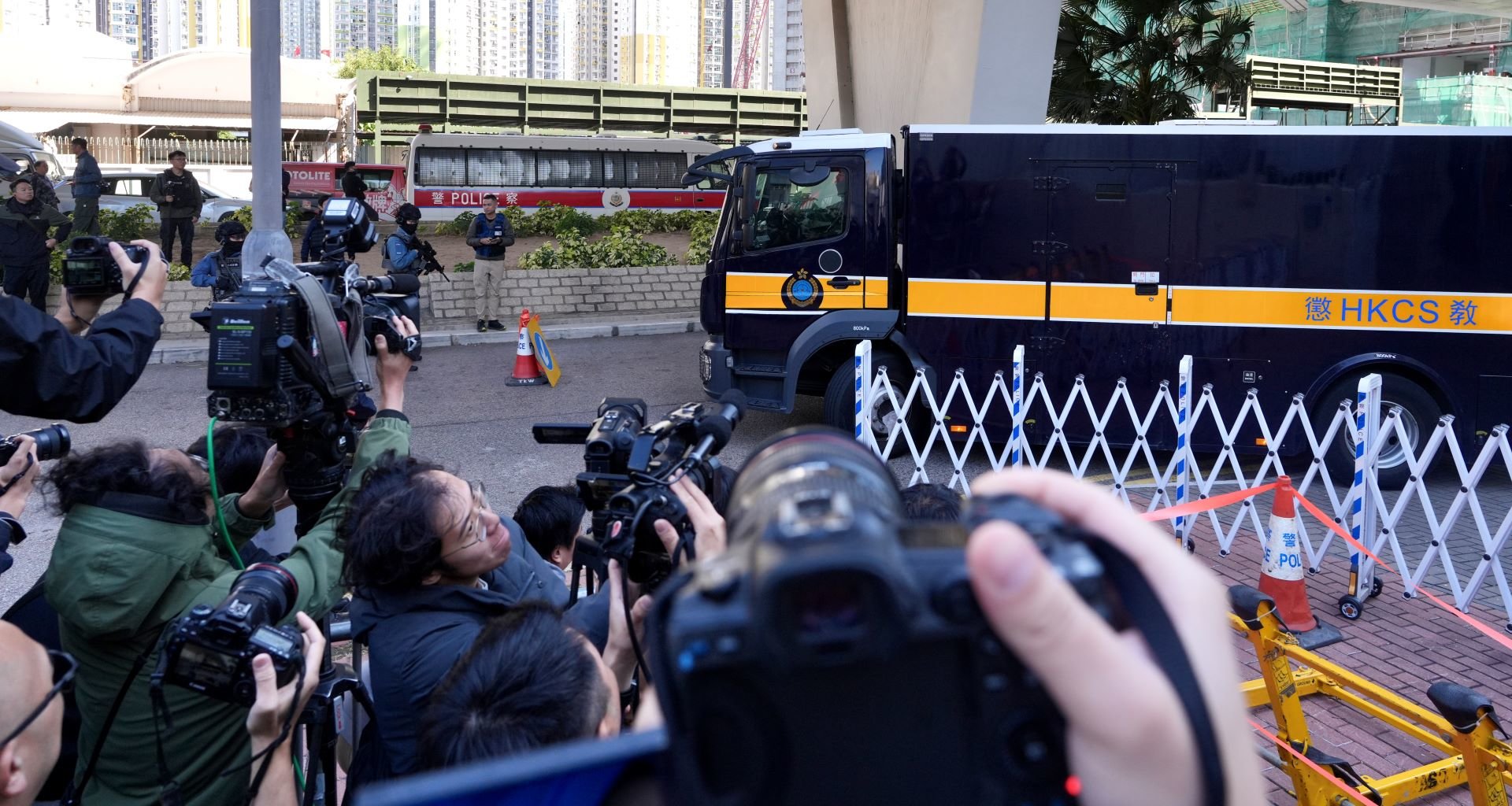
Lai, 78, was sentenced on February 9 to 20 years’ imprisonment after being convicted of conspiracy to collude with foreign forces and to publish seditious material, in landmark proceedings under the 2020 national security law.

The ruling drew strong international reactions, with governments, rights groups and diplomatic bodies characterising the verdict as disproportionate and a significant blow to press freedom, though Hong Kong and mainland authorities have maintained the process was lawful and necessary.

In defending the outcome, Lee reiterated that the legal process was conducted openly and in accordance with evidence and statutes, dismissing assertions that Lai’s prosecution was politically motivated.

He said safeguarding national security remained a paramount duty of the Hong Kong government, and that actions threatening sovereignty would be met with firm enforcement.

Lee’s comments underscore a stark divergence between local authorities’ interpretation of the case and the international community’s concerns about civil liberties and the legal environment in the territory.

China condemns London’s broadened British National (Overseas) visa pathway as interference following pro-democracy activist’s 20-year prison term
China has sharply criticised the United Kingdom’s expansion of its British National (Overseas) visa scheme for Hong Kong residents, dismissing the policy as “despicable and reprehensible” and accusing London of interfering in its internal affairs.

The diplomatic dispute comes in the wake of the 20-year prison sentence handed down to pro-democracy activist and media tycoon Jimmy Lai by Hong Kong authorities under the national security law, a case that has drawn international attention and condemnation.

The UK government confirmed on February 9 that it had widened eligibility for its BNO visa route, allowing children of status holders who were under eighteen at the time of Hong Kong’s 1997 handover to apply independently of their parents and enabling their partners and children to join them in Britain.

Officials framed the change as a moral response to the continuing deterioration of rights and freedoms in Hong Kong and an expression of the United Kingdom’s historic commitment to the people of the former colony.

Under the expanded scheme, the government estimates that roughly twenty-six thousand additional Hongkongers could relocate to the UK over the next five years, with pathways to long-term settlement.

Beijing’s Foreign Ministry and the Chinese Embassy in London reacted with unusually strong diplomatic rhetoric, characterising the UK’s move as a politically motivated intervention in China’s domestic affairs.

Official statements described the visa expansion as an attempt to undermine China’s sovereignty and disparaged the initiative as tainted by ‘‘malicious intentions’’ and remnants of a colonial mindset.

Chinese authorities have also defended Lai’s prosecution, asserting that the sentence upholds national security and the rule of law, and have urged foreign governments to respect China’s legal sovereignty.

The dispute follows wide international concern over Lai’s sentencing, which has been condemned by Western governments and human rights organisations as disproportionate and politically driven.

UK leaders have raised Lai’s case in dialogue with Chinese officials and called for his humanitarian release, even as they pursue deeper engagement on trade and bilateral issues.

London has reiterated that the expanded BNO visa scheme serves both humanitarian and strategic objectives by supporting individuals facing rights restrictions in Hong Kong while reinforcing the United Kingdom’s longstanding legal and moral obligations under the 1984 Sino-British Joint Declaration.

The clash over the visa policy underscores broader tensions in UK-China relations at a time of intensifying geopolitical competition and diverging approaches to governance and civil liberties.
A Chinese foreign ministry spokesperson stated that the 78-year-old deserves severe punishment for national security violations.


The lawsuit questions if tech companies can be held responsible for addiction-related harm to minors.

Tour operators and travellers report robust interest in journeys to Japan even as authorities urge caution amid Beijing–Tokyo tensions
Hong Kong residents continue to book travel to Japan and express strong interest in visiting the country even after authorities issued advisories urging heightened vigilance and caution.

The Hong Kong Security Bureau updated its outbound travel alert for Japan in mid-November, advising residents planning trips or already in the country to stay alert and monitor local safety information following China’s broader advisory that urged its citizens to avoid non-essential travel to Japan amid a diplomatic row over comments by Japanese leaders on Taiwan and reports of incidents involving Chinese nationals.

Travel numbers have remained resilient, with carriers operating normal flight schedules and travel agencies reporting sustained demand, particularly driven by favourable exchange rates and popular destinations such as ski resorts and cultural hubs.

Tourism industry representatives say that while mainland Chinese bookings have softened due to cancellations and advisories, Hong Kong-based interest has not seen a significant drop, and travel fairs continue to show Japan as a top choice for outbound leisure trips.

The weak Japanese yen and competitive flight schedules have further bolstered confidence among holidaymakers.

Forecasts for the coming peak seasons, including Lunar New Year and cherry-blossom periods, indicate continued strong demand, with forward bookings stable and price promotions in place to attract visitors.

Local tourism authorities have emphasised the importance of personal safety planning and the availability of flexible ticketing options, even as geopolitical tensions persist between Beijing and Tokyo.
China underscores its national security policy and legal framework for Hong Kong in the wake of a landmark sentencing under the territory’s security law
The Chinese government has underscored its national security policy and legal framework for Hong Kong in the aftermath of a court’s decision to sentence prominent pro-democracy media figure Jimmy Lai to twenty years in prison under the city’s national security law.

On February 9, a Hong Kong court imposed the harshest sentence to date under the 2020 National Security Law, finding Lai guilty of conspiring to collude with foreign forces and to publish seditious material after a lengthy trial that concluded with convictions in December 2025. The verdict and sentence have drawn global attention as emblematic of Beijing’s rigorous enforcement of security provisions in the territory.
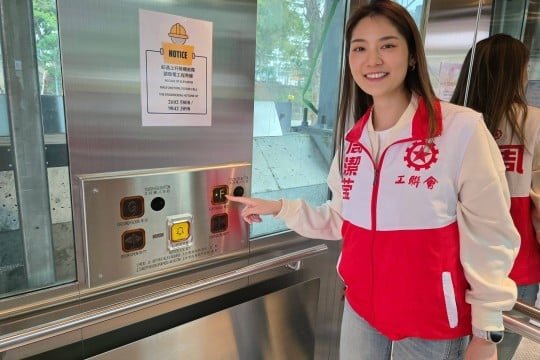
China’s broader national security strategy, articulated in a comprehensive national security white paper released by the State Council Information Office in May 2025, frames national security as integral to safeguarding its sovereignty, development, and social stability in a volatile global environment.

The document outlines a holistic security concept that encompasses political, economic, military and societal dimensions, and reflects the leadership’s emphasis on strengthening legal and institutional mechanisms to support these aims.

Hong Kong authorities and mainland officials have publicly defended the verdict against Lai as a lawful application of the security law and essential to preserving national stability, rejecting international criticism as interference in internal affairs.

This position aligns with Beijing’s published security doctrine, which positions strict enforcement as a cornerstone of its legal order and governance in the Hong Kong Special Administrative Region.

The national security law, enacted in June 2020 by China’s National People’s Congress and applied in Hong Kong, criminalizes secession, subversion, terrorism and collusion with foreign powers, and continues to shape the legal landscape of the city.

The leadership’s reaffirmation of its security policy through official documents aims to reinforce this framework amid ongoing diplomatic and human rights debates.
Pro-democracy media tycoon receives longest sentence yet under China’s national security law, prompting widespread international criticism and concern over press freedoms
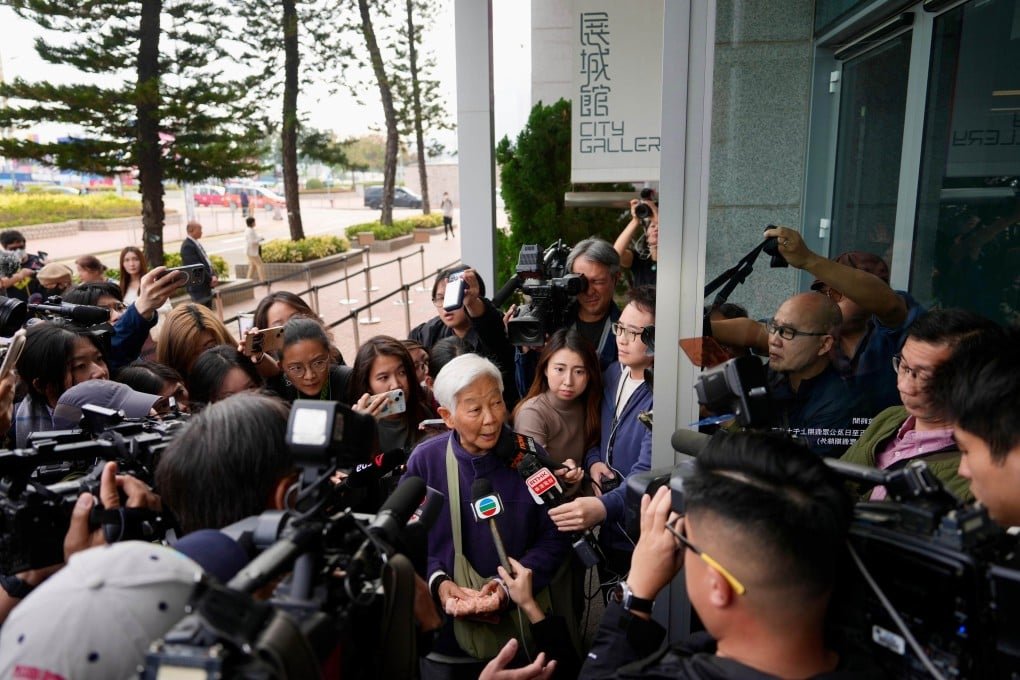
Jimmy Lai, the 78-year-old former Hong Kong media tycoon and prominent critic of Beijing, was sentenced on Monday to 20 years in prison in one of the most severe punishments to date under Hong Kong’s national security law.

Lai, founder of the now-defunct pro-democracy newspaper Apple Daily, was convicted in December on multiple charges, including conspiracy to collude with foreign forces and conspiracy to publish seditious materials, in a trial that has drawn intense international attention.

Lai’s sentencing on February 9 follows years of legal battles and his arrest in 2020 under the national security legislation imposed by Beijing.

The law, enacted in 2020 in response to widespread pro-democracy protests, has been used to suppress dissent and significantly weaken civil liberties in the city.

Lai’s conviction and lengthy prison term — the harshest yet under the law — come after a trial heard by a panel of judges and no jury, and after prosecutors presented hundreds of articles from his former newspaper as evidence of alleged wrongdoing.

The case has drawn strong reactions from governments and rights groups worldwide.

Leaders from the United States, United Kingdom, European Union and United Nations criticised the sentence as disproportionate and harmful to press freedom, with calls for Lai’s release and urgent diplomatic responses.

Human rights organisations labelled the punishment a severe blow to media independence in Hong Kong, highlighting concerns that the national security framework effectively criminalises free expression and political advocacy.

Chinese and Hong Kong authorities defended the ruling, asserting that the sentence upheld national security and the rule of law.

Hong Kong Chief Executive John Lee described Lai’s actions as threatening social order, while Beijing’s foreign ministry reiterated that the case is a matter of internal sovereignty and warned against foreign interference.

Lai’s family expressed deep concern for his health amid the long prison term, noting his age and existing medical conditions.

Lai’s Apple Daily, once a symbol of press freedom in Hong Kong, was forced to shut in 2021 after police actions and asset freezes crippled the outlet.

Lai’s lengthy sentence underscores the dramatic shift in Hong Kong’s legal and political landscape since the imposition of the national security law, and it has become a focal point in broader debates about civil liberties and Beijing’s authority over the city.
In a joint China-Myanmar-Thailand operation to dismantle gambling and fraud hubs in Myawaddy, Myanmar, Chinese police forces have escorted more than 1,500 criminal suspects back to China, according to Ministry of Public Security (MPS) on Monday, marking a phased achievement in the cross-order crackdown.

Chinese electric vehicle maker introduces seamless in-app charging payments in Hong Kong with plans to roll out across Southeast Asia and beyond
Chinese electric vehicle manufacturer XPeng has introduced a new integrated charging payment service in Hong Kong, enabling drivers to start, end and pay for EV charging directly within the official XPeng mobile application.

The service, launched on February nine, marks a significant step in XPeng’s strategy to enhance user convenience across its charging ecosystem and support the company’s broader global ambitions.

XPeng has partnered with Ant International’s payment arm Antom, which provides the digital payment infrastructure that underpins the functionality and enables users to complete transactions using AlipayHK.

The new solution allows drivers to scan a QR code at a charging pile or use the in-app interface to manage the entire charging session, offering Hong Kong EV owners a smoother and more efficient experience.

XPeng’s charging services in Hong Kong are initially integrated with networks operated by partners including Cornerstone Technologies and EV Power, covering more than 1,600 public chargers.

Additional payment options, including credit cards and a broader set of local digital wallets, are expected to be introduced soon as part of the rollout.

The company has framed the initiative as the first phase of a wider effort to standardise and simplify charging payments for electric vehicle users globally, positioning seamless ‘‘Search · Locate · Charge · Pay’’ capability as a key competitive offering in the smart mobility space.

The Hong Kong launch builds on XPeng’s expanding presence in the city — earlier establishing charging infrastructure and a tech experience centre — and on its regional efforts to grow EV charging accessibility across the Asia-Pacific.

Later in 2026, the payment service platform will be extended to other key markets, including Singapore, Thailand, Malaysia and Indonesia, with support for local payment methods like DANA, Touch ’n Go eWallet and TrueMoney.

Antom’s global payment ecosystem, which integrates more than 300 payment methods across over 200 markets and supports acceptance in more than 100 currencies, will underpin this international expansion, enabling XPeng to deliver a unified charging experience for drivers in multiple countries.

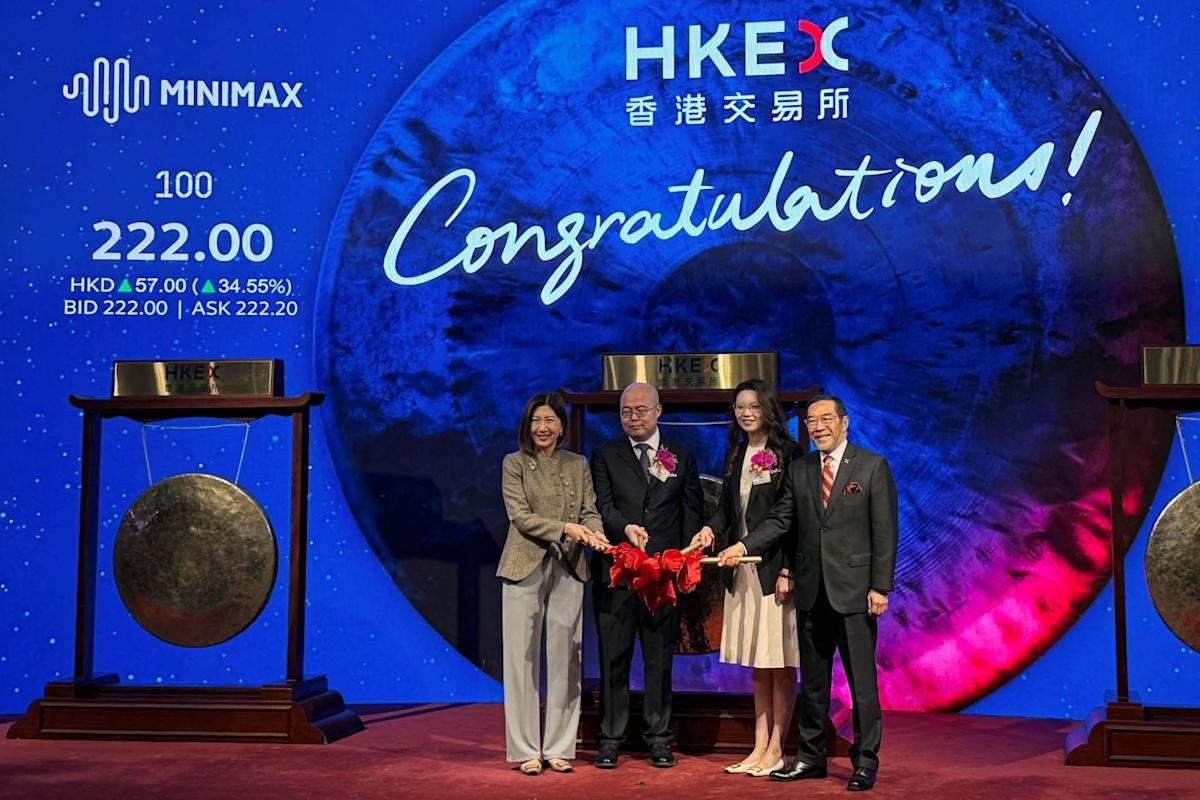
Chinese AI chip designer’s debut in Hong Kong sees limited early price movement despite strong fundraising and industry backing
A Chinese artificial intelligence chipmaker that raised substantial capital through a Hong Kong initial public offering saw its shares trade without significant movement on debut, reflecting a cautious mood among public market investors for early-stage tech listings.

Axera Semiconductor, a fabless designer of AI inference system-on-chips for on-device and edge computing applications, offered 104.9 million H-shares at HK$28.20 each, raising nearly HK$3 billion to support technology development, product expansion and broader commercial reach amid fast-growing demand for low-latency AI processing outside central data centers.

The company’s business has drawn backing from prominent venture investors and cornerstone subscribers including major technology groups, underlining confidence in its long-term potential.

Founded in 2019, Axera’s portfolio targets visual perception and smart vehicle segments, with the firm citing leadership in mid-to-high-end visual edge AI chip shipments in 2024. However, its Nasdaq-listed stock trading data show that early trading on the Hong Kong Stock Exchange has been muted, with the share price remaining effectively flat as investors weigh prospects for growth against typical early-stage financial losses and the capital-intensive nature of chip development.

The performance is being watched closely as a signal of how public markets value high-growth, deep-tech companies that are still building out revenue and seeking paths to profitability, and could influence appetite for future listings in the sector.
Jimmy Lai’s 20-year term and related jailings underscore the sharp erosion of press freedoms under China’s national security framework
The sentencing this week of media mogul Jimmy Lai and former Apple Daily executives to lengthy prison terms under Hong Kong’s national security law has come to symbolise a profound shift in the city’s media environment, illustrating an era in which independent journalism faces acute peril.

Lai, 78, the founder of the once-vibrant Apple Daily — which was forced to shutter in 2021 after government raids and asset freezes — received a 20-year prison sentence on February 9 for conspiracy to collude with foreign forces and publishing seditious material, the harshest penalty handed down under the 2020 National Security Law since its imposition by Beijing.

The decision follows Lai’s conviction last December by a panel of judges without a jury, in proceedings that cited hundreds of articles as evidence of alleged wrongdoing and reflected authorities’ strict interpretation of national security offences.

Lai’s co-defendants, including six former Apple Daily executives and two activists, received severe sentences ranging from around six to ten years after guilty pleas or cooperation with prosecutors.

Their prosecutions and penalties represent the most high-profile media-linked trial in Hong Kong’s recent history and crystallise authorities’ determination to enforce security laws against perceived dissent.

Once a leading voice advocating democratic values and editorial independence, Apple Daily’s closure was part of a broader crackdown on independent media following the introduction of the national security law in response to widescale pro-democracy protests in 2019. Since then, numerous outlets have folded or significantly curtailed operations, and journalists have faced arrests, prosecutions and heightened self-censorship, reshaping the landscape for press freedom in the city.

International reaction to Lai’s sentence has been swift and critical.

Western governments, multilateral bodies and rights groups have described the ruling as disproportionate and damaging to media freedoms, warning that it erodes Hong Kong’s reputation as a global financial centre with an autonomous legal system.

Authorities in Beijing and Hong Kong staunchly defend the convictions as lawful applications of security statutes necessary to safeguard stability and national interest.

Amid this sharp divergence of views, Lai’s sentencing is widely seen as a defining moment in the ongoing contest between press autonomy and state security imperatives in the former British colony.
Listing activity and fundraising rebound strongly in Hong Kong as investor confidence returns and large deals drive momentum
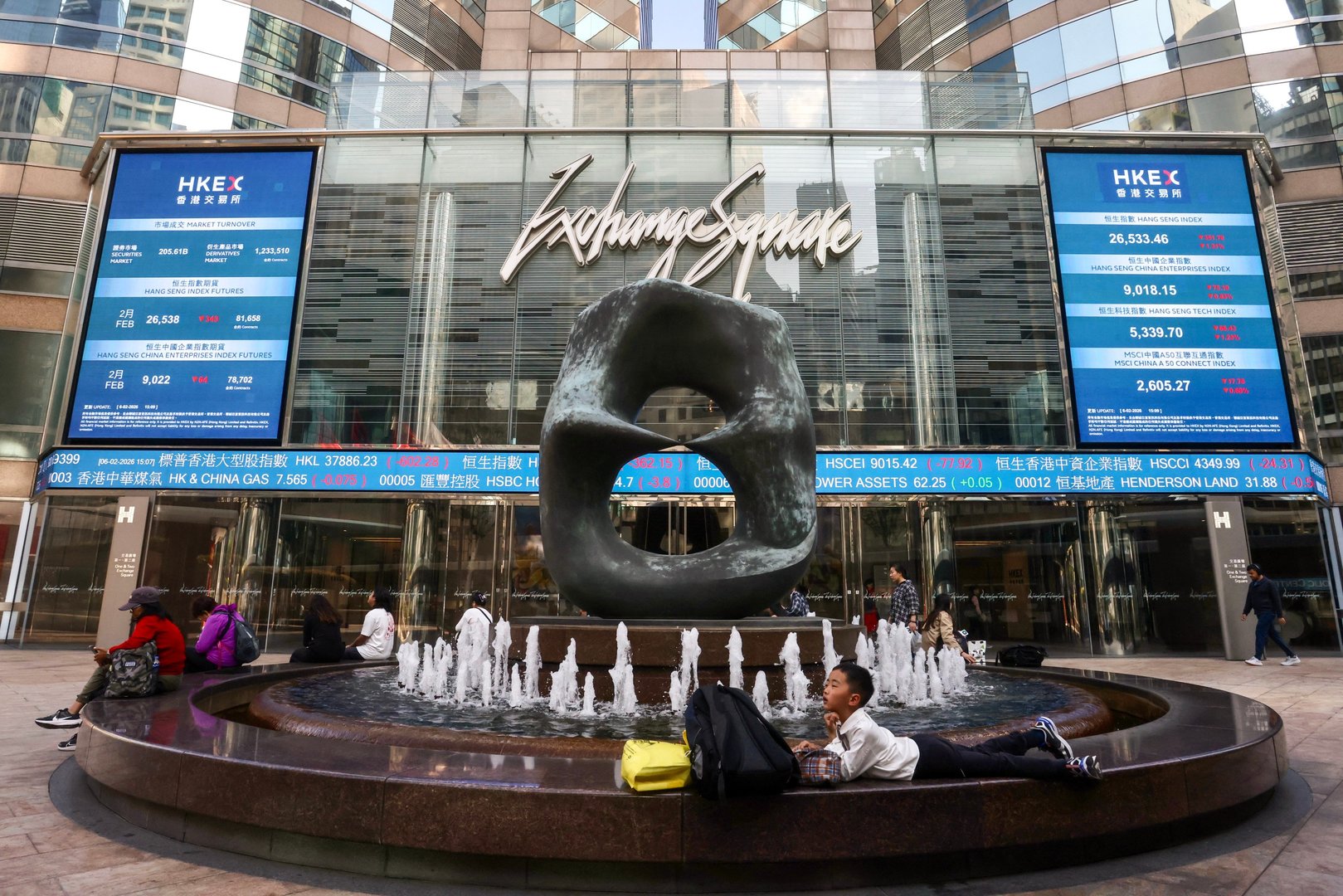
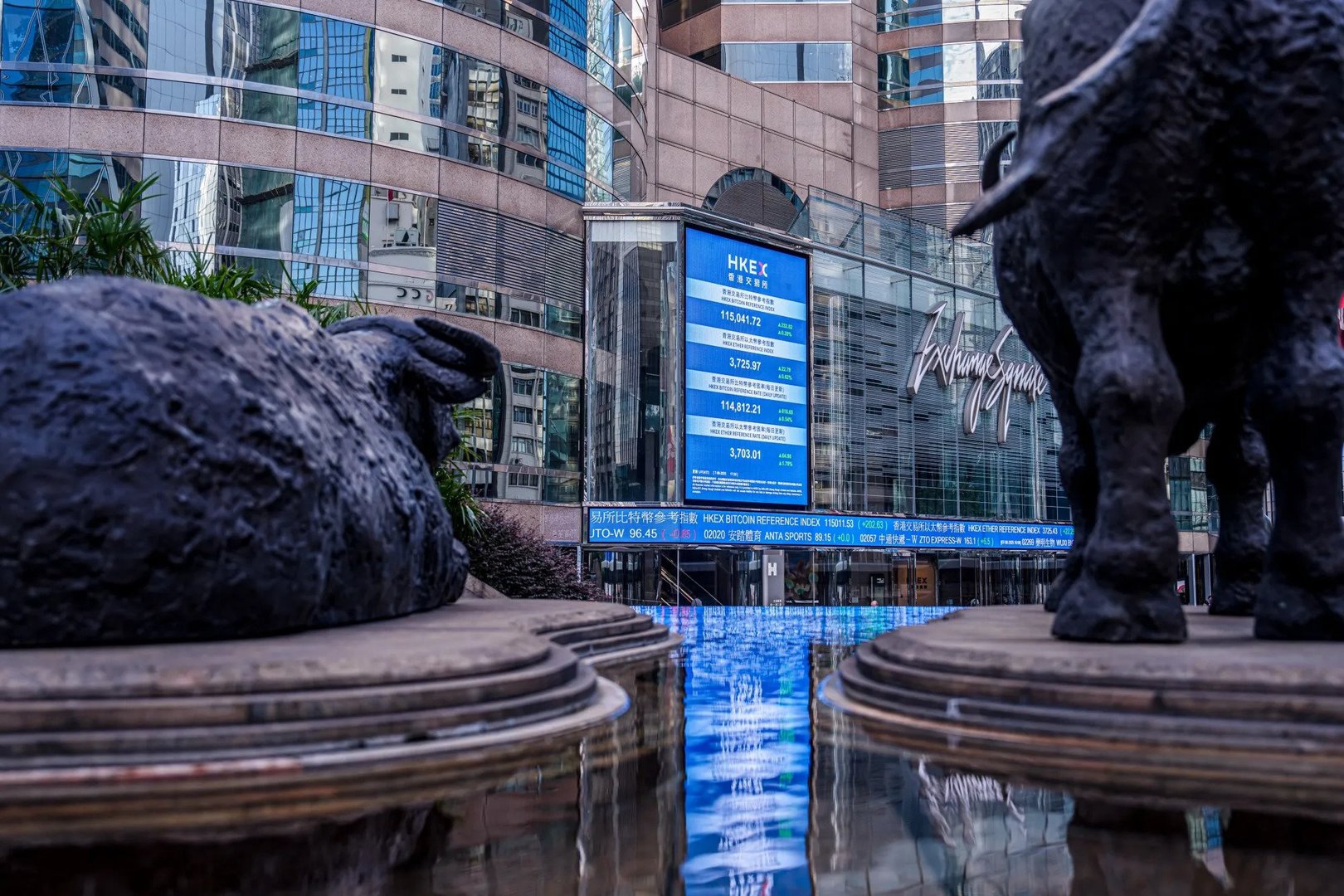
Hong Kong’s initial public offering (IPO) market has mounted a robust recovery, with listing activity and funds raised climbing sharply in recent months, signalling renewed confidence in the city’s capital markets.

The first month of 2026 delivered one of the strongest January performances on record, with a flurry of applications and sizeable capital raised from new listings, underscoring a powerful rebound from the downturn of the early 2020s.

This resurgence aligns with sustained momentum through 2025, when Hong Kong reclaimed its place among the world’s leading venues for public offerings, driven by megadeals and a diverse pipeline of issuers capturing investor interest amid favourable market conditions.

Market data show that in January 2026, a dozen companies listed on the Hong Kong Stock Exchange, collectively securing more than US$4 billion in new capital and marking one of the highest fundraising totals for the month historically.

Listing applications nearly tripled from a year earlier, reflecting strong demand from firms seeking to tap Hong Kong’s deep pools of liquidity.

The pipeline of prospective IPOs now spans sectors including technology, artificial intelligence, biotech and consumer goods, illustrating broadening issuer interest.

The rebound builds on a banner 2025 for the city’s IPO ecosystem.

According to professional services firms, Hong Kong was a major contributor to the global IPO market last year, with funds raised tripling and buoying the territory’s status as a premier fundraising hub.

Large-capital deals, including technology and industrial listings, have helped drive this recovery, while regulatory reforms and efforts to streamline listing processes have supported issuer confidence.

Looking ahead, analysts and advisers expect the momentum to continue into 2026, with forecasts suggesting the market will maintain strong performance supported by diverse sectors and an attractive financing environment.

The revival of Hong Kong’s IPO market not only reflects improving economic sentiment but also reinforces the city’s role as a critical gateway between mainland Chinese firms and global capital, attracting both domestic and international investors eager to participate in new equity offerings.
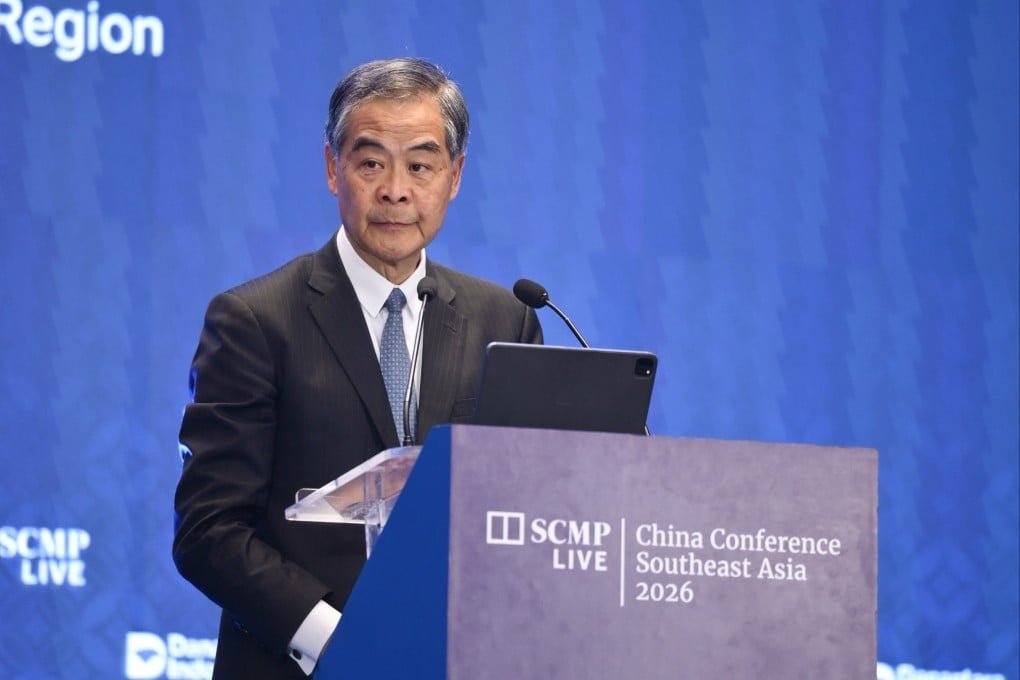
Leung Chun-ying lauds Beijing’s role in providing stability and calls for deeper China–Southeast Asia cooperation amid geopolitical volatility
China offers stability and certainty amid global unpredictability, former Hong Kong chief executive Leung Chun-ying said, describing Beijing as “a pair of steady hands” at a time of heightened geopolitical and economic uncertainty.

Leung, who now serves as vice-chairman of the National Committee of the Chinese People’s Political Consultative Conference, made the remarks in Jakarta on Tuesday during a keynote address at the South China Morning Post’s China Conference: Southeast Asia 2026, where he urged strengthened cooperation between China, Hong Kong and Southeast Asian nations against a backdrop of global turbulence.

China opposes unilateralism and protectionism, he said, and remains committed to upholding multilateral trade systems and the authority of the United Nations even as the global environment becomes increasingly unpredictable.

Leung emphasised that China’s dedication to fairness and justice, and its efforts to build what he described as a ‘‘community with a shared future for humanity,’’ make it a source of economic growth and a much-needed anchor of certainty for markets and states.

He added that, despite diversity and complex challenges in the Southeast Asian region, shared values and resilience have helped countries navigate recent volatility and will continue to underpin broader cooperation for mutual benefit.

Leung’s comments reflect a broader narrative promoted by Beijing that China’s domestic and international policies — including efforts to sustain economic momentum and maintain open engagement — contribute to global stability at a time of shifting power dynamics and mounting external pressures.

His remarks also underscored the importance of enhanced ties between China and Southeast Asian partners in areas such as trade, investment and infrastructural integration to ensure lasting economic and strategic resilience in an uncertain world.
Washington denounces the lengthy prison term for the pro-democracy media figure and calls for his release on compassionate grounds amid international concern
The United States government has sharply criticised the 20-year prison sentence handed down to Hong Kong pro-democracy media tycoon Jimmy Lai, denouncing the punishment as unjust and urging Chinese authorities to grant humanitarian relief.

The U.S. State Department described the sentence imposed on February 9 under Hong Kong’s national security law as ‘‘an unjust and tragic conclusion’’ to the case, asserting that it highlights Beijing’s willingness to silence advocates for fundamental freedoms in the former British colony.

Lai, a 78-year-old founder of the now-defunct pro-democracy newspaper Apple Daily and a vocal critic of China’s Communist Party, was convicted in December 2025 on charges of conspiracy to collude with foreign forces and conspiring to publish seditious articles.

Monday’s sentence — the harshest handed down under the 2020 national security law — has drawn widespread global attention and concern.

U.S. officials said Washington is urging Chinese and Hong Kong authorities to consider granting Lai humanitarian parole given his age and health, framing the case as emblematic of broader fears over diminishing political space and press freedom in Hong Kong.

The statement echoed broader international reactions from Western capitals and multilateral bodies that have criticised the verdict and called for Lai’s release.

The White House’s response underscores ongoing U.S. policy commitments, including under the Hong Kong Human Rights and Democracy Act, which obliges Washington to assess human rights conditions in the territory and consider targeted measures in response to erosion of autonomy.

U.S. lawmakers have repeatedly cited Lai’s case as a measure of the health of Hong Kong’s rule of law and civil liberties.

Beijing and Hong Kong authorities have defended the prosecution and sentence as lawful enforcement of national security protections, rejecting foreign criticism as interference in internal affairs.

Still, Washington’s public denunciation and calls for humanitarian relief highlight sustained geopolitical tensions over Hong Kong’s governance and the treatment of dissidents and independent journalists under the national security framework.
Washington expresses concern that Beijing’s expansion of digital asset initiatives in Hong Kong may erode U.S. leadership in cryptocurrency innovation and regulation
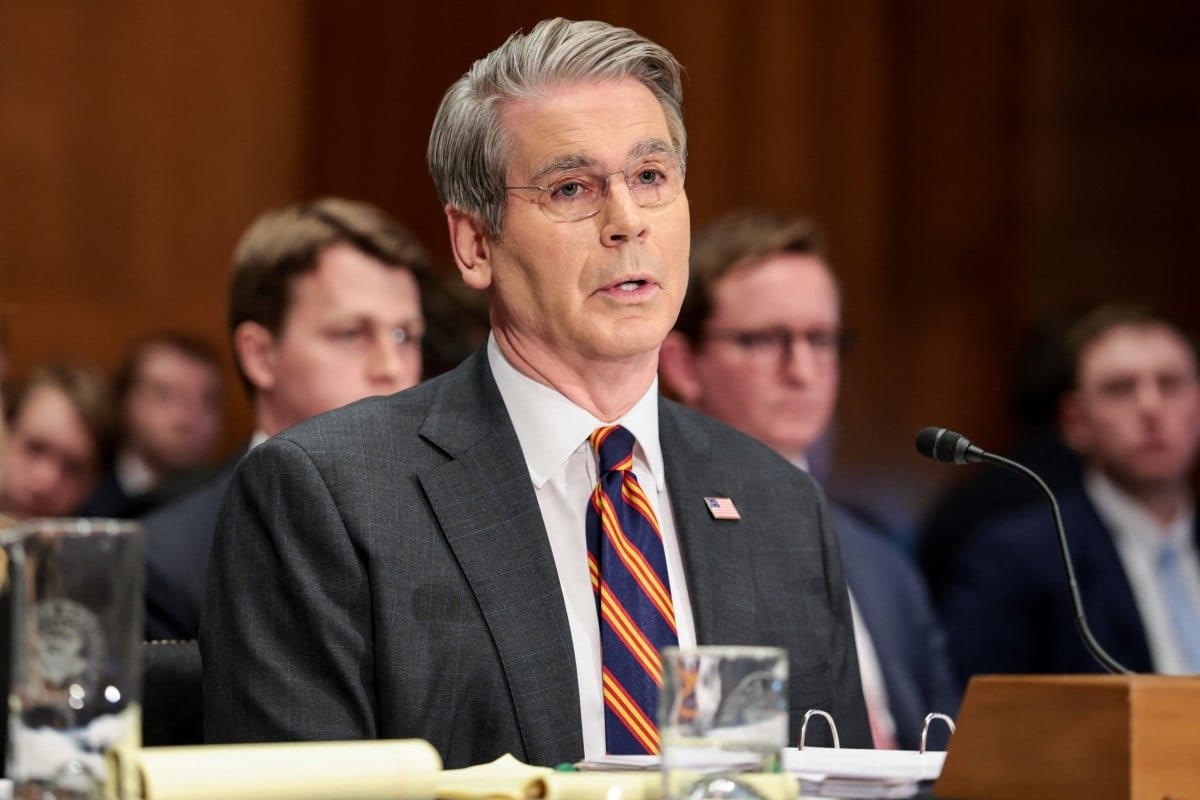
The United States Treasury has cautioned that China could be poised to challenge U.S. leadership in the rapidly evolving digital asset sector by leveraging Hong Kong’s emerging role as a regulated crypto hub.

Testifying before the Senate Banking Committee, Treasury Secretary Scott Bessent said he would “not be surprised” if Chinese authorities are exploring mechanisms to rival American influence in digital assets, given Hong Kong’s active development of regulatory infrastructure and licensing frameworks.

This warning reflects concerns in Washington about maintaining the United States’ competitive edge in blockchain technology and stablecoins at a time when global digital finance markets are maturing.

Bessent’s remarks came during questioning about broader geopolitical competition in finance, including whether Beijing is seeking to build alternatives to American financial leadership through digital assets.

He noted rumours that Chinese initiatives — potentially backed by assets other than the yuan such as gold — are being discussed, though he acknowledged that definitive information is lacking.

Secretary Bessent emphasised that the U.S. aims to remain the pre-eminent crypto jurisdiction by advancing regulatory clarity and supporting private sector innovation, including through recently enacted laws such as the Genius Act, which establishes a framework for stablecoin issuers.

Despite China’s longstanding ban on cryptocurrency trading and mining on the mainland, Hong Kong has taken a differing approach by creating a licensing regime for virtual asset trading platforms and stablecoin issuers.

Authorities in the city have also approved regulated products such as ETFs linked to major cryptocurrencies, drawing interest from firms seeking compliant digital asset exposure.

Analysts say this regulatory openness has positioned Hong Kong as a potential conduit for digital finance innovation and could attract both regional and global capital interested in blockchain-based products.

Bessent stressed that American policy will focus on balancing robust safeguards with enabling industry growth, arguing that the U.S. private sector and its dollar-linked stablecoins represent a well-regulated alternative to state-driven digital money projects.

He also highlighted bipartisan efforts to advance further legislative frameworks for digital assets, underscoring the administration’s commitment to securing America’s leadership in the sector.

The Treasury chief’s comments underscore a broader strategic competition in financial technology between Washington and Beijing, with Hong Kong’s evolving role in digital assets adding a new dimension to global economic rivalry.
Cash-in-transit risks and industry practices raise questions about protective measures following a series of violent thefts targeting currency handlers
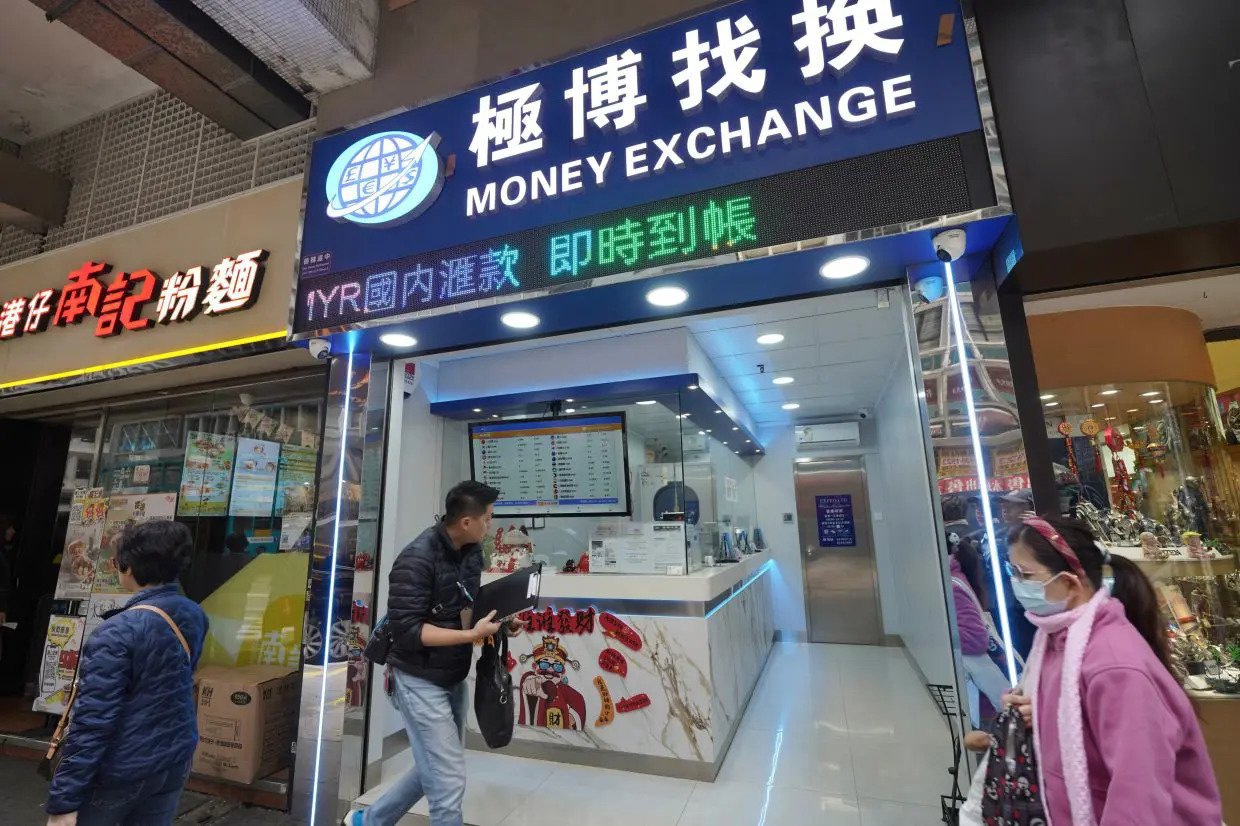
Recent high-value robberies targeting currency exchange staff in Hong Kong have prompted renewed scrutiny of security protocols within the foreign exchange and money-handling sector, raising questions about whether current safeguards adequately address the risks faced by firms and their personnel.

In late January, two employees carrying large amounts of Japanese yen were ambushed outside a Sheung Wan money changer and robbed of tens of millions of yen in cash, a case that led to multiple arrests and the recovery of some of the stolen funds.

Police said one of the individuals who initially reported being a victim was later arrested on suspicion of acting as an insider in the plot, underscoring complexities in how these incidents unfold.

Industry insiders acknowledge that carrying large amounts of cash between Hong Kong and overseas partners has been a long-standing practice for some money service operators, particularly when firms need to replenish specific foreign currency stocks or execute exchanges in the absence of direct banking arrangements.

Licensed operators are subject to oversight by Hong Kong’s Customs and Excise Department and must meet anti-money-laundering requirements and record-keeping obligations for sizeable transactions, but critics argue that regulation does not fully mitigate physical security risks inherent in moving large cash consignments.

Consultants and exchange executives say that while typical due diligence and customer verification processes help in screening clients, firms often rely on informal cash exchanges with counterparties, leaving employees vulnerable when transporting funds through public spaces.

Some operators have advised the use of armed escorts or professional cash-in-transit services once transaction values exceed defined thresholds, noting that insurance and guarded transport become more cost-effective at higher sums.

Regulatory requirements also compel individuals entering Hong Kong with substantial amounts of cash to make formal customs declarations, but there is no mandate on declaring the intended use of funds, and compliance rates vary.

Observers say that enhanced industry-wide security standards, broader adoption of armored transport, and closer coordination with law enforcement during high-volume periods could reduce the likelihood of opportunistic attacks.

While the recent robbery spurred arrests and highlighted potential insider involvement, it has also underscored the need for foreign exchange firms to reassess physical security alongside financial controls.

As the sector navigates both regulatory expectations and evolving criminal tactics, experts stress that comprehensive risk management frameworks — combining technology, protocol and personnel training — are essential to reassure clients and protect staff in a city long viewed as a financial hub with relatively low physical crime relative to other global centres.
New high-speed rail connections to multiple Chinese cities see heavy advance bookings ahead of the Spring Festival holiday
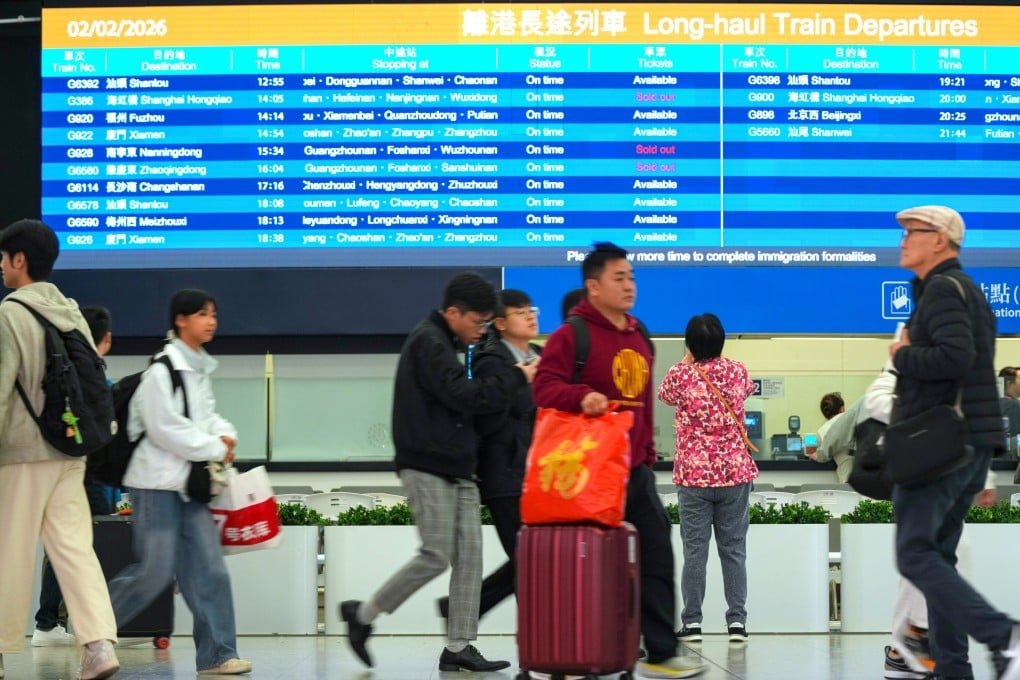
Tickets for the expanded high-speed rail network linking Hong Kong with mainland China are nearly sold out for the period immediately preceding the Lunar New Year holiday, reflecting strong travel demand and the popularity of newly launched routes.

All classes of seats on services from Hong Kong’s West Kowloon Station to 14 of 16 recently added mainland destinations were fully booked from Friday through next Sunday, according to online booking checks, with major hubs such as Nanjing, Wuxi and Hefei among the most sought-after.

The new connections form part of a broader expansion that now offers direct services from West Kowloon to over one hundred cities across the mainland.

Rail travellers were snapping up seats on long-haul services at premium and standard fare levels in the run-up to the Spring Festival peak.

For example, second-class tickets for the roughly seven-hour trip from Hong Kong to Nanjing South were priced at over HK$1,000, while business-class fares approached HK$3,500.

All classes to other popular destinations including Wuxi East and Hefei South were likewise exhausted for the key pre-holiday days.

The strong uptake comes as Hong Kong and mainland authorities gear up for what is expected to be a record travel surge during the Lunar New Year “Golden Week,” with border checkpoints and transport services preparing for high passenger volumes.

Forecasts suggest that around 1.43 million arrivals from the mainland could enter the city over the nine-day period, requiring cross-department coordination to manage flows efficiently at land, sea and air checkpoints.

This surge in bookings underlines renewed enthusiasm for cross-border travel and the importance of the high-speed rail link as a spine of connectivity between Hong Kong and China’s interior cities.

The rail expansion, which includes destinations across several provinces and upgraded sleeper services to key hubs, reflects broader efforts to support tourism, business travel and family reunions during one of the busiest periods of the year for passenger movement.
China’s domestic capital flows into Hong Kong’s technology shares rise sharply as valuations recover and AI prospects strengthen
Mainland Chinese investors have returned to Hong Kong’s technology sector, buying aggressively even as prices dipped and broader markets experienced volatility, highlighting renewed confidence in the region’s tech outlook.

Southbound flows, where mainland investors use the Stock Connect programme to purchase Hong Kong-listed stocks, have reached near record levels as investors hunt for value and exposure to firms leading artificial intelligence and digital transformation narratives.

This buying comes despite earlier market jitters and a retreat in some tech valuations during recent sell-offs.

A key driver of the renewed interest is optimism around China’s advancements in AI and related technologies, including breakthroughs from domestic AI startups that have helped reshape investor sentiment toward Hong Kong’s tech companies.

The Hang Seng Tech Index, which tracks major technology groups listed in Hong Kong, has benefited from this shift, with several large names posting notable gains on the back of AI-related catalysts and improved earnings prospects.

Market analysts say that while some investors were reluctant to engage during periods of heightened risk and weak performance, the combination of cheaper valuations and strong long-term growth narratives has encouraged renewed participation.

Mainland investors’ participation has accounted for a growing share of turnover, underscoring their influence on market dynamics and liquidity.

This trend reflects broader strategic shifts as investors weigh risks and opportunities in a complex economic landscape.

China’s strong focus on developing AI and tech capabilities has bolstered confidence, even as external pressures and macroeconomic uncertainties persist.

The inflows into Hong Kong tech shares signal a belief among mainland capital allocators that the current market environment offers attractive entry points into firms poised to benefit from innovation-driven growth.
Corporate relocations and rising regional headquarters boost office leasing and strengthen investor confidence in Hong Kong’s property market
Hong Kong’s expanding role as a hub for corporate headquarters is invigorating demand for commercial property, contributing to a broader rebound in the city’s office and retail markets after years of weakness.

The so-called “headquarters economy,” in which multinational and regional companies establish their main bases in the city, has underpinned stronger leasing activity and encouraged investors to reassess opportunities in prime real estate.

Analysts point to a surge in net absorption of office space in 2025 as evidence of this shift, with Central recording significant gains in recently reported quarterly figures, the strongest in over a decade.

This renewed demand for quality office space comes as locally registered companies hit record levels, with a substantial number of new and redomiciled firms choosing Hong Kong as their base.

The influx of businesses has helped stabilise rents, with the annual decline in overall office rents narrowing significantly, even as vacancy rates remain elevated by historical standards.

A spokesperson for a leading property consultancy noted that the headquarters effect particularly boosts leasing in high-grade buildings that support regional management, capital markets and professional services functions.

The strengthening office market is complemented by a broader commercial property recovery, supported by rising investment activity and improved sentiment.

Consultancy reports show that net absorption across the office sector hit its highest levels since 2018 in 2025, as financial firms, hedge funds and professional services tenants expanded or upgraded their premises.

While new supply scheduled for 2026 could continue to place downward pressure on vacancy and rents, the overall trend reflects more balanced conditions than in recent years.

Retail leasing has also benefited from increased corporate foot traffic and tourism, with high-street vacancy rates declining and modest rent growth forecast for 2026. This broader commercial upswing enhances confidence among investors and developers, even as market participants caution that persistent structural challenges such as elevated supply and shifting tenant preferences will continue to shape the landscape.

The headquarters economy’s contribution to commercial property dynamics illustrates how Hong Kong’s enduring appeal as a strategic base for regional operations can translate into tangible property market outcomes, reinforcing the city’s long-term role as a major Asian financial and business centre.
New planning framework reflects a move toward longer-term coordination and policy clarity amid global uncertainty
Hong Kong’s decision to develop a formal five-year plan marks a significant shift in how the city approaches economic governance, signalling a move toward longer-term strategic coordination at a time of heightened global uncertainty.

The initiative, outlined by senior officials in recent policy discussions, is intended to provide clearer direction across economic development, innovation, social policy and integration with regional growth frameworks.

The proposed plan represents a departure from Hong Kong’s traditional emphasis on short- to medium-term policy measures and reactive governance.

Officials say the five-year framework will help align public investment, regulatory priorities and private-sector engagement around shared objectives, offering greater predictability for businesses and investors navigating volatile global conditions.

Supporters of the initiative argue that a structured planning horizon will strengthen Hong Kong’s competitiveness by enabling more coherent development of key sectors such as financial services, technology, logistics and green finance.

The framework is also expected to improve coordination across government departments and enhance the effectiveness of large-scale infrastructure and innovation projects.

The move comes as Hong Kong faces intensifying competition from other regional financial centres and adjusts to shifting economic dynamics, including changing capital flows and evolving trade patterns.

By articulating medium-term priorities, policymakers aim to reinforce confidence in Hong Kong’s long-term prospects while maintaining the flexibility that has historically underpinned its success.

Officials emphasise that the five-year plan will not undermine Hong Kong’s market-driven model but rather complement it by setting clear strategic goals and performance benchmarks.

As details are refined, the initiative is being closely watched as a potential blueprint for how the city balances adaptability with longer-term planning in an increasingly complex global environment.
Tokenisation and regulated digital finance seen as major growth drivers for Asia’s leading asset management hub
Digital money and asset tokenisation could double the size of Hong Kong’s fund management industry, according to a newly released report that highlights the city’s ambition to position itself at the forefront of regulated digital finance.

The analysis suggests that the integration of digital assets into traditional investment products could significantly expand assets under management by attracting new capital and improving market efficiency.

The report argues that Hong Kong’s established legal framework, deep capital markets and close connectivity to mainland China place it in a strong position to benefit from the rapid development of digital finance.

By enabling the tokenisation of funds, bonds and other financial instruments, digital money is expected to lower transaction costs, improve liquidity and broaden investor access, particularly among younger and international investors.

Industry participants cited in the report say regulatory clarity has been a critical factor.

Hong Kong authorities have rolled out licensing regimes and guidance for virtual asset platforms, fund managers and custodians, creating what proponents describe as a stable and credible environment for innovation.

This approach is seen as differentiating Hong Kong from other jurisdictions where regulatory uncertainty has slowed adoption.

The report also notes that tokenised funds could unlock efficiencies across the fund value chain, from settlement and custody to reporting and compliance.

These gains, combined with the potential to distribute products digitally across borders, are expected to make Hong Kong-based funds more competitive globally and to draw inflows from both institutional and retail investors.

Looking ahead, the study concludes that sustained collaboration between regulators, financial institutions and technology providers will be essential to realise the full potential of digital money.

If implemented at scale, the report says, digital assets could become a core pillar of Hong Kong’s financial sector growth and reinforce the city’s status as a leading international asset management centre.
Offering underscores renewed appetite for Asia listings as issuers tap Hong Kong’s deep capital markets
Montage is preparing to debut in public markets after completing a nine hundred two million dollar share sale in Hong Kong, marking one of the larger offerings in the city in recent months and signalling a revival in investor appetite for regional listings.

The transaction drew interest from a broad mix of institutional buyers, reflecting confidence in Hong Kong’s role as a gateway for capital raising despite global market volatility.

People familiar with the deal said the offering was structured to balance liquidity with long-term shareholder stability, with cornerstone and anchor investors providing early support.

The sale positions Montage to pursue its growth strategy with a strengthened balance sheet, while also establishing a market valuation benchmark ahead of its debut.

The timing of the listing comes as Hong Kong’s equity market shows signs of recovery, aided by improved sentiment toward Asia, stabilising interest rate expectations and a pickup in cross-border investment flows.

Bankers and investors note that issuers with clear growth narratives and disciplined governance are finding receptive demand, even as selectivity remains high.

For Hong Kong, the transaction adds momentum to efforts to reinforce its standing as a premier fundraising hub, particularly for companies seeking access to international capital alongside regional investors.

Market participants say the deal demonstrates that sizeable offerings can clear when pricing discipline and investor engagement are aligned.

Montage is expected to begin trading shortly, with attention turning to post-listing performance and execution against stated growth plans.

The debut will be watched closely as a barometer of market depth and confidence for upcoming issuers considering Hong Kong as their listing venue.
DBS chief executive says both financial hubs are well positioned as global investors reassess opportunities across Asia
Hong Kong and Singapore are emerging as key contenders to capture a new wave of capital inflows into Asia as global investors rebalance portfolios amid shifting interest rate expectations and geopolitical uncertainty.

According to the chief executive of DBS Group, Asia’s largest lender by assets, both financial centres are benefiting from renewed attention as investors seek stability, depth and reliable regulatory frameworks in the region.

Speaking on recent market trends, the DBS chief executive said Asia is seeing a gradual return of capital after a period of caution driven by tighter global monetary conditions and volatility in major economies.

He noted that Hong Kong and Singapore each offer distinct advantages: Hong Kong retains its role as a critical gateway to mainland China, while Singapore continues to attract wealth management, private banking and corporate treasury flows due to its reputation for governance and neutrality.

The executive emphasised that capital movements are not a zero-sum contest between the two cities.

Instead, investors are increasingly diversifying across multiple Asian hubs to manage risk and tap into different growth stories.

Hong Kong’s deep capital markets and connectivity to China’s economy remain compelling for investors focused on equities and cross-border financing, while Singapore’s strength in foreign exchange, commodities trading and family office services has drawn significant inflows.

He also pointed to improving sentiment toward Asia as inflation eases in several economies and expectations grow that global interest rates may stabilise.

These factors, combined with strong domestic savings in the region, are supporting a more constructive outlook for Asian financial markets compared with recent years.

Looking ahead, the DBS chief executive said sustained capital inflows would depend on policy clarity, market reforms and continued openness in both jurisdictions.

He added that Asia’s long-term growth fundamentals remain intact, positioning Hong Kong and Singapore to play complementary roles as global investors increase exposure to the region.
Canberra launches urgent inquiry and weighs tariffs and quotas to protect domestic industry as fabricated steel imports climb
Australia has moved to address a dramatic surge in cheap fabricated steel imports, including a significant share linked to Chinese production, by initiating an urgent government inquiry that could lead to tariffs, quotas or other trade restrictions.

The action follows mounting pressure from local steel fabricators and industry bodies who warn that overseas imports, often priced far below domestic costs, are undermining Australian manufacturers and eroding sovereign capability.

Treasurer Jim Chalmers has asked the Productivity Commission to investigate the impact of structural steel imports on the national market, with an interim report due later this year and a final recommendation expected by November.

The inquiry will consider applying tariffs or import quotas under World Trade Organization frameworks to ensure “fair competition” and prevent serious injury to Australia’s steel sector.

Industry representatives report that fabricated steel imports have risen sharply in recent years, with overseas suppliers undercutting local producers by as much as 50 per cent on pricing.

Domestic steel producers and fabricators say the influx of cheap steel is forcing production declines and job losses.

Small and medium enterprises report dramatic drops in output as infrastructure and construction projects increasingly source structural steel from abroad rather than from Australian manufacturers.

The Australian Steel Institute and other stakeholders argue that maintaining a viable local steel industry is essential to national infrastructure supply chains and long-term economic resilience.

While raw steel imports have been relatively steady, fabricated steel — crucial for building and industrial applications — now constitutes a far larger share of annual imports, driving the urgency for potential policy action.

Vietnam has also emerged as a notable exporter of steel products to Australia, adding complexity to trade defense considerations.

Any imposed restrictions would apply broadly across trading partners rather than exclusively targeting China, but because China is a major source of manufactured steel products entering the Australian market, it could bear the brunt of any new measures.

The government’s move to launch the inquiry comes amid broader global trade tensions and follows external protections such as U.S. tariffs on steel and aluminium that have indirectly redirected supply flows to markets including Australia.

Canberra is attempting to strike a balance between defending domestic industry and managing key economic relationships, particularly given China’s role as Australia’s largest trading partner.

The outcome of the Productivity Commission review will shape Canberra’s next steps on trade policy and potential safeguard measures aimed at steel manufacturers.
The global pop icon pauses during her Hong Kong stay to pray at Che Kung Temple, connecting with local devotees and her inner self
BLACKPINK’s Lisa made a low-key but striking personal visit to Che Kung Temple in Hong Kong, where she was seen engaging in traditional prayer rituals amid her ongoing global activities.

The Thai-born artist, known internationally for her role in the K-pop powerhouse group and her recent world tour performances, spent time at the temple lighting incense and praying alongside local worshippers, offering a rare glimpse of her spiritual side.

The visit took place as Lisa and her bandmates wrapped up the Hong Kong leg of their Deadline World Tour, which concluded at Kai Tak Stadium in late January.

Video circulating online shows Lisa in casual attire — a pink hoodie, black leggings and glasses — at the bustling temple, where she observed rituals with quiet focus.

According to local testimonials, the singer remained respectful and composed, even as fans recognised her presence and greeted her warmly.

Despite her global fame, the 27-year-old maintained a humble demeanour during the visit.

Temple visitors reported that she approached the experience sincerely, lighting incense sticks and joining others in prayer without hesitation, suggesting a personal connection to spiritual practices.

Her manager declined photo requests inside the temple, indicating that Lisa was dressed modestly and sought a private experience, though she did acknowledge fans with friendly waves outside the formal worship area.

Lisa’s appearance in Hong Kong has drawn attention not only for her musical achievements but also for her willingness to embrace local cultural traditions during her travels.

The visit to Che Kung Temple highlights a different dimension of her public persona — one rooted in introspection and cultural engagement — resonating with fans who value both her artistic excellence and grounded personal presence.
Sun Hung Kai Properties clears all 218 units at Sierra Sea, underscoring revived buyer demand ahead of the Lunar New Year
Sun Hung Kai Properties (SHKP), Hong Kong’s largest developer by market capitalisation, has sold all 218 units released this weekend at its Sierra Sea residential project, marking a strong uptick in primary market activity as the city approaches the Lunar New Year.

Sales were completed within the day, continuing a pattern of robust buyer demand that has seen the development repeatedly sell out new batches of units in recent weeks.

The latest tranche comprised a mix of two-bedroom and three-bedroom flats, with prices after discounts ranging from approximately four point six million Hong Kong dollars to more than ten million Hong Kong dollars.

The average price per square foot on a discounted basis reflected stable pricing conditions, suggesting buyers remain confident despite broader economic uncertainties.

Property agents described the brisk pace as part of a Lunar New Year “mini-boom,” a seasonal phenomenon in which home purchases often accelerate ahead of the holiday period.

Both end users and investors were active, with several buyers acquiring multiple units in single transactions, highlighting sustained confidence among higher-net-worth purchasers.

Located in Shap Sze Heung between Sai Kung and Ma On Shan in the New Territories, Sierra Sea has emerged as one of the most closely watched new residential developments in Hong Kong.

Cumulative sales across its releases have now exceeded one thousand three hundred units, reinforcing signs of renewed momentum in the city’s property market as the festive season approaches.
Global institutional leaders to convene in Hong Kong for high-level discussions on the future of multi-asset markets and the integration of digital and traditional finance
Hong Kong is preparing to host the highly anticipated Liquidity 2026 institutional summit on February 9 at the JW Marriott Hotel, bringing together global financial leaders to examine the evolving dynamics of multi-asset markets and the intersection of digital assets and traditional finance.

Organised by institutional prime broker LTP, the fourth edition of the event is expected to draw representatives from sovereign wealth funds, pension funds, asset managers, banks, exchanges, custodians, technology firms and regulators for a full-day forum of discussion and networking.

Under the theme “Bridging Digital Assets and Traditional Finance: Building the Next Generation of Multi-Asset Financial Infrastructure,” the summit will focus on key trends shaping the financial landscape.

Delegates will explore topics that include the future of multi-asset trading, risk management and capital allocation, the development of interoperable clearing and custody solutions, and the institutionalisation of digital assets and tokenised products.

The agenda also emphasises building sustainable infrastructure to support market convergence and greater institutional participation.

Now established as a leading platform for institutional dialogue, Liquidity 2026 continues to foster collaboration between traditional financial markets and digital asset ecosystems.

Organisers anticipate more than a thousand attendees representing over 400 institutions, providing opportunities for strategic engagement among senior executives and industry innovators.

Sponsors and partners include prominent market infrastructure providers and finance associations, reflecting deep institutional interest in the discussions that will shape future market structures.

By convening in Hong Kong, the summit underscores the city’s role as a global financial hub and a centre for innovation in multi-asset and digital finance.

With its strategic position in Asia and robust regulatory framework, Hong Kong is positioned to support discussions on cross-border coordination, technological innovation and the expansion of institutional liquidity across traditional and emerging market domains.
Independent committee signals deep regulatory and safety lapses following city’s worst fire disaster in decades
An independent inquiry into the catastrophic residential fire that devastated the Wang Fuk Court public housing estate in Hong Kong has revealed “key clues” pointing to systemic failures in safety oversight and building maintenance, senior counsel Victor Dawes has announced.

The findings emerged at the first formal meeting of the inquiry committee, which heard extensive evidence from multiple parties and indicated that a series of structural and procedural problems may have contributed to the tragedy. 

The session, held in Central, began with a moment of silence for the 168 people who lost their lives and nearly 5,000 residents displaced when flames tore through seven of the estate’s eight high-rise buildings during an extensive renovation last November.

Dawes said the information gathered to date provided the committee with a “considerable understanding” of the blaze and suggested that systemic issues — described as “unacceptable” — could not be ignored.

Future hearings will disclose detailed evidence publicly. 

Judge David Lok Kai-hong, who chairs the committee, outlined procedural arrangements for the coming months, noting that the inquiry’s work must proceed without affecting concurrent criminal, civil and coroner’s proceedings related to the fire.

He stressed the importance of ensuring fair legal processes for any individuals or organisations that may face accountability.

Testimony at the session included representatives from government departments, the Urban Renewal Authority, the property manager and architectural consultants linked to the renovation project. 

Residents of Wang Fuk Court, many of whom attended in person or via livestream, urged the committee to identify those responsible and help deliver justice.

Calls for transparency and accountability have grown since the blaze, which authorities initially linked to flammable construction materials, including substandard netting and insulation used during renovations, and to broader concerns about fire safety regulation.

Subsequent hearings, scheduled to start on March 19 and expected to run for several days, will centre on identifying causal factors, evaluating safety standards and proposing reforms to prevent similar disasters in the future. 
The usually private former model is spotted participating in a Buddhist activity, attracting attention for her understated style and youthful presence
Carol Chu, the Malaysian wife of Hong Kong superstar Andy Lau, made an uncommon solo public appearance this week, drawing attention from fans and onlookers for her graceful presence and discreet elegance.

The 59-year-old, who has maintained a low public profile since marrying Lau in 2008, was photographed taking part in a Buddhist activity aboard what appeared to be a ship during a visit to mainland China.

Photos circulating online show Chu wearing a casual oversized T-shirt, her hair pulled back into a ponytail and a face mask, yet still easily recognisable to admirers.

Despite her simple attire, observers noted that Chu carried a luxury handbag valued at nearly fifty thousand Hong Kong dollars, a subtle complement to her otherwise relaxed look.

Onlookers and netizens also remarked on her youthful appearance, noting her smooth complexion and dark hair, which seemed unaffected by age.

Chu’s rare appearance has stimulated online discussion about her enduring poise and the couple’s enduring partnership.

Chu and Lau’s relationship has long been a subject of fascination.

The pair met in the late 1980s and quietly formalised their marriage in Las Vegas in 2008 after years of keeping their relationship out of the spotlight.

They have one daughter, Hanna, born in 2012, and have largely shielded their family life from intense media scrutiny.

Lau has previously acknowledged Chu’s sacrifices and the couple’s efforts to protect their privacy during his long and high-profile career, including measures to ensure the family is not followed by paparazzi during travel.

The latest images of Chu’s mainland visit underscore her continued discretion and understated presence away from the glare of media attention, even as she remains a figure of interest to fans across Asia.

The appearance also highlights the enduring bond between the couple, whose private life has often been maintained with a careful balance of visibility and personal boundaries.
Agnes Chau publicly regrets improper parking at public housing estate, prompting debate over conduct of local officials
A Hong Kong district councillor has publicly apologised after being photographed parking her vehicle in a designated fire exit lane at a public housing estate, reigniting discussion about the responsibilities of elected representatives and road safety compliance in the city.

Agnes Chau Kit-ying, who serves as a district councillor in the Kwai Chung area, acknowledged the incident and expressed regret for her actions, emphasising her commitment to upholding the standards expected of public officeholders.

The episode came to light when neighbours noticed Chau’s car parked in a lane that is legally reserved to ensure unobstructed access for emergency vehicles, including fire engines, and clear evacuation routes for residents.

Fire exit lanes are regulated to protect public safety and facilitate rapid response in the event of a fire or other emergency.

Chau’s decision to stop in such a space drew criticism from some community members and road safety advocates, who underscored the need for even public figures to model compliance with traffic and public safety laws.

In her statement of apology, Chau acknowledged the concerns raised by residents and said she had taken responsibility for the mistake.

She reaffirmed her respect for the community and said her intention was never to undermine public trust or compromise safety.

The incident has also sparked broader conversations in local political circles about the conduct of officials in everyday civic matters and the importance of setting strong examples for proper behaviour on the city’s roads.

Authorities did not immediately indicate whether any formal citation or fine would be issued in connection with the parking violation.

Meanwhile, the public reaction appears to reflect general support for accountability, with many residents welcoming the councillor’s prompt apology while also stressing that adherence to safety regulations is essential in densely populated urban environments such as Hong Kong’s public housing estates.
City set to issue licences mid-2026 as long-standing ban on dogs in eateries is lifted, signalling a shift toward inclusive pet-friendly urban living
Hong Kong is on the cusp of a significant shift in its dining culture as government officials prepare to licence the city’s first dog-friendly restaurants by mid-2026, ending a decades-old prohibition on pets in licensed eateries.

Under a policy initiative announced in the 2025 Policy Address, the long-standing ban that has barred dogs from entering restaurant premises — except guide dogs and police dogs — is to be replaced with a regulatory framework allowing pet-inclusive dining.

The forthcoming change reflects evolving public attitudes and demand from pet owners seeking greater leisure options that include their four-legged companions.

Since 1994, Hong Kong’s food-service regulations have prohibited dogs in dining establishments to safeguard public health, but the growing popularity of pet ownership and international norms in comparable global cities have contributed to momentum for reform.

Under the new regime, eateries can apply for pet-friendly licences, enabling owners to bring dogs into designated areas of indoor dining spaces while adhering to hygiene and safety standards.

The decision has been welcomed by animal lovers and hospitality operators alike.

Pet-friendly cafés and eateries have proliferated across Hong Kong in recent years, informally accommodating pets in outdoor seating and specialised zones even without formal permits.

Many establishments have introduced amenities such as water stations, pet-permitted terraces and even pet-themed menus, underscoring the city’s vibrant and diverse dining landscape.

With official licensing, restaurateurs are expected to invest further in facilities and services tailored to pet companions.

Government guidelines under consideration aim to balance pet inclusion with public health and safety, potentially requiring measures such as leashing, designated pet zones and cleaning protocols.

The policy shift is viewed as part of a broader effort to enhance Hong Kong’s urban living environment, making the city more welcoming for residents and visitors who consider pets an integral part of family life.

As the mid-2026 licensing timeline approaches, many in the culinary and pet communities are preparing for an expanded era of pet-friendly dining experiences across the city.
City’s riders win silver and advance toward medal targets amid strong performances at continental event
Hong Kong’s road cycling squad delivered standout performances at the Asian Road Cycling Championships in Saudi Arabia, with local star Chloe Leung Wing-yee capturing a silver medal in the women’s individual time trial and the team positioning itself for further success across upcoming races.

The championships, drawing elite riders from across Asia, have provided a platform for Hong Kong’s cyclists to demonstrate competitive progress against some of the region’s strongest opposition.

In the individual time trial, Leung completed the 20-kilometre course in tightly contested conditions and finished second behind Kazakhstan’s Rinata Sultanova, clocking a time just nine seconds off the winning mark.

Her result marked a significant achievement in continental competition and underscored her consistency at the elite level, building on her recent success at national and international events.

The silver medal contributes to Hong Kong’s broader ambitions at the championships and reflects the depth of talent emerging from the territory’s cycling programme.

Hong Kong’s campaign in Saudi Arabia continues with additional events on the schedule, including mixed team and road race competitions that will test the squad’s versatility and collective strength.

Head coach Herve Dagorne has noted that the team’s performances so far offer encouragement and a foundation on which to pursue further podium finishes.

The championships also serve as an important milestone in preparations for major regional competitions later in the year.

Hong Kong’s achievements at the Asian Road Cycling Championships resonate within the city’s broader sporting community, highlighting the progress of its cyclists on the continental stage and generating optimism as riders seek additional medals in the remaining events of the competition.
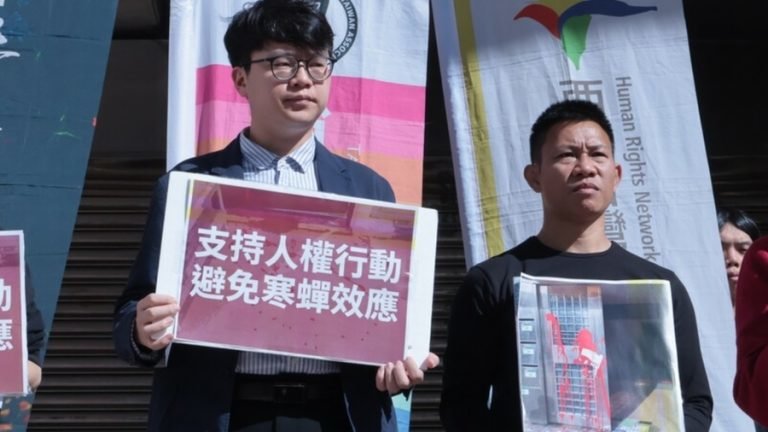
Repeated attacks with red paint on the Muay Thai studio of Tong Wai-hung prompt closure as Taiwanese police pursue suspect and activists decry transnational repression
Hong Kong pro-democracy activist Tong Wai-hung has temporarily shut down his Muay Thai gym in Taipei after vandals splashed the facility with red paint for a second time, intensifying fears of cross-border intimidation that have reverberated through Taiwan’s civil society.

The latest incident occurred in the early hours of Wednesday, when a perpetrator threw red paint across the entrance of the studio in Taipei’s Shilin District and distributed leaflets alleging a debt dispute.

Tong and civil society groups have dismissed these claims and described the attack as a form of transnational repression intended to disrupt his life and work.

Taipei City Police identified the suspect as a 46-year-old man surnamed Leung, a Hong Kong native who also holds Taiwanese citizenship.

Police said he entered Taiwan late Tuesday, purchased the paint and carried out the attack before leaving for Hong Kong via Taoyuan International Airport.

Authorities have said they will arrest him if he re-enters Taiwan while investigators continue probing whether the vandalism had accomplices.

The two attacks — the first occurred in November last year — have unsettled Tong’s neighbours and landlord and led him to suspend classes at the studio.

Tong, who is wanted by Hong Kong authorities for his role in pro-democracy protests, has consistently denied any personal debts or disputes and rejected debt-related explanations for the incidents.

He and human rights groups argue the pattern reflects broader attempts to intimidate Hongkongers living in Taiwan, particularly outspoken critics of Beijing and Hong Kong authorities.

Amnesty International Taiwan’s deputy secretary-general described the case as more than a public order issue, calling it emblematic of transnational repression directed at activists abroad.

Campaigners have urged the Taiwanese government to develop institutional mechanisms to address such cross-border harassment and protect civil society.

Taiwan’s Mainland Affairs Council previously characterised the earlier vandalism as intimidation and pledged a full investigation.

Meanwhile, Tong said he may relocate the gym but expects harassment to continue, underscoring enduring concerns among exiled Hong Kong activists about safety and freedom of expression in Taiwan.
Senior executives describe deepening trade, investment and financial ties linking Asia’s financial gateway with the Gulf’s strategic hub
A growing cohort of Hong Kong business leaders has outlined significant opportunities ahead in economic and commercial cooperation linking Hong Kong, mainland China and the United Arab Emirates, underscoring a broader pattern of integration between Asia and the Middle East.

The dialogue reflects an evolving global economic landscape in which strategic corridors of trade, capital and innovation are increasingly key drivers of growth.

Executives and officials gathered in forums such as Investopia Global’s Hong Kong edition have emphasised that the UAE and Hong Kong serve complementary functions: Hong Kong as a gateway to China and broader Asia, and the UAE as a nexus for the Middle East, Africa and Europe.

Delegates noted that financial services, logistics, green technology, digital trade and fintech are among the sectors poised for accelerated collaboration, supported by mutual recognition arrangements and new co-operation frameworks that reduce barriers to cross-border investment.

Recent regulatory cooperation, including mutual recognition of funds schemes and memoranda of understanding between exchanges, reflects a practical commitment to deepen market linkages.

Business leaders have also pointed to the role of strategic infrastructure, regulatory alignment and expanding people-to-people connectivity in unlocking future potential.

For the UAE, Hong Kong’s position within China’s Closer Economic Partnership Arrangement and its capacity as a global financial centre provide vital access to Mainland markets and capital.

Conversely, UAE investors have been active in exploring opportunities in Hong Kong’s diverse ecosystem, including family offices, asset management and innovative financial products.

Beyond finance, the vibrant start-up ecosystems in both markets are seen as fertile ground for co-investment and talent exchange.

In parallel, officials from both sides have cited robust bilateral trade performance, with the UAE now one of Hong Kong’s largest Middle Eastern partners and trade volumes continuing to climb.

Leaders emphasise that these links build on longstanding diplomatic engagement and shared interests in open markets and sustainable growth.

With new platforms emerging to support deeper co-operation, business voices from Hong Kong are bullish about a future in which Asia-Gulf economic corridors drive expanded commerce, capital flows and joint ventures across continents.
Record influx driven by improved flight links, major events and refreshed attractions rekindles Aussie interest in the city
Hong Kong has seen a remarkable resurgence in Australian visitors, with arrivals from Down Under rising sharply in 2025 as the city reasserts itself as a premier destination for travel, business and cultural experiences.

According to figures from the Hong Kong Tourism Board, nearly 469,000 Australians visited in 2025, marking a nearly twenty-seven per cent increase compared with the previous year and approaching pre-pandemic levels of demand.

This surge has reinforced Hong Kong’s appeal as both a stopover hub for regional travel and a standalone destination for holidays and short breaks.

A key driver of the rebound has been the restoration and expansion of direct air connectivity between Australia and Hong Kong.

In 2025, Hong Kong Airlines introduced direct flights from Melbourne and Sydney, while Cathay Pacific resumed services from Adelaide and other Australian cities, making travel more convenient for leisure and business travellers alike.

Enhanced flight options have reduced barriers to travel and expanded access from multiple major Australian markets.

Hong Kong’s packed events calendar and new attractions have further fuelled interest among Australians.

The opening of the Kai Tak Sports Park, the return of the iconic Hong Kong Sevens rugby tournament, and celebrations such as Hong Kong’s Wine & Dine Festival and Disneyland’s anniversary have provided compelling reasons for extended stays.

Meanwhile, expanded cultural offerings at precincts such as the West Kowloon Cultural District have enriched the visitor experience, drawing Australians with interests in sport, arts and gastronomy.

Tourism officials have also emphasised Hong Kong’s ease of communication and relatively short flight times as factors enhancing its attractiveness for Australian visitors.

With a significant portion of the local population comfortable in English and a diverse array of dining, shopping and outdoor experiences available, many Australians find the city both accessible and rewarding.

These elements, coupled with strategic marketing campaigns targeting the Australian market, have helped reignite strong travel momentum in 2025 and are expected to sustain growth into 2026.
Senior legal figure backs court conviction of media tycoon and stresses rule of law and stability under the National Security Law
The head of a prominent legal association in Hong Kong has publicly stated that Jimmy Lai Chee-ying must be punished for actions that endangered national security, reinforcing the government’s stance ahead of his impending sentencing.

Peter Wong Kit-hin, chief of the Hong Kong Legal Professionals Association, said in a statement that the court’s conviction of Lai — the founder of the now-defunct Apple Daily newspaper — reflected careful judicial scrutiny and was essential to upholding the rule of law and the city’s stability.

Wong noted that Lai’s conduct, as determined by the High Court in December, involved long-term planning to coordinate with foreign forces against the central government and the Hong Kong Special Administrative Region, actions he characterised as harmful to both national security and Hong Kong’s prosperity and stability.

The comments come as Lai, 78, is scheduled to be sentenced on Monday after being found guilty on multiple counts, including conspiracy to collude with foreign forces and conspiracy to publish seditious materials under the National Security Law, offences that carry significant penalties.

Supporters of the law argue that strong enforcement and appropriate sentencing serve as a deterrent to others and are in line with legal obligations under the “one country, two systems” framework.

The position contrasts sharply with international calls for clemency and raised concerns over press freedom, but within Hong Kong legal and political circles, officials emphasise adherence to judicial process and safeguarding national security as paramount.
Observatory warns of chilly Sunday morning as winter monsoon brings sharp drop in temperatures
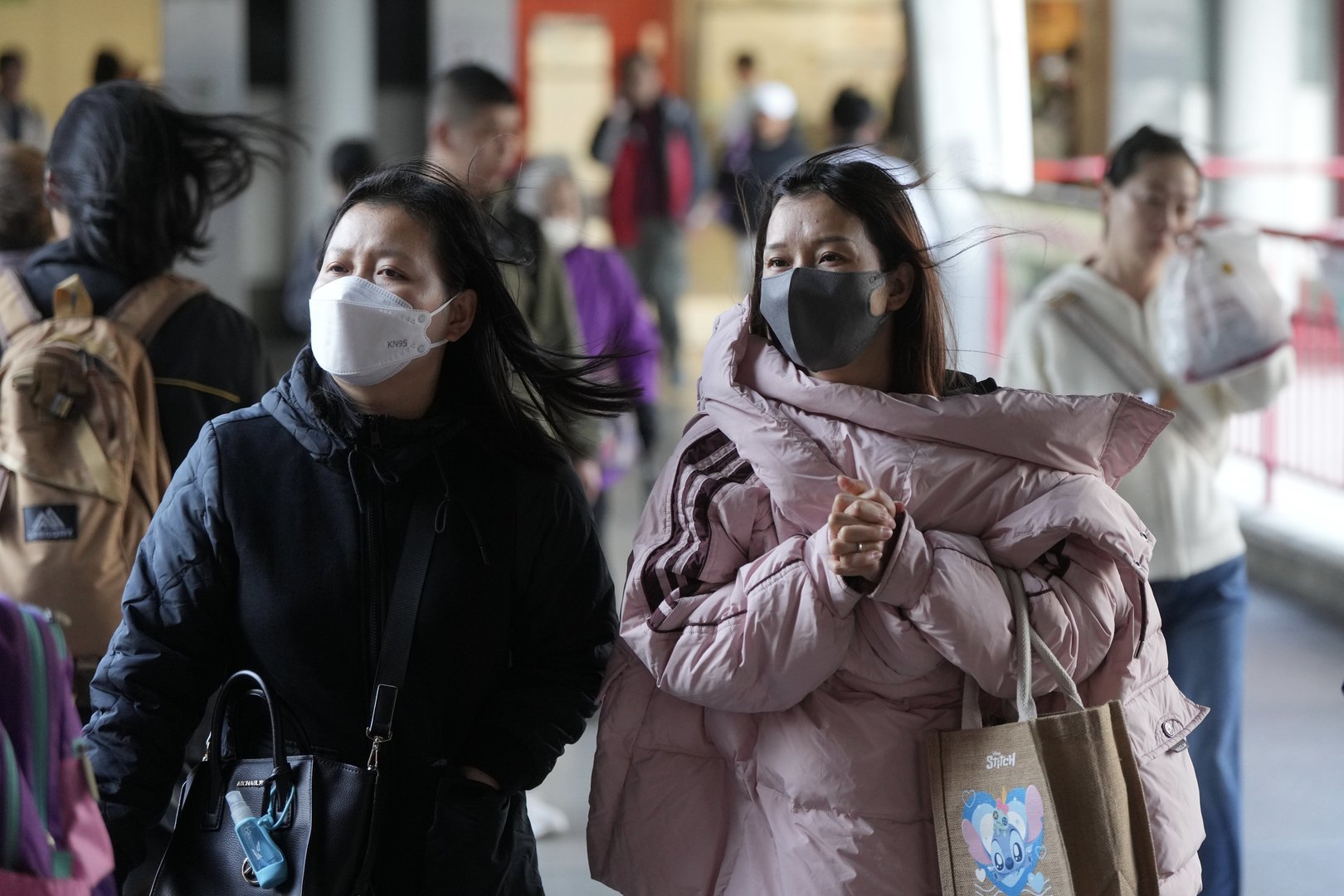
Temperatures in parts of Hong Kong, including Lantau Island and rural districts, are expected to fall to around eight degrees Celsius early on Sunday morning as a strong winter monsoon continues to affect the region.

The Hong Kong Observatory said the cold weather will be accompanied by generally clear skies overnight, allowing temperatures to drop further in less urbanised areas.

Forecasters said the cold snap is being driven by a dry continental airstream from the north, which has already brought noticeably cooler conditions across the territory.
Urban areas are expected to record slightly higher temperatures, while exposed and inland locations such as Lantau, the New Territories and high ground may experience the lowest readings.

The Observatory has advised residents to take precautions against the cold, particularly the elderly and those with chronic illnesses.

Daytime temperatures are expected to recover gradually on Sunday, though conditions will remain cool and dry.
Authorities have also reminded hikers and outdoor enthusiasts to dress warmly and be prepared for colder conditions in country parks and higher elevations.

The Observatory indicated that temperatures may rise slightly in the following days as the monsoon weakens, but cool mornings are likely to persist in the near term.
Insurance unit drives robust sales and contractual margin increases as group reports broad Asia-wide momentum
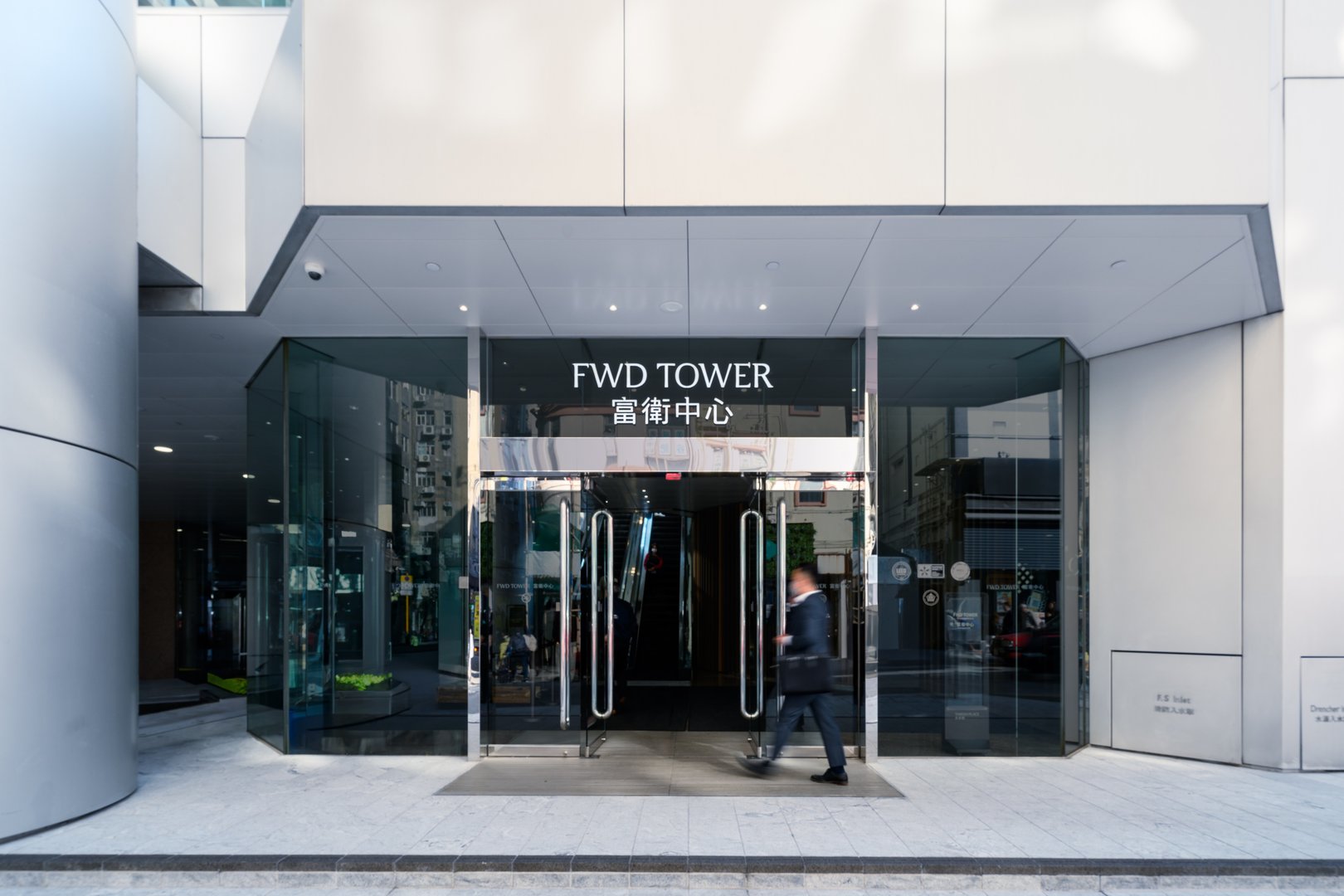
FWD Hong Kong has continued to deliver strong growth in new business indicators as part of its parent group’s broader performance across Asia, reflecting robust customer demand and strategic distribution expansion.

For the nine months ended September 30, 2025, FWD Group reported a 37 per cent year-on-year rise in new business sales to US$1.935 billion on an annualised premium equivalent basis, with new business contractual service margin also up 27 per cent, driven in part by exceptional results in Hong Kong and Macau.

Exceptional demand from both local and visiting customers supported the surge in new business in the Hong Kong SAR & Macau SAR segment, where growth was significantly higher than in some other markets, in line with the city’s role as a key financial and insurance hub.

Across FWD’s pan-Asian operations, the group’s strategic diversification and multi-channel distribution approach underpinned organic new business momentum, with strong double-digit sales growth seen in emerging markets including Singapore, Malaysia, the Philippines and Indonesia.

Japan also contributed to overall expansion with growth in individual protection lines, while some headwinds from low interest rates weighed on sales in Thailand & Cambodia.

In addition to the expansion in new business, FWD Group has strengthened its financial position through refinancing and debt reduction actions following its successful initial public offering in Hong Kong in July 2025, lowering leverage and financing costs and positioning the insurer for further growth.

The results highlight the resilience and appeal of FWD’s customer-led strategy in the competitive insurance landscape and reinforce Hong Kong’s importance as a centre of sustained new business growth within the group’s regional footprint.
U.S. activewear label secures prominent K11 Musea location ahead of broader China and regional rollout
Alo Yoga, the Los Angeles-based luxury athleisure brand, has secured a prime waterfront retail space at Hong Kong’s K11 Musea, marking a high-profile step in its Asia expansion strategy.

The flagship location, overlooking Victoria Harbour in Tsim Sha Tsui, is understood to occupy a double-level unit formerly leased by Fortnum & Mason and is being fitted out with prominent Alo Yoga branding that reflects the company’s premium lifestyle positioning.

This move into one of Hong Kong’s most visible retail districts underscores Alo Yoga’s intention to elevate its presence in the Asia-Pacific market as consumer demand for wellness-oriented apparel and experiences grows.

The Hong Kong store will serve as a key hub for Alo Yoga’s push into Greater China, complementing ongoing plans for flagship openings in Shanghai and Beijing in 2026. The company has been actively recruiting for regional roles in operations and management based in Hong Kong, signaling a broader build-out of its Asia business.

Alo Yoga’s strategic choice of a waterfront flagship aligns with its global retail strategy of marrying fashion, community and lifestyle elements in experiential store environments, a formula it has deployed in other major markets.

Industry observers note that Alo Yoga’s expansion places it in direct competition with established activewear players such as Lululemon, which has long cultivated a strong foothold across Greater China and the wider region.

Hong Kong’s retail landscape remains competitive but attractive for premium brands seeking visibility and access to both local and international tourists.

Alo Yoga’s high-profile Hong Kong debut reflects both confidence in the city’s retail draw and the brand’s broader ambition to establish itself as a regional leader in premium athleisure and wellness lifestyle offerings.
Government plans to require companies to notify authorities and affected individuals of serious personal data leaks
Hong Kong’s government is preparing to revive long-discussed reforms to its privacy legislation that would require organisations to report data breaches involving personal information, signalling a significant shift in the city’s regulatory approach to data protection.

Officials have indicated that amendments to the Personal Data (Privacy) Ordinance are being prioritised, with the aim of introducing mandatory notification obligations for companies and public bodies when serious data leaks occur.

Under the proposed changes, organisations would be required to inform the Privacy Commissioner for Personal Data and affected individuals within a specified timeframe if a breach poses a real risk of harm.

The move follows a series of high-profile data incidents in recent years that exposed weaknesses in the current framework, which relies largely on voluntary reporting and post-incident enforcement.

Authorities have argued that compulsory notification would improve transparency, strengthen accountability and allow faster mitigation of potential damage to individuals.

The government has stressed that the revival of the bill reflects the growing importance of data governance in a digital economy and the need to align Hong Kong’s standards more closely with international practices.

Officials have also signalled that penalties for non-compliance could be enhanced, alongside clearer powers for the privacy regulator to investigate and enforce breaches of the law.

Business groups are closely watching the proposals, weighing the potential compliance burden against the benefits of greater legal certainty and public trust.

If enacted, the reforms would mark one of the most substantial updates to Hong Kong’s privacy regime in years, reshaping how organisations manage cybersecurity risks and respond to incidents involving personal data.
Authorities deploy crowd management, CCTV and enforcement to protect nature areas as visitor numbers are set to surge
Hong Kong authorities are preparing to enforce stricter crowd and environmental controls at popular nature spots during the upcoming Lunar New Year holiday, as the city anticipates a significant influx of visitors and a potential impact on ecological areas.

With an estimated 1.43 million Mainland Chinese tourists expected to visit during the nine-day Golden Week period from February 15 to 23, government departments are coordinating measures to manage large numbers at rural destinations such as Sai Kung’s High Island Reservoir East Dam and campgrounds including Ham Tin Wan and Tai Long Wan.

The Agriculture, Fisheries and Conservation Department will deploy additional personnel and, where necessary, temporary crowd control at key entrances to prevent dangerous overcrowding and minimize environmental damage, while CCTV monitoring will be installed at sites such as Ham Tin Bay to track visitor flow.

Officials have urged visitors to respect conservation rules and to avoid littering or damaging fragile ecosystems, noting previous holiday periods saw strain on facilities and natural habitats at some country park locations.

These arrangements form part of a broader government strategy to balance visitor services, transport coordination and environmental protection during one of the busiest holiday seasons for the city’s tourism sector.
Hong Kong expresses strong disagreement with Panama’s annulment of CK Hutchison port concession, urging protection for foreign investors
Hong Kong’s government has issued a firm protest against Panama’s Supreme Court decision to annul the concession held by the Hong Kong-based firm CK Hutchison Holdings to operate two strategic ports on the Panama Canal.

Hong Kong’s Secretary for Commerce and Economic Development, Algernon Yau Ying-wah, summoned Panama’s consul-general to formally convey “strong dissatisfaction and opposition” to the ruling, emphasising the long-term investments and job creation contributed by the company and warning that the verdict could undermine Panama’s business climate and international trade norms.

The decision by Panama’s highest court, which found the port contract unconstitutional, has drawn criticism from Hong Kong authorities who say it threatens legal certainty and the protection of lawful foreign enterprises.

They urged Panama to respect the spirit of commercial agreements and ensure fair and reasonable treatment for companies operating within its jurisdiction, underscoring concerns about the implications for investor confidence and economic development.

The dispute has broader geopolitical dimensions, occurring amid rising strategic competition over the Panama Canal and complicating a planned sale of CK Hutchison’s global port assets.

CK Hutchison’s subsidiary, Panama Ports Company, has initiated international arbitration against Panama to challenge the ruling and seek remedies, while Panama’s president has defended the judiciary’s independence and reaffirmed the continuity of port operations.

The episode highlights tensions over legal frameworks governing foreign investments and signals potential knock-on effects for international infrastructure transactions and global trade routes.
Stock retreat tests investor confidence as company pushes ahead with repurchases and key results approach
Hongkong Land’s share price fell more than four per cent in recent trading, despite the company confirming fresh share buybacks aimed at supporting shareholder value.

The decline came amid heightened market sensitivity toward the property sector, even as the group continued to return capital and signal confidence in its long-term strategy.

The company disclosed that it repurchased additional shares in the open market and will cancel them, reducing its outstanding share count.

The move follows earlier asset disposals and capital recycling initiatives designed to strengthen the balance sheet and fund shareholder returns.

Management has positioned the buyback programme as part of a broader effort to enhance earnings per share and reinforce valuation discipline.

Market participants, however, appeared cautious, with some investors weighing the benefits of buybacks against ongoing uncertainty in commercial property markets, interest-rate expectations and the pace of office leasing recovery in key Asian cities.

The share price reaction suggested concerns that near-term operating conditions could continue to overshadow capital-return measures.

Attention is now turning to Hongkong Land’s upcoming full-year results, where investors will look for clearer signals on earnings resilience, asset performance and progress on capital allocation priorities.

The company’s ability to sustain leasing momentum, execute further asset recycling and maintain disciplined returns is expected to play a central role in shaping sentiment in the weeks ahead.
Graham Linehan is an Irish comedy writer who tweeted jokes critical of transgender ideology while in the United States. When he flew to London, Linehan was arrested at Heathrow Airport by 5 armed officers.
WATCH Linehan's testimony. 
Treasury chief signals concern over China’s digital asset development and calls for strengthened US crypto policy to maintain global primacy
The United States Treasury Secretary has cautioned that China may be positioning itself to challenge American leadership in digital assets, signalling heightened geopolitical competition in emerging financial technologies.

Testifying before the Senate Banking Committee, the Treasury chief said that China’s activities, particularly through Hong Kong’s expansive digital asset “sandbox,” could enable Beijing to cultivate alternative financial instruments or systems that compete with US-based innovations.

While acknowledging that concrete details of specific Chinese projects are not confirmed, the Treasury head noted “rumours” that Chinese authorities might explore digital asset models backed by assets other than the renminbi, such as gold, highlighting Beijing’s potential ambitions in the sector.

He said this should prompt the United States to advance regulatory clarity and legislative action to solidify its own digital asset ecosystem and prevent strategic disadvantages.

The remarks come amid a broader push by the current US administration to make the United States the “crypto capital of the world” by encouraging firms to locate and innovate within domestic markets and by pursuing comprehensive digital asset legislation.

Treasury officials have underscored the importance of fostering a competitive environment for stablecoins, blockchain technology and other digital financial tools, while balancing consumer protection and financial stability considerations.

China’s longstanding ban on cryptocurrency trading on the mainland has contrasted with Hong Kong’s more permissive regulatory approach, which has sought to develop the city as a digital asset hub.

This divergence has fuelled speculation about how different approaches may affect global influence in digital finance.

The Treasury’s warnings reflect not only competition over technological innovation but also concerns that a rival digital ecosystem outside American regulatory influence could shift the dynamics of global capital flows and financial infrastructure.

In response, US policymakers and industry leaders have called for accelerated legislative work to establish clear regulatory frameworks, attract innovation, and reinforce the United States’ position at the forefront of digital financial markets.

Maintaining leadership in digital assets is seen as interlinked with broader goals of sustaining the global role of the US dollar and ensuring that technological advances serve economic growth and national interests.
Court records show the FBI could not extract data from a Washington Post reporter’s iPhone thirteen after a January search linked to a classified leaks inquiry.
A court filing has revealed a direct confrontation between modern smartphone security and federal investigative power after Apple’s iPhone Lockdown Mode prevented the FBI from accessing data on a journalist’s seized device.

The episode has become a concrete test of how far law enforcement can go when investigating leaks involving classified information, and where the practical limits of digital searches now lie.

Earlier this year, federal agents searched the home of Washington Post reporter Hannah Natanson as part of an investigation into the alleged disclosure of classified material.

During the January operation, agents seized several electronic devices, including a MacBook Pro and an iPhone thirteen.

The seizure itself was lawful under a warrant, but what followed exposed a growing gap between possession of a device and access to its contents.

Confirmed vs unclear: What can be confirmed from court records is that Natanson’s iPhone was operating in Apple’s Lockdown Mode and that the FBI’s Computer Analysis Response Team, the bureau’s specialized digital forensics unit, was unable to extract data from the device at the time the government submitted its filing.

It is also confirmed that the government opposed returning the seized devices while the legal dispute was ongoing.

What remains unclear is whether the FBI later succeeded in accessing the iPhone after the filing date, as the court record reflects only the situation up to that point and does not disclose subsequent technical outcomes.

Mechanism: Lockdown Mode is an optional security setting designed for users who may face highly targeted and sophisticated cyber threats.

When activated, it sharply reduces the ways an iPhone can communicate with the outside world.

Certain message attachments are blocked, web technologies are restricted, unsolicited contact pathways are limited, and physical data connections are disabled while the device is locked.

These constraints are meant to frustrate advanced spyware and intrusion attempts, but they also interfere with some forensic techniques that rely on those same pathways to extract data.

Unit economics: From Apple’s perspective, Lockdown Mode is a feature developed once and deployed across millions of devices at relatively low marginal cost, reinforcing the company’s security reputation.

For law enforcement, each locked device represents a bespoke challenge.

Specialized analysts, advanced tools, and extended timelines are required, and even then success is not guaranteed.

As device security improves, the cost and effort required to access a single phone increase, while the value of quick access in time-sensitive investigations becomes harder to achieve.

Stakeholder leverage: Apple controls the design of the operating system and frames Lockdown Mode as a safeguard against rare but severe digital threats.

The FBI holds the authority to seize devices under judicial oversight but cannot compel access without a viable technical or legal pathway.

Courts arbitrate between these positions, weighing investigative needs against constitutional protections and press freedoms.

Journalists, although they have limited control once devices are seized, carry significant leverage through the broader implications for source confidentiality and the free flow of information.

Competitive dynamics: The pressure on law enforcement is intensifying as encrypted and hardened devices become standard rather than exceptional.

Each failed extraction reinforces demands for broader authority or new technical capabilities.

At the same time, Apple faces pressure to maintain strong defenses without creating backdoors that could undermine user trust or expose devices to abuse.

High-profile cases like this one harden positions on both sides, turning individual disputes into precedents watched closely by investigators, journalists, and technology companies alike.

Scenarios: The most likely outcome is a prolonged legal process in which investigators remain limited to whatever data can be lawfully and technically accessed, while the phone itself remains difficult to penetrate.

A more favorable outcome for authorities would involve narrow, case-specific access gained through cooperation or a technical method that does not weaken protections for other users.

A more adverse scenario would see the dispute escalate into a broader policy clash, with courts endorsing wider device access in journalist cases and triggering a chilling effect on sources.

What to watch: Observers will be watching whether subsequent court filings indicate any change in the FBI’s ability to access the iPhone, whether judges impose clearer limits on how long journalist devices can be retained, and whether the government narrows the scope of what it seeks from seized materials.

Attention will also focus on whether more journalists begin enabling Lockdown Mode, whether Apple adjusts the feature in response to law enforcement pressure, and whether this case becomes a reference point in future debates over encryption, digital searches, and press protections.
Robust capital markets, strong fundraising and renewed investor interest underscore the city’s economic and financial comeback
Hong Kong’s financial sector is showing clear signs of resurgence as the city capitalises on deep liquidity, strong capital flows and a robust pipeline of listings to reclaim its status as a premier global financial hub.

After years of market volatility and slower growth, recent developments across IPO issuance, economic forecasts and market sentiment point to a renewed financial momentum.

The city’s initial public offering market has been particularly vibrant, with companies raising significant capital and making Hong Kong one of the busiest fundraising venues in the world.

In the first half of 2025 alone, about sixteen billion dollars was raised across multiple deals, including major offerings from technology and battery firms, marking a near-record pace of IPO activity and a notable increase in both deal count and total proceeds compared with the previous year.

The strength of this IPO pipeline reflects investor confidence and heightened demand for access to Asia-focused equities, drawing both international and mainland capital to the exchange. 

Authorities and market participants have also pointed to broad economic indicators that bolster the city’s financial outlook.

Hong Kong’s Financial Secretary raised the city’s growth forecast to around three point two percent for 2025, citing expanding capital markets, thriving trading activity and diversified economic drivers.

The sustained flow of bank deposits, which now total over two point three trillion dollars, and a comprehensive regulatory environment tailored to attract listings in technology, biotech and specialist sectors have further underpinned the city’s appeal to issuers and investors alike.

Alongside market and economic data, positive movement in equity indices and recent gains in retail and services sectors have supported a more constructive investment climate.

While some volatility remains — as seen in periodic pullbacks in broader Asian markets — the overall trend has been toward stabilisation and growth.

Financial leaders and industry analysts have attributed this shift to both structural reforms in the capital markets and Hong Kong’s unique position as a conduit for cross-border capital flows, particularly between mainland China and global investors.

With a growing pipeline of prospective listings, enhancements to fintech and sustainable finance ecosystems, and policies designed to promote resilience and innovation, Hong Kong’s financial centre appears to be regaining its strategic foothold in global finance.

The combination of macroeconomic growth, capital market dynamism and investor participation suggests the city is building on its long-established strengths while adapting to evolving global financial trends.
Beijing Brands UK Hong Kong Visa Expansion ‘Despicable and Reprehensible’ After Jimmy Lai Sentencing
Hong Kong Visitors Maintain Strong Demand for Japan Despite Travel Warnings
Beijing Reaffirms National Security Doctrine After Jimmy Lai’s 20-Year Sentence
Jimmy Lai Sentenced to 20 Years in Hong Kong in National Security Case That Draws Global Outcry
US Treasury Warns China’s Digital Asset Push Could Challenge American Financial Leadership
Apple iPhone Lockdown Mode blocks FBI data access in journalist device seizure
KPMG Urges Auditor to Relay AI Cost Savings
China unveils plans for a 'Death Star' capable of launching missile strikes from space
Investigation Launched at Winter Olympics Over Ski Jumpers Injecting Hyaluronic Acid
U.S. State Department Issues Urgent Travel Warning for Citizens to Leave Iran Immediately
Wall Street Erases All Gains of 2026; Bitcoin Plummets 14% to $63,000
CK Hutchison Initiates International Arbitration Against Panama Over Panama Canal Port Ruling
Eighty-one-year-old man in the United States fatally shoots Uber driver after scam threat
Uber Relaunches Macau Service With Premium Limousine Trips to Hong Kong and Local Taxi Bookings
AI Invented “Hot Springs” — Tourists Arrived and Were Shocked
Hong Kong Urges Strong Fiscal Cushion as Global Geopolitical Complexity Grows
Hong Kong Philharmonic Orchestra Launches “We Pick You Up!” to Bring Students to Concerts
AstraZeneca Announces £11bn China Investment After Scaling Back UK Expansion Plans
Tech Market Shifts and AI Investment Surge Drive Global Innovation and Layoffs
Global Shifts in War, Trade, Energy and Security Mark Major International Developments
Markets Jolt as AI Spending, US Policy Shifts, and Global Security Moves Drive New Volatility
Former South Korean First Lady Kim Keon Hee Sentenced to 20 Months for Bribery
Thailand’s Auto Industry Sets Ambitious 1.5 Million Vehicle Output Target for 2026 Amid Global Trade Shifts
Tesla Ends Model S and X Production and Sends $2 Billion to xAI as 2025 Revenue Declines
China Executes 11 Members of the Ming Clan in Cross-Border Scam Case Linked to Myanmar’s Lawkai
Starmer Signals UK Push for a More ‘Sophisticated’ Relationship With China in Talks With Xi
The AI Hiring Doom Loop — Algorithmic Recruiting Filters Out Top Talent and Rewards Average or Fake Candidates
Putin’s Four-Year Ukraine Invasion Cost: Russia’s Mass Casualty Attrition and the Donbas Security-Guarantee Tradeoff
Japan Bids Farewell to Its Last Pandas Amid Rising Tensions with China
Thailand and Nepal Launch Virus Screening After Nipah Outbreak Confirmed in India
Four Arrested in Andhra Pradesh Over Alleged HIV-Contaminated Injection Attack on Doctor
WhatsApp Develops New Meta AI Features to Enhance User Control
Air France and KLM Suspend Multiple Middle East Routes as Regional Tensions Disrupt Aviation
Thailand’s Bangkok Mandates Pet Registration and RFID Microchips for Urban Pet Identification
Thailand’s Lisa Joins Nike as Global Ambassador, Expanding Tourism-Brand Halo Effect
PLA opens CMC probe of Zhang Youxia, Liu Zhenli over Xi authority and discipline violations
Hong Kong’s Paul Chan Showcases City’s Strategic Strengths at World Economic Forum in Davos
Hong Kong Vigil Organizer Says Her Aim Was Democratic Reform, Not Ending Communist Party Rule
Gold Jumps More Than 8% in a Week as the Dollar Slides Amid Greenland Tariff Dispute
Thailand and the Bank of Thailand lift the foreign income repatriation threshold to ten million dollars as an exchange-rate stability strategy for baht competitiveness governance
Thailand, global investors, and the Board of Investment’s WEF 2026 investment pledge drive contest the neutral hub strategy as a capital-attraction and economic governance posture
Thailand’s Tourism Authority and LISA’s Red Lotus Sea campaign image: digital soft power branding in the AI-and-meme era
Boston Dynamics Atlas humanoid robot and LG CLOiD home robot: the platform lock-in fight to control Physical AI
United States under President Donald Trump completes withdrawal from the World Health Organization: health sovereignty versus global outbreak early-warning access
Tech Brief: AI Compute, Chips, and Platform Power Moves Driving Today’s Market Narrative
NATO’s Stress Test Under Trump: Alliance Credibility, Burden-Sharing, and the Fight Over Strategic Territory
Hong Kong Financial Secretary Paul Chan Promotes Growth and Connectivity at Davos Forum
Google’s Thailand Cloud Region: The High-Stakes Race Between Digital Sovereignty and Big-Tech Dependence
Thailand’s Davos Money Hunt, Digital Bets, and Market Whiplash: The 10 Developments Moving Fast
Thailand and ASEAN Today: Border Enforcement, Investor Signals, and Bangkok’s PM2.5 Reality