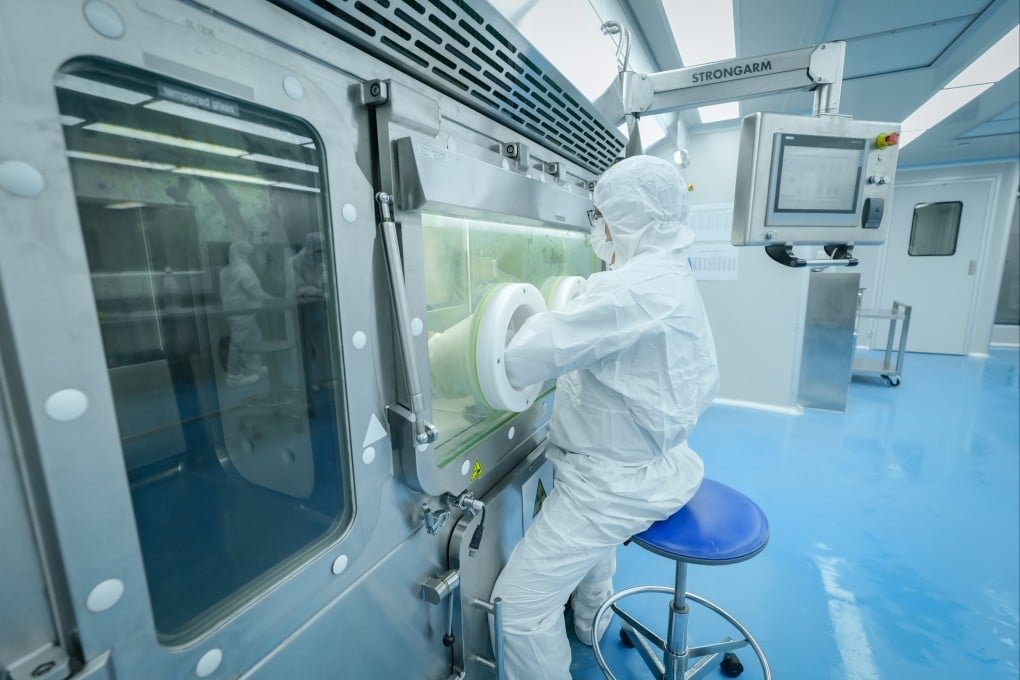
The University of Hong Kong aims to mass-produce radioligand therapies in the Northern Metropolis, targeting cancers such as nasopharyngeal carcinoma
The University of Hong Kong (HKU) is moving to establish a nuclear-medicine production facility in the Northern Metropolis development area, with the goal of halving the cost of imported therapies and expanding access.
The initiative builds on successful clinical trials conducted by HKU using radioligand therapy (RLT) between 2020 and 2023 for neuroendocrine tumours, according to Professor Victor Lee Ho-fun, chairman of HKU’s Department of Clinical Oncology.
The proposed plant, to be sited in the Northern Metropolis megaproject zone in Hong Kong’s New Territories, will aim to manufacture isotopes and delivery agents for use in treatment of nasopharyngeal cancer—a disease notably prevalent in southern China, including Hong Kong, Macau and Guangdong province.
Professor Lee pointed out that current therapies for nasopharyngeal cancer are “not very effective”, and the localised manufacturing would allow both innovation and cost-reduction.
Radioligand therapy uses radio-labelled molecules to deliver targeted radiation to cancer cells.
Hong Kong already widely utilises such nuclear-medicine techniques for prostate cancer.
HKU researchers are now adapting their RLT platform to tackle different tumour types.
A key enabler of the scheme is the Northern Metropolis initiative, which envisions new industrial infrastructure and innovation clusters across the region.
The government’s development plan states that the Northern Metropolis will support high-end professional services and innovation-technology industries, positioning it as a strategic site for advanced health-science manufacturing.
The university said the facility would contribute to the broader Hong Kong-Greater Bay Area ambition to establish a downstream production cluster for nuclear medicine and therapeutics.
By localising supply chains, HKU envisages cost savings and improved availability, particularly for cancers with regional concentration.
Observers say that if realised, the plant could add a layer to Hong Kong’s health-science ecosystem and reduce reliance on overseas imports of specialty isotopes and radiopharmaceuticals.
HKU emphasised that project planning remains in early stages, including regulatory approval, manufacturing licensing and site-design work.
The next steps involve detailed feasibility studies, partnership discussions with industry and hospitals, and alignment with radiation-safety frameworks.
The university noted that its prior achievements in nuclear-medicine research and the strategic land-use potential of the Northern Metropolis make the plan timely and regionally strategic.
Should the production facility advance as proposed, it may mark a significant step in Hong Kong’s transition from research to manufacturing in the life-sciences sector, expanding access to advanced cancer therapies and reinforcing the city’s role in the Hong Kong–Shenzhen science corridor.
The initiative builds on successful clinical trials conducted by HKU using radioligand therapy (RLT) between 2020 and 2023 for neuroendocrine tumours, according to Professor Victor Lee Ho-fun, chairman of HKU’s Department of Clinical Oncology.
The proposed plant, to be sited in the Northern Metropolis megaproject zone in Hong Kong’s New Territories, will aim to manufacture isotopes and delivery agents for use in treatment of nasopharyngeal cancer—a disease notably prevalent in southern China, including Hong Kong, Macau and Guangdong province.
Professor Lee pointed out that current therapies for nasopharyngeal cancer are “not very effective”, and the localised manufacturing would allow both innovation and cost-reduction.
Radioligand therapy uses radio-labelled molecules to deliver targeted radiation to cancer cells.
Hong Kong already widely utilises such nuclear-medicine techniques for prostate cancer.
HKU researchers are now adapting their RLT platform to tackle different tumour types.
A key enabler of the scheme is the Northern Metropolis initiative, which envisions new industrial infrastructure and innovation clusters across the region.
The government’s development plan states that the Northern Metropolis will support high-end professional services and innovation-technology industries, positioning it as a strategic site for advanced health-science manufacturing.
The university said the facility would contribute to the broader Hong Kong-Greater Bay Area ambition to establish a downstream production cluster for nuclear medicine and therapeutics.
By localising supply chains, HKU envisages cost savings and improved availability, particularly for cancers with regional concentration.
Observers say that if realised, the plant could add a layer to Hong Kong’s health-science ecosystem and reduce reliance on overseas imports of specialty isotopes and radiopharmaceuticals.
HKU emphasised that project planning remains in early stages, including regulatory approval, manufacturing licensing and site-design work.
The next steps involve detailed feasibility studies, partnership discussions with industry and hospitals, and alignment with radiation-safety frameworks.
The university noted that its prior achievements in nuclear-medicine research and the strategic land-use potential of the Northern Metropolis make the plan timely and regionally strategic.
Should the production facility advance as proposed, it may mark a significant step in Hong Kong’s transition from research to manufacturing in the life-sciences sector, expanding access to advanced cancer therapies and reinforcing the city’s role in the Hong Kong–Shenzhen science corridor.