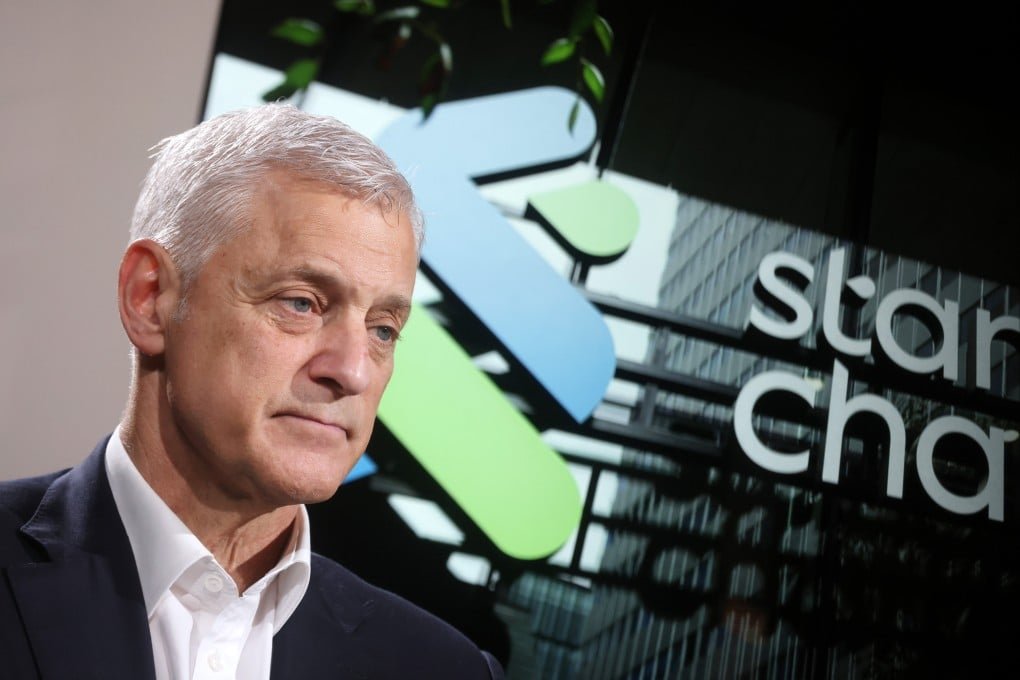
CEO Bill Winters says the bank will build on Hong Kong’s fintech framework and blockchain pilot projects to advance its next-generation banking model
Standard Chartered is placing Hong Kong at the core of its digital-finance ambitions as the bank gears up for a blockchain-driven future, according to Chief Executive Bill Winters.
In a recent interview the banker emphasised the city’s “pioneering regulatory framework” that supports experimentation with tokenisation, central-bank digital currency and other innovations.
Winters praised the Hong Kong Monetary Authority (HKMA) for its pilot programmes and regulatory sandboxes, which have enabled participants to safely work on projects such as tokenised deposits and stablecoins.
He added that Standard Chartered, as one of Hong Kong’s note-issuing banks, is actively engaging in the local fintech ecosystem and participating in the HKMA’s initiatives.
“We’re going to remain ahead on digital technology, and what we lose in margin, we’re going to make up in volume by providing a better service to our customers,” Winters said, signalling a shift in the bank’s operating model.
He noted that Hong Kong’s newly announced five-year fintech strategy will strengthen the city’s role as an innovation hub and aligns with the bank’s vision of a tokenised financial system.
For Standard Chartered, the commitment to Hong Kong fits within a broader push across Asia to deepen its digital and wealth-management franchises.
Winters has described the future of money as “fully digital” and predicted that virtually all transactions will eventually settle on blockchains.
Even as the timing of that transformation remains uncertain, he said, experimentation in Hong Kong offers a platform to shape how new settlement infrastructure and tokenised assets will operate.
Analysts observe that the move highlights Hong Kong’s renewed relevance in global finance as it seeks to reassert itself as a gateway to China and a platform for digital-asset innovation.
Standard Chartered’s strategy suggests that as banking income growth faces pressure, leveraging fintech and tokenisation may offer alternative growth pathways.
The bank’s focus on Hong Kong may also reflect confidence that the region will remain a favourable jurisdiction for experimentation in digital finance.
Winters reinforced that for the bank the question is no longer whether to invest in digital-asset infrastructure—but where and how.
With Hong Kong delivering a regulatory ecosystem that blends safety with innovation, Standard Chartered views the city as the natural anchor point for its digital-finance ambitions.
In a recent interview the banker emphasised the city’s “pioneering regulatory framework” that supports experimentation with tokenisation, central-bank digital currency and other innovations.
Winters praised the Hong Kong Monetary Authority (HKMA) for its pilot programmes and regulatory sandboxes, which have enabled participants to safely work on projects such as tokenised deposits and stablecoins.
He added that Standard Chartered, as one of Hong Kong’s note-issuing banks, is actively engaging in the local fintech ecosystem and participating in the HKMA’s initiatives.
“We’re going to remain ahead on digital technology, and what we lose in margin, we’re going to make up in volume by providing a better service to our customers,” Winters said, signalling a shift in the bank’s operating model.
He noted that Hong Kong’s newly announced five-year fintech strategy will strengthen the city’s role as an innovation hub and aligns with the bank’s vision of a tokenised financial system.
For Standard Chartered, the commitment to Hong Kong fits within a broader push across Asia to deepen its digital and wealth-management franchises.
Winters has described the future of money as “fully digital” and predicted that virtually all transactions will eventually settle on blockchains.
Even as the timing of that transformation remains uncertain, he said, experimentation in Hong Kong offers a platform to shape how new settlement infrastructure and tokenised assets will operate.
Analysts observe that the move highlights Hong Kong’s renewed relevance in global finance as it seeks to reassert itself as a gateway to China and a platform for digital-asset innovation.
Standard Chartered’s strategy suggests that as banking income growth faces pressure, leveraging fintech and tokenisation may offer alternative growth pathways.
The bank’s focus on Hong Kong may also reflect confidence that the region will remain a favourable jurisdiction for experimentation in digital finance.
Winters reinforced that for the bank the question is no longer whether to invest in digital-asset infrastructure—but where and how.
With Hong Kong delivering a regulatory ecosystem that blends safety with innovation, Standard Chartered views the city as the natural anchor point for its digital-finance ambitions.