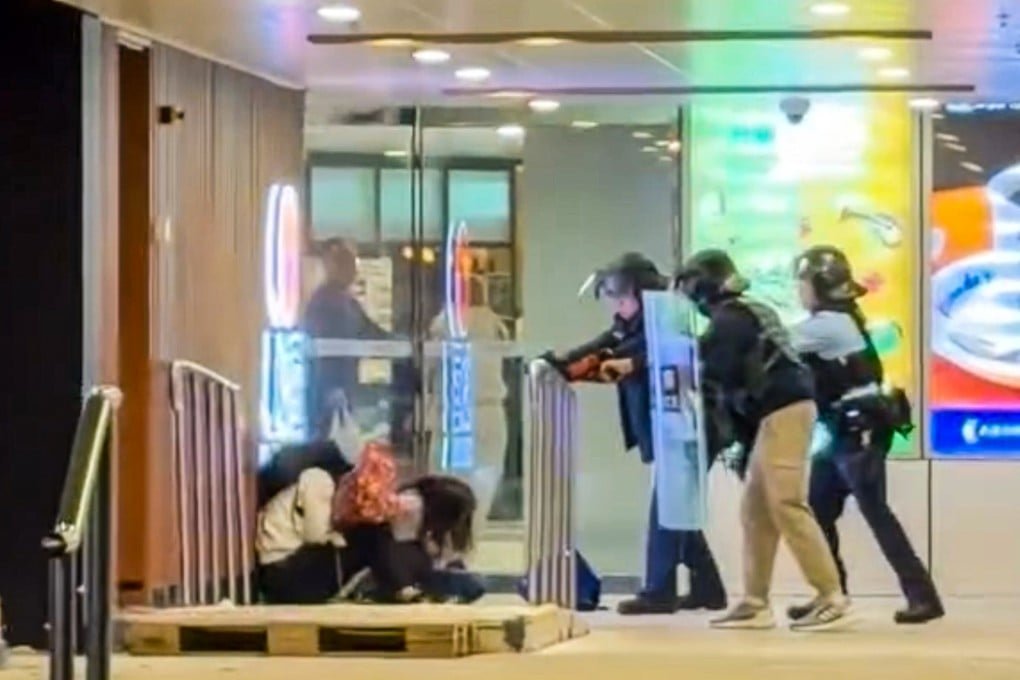
Sporadic incidents in which officers have fired on duty underscore strict firearm protocols and exceptional threat scenarios in Hong Kong
Hong Kong police officers discharge firearms only in highly unusual and extreme situations, under strict protocols governing the use of lethal force when there are imminent threats to life.
Shootings by police have been infrequent in the city’s recent history, reflecting both rigorous training and stringent rules on firearm deployment.
Most incidents that have drawn attention involve a lone suspect armed with a weapon who ignored repeated warnings and presented a clear danger to officers or civilians, prompting an officer to open fire as a last resort.
One notable case occurred in September 2024 when a man in North Point attacked family members with bladed weapons and charged at officers.
After issuing repeated warnings, the responding officer discharged his service weapon, fatally wounding the assailant.
Police defended the decision as consistent with departmental policy, which permits firearm use only when there is no viable alternative and there is an immediate threat to life.
That episode was widely cited in public discussion of the force’s firearm guidelines and training standards.
The Hong Kong Police Force emphasises that officers receive extensive preparation in de-escalation and firearms discipline, and that the use of lethal force is always subject to internal review and potential legal scrutiny.
Historical records show that such use of firearms by Hong Kong police remains extremely rare relative to the volume of law enforcement operations in the city.
Decades-past events include instances where officers fired in self-defence against violent suspects, but these are notable precisely for their scarcity and the serious circumstances in which they occurred, such as violent confrontations or imminent threats.
The city’s policing policies are designed to prioritise preservation of life, with live fire deployed only when other means cannot neutralise an immediate danger.
The rarity of shootings illustrates both the restraint exercised by the force and the unique conditions that must be met for an officer to justify the discharge of a firearm while on duty.
Shootings by police have been infrequent in the city’s recent history, reflecting both rigorous training and stringent rules on firearm deployment.
Most incidents that have drawn attention involve a lone suspect armed with a weapon who ignored repeated warnings and presented a clear danger to officers or civilians, prompting an officer to open fire as a last resort.
One notable case occurred in September 2024 when a man in North Point attacked family members with bladed weapons and charged at officers.
After issuing repeated warnings, the responding officer discharged his service weapon, fatally wounding the assailant.
Police defended the decision as consistent with departmental policy, which permits firearm use only when there is no viable alternative and there is an immediate threat to life.
That episode was widely cited in public discussion of the force’s firearm guidelines and training standards.
The Hong Kong Police Force emphasises that officers receive extensive preparation in de-escalation and firearms discipline, and that the use of lethal force is always subject to internal review and potential legal scrutiny.
Historical records show that such use of firearms by Hong Kong police remains extremely rare relative to the volume of law enforcement operations in the city.
Decades-past events include instances where officers fired in self-defence against violent suspects, but these are notable precisely for their scarcity and the serious circumstances in which they occurred, such as violent confrontations or imminent threats.
The city’s policing policies are designed to prioritise preservation of life, with live fire deployed only when other means cannot neutralise an immediate danger.
The rarity of shootings illustrates both the restraint exercised by the force and the unique conditions that must be met for an officer to justify the discharge of a firearm while on duty.