New Port Community System harnesses AI and blockchain to provide real-time tracking and streamline logistics across sea, land and air
The Hong Kong government has officially launched a digital Port Community System designed to provide comprehensive, real-time cargo tracking and enhance the efficiency and transparency of logistics operations, with more than 2,300 firms already registered to use the platform.
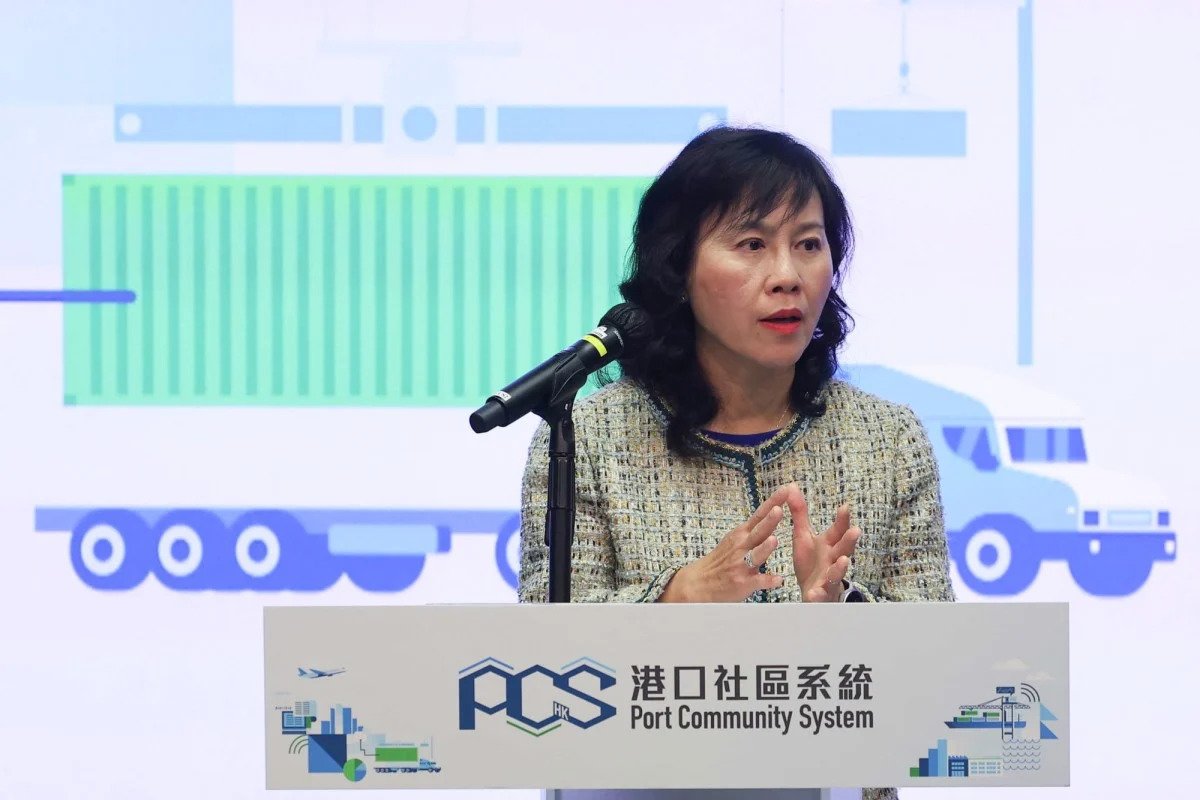
The system, unveiled by Secretary for Transport and Logistics Mable Chan at a ceremony on January 16, integrates logistics data across maritime, land and air transport and applies artificial intelligence and blockchain technologies to enable instantaneous tracking services and value-added capabilities.
Chan said the platform is a foundational element of Hong Kong’s ambition to strengthen its position as a global trade, maritime and logistics hub, and reflects close collaboration between government and industry stakeholders.
Under the new regime, registered logistics operators, freight forwarders and shippers can access unified information on cargo movement and alerts, which authorities say will reduce data fragmentation and improve supply-chain visibility.
The system also forms part of the Hong Kong Monetary Authority’s “Project CargoX,” which aims to use logistics data to enhance trade finance, offering small and medium-sized enterprises new avenues to secure financing by linking logistics data with financial services.
In addition to tracking functions, the Transport and Logistics Bureau plans to work with the Customs and Excise Department on digitalising inspection and detention notifications to further boost customs clearance efficiency.
Industry representatives have welcomed the initiative as an important step in modernising logistics operations and facilitating faster, more transparent cargo handling.
Officials said future plans include expanding offshore tracking to connect Hong Kong’s ports more closely with international shipping networks, further reinforcing the city’s integrated logistics infrastructure and global connectivity.
The system, unveiled by Secretary for Transport and Logistics Mable Chan at a ceremony on January 16, integrates logistics data across maritime, land and air transport and applies artificial intelligence and blockchain technologies to enable instantaneous tracking services and value-added capabilities.
Chan said the platform is a foundational element of Hong Kong’s ambition to strengthen its position as a global trade, maritime and logistics hub, and reflects close collaboration between government and industry stakeholders.
Under the new regime, registered logistics operators, freight forwarders and shippers can access unified information on cargo movement and alerts, which authorities say will reduce data fragmentation and improve supply-chain visibility.
The system also forms part of the Hong Kong Monetary Authority’s “Project CargoX,” which aims to use logistics data to enhance trade finance, offering small and medium-sized enterprises new avenues to secure financing by linking logistics data with financial services.
In addition to tracking functions, the Transport and Logistics Bureau plans to work with the Customs and Excise Department on digitalising inspection and detention notifications to further boost customs clearance efficiency.
Industry representatives have welcomed the initiative as an important step in modernising logistics operations and facilitating faster, more transparent cargo handling.
Officials said future plans include expanding offshore tracking to connect Hong Kong’s ports more closely with international shipping networks, further reinforcing the city’s integrated logistics infrastructure and global connectivity.