Industrial advances in Chinese defence steel coincide with the indefinite closure and planned sale of the Conshohocken steel facility in Pennsylvania
China has achieved a significant technological advance in the production of high-performance armour steel, increasing output efficiency by roughly thirty per cent through the adoption of new tooling and process improvements, while a major United States plate-finishing facility that once supported defence and infrastructure steel supplies has ceased operations amid weak demand and financial losses.
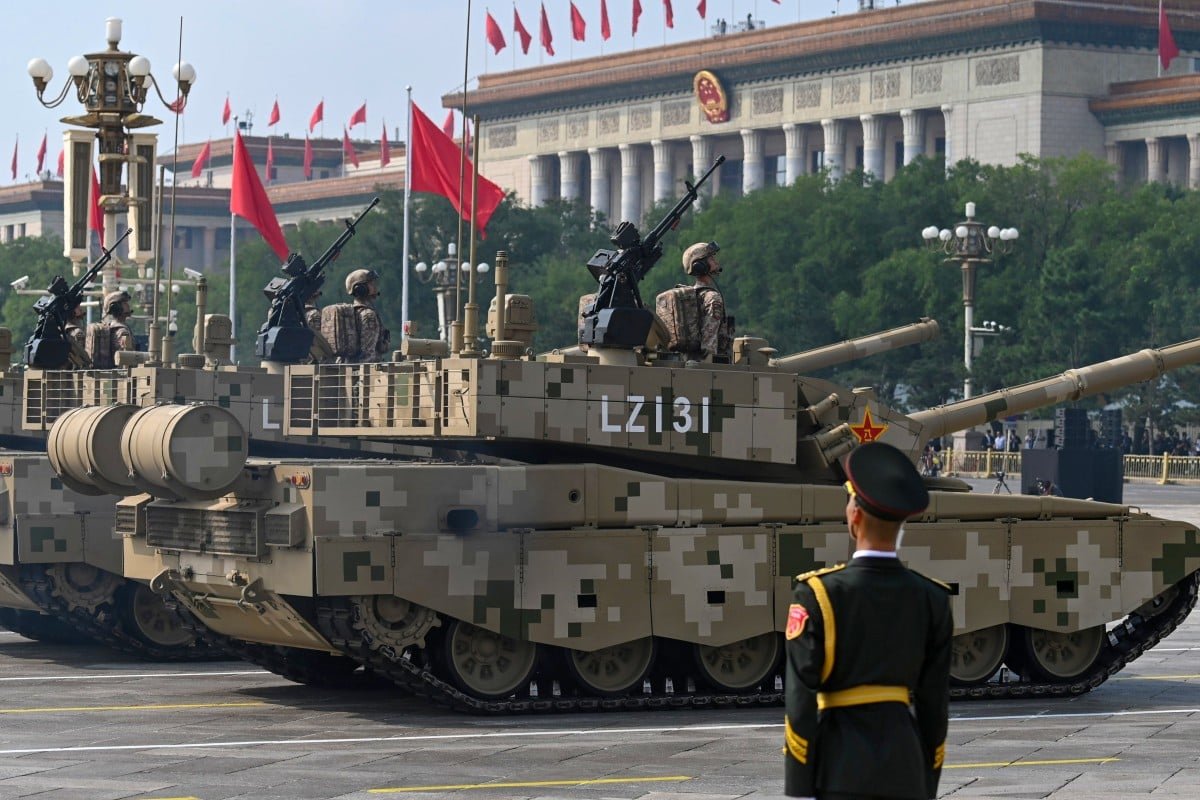
Chinese state-linked supplier Inner Mongolia First Machinery Group resolved key technical challenges in producing ultra-high strength armour steel for use in armoured vehicles and tanks, upgrading cutting tools with materials such as cubic boron nitride to extend tool life and allowing larger quantities of specialised steel to be manufactured at lower cost and higher throughput.
These improvements form part of Beijing’s ongoing efforts to enhance its indigenous defence industrial base and supply chain capabilities at a time when the global landscape for military and specialised steels is in flux.
In contrast, Cleveland-Cliffs’ Conshohocken plate-finishing plant in Plymouth Township, Pennsylvania — a facility with longstanding ties to the U.S. defence industrial supply chain — was indefinitely idled in mid-2025 as part of a broader shutdown of three specialised plants by the American steelmaker.
The company cited insufficient demand and unfavourable pricing for products such as specialty plates and high-carbon steel sheets, which fall outside its core flat-rolled steel focus, as reasons for the closures.
The Conshohocken facility, which employed around one hundred fifteen workers and provided finished steel plates for military, commercial and infrastructure applications, has since been listed for sale, and local reporting indicated it is scheduled to officially close in November.
The juxtaposition of China’s boosted armour steel production and the shuttering of a specialised U.S. steel plant highlights shifting dynamics within the global defence-related metals market.
Armour steel — characterised by extreme hardness, high toughness and low thermal conductivity — is a critical material for military platforms ranging from tanks to naval vessels.
China’s investment in technical upgrades reflects both civilian and defence industrial priorities, while the contraction of capacity at facilities such as Conshohocken underscores broader pressures on niche steel segments in the United States.
Analysts note that the closure of specialised finishing works could affect supply chains for certain defence and heavy industrial products, even as mainstream flat-rolled steel production remains robust for broader industrial needs.
Chinese state-linked supplier Inner Mongolia First Machinery Group resolved key technical challenges in producing ultra-high strength armour steel for use in armoured vehicles and tanks, upgrading cutting tools with materials such as cubic boron nitride to extend tool life and allowing larger quantities of specialised steel to be manufactured at lower cost and higher throughput.
These improvements form part of Beijing’s ongoing efforts to enhance its indigenous defence industrial base and supply chain capabilities at a time when the global landscape for military and specialised steels is in flux.
In contrast, Cleveland-Cliffs’ Conshohocken plate-finishing plant in Plymouth Township, Pennsylvania — a facility with longstanding ties to the U.S. defence industrial supply chain — was indefinitely idled in mid-2025 as part of a broader shutdown of three specialised plants by the American steelmaker.
The company cited insufficient demand and unfavourable pricing for products such as specialty plates and high-carbon steel sheets, which fall outside its core flat-rolled steel focus, as reasons for the closures.
The Conshohocken facility, which employed around one hundred fifteen workers and provided finished steel plates for military, commercial and infrastructure applications, has since been listed for sale, and local reporting indicated it is scheduled to officially close in November.
The juxtaposition of China’s boosted armour steel production and the shuttering of a specialised U.S. steel plant highlights shifting dynamics within the global defence-related metals market.
Armour steel — characterised by extreme hardness, high toughness and low thermal conductivity — is a critical material for military platforms ranging from tanks to naval vessels.
China’s investment in technical upgrades reflects both civilian and defence industrial priorities, while the contraction of capacity at facilities such as Conshohocken underscores broader pressures on niche steel segments in the United States.
Analysts note that the closure of specialised finishing works could affect supply chains for certain defence and heavy industrial products, even as mainstream flat-rolled steel production remains robust for broader industrial needs.