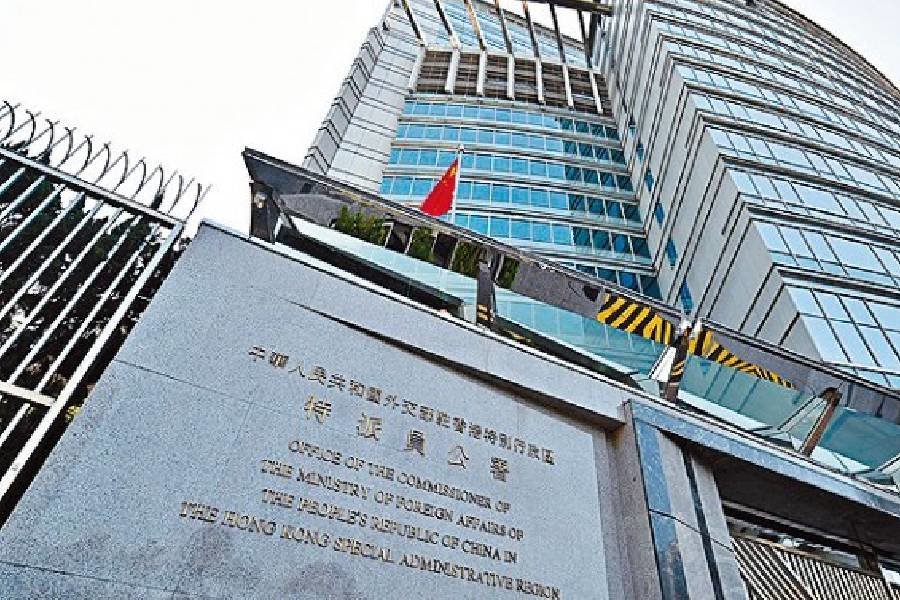
China’s representative in Hong Kong decries U.S. legislative efforts targeting Hong Kong Economic and Trade Offices as interference in internal affairs
A senior spokesperson for the Office of the Commissioner of China’s Ministry of Foreign Affairs in the Hong Kong Special Administrative Region has issued a forceful denunciation of recent actions by United States lawmakers seeking to strip Hong Kong’s Economic and Trade Offices of their privileges and immunities in the United States.
The statement criticised the reintroduction of legislation that would require the U.S. State Department to review and potentially revoke the diplomatic status of the Hong Kong Economic and Trade Offices — permanent representative bodies promoting Hong Kong’s commercial and cultural ties in cities including Washington, New York and San Francisco — as unfounded and politically motivated.
U.S. representatives, led by a bipartisan group in Congress, have advanced a version of the Hong Kong Economic and Trade Office Certification Act that would obligate the U.S. president to determine whether the offices merit the special treatment historically afforded under U.S. law and could lead to the termination of their operations if they fail to meet criteria linked to Hong Kong’s autonomy.
Beijing’s liaison office responded that these efforts “smear” the city’s governance framework, undermine normal bilateral exchanges, and constitute unwarranted interference in China’s internal affairs.
The statement asserted that the Hong Kong Economic and Trade Offices play a constructive role in fostering economic, trade and cultural cooperation between Hong Kong and the United States and that questioning their legitimacy runs counter to the principles of international law and established norms governing interstate relations.
A spokesperson warned that continued pursuit of this legislative agenda would elicit “resolute countermeasures” and urged U.S. politicians to reconsider what Beijing described as their “political self-interest” in targeting Hong Kong’s status.
The controversy unfolds against a backdrop of longstanding U.S. scrutiny of Hong Kong’s governance since the implementation of the national security law, with critics in Washington arguing that Beijing’s influence has eroded the city’s autonomy and justified reevaluation of its institutions.
Supporters of the bill in the U.S. Congress contend that reassessing the privileges of the trade offices is necessary given changes in Hong Kong’s political landscape, though these arguments have been emphatically rejected by Chinese and Hong Kong authorities.
The statement criticised the reintroduction of legislation that would require the U.S. State Department to review and potentially revoke the diplomatic status of the Hong Kong Economic and Trade Offices — permanent representative bodies promoting Hong Kong’s commercial and cultural ties in cities including Washington, New York and San Francisco — as unfounded and politically motivated.
U.S. representatives, led by a bipartisan group in Congress, have advanced a version of the Hong Kong Economic and Trade Office Certification Act that would obligate the U.S. president to determine whether the offices merit the special treatment historically afforded under U.S. law and could lead to the termination of their operations if they fail to meet criteria linked to Hong Kong’s autonomy.
Beijing’s liaison office responded that these efforts “smear” the city’s governance framework, undermine normal bilateral exchanges, and constitute unwarranted interference in China’s internal affairs.
The statement asserted that the Hong Kong Economic and Trade Offices play a constructive role in fostering economic, trade and cultural cooperation between Hong Kong and the United States and that questioning their legitimacy runs counter to the principles of international law and established norms governing interstate relations.
A spokesperson warned that continued pursuit of this legislative agenda would elicit “resolute countermeasures” and urged U.S. politicians to reconsider what Beijing described as their “political self-interest” in targeting Hong Kong’s status.
The controversy unfolds against a backdrop of longstanding U.S. scrutiny of Hong Kong’s governance since the implementation of the national security law, with critics in Washington arguing that Beijing’s influence has eroded the city’s autonomy and justified reevaluation of its institutions.
Supporters of the bill in the U.S. Congress contend that reassessing the privileges of the trade offices is necessary given changes in Hong Kong’s political landscape, though these arguments have been emphatically rejected by Chinese and Hong Kong authorities.