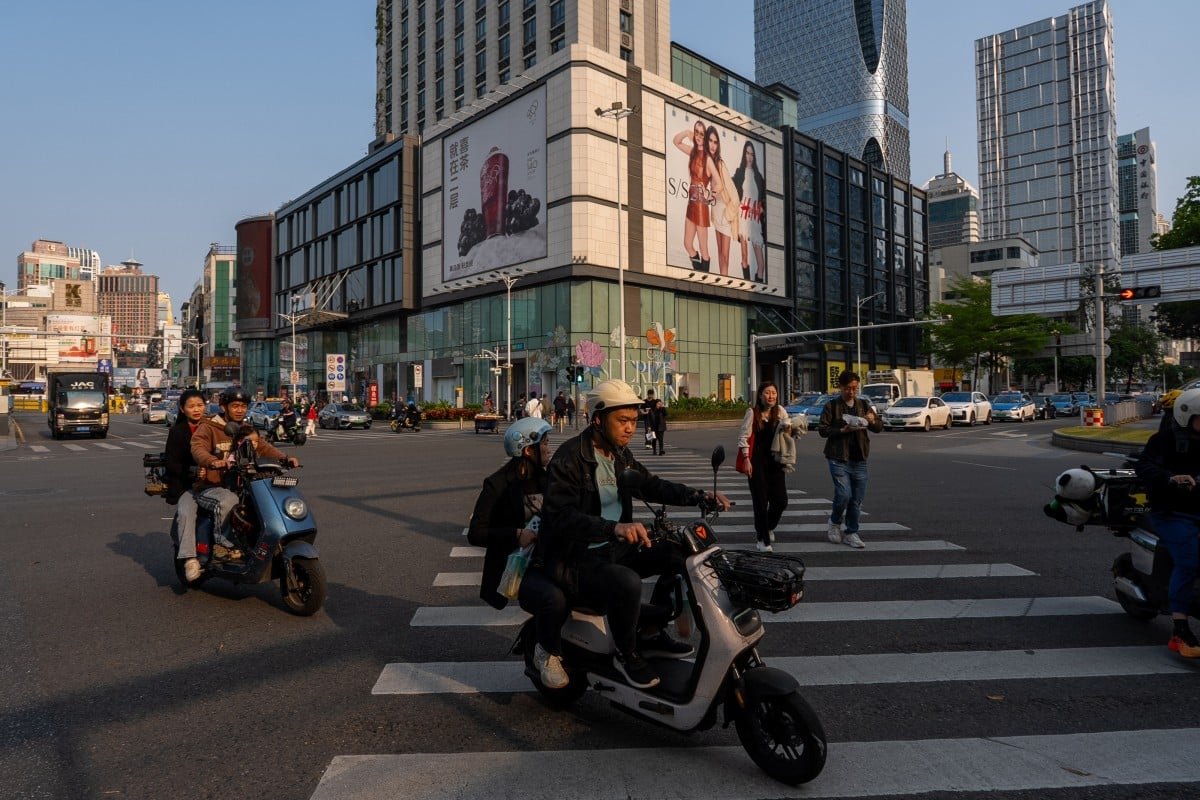
Despite its largest-ever consumption subsidy effort, China’s Guangdong province faces tepid public response amid economic uncertainty
Guangdong province’s ambitious consumer subsidy initiative, which launched in early November with a headline commitment of 3.5 billion yuan (roughly 492 million US dollars), has so far failed to ignite broad consumer enthusiasm.
The scheme, which offers discounts on goods from smartphones to snowboards and will run until March, aims to spur domestic spending ahead of the 2026 National Games and key holidays.
The programme reflects Beijing’s broader effort to rebalance its economy by boosting consumption as exports face trade-tension headwinds and the property sector remains under pressure.
Guangdong – China’s most populous province and a major export hub of 128 million people – is seeking to generate a surge in foot traffic and spending through subsidised goods transactions.
However, on-the-ground feedback has been underwhelming.
Many locals say the vouchers do not deliver sufficiently generous discounts to overcome lingering caution in the face of job-market fragility and broader economic uncertainty.
One Shenzhen resident remarked that the incentive “wasn’t enough” to justify a large purchase.
In addition, some retailers said the promotional pricing was opaque, and that the discount layers were modest in practice.
Analysts observe that Guangdong’s difficulties underscore structural headwinds facing China’s consumer-led growth model.
Although consumption voucher programmes have shown near-term impact in past years, their success is heavily conditioned on underlying consumer confidence.
With youth unemployment elevated, property market policy still unsettled and external demand softening, households remain in wait-and-see mode.
Moving forward, Guangdong officials plan to pivot the voucher campaign toward major events and holidays – including the National Games and Spring Festival – in the hope of creating targeted “spikes” in spending.
But for the momentum to be sustained, experts say the region may need to expand the scheme beyond durable goods and appliances to services such as dining, tourism and leisure, which could engage a larger share of household budgets.
If consumer sentiment does not improve, Guangdong’s high-profile subsidy effort may struggle to close the consumption gap it was meant to address.
The scheme, which offers discounts on goods from smartphones to snowboards and will run until March, aims to spur domestic spending ahead of the 2026 National Games and key holidays.
The programme reflects Beijing’s broader effort to rebalance its economy by boosting consumption as exports face trade-tension headwinds and the property sector remains under pressure.
Guangdong – China’s most populous province and a major export hub of 128 million people – is seeking to generate a surge in foot traffic and spending through subsidised goods transactions.
However, on-the-ground feedback has been underwhelming.
Many locals say the vouchers do not deliver sufficiently generous discounts to overcome lingering caution in the face of job-market fragility and broader economic uncertainty.
One Shenzhen resident remarked that the incentive “wasn’t enough” to justify a large purchase.
In addition, some retailers said the promotional pricing was opaque, and that the discount layers were modest in practice.
Analysts observe that Guangdong’s difficulties underscore structural headwinds facing China’s consumer-led growth model.
Although consumption voucher programmes have shown near-term impact in past years, their success is heavily conditioned on underlying consumer confidence.
With youth unemployment elevated, property market policy still unsettled and external demand softening, households remain in wait-and-see mode.
Moving forward, Guangdong officials plan to pivot the voucher campaign toward major events and holidays – including the National Games and Spring Festival – in the hope of creating targeted “spikes” in spending.
But for the momentum to be sustained, experts say the region may need to expand the scheme beyond durable goods and appliances to services such as dining, tourism and leisure, which could engage a larger share of household budgets.
If consumer sentiment does not improve, Guangdong’s high-profile subsidy effort may struggle to close the consumption gap it was meant to address.