Now that we know Trump is the target of an active criminal investigation, what's next? And how might this end for the former — and possibly future — president?

The FBI waded into uncharted territory when it executed a search warrant in August at former President Donald Trump's Mar-a-Lago club and personal residence in Palm Beach, Florida.

According to the unsealed warrant and an accompanying FBI manifest of items seized, the feds recovered 20 boxes from Mar-a-Lago and at least 11 sets of classified documents, including some marked top secret. The warrant also indicated that the Justice Department was investigating whether Trump violated three federal laws, including the Espionage Act, related to the handling of national security information.

The raid — and its continued fallout — sparked a national firestorm as the public grappled with the reality that there was an active criminal investigation into the former president of the United States and a current 2024 Republican presidential candidate.

After Trump announced his third presidential bid in November, Attorney General Merrick Garland tapped Jack Smith, a veteran war crimes prosecutor, to be special counsel in charge of any DOJ investigations involving Trump, including the classified documents inquiry and the sprawling Capitol riot probe.

The unprecedented position the department is in has prompted a slew of questions. Chief among them: What happens next, and how might this end for Trump?

Here are some possibilities:


The investigations conclude with no charges filed


In the US's 250-year history, no ex-commander in chief has ever faced criminal charges. And while the FBI's raid indicated that its investigation had entered an aggressive phase, the inquiry may very well wrap up without an indictment against Trump.

For a somewhat similar example of this option playing out, look to Trump's former personal defense attorney Rudy Giuliani. The FBI raided Giuliani's home and office last year and seized more than a dozen of his electronic devices as part of a criminal investigation into whether Giuliani broke foreign-lobbying laws.
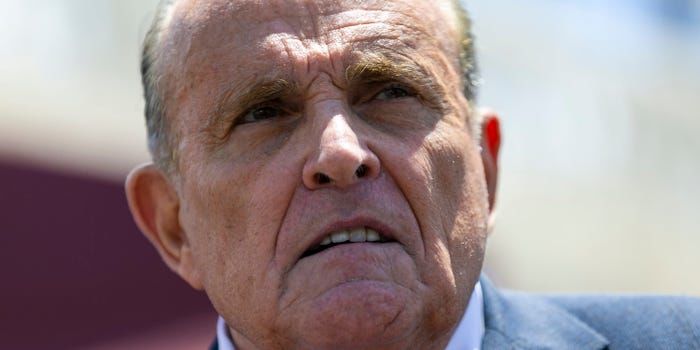
Former New York City Mayor Rudy Giuliani.


Over the summer, the feds returned Giuliani's devices to him, and The New York Times reported that he's unlikely to face criminal charges related to his work in Ukraine.

Barbara McQuade, a former US attorney for the Eastern District of Michigan, cautioned against assuming that the Mar-a-Lago raid would lead to an indictment and said it's possible the Justice Department wanted only to recover the records Trump had at his Florida property.

"In a case involving sensitive documents, a high priority for the government is to protect the content from disclosure, which can be difficult when trying a case in open court," McQuade told Insider. "The warrant may have been executed just to get the documents back. It was Trump who made the public announcement about it."

In the event that no charges are filed against him, Trump would have a clear path to landing in the White House again.


Trump agrees not to seek public office to avoid an indictment


On the other end of the spectrum, prosecutors could pursue criminal charges against the 45th president in connection to his handling of government records. If they did, it could go one of several ways.

One option with some historical precedent: a deal in which Trump agrees to suspend his campaign and not seek public office in exchange for avoiding charges.

In 2001, on his last day in office, then-President Bill Clinton cut a deal with the Whitewater special prosecutor Robert Ray: If Clinton gave up his license to practice law in his home state of Arkansas for five years, the Whitewater team wouldn't pursue criminal charges against him for lying under oath about his sexual relationship with the former White House intern Monica Lewinsky.

Whitewater investigators also imposed a $250,000 fine on Clinton, which he paid, and the Supreme Court suspended him from arguing cases before it. The court gave Clinton 40 days to explain why he shouldn't be disbarred after the Arkansas Bar Association suspended him, but rather than face disbarment, Clinton resigned his membership on the Supreme Court Bar.

Monica Lewinsky worked as a White House intern under President Bill Clinton.


In Trump's case, while the Justice Department's investigation into his handling of government records is now the most public-facing one, it isn't the only ongoing federal inquiry connected to him. The department is also conducting a wide-ranging investigation into the January 6, 2021, Capitol riot, and several former high-ranking White House officials have been subpoenaed as at least two grand juries investigate events leading up to the attack.

Prosecutors are said to be zeroing in on Trump's actions surrounding the riot, and CNN reported his lawyers had grown more concerned about Trump's legal exposure as the attorney general publicly emphasized that "no person is above the law."

Then there's Congress' separate investigation into January 6, which has highlighted several laws lawmakers think Trump may have broken in connection to the riot. The bipartisan select committee overseeing the investigation is expected to ask the DOJ to prosecute Trump on three charges: conspiracy to defraud the US, obstruction of an official proceeding, and inciting an insurrection.

Trump's defense lawyer Alina Habba previously appeared to allude to the possibility of him agreeing not to seek office again in exchange for avoiding criminal charges.

"I've sat across from him every time he gets frustrated, and I say to him, 'Mr. President, if you would like me to resolve all your litigation, you should announce that you are not running for office, and all of this will stop,'" Habba said on Real America's Voice.


Trump is indicted, convicted, and ends up behind bars — but can still run for president


If Trump is charged with a crime — or crimes — but forgoes a plea deal, the case will proceed to a criminal trial. According to the FBI's search warrant, prosecutors are looking into whether Trump violated three federal laws relate to his handling of national security information:

*  18 USC § 793, a key facet of the Espionage Act relating to the removal of information pertaining to the US's national defense. Conviction on this count carries a maximum penalty of 10 years in prison.

*  18 USC § 2071, which bars the concealment, removal, or mutilation generally of government records. Conviction on this count carries a maximum penalty of three years and disqualification from holding public office.

*  18 USC § 1519, which prohibits the destruction, alteration, or falsification of records "with the intent to impede, obstruct, or influence the investigation or proper administration of any matter" within the jurisdiction of federal agencies or departments. Conviction on this count carries a maximum penalty of 20 years in prison.

In all, the former president, if convicted, would be facing up to 33 years of incarceration, according to legal experts.

"These are serious crimes because they risk our national security," McQuade, the former US attorney, said. "The facts will matter. I would imagine that as with the investigation of Hillary Clinton, DOJ will want to assess intent."

She added that the inclusion of Section 1519 — the obstruction statute — "suggests that Trump may have tried to conceal from the government what he had."

"If so, that factor would tend to favor prosecution," she said.

That begs the question: If Trump is charged, convicted, and winds up in prison, can he still run for president in 2024?

The short answer is yes, and it's been done before.

As Insider previously reported, there's nothing in the Constitution that blocks someone from mounting a presidential run if they're behind bars. The socialist candidate Eugene Debs had been convicted of treason under the Espionage Act when he ran for president in 1920. And Lyndon LaRouche, who was convicted of mail fraud in 1988 and imprisoned, ran for president in 1992.

If he's convicted for violating two of the three laws mentioned above, Trump could still run for president, even if he's incarcerated. If he's convicted of violating Section 2071, however, he could be disqualified from holding office again.

That said, legal scholars told The New York Times that it's unlikely Trump would be blocked from running again even if he's convicted of a Section 2071 violation, citing Supreme Court rulings that indicate Congress cannot overrule the Constitution's eligibility criteria for the presidency.
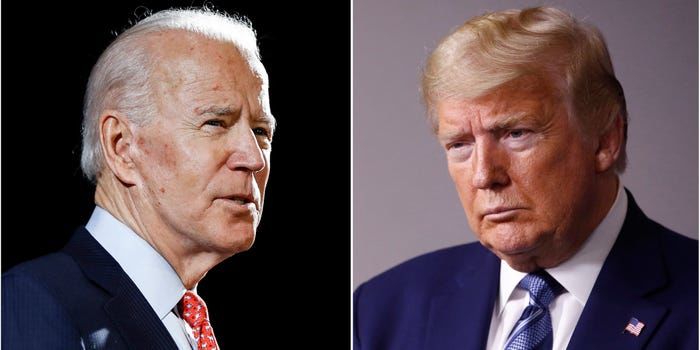

Biden grants Trump executive clemency


President Joe Biden could elect to grant Trump executive clemency — in the form of a pardon, commutation, amnesty, or reprieve — if Trump got indicted, convicted, or even faced the threat of indictment during Biden's administration. The most famous historical example of this was when President Gerald Ford pardoned his predecessor, Richard Nixon, after Nixon resigned from office amid the Watergate scandal.

Congress dropped its impeachment investigation into Nixon following his resignation, but he still faced the risk of criminal prosecution on both a state and a federal level. In September 1974, Ford granted Nixon a full and unconditional pardon for any crimes he may have committed while president.

While the move was seen as a step toward helping the country heal in the wake of Watergate, it's also widely believed to be one of the main reasons Ford lost his own bid to serve a full term in the 1976 election against Jimmy Carter.

Now, more than four decades later, legal experts suggest it's highly likely Biden will grant Trump a pardon or a commutation if he's convicted, indicted, or under threat of indictment to avoid further inflaming political divisions in the country.

"My 100% is really that there is no way that a former POTUS is going to spend time in jail, or that Biden (or any normal POTUS) would allow that," Asha Rangappa, a former FBI agent and a dean at Yale Law School, tweeted.

Aziz Huq, a law professor at the University of Chicago, made a similar point.

A narrow pardon for offenses related to the mishandling of classified information, as opposed to a blanket pardon like the one Ford granted Nixon, "might minimize damage to the rule of law, while shoring up our democratic norms," Huq wrote for Politico.

"While hardly perfect, it might well be the least bad option to protect our constitutional democracy," he added.

But it's worth noting that a presidential pardon wouldn't shield Trump from state charges.

The Fulton County district attorney's office is investigating whether Trump and his allies violated Georgia laws in their quest to nullify Biden's election victory in the state — and some legal experts say this investigation is a bigger risk to Trump than the Justice Department's.
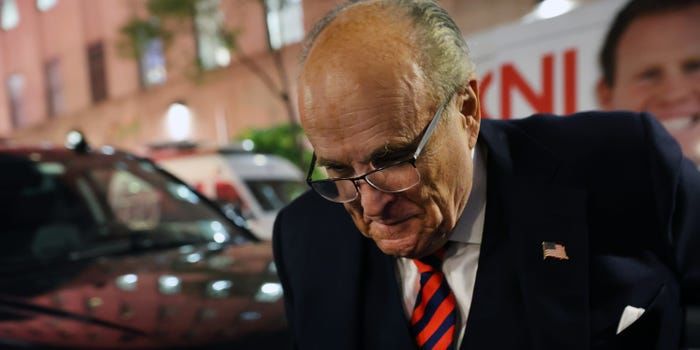
Local prosecutors in Georgia have targeted Rudy Giuliani in their investigation into efforts by Donald Trump and his allies to overturn the state's 2020 election results.


If Trump becomes a target of the investigation and faces state criminal charges, his only hope for clemency upon conviction would be from a Georgia pardons and parole board.


Trump gets indicted and acquitted following a trial


It's also possible that Trump will be criminally charged and opt not to cut a deal and that Biden won't step in with a clemency grant. If the case went to trial, a 12-person jury would have to reach a unanimous decision to convict, and Trump would be off the hook if just one juror broke from the others.

If he does sidestep the legal minefield he's in and makes it back into the White House in 2024, Trump and his allies have made clear that they intend to exact revenge on the Justice Department and the FBI.

It wouldn't be the first time Trump has interfered with the department's work.

He made headlines during his presidency for wondering why he couldn't have "my guys" at the "Trump Justice Department" do his bidding. He famously fired James Comey, the FBI director in charge of the investigation into the Trump campaign's links to Russia. Then he ordered the firing of the special counsel appointed to investigate Comey's firing (and backed off only when the White House counsel threatened to quit).

When he lost the 2020 election, Trump tried to enlist the Justice Department to overturn Biden's victory and attempted to oust the acting attorney general before backing off when top department officials threatened to resign en masse.

The former president has repeatedly posted op-eds to Truth Social suggesting that he'll seek payback if elected to office again.

Michael Caputo, a former top communications aide at the Department of Health and Human Services and one of Trump's most loyal lieutenants, also alluded to what could come next if Trump's reelected.

"At the end of this thing, the FBI is going to be four different departments spread across the federal government like seeds to the wind and probably based in Wichita," he told Insider.

Equity markets across Southeast Asia advanced as strong corporate earnings and continued foreign investment in regional manufacturing offset concerns over supply chain disruptions linked to renewed tensions affecting the Strait of Hormuz.
The second ASEAN-India Women Scientists Conclave in Phnom Penh brought together researchers and policymakers to strengthen regional scientific cooperation and support collaborative research across Southeast Asia and India.
Chinese authorities evacuated more than six hundred thousand people in Wenzhou as Typhoon Bavi approached the east coast after worsening monsoon conditions in the Philippines, where at least seventeen people were killed.
Royal Thai Police arrested an alleged organiser of a heroin trafficking network that used commercial flight attendants to move narcotics from Myanmar through Bangkok to Australia.
The State Railway of Thailand denied reports that a major private contractor intends to leave the airport rail link project, even as operational and financial challenges continue to delay progress on key transport infrastructure.
Revenue from foreign film productions reached a record level, reflecting the success of government incentives designed to attract international studios and promote Thailand's cultural and tourism sectors.
The Thai government has begun reorganising key ministries with the aim of boosting international tourism, increasing higher-value visitor spending, and reinforcing Thailand's position as a leading global travel destination.
Former Prime Minister Thaksin Shinawatra met Indonesia's president to discuss wealth management cooperation and broader regional economic issues, highlighting his continued influence in cross-border policy discussions.
Singapore signalled a policy shift toward protecting Chinese dialects as an important part of the nation's cultural heritage, responding to growing public interest in preserving ancestral languages alongside Mandarin.
An HSBC survey found that seventy-six percent of Singapore's mass affluent and high-net-worth investors use artificial intelligence to support investment decisions, although most continue to rely on human advisers before making final financial choices.
Singapore's Budget 2026 introduces a new artificial intelligence innovation hub at One-North alongside tax deductions of up to four hundred percent for qualifying corporate artificial intelligence investments, as the government steps up its digital transformation strategy.
Malaysia is restricting approvals for conventional data centres after warnings that rapid digital infrastructure growth is placing increasing pressure on electricity and water supplies, particularly in Johor and the Klang Valley, while prioritising projects linked to artificial intelligence.
Authorities in Ho Chi Minh City unveiled draft plans to provide grants of up to six hundred thousand United States dollars for individual semiconductor design projects as Vietnam seeks to accelerate the commercialization of locally developed microchips.
Vietnam's Ministry of Science and Technology inaugurated the country's first semiconductor pilot production centre, aiming to connect domestic research and chip design with commercial manufacturing.
Authorities approved a one billion United States dollar investment by LG Innotek to build a semiconductor package substrate manufacturing facility in Hai Phong, reinforcing Vietnam's strategy to expand into higher-value segments of the global chip supply chain by late two thousand twenty-eight.
The Special Advisory Council for Myanmar condemned plans for ASEAN foreign ministers to meet a representative of Myanmar's military government in Bangkok, arguing the move undermines the bloc's Five-Point Consensus and risks legitimizing the junta.
Senior economic policymakers are set to begin evaluating four hundred billion baht in proposed loan-funded projects intended to boost domestic demand, modernize infrastructure, and strengthen Thailand's appeal as a regional manufacturing and logistics hub.
Thailand's Meteorological Department warned of flash floods and dangerous sea conditions across southern and eastern provinces as Typhoon Bavi intensified the southwest monsoon, forcing Thai Airways and other regional carriers to cancel flights to Taipei and Shanghai.
Prime Minister Anutin Charnvirakul and Malaysian Prime Minister Anwar Ibrahim inaugurated a new road linking key border checkpoints in Putrajaya and signed agricultural agreements aimed at expanding bilateral trade beyond last year's twenty-seven billion United States dollars.
Thailand's Board of Investment approved nearly one point nine nine billion United States dollars in new projects led by East Asian technology companies, targeting artificial intelligence infrastructure, printed circuit boards, and clean energy while introducing a dedicated panel to assess the environmental impact of future data centre developments.
THEY THOUGHT Al WAS FREE LABOR. THEN THE BILL CAME: A new global survey suggests many corporate executives who expected artificial intelligence to reduce costs are instead facing soaring computing bills and unpredictable usage-based pricing driven by uncontrolled employee adoption.

Has the rush to adopt artificial intelligence across businesses—and the widespread layoffs that followed—actually produced the major savings the technology industry expected?

According to a new global survey by KPMG, one of the world's four largest accounting and consulting firms, a growing number of multinational corporate executives are now experiencing "AI bill shock" as invoices for artificial intelligence services continue to climb.

It appears that while artificial intelligence companies previously subsidized the cost of their large language models through contracts with fixed pricing, the enormous computing power now required to run increasingly sophisticated AI systems in massive data centers is reshaping the technology sector and driving significant price increases.

Only a few months ago, chief executives were encouraging—or even requiring—their employees to use artificial intelligence as much as possible for tasks such as software development, a phenomenon that became known as "token-maxxing."

Amazon even began measuring employees according to the number of AI "tokens" they consumed, as though they were competing in a video game, before discovering that some employees were launching artificial intelligence agents to perform unnecessary tasks simply to improve their rankings. Meta also encouraged greater use of AI tools by incorporating AI usage into employee performance evaluations.

Now, many organizations are beginning to hesitate. After employees became heavily dependent on AI-powered coding tools, companies are discovering that the cost of operating those systems is becoming increasingly difficult to control.

The KPMG report, first reported by the British technology news site The Register, surveyed two thousand one hundred and forty-five senior executives across twenty countries. It found that twenty-nine percent were surprised by the rising costs associated with artificial intelligence.

In other words, nearly one-third of senior executives appear to have been swept up in the excitement surrounding artificial intelligence without first developing a clear strategy for using it efficiently and economically—a reality becoming increasingly apparent now that, as the saying goes, "the meter is running."

A manager at Nvidia recently acknowledged that his research team now spends more on artificial intelligence than on employee salaries themselves. Axios also reported that an unidentified company spent five hundred million dollars in a single month on Claude usage fees after failing to place any limits on employees' licenses. Another recent study found that businesses described as the "most AI-dependent" now spend approximately seven thousand five hundred dollars per employee every month on artificial intelligence.

The report's findings reinforce concerns that a significant number of corporate leaders have treated artificial intelligence primarily as a tool for replacing existing resources—including employees—without sufficient planning, without understanding its full economic implications, and while remaining disconnected from the practical realities of implementation.

According to The Register, many executives' limited understanding of what has become known as the "economics of artificial intelligence"—a field that remains relatively new and still lacks extensive practical experience—has emerged as one of the biggest obstacles to successful deployment in the workplace.

"As usage-based pricing models become more common, rather than pricing fixed in advance, many organizations are only now beginning to develop the capabilities needed to forecast, monitor and manage AI spending effectively," the report's authors wrote.

The bad news, the publication argues, is that this situation has created a global financial environment that, by some measures, appears even more fragile than the period preceding the Great Depression.

Artificial intelligence—or, more precisely, the mythology surrounding it—is also increasingly being used as a disciplinary tool in workplaces. Fearing that AI could replace them, many employees are becoming less willing to negotiate over salaries and benefits. At the same time, many managers are using artificial intelligence not only to justify large-scale layoffs but also as a means of discouraging employees from challenging management decisions.

A new UK study found that sexually transmitted strains of Shigella spread more than twice as fast as other strains and show substantially higher antibiotic resistance, prompting calls for updated clinical guidance and targeted prevention measures.

Shigella, the bacterium responsible for dysentery, is best known as a disease transmitted through contaminated food and poor hand hygiene. It is one of the leading causes of diarrheal illness among children in developing countries and is responsible for more than two hundred thousand deaths worldwide each year.

However, certain strains of the bacterium, including Shigella sonnei and Shigella flexneri, are also transmitted through sexual contact, primarily via oral-anal contact. Over the past two decades, these strains have spread steadily across Western countries. Today, the disease is considered endemic within certain sexual networks of men who have sex with men.

New data from the UK Health Security Agency show that confirmed cases of potentially sexually transmitted Shigella rose to two thousand five hundred and sixty in twenty twenty-five, compared with two thousand and fifty-two in twenty twenty-three.

Researchers from the University of Cambridge, whose findings were published in The Lancet Infectious Diseases, analyzed three thousand five hundred and fourteen bacterial samples collected across the United Kingdom between two thousand four and two thousand twenty. They divided the cases into three groups: men aged sixteen to sixty who had not recently traveled to regions where Shigella is endemic—Africa, Asia, or Central and Latin America—and who were likely men who have sex with men, representing about thirty-four percent of all samples; other locally acquired infections, accounting for approximately thirty-six percent; and travel-associated cases, which made up the remainder.

The study's central finding was that sexually transmitted strains spread geographically more than twice as fast as other local strains. Over approximately two and a half years of bacterial evolution, the average distance between closely related strains transmitted among men who have sex with men reached one hundred and seventeen kilometers, compared with only forty-six kilometers among other locally circulating strains.

Researchers also identified a significantly larger number of separate transmission chains within this group—about one hundred more than in other populations occupying the same geographical area—even though men who have sex with men represent a minority of the male population in Britain. These strains also remained genetically distinct from other circulating strains for approximately fifteen years of evolution, compared with about two and a half years in other populations, indicating a prolonged and largely independent transmission network. The highest concentrations of cases were recorded in major urban centers, particularly London and Manchester.

Antibiotic resistance was considerably more common among sexually transmitted strains. Seventy percent were resistant to at least one clinically relevant antibiotic, compared with forty percent of other local strains and forty-nine percent of travel-associated strains.

Between twenty fifteen and twenty twenty, the annual growth rate of sexually transmitted strains increased by fifteen percent compared with strains transmitted through more traditional routes. A separate analysis of four hundred and sixty-eight samples collected in England between twenty sixteen and twenty twenty-one identified a strain that spread rapidly shortly after the COVID-19 pandemic while simultaneously developing resistance to three major antibiotics: ciprofloxacin, azithromycin and ceftriaxone.

Professor Kate Baker, one of the study's lead investigators from the Department of Genetics at the University of Cambridge, said many men who have sex with men remain unaware of the growing risk.

"Sexual transmission has become a permanent part of Shigella transmission patterns in the United Kingdom," Baker said. "It is important that this message reaches the relevant communities in order to help slow its spread."

She added that the problem does not involve a single strain but several overlapping strains evolving drug resistance simultaneously, meaning patients infected through sexual transmission may require treatment that differs substantially from those infected during international travel.


Another significant finding linked rising azithromycin resistance among men who have sex with men to historical treatment guidelines for gonorrhea. Until twenty eighteen, azithromycin formed part of the recommended combination therapy for gonorrhea. Researchers believe repeated exposure to the drug unintentionally provided Shigella carried by the same patients with a selective survival advantage. After clinical guidelines switched to ceftriaxone-only treatment in twenty eighteen, that selective advantage gradually declined and almost disappeared.

Professor Baker said the finding illustrates that antibiotic treatment directed at one disease can influence bacteria throughout the body rather than affecting only the intended pathogen.

Earlier studies by Baker and her team found that up to one-third of patients with sexually transmitted Shigella require hospitalization for an average of four to five days, while roughly two-thirds are simultaneously diagnosed with another sexually transmitted infection, including HIV. Transmission occurs through direct or indirect oral-anal contact. Shigella is exceptionally infectious: as few as ten bacteria are sufficient to cause disease, whereas Salmonella generally requires more than one thousand. An infected person may remain contagious for approximately one month.

Symptoms include watery diarrhea that may contain blood, mucus or pus in severe cases, nausea or vomiting, abdominal pain, fever above thirty-eight degrees Celsius and, in some cases, low mood. Worldwide, deaths from Shigella result from dehydration caused by severe diarrhea, bowel or stomach perforation, or malnutrition.

Mark Tweed of the Terrence Higgins Trust, an organization focused on HIV, described the infection as a growing concern among some gay and bisexual men with frequent sexual partnerships.

"Research has linked infection to having multiple sexual partners, drug use in sexual settings, the use of HIV pre-exposure medication, and simultaneous infection with other sexually transmitted diseases," Tweed said. "But these are statistical associations, not proof that any single behavior is responsible for the increase."

He urged anyone who suspects they may have Shigella infection to seek medical assessment.

Dr. Daniel Richardson, a sexual health consultant at the University Hospitals Sussex NHS Foundation Trust, said physicians treating patients with dysentery should routinely ask about sexual history and tailor treatment accordingly, noting that sexually transmitted strains show substantially higher antibiotic resistance than other forms of the disease.

Professor Baker emphasized that traditional public health advice for preventing Shigella, such as handwashing and food hygiene, is not sufficient to prevent sexual transmission.

"If you begin feeling unwell, or if you have recently recovered from diarrheal illness, avoid sexual activity for two weeks after complete recovery," she said. "Tell your doctor about your sexual history and ask for comprehensive screening for sexually transmitted infections."

She also recommended thoroughly washing the hands, pelvis and buttocks after anal contact, changing condoms between anal and oral sex, using latex gloves for finger penetration or fisting, and avoiding the sharing of sex toys or equipment used for rectal douching.

The South Korean semiconductor giant completed the second-largest public offering in history after overwhelming investor demand, strengthening its position as one of the biggest beneficiaries of the global artificial intelligence boom.
South Korean semiconductor giant SK Hynix has raised approximately twenty-six point five billion dollars on Nasdaq after attracting demand that exceeded the available offering by seven times and pricing its American Depositary Receipts, or ADRs, at one hundred and forty-nine dollars each.

The offering price is two point seven percent higher than the stock's average price in South Korea over the past three trading days.

SK Hynix shares were up two point five percent in South Korea, compared with a five percent gain in the Kospi index.

The company begins trading today in New York under the ticker symbol SKHY.

The transaction is the second-largest public offering in history.

The amount raised by SK Hynix is surpassed only by SpaceX's seventy-five billion dollar offering last month.

By comparison, Saudi oil giant Aramco raised twenty-five point six billion dollars in its 2019 Saudi listing, while Alibaba raised twenty-five billion dollars in its 2014 public offering.

Even so, the amount raised fell short of the twenty-nine billion dollars the company had originally hoped to secure before the recent decline in the South Korean stock market.

Over the past two years, SK Hynix has emerged as one of the primary beneficiaries of the global race to develop artificial intelligence systems, driven by its leadership in High Bandwidth Memory, or HBM, advanced memory chips.

These chips are a critical component in artificial intelligence accelerators developed by companies including Nvidia and Google, and demand has surged alongside the rapid expansion of large artificial intelligence models and data centers.

The company has capitalized on the market boom more effectively than its main competitors, Samsung Electronics and Micron, establishing itself as one of the semiconductor industry's most important suppliers to the artificial intelligence sector.

As a result, many investors view SK Hynix as one of the companies positioned to benefit most directly from the enormous investments major technology companies are making in advanced computing infrastructure.

The New York listing is intended to broaden SK Hynix's investor base and make it easier for U.S. investors to gain exposure to one of the biggest corporate beneficiaries of the artificial intelligence revolution.
A Ryanair Boeing 737-800 returned safely to Thessaloniki after a cabin window became dislodged during climb, causing rapid decompression and injuring a passenger seated beside the damaged window.
A Ryanair-operated Boeing 737-800 was forced to return to Thessaloniki, Greece, shortly after takeoff on Friday after a cabin window became dislodged during the climb, triggering rapid cabin decompression and a major in-flight emergency.

What is confirmed is that the aircraft landed safely, one passenger required medical treatment, and an official investigation into the cause is underway.

The aircraft had departed Thessaloniki for Memmingen, Germany, before the incident occurred.

Witnesses said a loud explosion-like noise was heard while the aircraft was climbing, followed almost immediately by the loss of cabin pressure.

Oxygen masks deployed automatically as the pilots initiated an emergency descent and turned the aircraft back toward its departure airport.

The passenger seated next to the damaged window, identified in multiple reports as a sixty-one-year-old Serbian man, was partially forced through the opening.

Witnesses said his head, neck and shoulders extended outside the aircraft while his seat belt prevented him from being completely ejected.

His wife reportedly held onto his legs while nearby passengers and several medically trained travelers helped pull him back into the cabin.

The man suffered neck injuries, abrasions and friction burns but remained conscious after the aircraft landed.

A pregnant passenger was also taken to hospital as a precaution and was later discharged.

Passengers described scenes of panic inside the cabin.

One said the sound resembled a tire exploding, followed by screaming as the aircraft rapidly lost altitude because of the decompression.

Another said the cabin crew appeared overwhelmed while everyone immediately put on oxygen masks.

Witnesses added that several passengers rushed forward to help the injured man, whose seat belt is widely credited with preventing a fatal outcome.

Ryanair confirmed that the flight returned to Thessaloniki after a passenger window became dislodged during flight.

The airline said the aircraft landed normally, passengers returned to the terminal, one passenger requested and received medical assistance on the ground, and a replacement aircraft later completed the journey to Germany.

The cause of the window failure has not yet been established.

Some early reports suggested that debris from the aircraft's right engine may have struck the window after an apparent engine malfunction.

What is confirmed is that investigators are examining the sequence of events.

The reported engine-debris scenario has not been officially confirmed.

The investigation is being led by North Macedonia's Aircraft Accident and Incident Investigation Committee, while the United States National Transportation Safety Board has been notified because the event involved an engine issue and cabin decompression.
The Philippines has extended its electronic visa programme to travellers from Denmark and Greenland, part of a broader effort to simplify entry procedures and attract more long-haul visitors from Europe.
Importers in Singapore are adopting blockchain technology to verify the origin and movement of premium durians, improving product traceability and helping combat fraud across regional agricultural supply chains.
Thailand's Constitutional Court is preparing to rule on government borrowing measures, with the decision expected to clarify the fiscal limits surrounding the administration's broader economic stimulus plans.
Chinese-linked companies have acquired oil assets in Myanmar vacated by international firms affected by sanctions, increasing Beijing's presence in the country's energy sector.
The International Energy Agency says escalating tensions between the United States and Iran could threaten the expected global oil surplus, increasing risks for energy-importing economies and manufacturers across Southeast Asia.
Japan has approved a forty-two million United States dollar grant to fund postgraduate education for young Cambodian civil servants, strengthening long-term cooperation and human resource development across the Mekong region.
The Thai government has introduced a thirty billion baht lending initiative to improve financing for farmers, aiming to strengthen agricultural production, food security and resilience against climate-related risks.
Toyota has inaugurated a new Hilux assembly line at the Phnom Penh Special Economic Zone, expanding its Southeast Asian manufacturing network while supporting Cambodia's growing industrial sector.
Indonesia's sovereign wealth fund Danantara has begun construction of a three trillion rupiah waste-to-energy facility in Bali, combining waste management improvements with new renewable power generation for the island.
The Philippines has criticised China for conducting an intercontinental ballistic missile launch without prior notification, saying the test heightens security concerns across the Indo-Pacific.
Myanmar military leader Min Aung Hlaing has travelled to Laos despite the wider diplomatic freeze imposed by ASEAN, while Thailand and other regional governments reaffirmed their commitment to existing restrictions on engagement with Myanmar's military leadership.
Singapore and Malaysia are finalising a digital immigration system that will eliminate physical passport stamping, with the new process expected to reduce congestion at one of the world's busiest land border crossings from early next year.
Indonesia's National Research and Innovation Agency confirmed the upcoming launch of the NEO-1 satellite, the country's first Earth observation satellite developed by domestic engineers with more than sixty-five percent locally produced components.
Environmental ministers meeting in Bali warned that regional fire hotspots increased by eighty-six percent during the first half of the year and called for stronger cross-border cooperation as severe El Niño conditions are expected to persist through August and September.
Malaysia has begun limiting approvals for non-artificial intelligence data centres in areas including Johor after rapid investment in digital infrastructure increased pressure on electricity generation and water resources.
The Tourism Authority of Thailand and AirAsia have signed a three-year cooperation agreement to promote travel across ASEAN after the airline carried more than one million passengers between Malaysia and Thailand during the first half of the year.
The Asian Development Bank has cut its growth forecast for developing Asia to four point nine percent, citing prolonged Middle East tensions and higher energy costs that are weighing on domestic demand, tourism recovery and import prices across the region.
Thai Prime Minister Anutin Charnvirakul and Malaysian Prime Minister Anwar Ibrahim inaugurated integrated customs facilities in Putrajaya and pledged to advance double-track rail links, deepening trade and transport integration between the two neighbouring ASEAN economies.
Thailand has secured more than four billion United States dollars in investment across battery manufacturing, vehicle components and charging infrastructure, strengthening its position as Southeast Asia's leading automotive production base as Japanese, South Korean and Chinese manufacturers expand local operations.
Thailand's Board of Investment has approved more than one point nine billion United States dollars in foreign investment for artificial intelligence infrastructure, semiconductor materials and clean energy projects, reinforcing the country's push to become a regional hub for next-generation technology manufacturing.
Record-breaking June temperatures catalyzed chemical reactions that exposed nearly three hundred million people to toxic smog levels, intensifying public health strains.
An unprecedented early-summer heatwave across Western Europe has triggered extensive ground-level ozone pollution, exposing approximately two thirds of the European Union population to toxic atmospheric conditions.

Ground-level ozone, a primary component of industrial smog, forms when high temperatures and intense sunlight accelerate chemical reactions between nitrogen oxides from vehicular traffic and human-driven methane emissions.

What is confirmed by regional atmospheric modeling and census data is that nearly three hundred million individuals, including an estimated one hundred million highly vulnerable children and elderly citizens, breathed air exceeding the European Union recommended maximum daily threshold of one hundred and twenty micrograms per cubic meter between June twenty-first and June twenty-eighth.

The scale of the pollution represents an immediate public health crisis, as ground-level ozone causes severe respiratory inflammation, damages lung tissue, and triggers acute asthma attacks.

The European Environment Agency previously attributed over sixty-three thousand annual deaths and billions of euros in agricultural crop damage to this specific pollutant.

During the late June climate anomaly, which the Copernicus Climate Change Service confirmed as the hottest June on record for Western Europe, more than seventy-two million people were subjected to extreme ozone concentrations exceeding one hundred and fifty micrograms per cubic meter, with peak levels reaching two hundred and thirty-three point seven micrograms in the German state of North Rhine-Westphalia.

Controlling this invisible atmospheric threat remains a complex regulatory challenge because ground-level ozone relies heavily on volatile organic compounds like methane, which accounts for one third of its formation.

While the European Union has successfully curbed urban nitrogen dioxide emissions over recent decades, the trading bloc currently lacks legally binding targets to reduce methane emissions stemming from its agricultural sector.

Environmental researchers note that the compounding pressure of high humidity, extreme temperatures, and elevated ozone creates a severe cumulative strain on human cardiovascular systems.

To mitigate immediate physiological risk during these escalating heat events, public health officials are advising citizens to restrict outdoor activities and avoid physical exercise during peak daylight hours as a critical safety measure.
The Royal Thai Embassy in Singapore hosted an exhibition celebrating traditional Thai textiles and contemporary design, using cultural exchange to strengthen Thailand's regional profile and diplomatic engagement.
Voters in Johor are preparing for a closely watched state election widely viewed as an important measure of support for Malaysia's federal governing coalition ahead of the next general election.
Officials meeting in Da Nang agreed to expand the use of artificial intelligence, digital reporting systems, and data-driven risk assessments to strengthen occupational safety standards across Southeast Asia's rapidly industrialising economies.
The AI Invoice Shock: Layoffs Didn't Save Managers Money — They Cost Them More
Concern: Sexually Transmitted Bacterium Among Men Develops Antibiotic Resistance
Following Massive Investor Demand: SK Hynix Raises 26.5 Billion Dollars on Nasdaq
Passenger Partially Pulled Out of Ryanair Jet After Cabin Window Fails Mid-Flight
Severe Heatwave Drives Dangerous Ground-Level Ozone Pollution Across Two Thirds of European Union
Flight Instructor Jumped to His Death — Student Landed the Plane: "You Know What You Need to Do"
The Physical and Electronic Barriers Disrupting Domestic Wireless Networks
France and Morocco Open World Cup Quarter-Finals as Collina Defends Refereeing
Tech Pulse: The Future of AI and Screen Culture
Global News Briefing: Escalating Geopolitical Tensions and Corporate Shakeups
Global News Brief: Escalating Conflicts, Public Health Crises, and World Cup Drama
Europe's Growing Struggle with Extreme Heat and Air Conditioning
Anthropic Reengineers Agentic Architecture to Shift Autonomous Workplace Automation to the Cloud
Apple Advances Late-Stage Operating Systems with Fourth Beta Deployments
Global Crisis Alert: Escalating Middle East Tensions and UK Political Upheaval
"A New Era of Testing": The Rare Launch of a Missile from a Chinese Nuclear Submarine - That Could Reach U.S. Soil
Japanese Technology Firm Fujitsu Launches Advanced Artificial Intelligence Tool for Corporate Disclosures
South Africa Officially Launches Nationwide Campaign for Highly Contested Local Government Elections
United Kingdom Commits Additional Funding for Unexploded Ordnance Clearance in Laos
Singapore Announces Stringent New Greenhouse Gas Regulations for Commercial Cooling Systems
Cambodia and Thailand Hold High-Level Border Security Talks at United Nations Headquarters
Myanmar Military Government and China Sign Major Agreement to Upgrade Media and Cultural Cooperation
Knife Attack at Swiss Train Station Leaves Three Injured in Suspected Act of Domestic Terrorism
Transnational Extortion Gang Threatens Canadian Police With Army of One Thousand Armed Operatives
Australia Imposes Forty-Two-Day Quarantine on Cruise Ship Passengers Following Deadly Hantavirus Outbreak
International Monetary Fund Unlocks Seven Hundred Million United States Dollars for Sri Lanka Following Economic Reforms
China and Canada Foreign Ministers Meet in Ottawa in Effort to Stabilize Strained Diplomatic Ties
Indonesia Demands Urgent United Nations Security Council Reform Amid Escalating Global Conflicts
Extreme Weather Patterns Trigger Severe Drought in Madagascar and Destructive Flooding in East Africa
Indian State of Karnataka Faces Political Upheaval as Chief Minister Siddaramaiah Abruptly Resigns
Philippines and Japan Reaffirm Defense Ties as Crucial for Indo-Pacific Regional Stability
Norway Joins French Nuclear Deterrence Initiative in Major Shift for European Security Architecture
Global Critical Mineral Alliances Expand as Western Nations Move to Counter Chinese Supply Dominance
United States Imposes Fifty Percent Tariffs on Mexican Steel and Aluminum Ahead of Trade Pact Review
European Union and China Head Toward Major Trade Conflict Over Clean Technology Exports
United States Economic Growth Severely Downgraded to One Point Six Percent as Stagflation Fears Mount
World Health Organization Warns Central African Ebola Epidemic is Outpacing Containment Efforts
United States Treasury Department Conditions Sanctions Relief on Reopening of the Strait of Hormuz
Iranian Air Defenses Intercept and Destroy United States Military Drone Over Bushehr Province
Iranian Armed Forces Launch Ballistic Missiles Toward Unspecified Targets Prompting Regional Condemnation
United Nations Secretary-General Warns Global Order Facing Highest Level of Conflict Since 1945
Israel Issues Sweeping Evacuation Orders in Southern Lebanon Amid Intensified Hezbollah Conflict
Russia Announces Systemic Military Strikes Targeting Ukrainian Defense and Energy Infrastructure
United States and Iranian Negotiators Reach Draft Agreement to Extend Ceasefire and Resume Nuclear Talks
United Nations Security Council Deeply Divided Over United States Capture of Venezuelan President
US and Iran Exchange Direct Military Strikes Amid Fragile Gulf Ceasefire
World Health Organization Warns of Catastrophic Ebola Outbreak in DR Congo
Russia Threatens New Wave of Strikes on Ukrainian Infrastructure and Embassies
Scientists Warn Atlantic Ocean Currents Could Collapse Faster Than Projected
Anthropic Reaches $900 Billion Valuation in Historic AI Funding Round