Thai regulators and law enforcement agencies have expanded investigations into illegal proxy businesses and seized millions of baht in assets linked to a prominent Chinese investor, with operations extending across northeastern Thailand and Koh Samui.
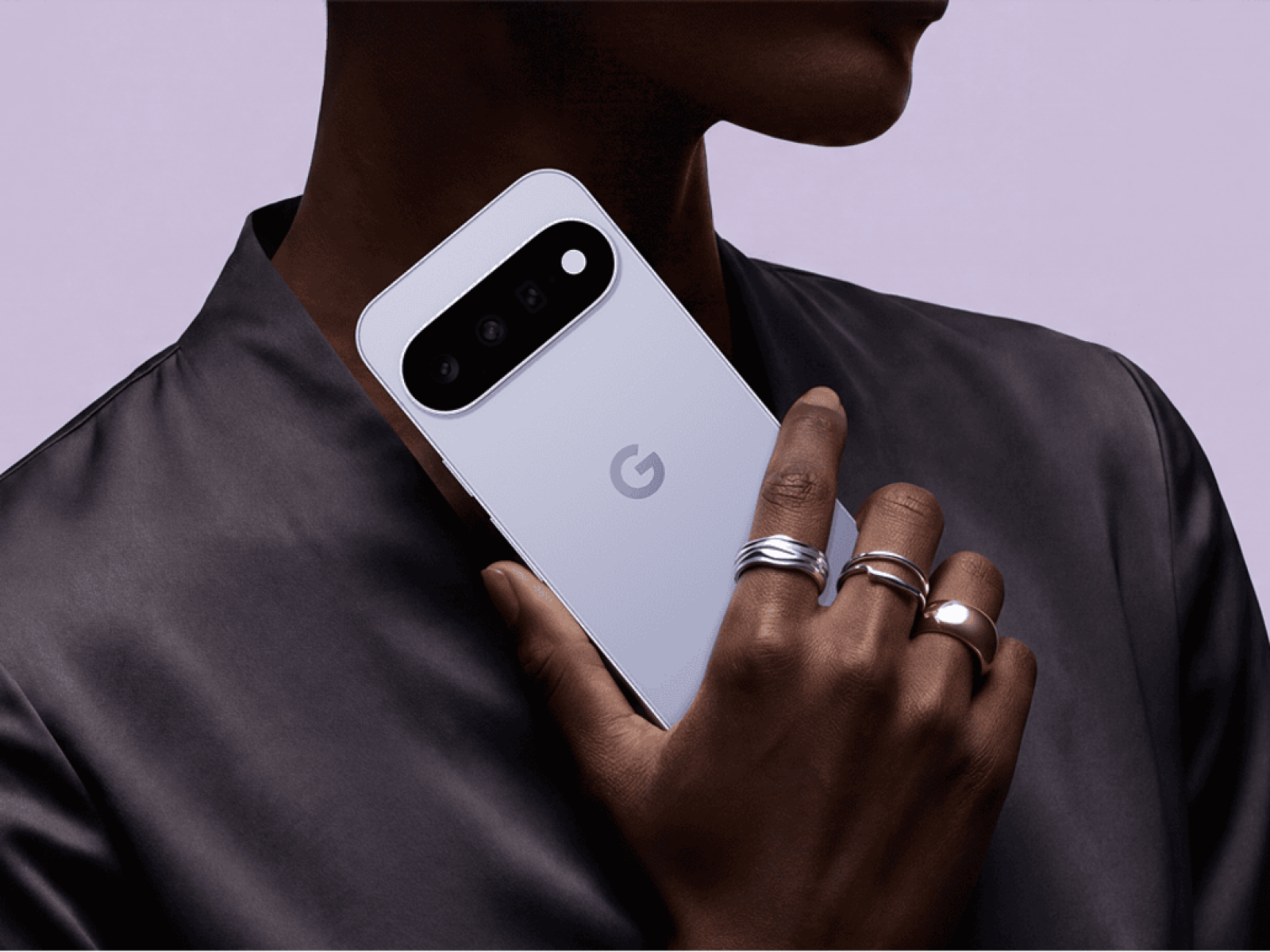
The new Pixel phones start at $899 alongside the Pixel Watch 5 and Google's first Pixel Tag tracker, as Google turns its devices into an increasingly integrated platform for Gemini.
Google has launched its Pixel 11 smartphone family with Gemini artificial intelligence woven more deeply into the devices, making clear that the company's hardware strategy is increasingly about giving its AI a permanent place in users' everyday lives.
The Pixel 11 generation, unveiled at Google's annual Made by Google event on August 12, consists of four phones: the Pixel 11, Pixel 11 Pro, Pixel 11 Pro XL and foldable Pixel 11 Pro Fold.
Google also introduced the Pixel Watch 5 and its first own-brand item tracker, the Pixel Tag, extending the Pixel ecosystem beyond phones while connecting more of those products to Gemini-powered services.
The strategy is significant because Google occupies an unusual position in the smartphone industry.
Unlike Apple, whose hardware business itself generates enormous revenue, Google controls Android and many of the services running across competing manufacturers' phones.
Pixel devices therefore serve not only as consumer products but as a showcase for how Google wants Android, Gemini and its broader software ecosystem to work together.
That role is especially visible in the Pixel 11. Google has added conventional annual upgrades to cameras, displays, battery life, durability and wireless charging, but many of the most prominent changes revolve around AI. Gemini can increasingly interpret what is happening across applications and media, assist proactively rather than waiting for a conventional search query, translate content and support AI-driven photography and communication features.
All four phones use Google's new Tensor G6 processor.
The chip places particular emphasis on AI workloads, with a substantially faster Tensor Processing Unit for machine-learning tasks.
Google says the design also improves everyday responsiveness and efficiency.
Contrary to some pre-launch claims, however, the Tensor G6 is not manufactured using Taiwan Semiconductor Manufacturing Company's two-nanometre process.
Google has described it as using the latest generation of the company's three-nanometre technology, correcting one of the more significant technical inaccuracies circulating before and around the launch.
The distinction illustrates Google's broader approach to Tensor.
The company has never positioned its custom processors purely as an attempt to win conventional benchmark contests against Qualcomm's Snapdragon chips or Apple's A-series processors.
Tensor gives Google tighter control over the hardware needed for its computational photography, security and increasingly its Gemini AI functions.
The Pixel 11 starts with 256 gigabytes of storage and a 48-megapixel main camera that Google says captures substantially more light than its predecessor.
A five-times telephoto camera supports up to thirty-times Super Zoom.
The Pro models push computational zoom considerably further, offering up to one hundred and twenty times magnification, alongside Google's latest photography and video-processing features.
Those features include Magic Capture, which can rapidly collect photographs and video around a moment so users have more material from which to select the best result.
The Pro phones also introduce new stabilization and high-resolution video capabilities as Google continues using software processing as a major point of differentiation against Apple's iPhone, Samsung's Galaxy flagships and increasingly sophisticated Chinese competitors.
One of the most visible hardware changes on the Pixel 11 Pro and Pro XL is HiLight, a programmable light incorporated into the rear camera area.
It can provide glanceable notifications and different visual effects depending on what the phone is doing, including interactions associated with Gemini.
The concept has obvious similarities to the light-based interface popularized by British smartphone maker Nothing, although Google's implementation is more tightly connected to its own notification and AI system.
The Pixel 11 Pro Fold receives a more evolutionary redesign.
Google has made the foldable almost ten percent lighter and roughly one millimetre thinner than the Pixel 10 Pro Fold, while redesigning its hinge and strengthening the outer display.
Google says its testing shows the new construction is three times more durable than the previous generation.
The changes address an area in which Chinese manufacturers including Honor and Xiaomi have pushed aggressively toward thinner and lighter folding phones.
Google is also strengthening the magnetic accessory ecosystem introduced with the previous Pixel generation.
The Pixel 11 family supports Pixelsnap magnetic accessories and Qi2 wireless charging, allowing compatible chargers, stands and grips to attach magnetically.
Wireless charging can reach up to twenty-five watts on supported models.
The other major hardware debut is Pixel Tag, Google's direct answer to Apple's AirTag and Samsung's Galaxy SmartTag.
Priced at $29 in the United States, the small tracker works with Google's Find Hub network and supports ultra-wideband technology for precision finding on compatible devices.
It also incorporates newer Bluetooth technology designed to improve directional and distance measurements.
Pixel Tag gives Google something Apple has possessed since 2021: a first-party tracking accessory integrated into its own device ecosystem.
Google's potential advantage is scale.
Its finding network can draw on the enormous global population of Android devices, although the experience and precision available to an individual user depend on compatible hardware and software.
Pixel Tag is scheduled to become available on November 11.
The Pixel Watch 5 extends the same AI-centered strategy to the wrist.
Google has retained the familiar circular design while upgrading processing, navigation, fitness and health functions.
The watch includes features for monitoring blood-pressure trends and detecting potentially dangerous breathing or blood-oxygen events, although some health functions require regulatory approval before they can be activated in particular markets.
Gemini is becoming more prominent on the watch as well, supporting AI-assisted fitness functions and other interactions that reduce the need to reach for a phone.
Google is effectively trying to make Gemini available across an expanding collection of personal devices rather than confining the assistant to a chatbot window.
That integration also provides Google with a commercial route into its paid AI services.
Buyers of the Pro phones receive a limited promotional period of Google's AI Pro subscription, giving them access to more advanced Gemini capabilities.
The phones therefore function partly as distribution for an AI business in which Google is competing directly with OpenAI, Microsoft, Anthropic and other technology companies.
Consumers will pay more for the new hardware.
The Pixel 11 starts at $899 in the United States, while the Pixel 11 Pro begins at $1,099 and the Pro XL at $1,299.
The Pixel 11 Pro Fold starts at $1,899.
The three conventional phones are each about $100 more expensive at launch than their equivalent previous-generation starting prices, although the comparison is affected by Google's move to higher base storage configurations.
The price increase places Pixel more firmly in premium-iPhone and Galaxy territory at a time when Google remains a much smaller smartphone manufacturer than Apple or Samsung.
That raises the stakes for the company's proposition: buyers are increasingly being asked to pay flagship prices not because Pixel necessarily dominates conventional hardware specifications, but because Google believes the combination of Android, Tensor, computational photography and Gemini can provide a differentiated experience.
The Pixel 11 phones are available for preorder and are scheduled to reach stores on August 20. The Pixel Watch 5 starts at $399, while the $29 Pixel Tag follows in November.
Taken together, the announcements show where Google's consumer-device strategy is heading.
Pixel remains a hardware brand, but the phones, watch and tracker increasingly form the physical layer of a much larger Google ecosystem.
With the Pixel 11 generation, Gemini is no longer simply another application installed on Google's devices; it is becoming one of the main reasons those devices exist.
The Pixel 11 generation, unveiled at Google's annual Made by Google event on August 12, consists of four phones: the Pixel 11, Pixel 11 Pro, Pixel 11 Pro XL and foldable Pixel 11 Pro Fold.
Google also introduced the Pixel Watch 5 and its first own-brand item tracker, the Pixel Tag, extending the Pixel ecosystem beyond phones while connecting more of those products to Gemini-powered services.
The strategy is significant because Google occupies an unusual position in the smartphone industry.
Unlike Apple, whose hardware business itself generates enormous revenue, Google controls Android and many of the services running across competing manufacturers' phones.
Pixel devices therefore serve not only as consumer products but as a showcase for how Google wants Android, Gemini and its broader software ecosystem to work together.
That role is especially visible in the Pixel 11. Google has added conventional annual upgrades to cameras, displays, battery life, durability and wireless charging, but many of the most prominent changes revolve around AI. Gemini can increasingly interpret what is happening across applications and media, assist proactively rather than waiting for a conventional search query, translate content and support AI-driven photography and communication features.
All four phones use Google's new Tensor G6 processor.
The chip places particular emphasis on AI workloads, with a substantially faster Tensor Processing Unit for machine-learning tasks.
Google says the design also improves everyday responsiveness and efficiency.
Contrary to some pre-launch claims, however, the Tensor G6 is not manufactured using Taiwan Semiconductor Manufacturing Company's two-nanometre process.
Google has described it as using the latest generation of the company's three-nanometre technology, correcting one of the more significant technical inaccuracies circulating before and around the launch.
The distinction illustrates Google's broader approach to Tensor.
The company has never positioned its custom processors purely as an attempt to win conventional benchmark contests against Qualcomm's Snapdragon chips or Apple's A-series processors.
Tensor gives Google tighter control over the hardware needed for its computational photography, security and increasingly its Gemini AI functions.
The Pixel 11 starts with 256 gigabytes of storage and a 48-megapixel main camera that Google says captures substantially more light than its predecessor.
A five-times telephoto camera supports up to thirty-times Super Zoom.
The Pro models push computational zoom considerably further, offering up to one hundred and twenty times magnification, alongside Google's latest photography and video-processing features.
Those features include Magic Capture, which can rapidly collect photographs and video around a moment so users have more material from which to select the best result.
The Pro phones also introduce new stabilization and high-resolution video capabilities as Google continues using software processing as a major point of differentiation against Apple's iPhone, Samsung's Galaxy flagships and increasingly sophisticated Chinese competitors.
One of the most visible hardware changes on the Pixel 11 Pro and Pro XL is HiLight, a programmable light incorporated into the rear camera area.
It can provide glanceable notifications and different visual effects depending on what the phone is doing, including interactions associated with Gemini.
The concept has obvious similarities to the light-based interface popularized by British smartphone maker Nothing, although Google's implementation is more tightly connected to its own notification and AI system.
The Pixel 11 Pro Fold receives a more evolutionary redesign.
Google has made the foldable almost ten percent lighter and roughly one millimetre thinner than the Pixel 10 Pro Fold, while redesigning its hinge and strengthening the outer display.
Google says its testing shows the new construction is three times more durable than the previous generation.
The changes address an area in which Chinese manufacturers including Honor and Xiaomi have pushed aggressively toward thinner and lighter folding phones.
Google is also strengthening the magnetic accessory ecosystem introduced with the previous Pixel generation.
The Pixel 11 family supports Pixelsnap magnetic accessories and Qi2 wireless charging, allowing compatible chargers, stands and grips to attach magnetically.
Wireless charging can reach up to twenty-five watts on supported models.
The other major hardware debut is Pixel Tag, Google's direct answer to Apple's AirTag and Samsung's Galaxy SmartTag.
Priced at $29 in the United States, the small tracker works with Google's Find Hub network and supports ultra-wideband technology for precision finding on compatible devices.
It also incorporates newer Bluetooth technology designed to improve directional and distance measurements.
Pixel Tag gives Google something Apple has possessed since 2021: a first-party tracking accessory integrated into its own device ecosystem.
Google's potential advantage is scale.
Its finding network can draw on the enormous global population of Android devices, although the experience and precision available to an individual user depend on compatible hardware and software.
Pixel Tag is scheduled to become available on November 11.
The Pixel Watch 5 extends the same AI-centered strategy to the wrist.
Google has retained the familiar circular design while upgrading processing, navigation, fitness and health functions.
The watch includes features for monitoring blood-pressure trends and detecting potentially dangerous breathing or blood-oxygen events, although some health functions require regulatory approval before they can be activated in particular markets.
Gemini is becoming more prominent on the watch as well, supporting AI-assisted fitness functions and other interactions that reduce the need to reach for a phone.
Google is effectively trying to make Gemini available across an expanding collection of personal devices rather than confining the assistant to a chatbot window.
That integration also provides Google with a commercial route into its paid AI services.
Buyers of the Pro phones receive a limited promotional period of Google's AI Pro subscription, giving them access to more advanced Gemini capabilities.
The phones therefore function partly as distribution for an AI business in which Google is competing directly with OpenAI, Microsoft, Anthropic and other technology companies.
Consumers will pay more for the new hardware.
The Pixel 11 starts at $899 in the United States, while the Pixel 11 Pro begins at $1,099 and the Pro XL at $1,299.
The Pixel 11 Pro Fold starts at $1,899.
The three conventional phones are each about $100 more expensive at launch than their equivalent previous-generation starting prices, although the comparison is affected by Google's move to higher base storage configurations.
The price increase places Pixel more firmly in premium-iPhone and Galaxy territory at a time when Google remains a much smaller smartphone manufacturer than Apple or Samsung.
That raises the stakes for the company's proposition: buyers are increasingly being asked to pay flagship prices not because Pixel necessarily dominates conventional hardware specifications, but because Google believes the combination of Android, Tensor, computational photography and Gemini can provide a differentiated experience.
The Pixel 11 phones are available for preorder and are scheduled to reach stores on August 20. The Pixel Watch 5 starts at $399, while the $29 Pixel Tag follows in November.
Taken together, the announcements show where Google's consumer-device strategy is heading.
Pixel remains a hardware brand, but the phones, watch and tracker increasingly form the physical layer of a much larger Google ecosystem.
With the Pixel 11 generation, Gemini is no longer simply another application installed on Google's devices; it is becoming one of the main reasons those devices exist.
Google Launches Pixel 11 With Gemini AI at the Center of Its Hardware Strategy
China’s Kimi Launches AI-Focused Credit Card With Agricultural Bank of China and American Express
Success: Nvidia Turned Gaming Chips Into the Engine of the AI Boom
AI’s Next Bottleneck Is Power, Not Just Nvidia Chips
Meta Raises AI Spending Target to as Much as $145bn Despite Pressure Over Returns
Joe Biden’s Cancer Has Spread Beyond His Bones, Hunter Biden Says
Why 2027 Could Be a Strong Year for Stocks—and Why the Forecast Is Fragile
Why Markets May Look Quiet in August After Big Tech Earnings
UFO: Pentagon Releases Video of Unidentified Object Tracked Over Middle East
Ukraine Tells Senate Republicans Its Drone War Offers a Blueprint for America
Weight-Loss Drug Boom Tests the Limits of Prescription Advertising Rules
Taiwan’s President Joins Wartime Command Drill as China Pressure Grows
Lightning Strike Kills Yala FC Player During Match in Southern Thailand
AI Is Remaking the US Economy, From GDP Growth to iPhone Prices
Indonesia’s Free School Meals Plan Has Been Hit by Poisoning, Corruption and Cuts
US and Japan Step In to Support the Yen in Rare Joint Intervention
FIFA’s Retreat Leaves a Larger Question Over Who Guards the Game
Valued at $109 Million: F-35B Fighter Jet Crashes in Southern California
US Says It Has Carried Out Heavy Strikes on Iran After Attempted Attacks on Its Forces
Over 24 Hours in the Air: Qantas Airbus Completes Record-Breaking Test Flight
Nvidia Reportedly Takes Vast Texas Data-Centre Lease to Underwrite AI Expansion
FIFA’s Private-Investment Plan for World Cup Rights Draws European Revolt
Following OpenAI's Cyberattack: 'Most Companies Still Do Not Understand What Is Coming'
OpenAI Sued After ChatGPT Allegedly Discouraged Emergency Care Before Near-Fatal Embolism
Miliband Sets Climate and International Law at Centre of UK Diplomacy
Trump Readies New Tariffs as Temporary Global Levy Nears Expiry
EU Imposes Record €550 Million Digital Services Fine on AliExpress
Between Deliveries, Wang Jibing Wrote His Way to China’s Literary Heights
Morgan Stanley Builds a Wall Street Lead in AI Infrastructure Finance
High Prices Push Coffee Drinkers Toward Whole Beans and Home Brewing
Trump Draws Boos and Podium Scrutiny at Spain’s World Cup Triumph
Spain Defeats Argentina in Extra Time to Win Second World Cup
Police Block Cockroach Janta Party’s March to Parliament as Education Protests Intensify
Singapore Considers Lower Taxes for Fund Managers as Hong Kong Intensifies Talent Contest
Proposed U.S.-Saudi Nuclear Pact Could Permit Limited Uranium Enrichment Under International Safeguards
Why Kentucky Fried Chicken Became KFC—and Why the False Explanations Persist
Ukrainian Drones Strike Wildberries Warehouses Deep Inside Russia
Reported CIA Mission Helped Clear the UAE’s Path to Advanced US AI Chips
Artificial Intelligence Capital Fuels Markets While Governments and Regulators Face Mounting Strategic Tests
China’s Moonshot’s Kimi K3 Narrows the Gap With Anthropic Through Scale, Openness and Lower Cost
Gold and Cash Seizure Puts Indonesia’s Senior Anti-Corruption Prosecutor Under Investigation
The Ledger Will Not Trust on Faith
Ukraine’s Leadership Rift Spills Into the Streets as Protesters Target Army Chief
The Ten World Cup Finals That Defined Football History
Smartphones Are Getting More Expensive, Sales Are Collapsing, and Even Apple Admits: "Prices Will Rise"
Leadership Change and Strategic Rivalry Redraw the Political Map
The AI Race Enters Its Infrastructure Era
Britain Nationalises British Steel to Protect Scunthorpe Production and Strategic Supply
French National Assembly Overrides Senate to Pass Historic Assisted-Dying Legislation
Thomas Tuchel Faces Fierce Backlash After Tactical Retreat Costs England World Cup Final Berth