US President Biden, Japanese Emperor Naruhito and New Zealand Prime Minister Ardern will be among the guests for Queen Elizabeth II’s state funeral on September 19.

As Britain mourns the death of its longest-serving monarch, frantic preparations are already underway in London for what is shaping up to be one of the century’s biggest diplomatic occasions.

Hundreds of current and former heads of state and government will join scores of other dignitaries descending upon Britain next week for the state funeral of Queen Elizabeth II, who died Thursday after 70 years on the throne.

Leaders including U.S. President Joe Biden, European Commission President Ursula von der Leyen and New Zealand’s Prime Minister Jacinda Ardern have already confirmed they will attend the funeral, which Buckingham Palace announced Saturday will be held on September 19, at 11 a.m. at Westminster Abbey.

The historic church, with capacity for 2,000 people, was the setting for Queen Elizabeth’s marriage to Prince Philip in 1947, and for all but two British coronations since 1066.

Also likely to attend the funeral are Japan’s Emperor Naruhito — who may travel alongside Empress Masako and Prime Minister Fumio Kishida — Turkey’s President Recep Tayyip Erdoğan, and French President Emmanuel Macron, among many more.

Spain is likely to be represented by King Felipe VI, who has blood ties to the British royal family dating back to the 19th century. Members of other European royal families including from Belgium, Denmark, the Netherlands, Norway and Sweden will also travel.

“It would not be surprising if all the crowned heads of state from Europe come, as well as heads of state and heads of government in other countries,” said a former Cabinet minister who was in government at the time of another major funeral, that of former U.K. Prime Minister Margaret Thatcher in 2013.

“It will be a huge diplomatic event,” they added. “Her majesty’s last contribution to the wellbeing of our country is to provide an excuse for a huge diplomatic get-together.”

“This will be a funeral like no other, or few other,” agreed John Kampfner, director of the “U.K. in the World” initiative at the Chatham House think tank. “There have been great state funerals before — of American presidents, of Nelson Mandela and others. But quite simply the queen was the most famous person in the world, and as a result I think there will be an attendance list that will be unprecedented.”

The most notable — albeit unsurprising — absence will be that of Russian President Vladimir Putin, after the Kremlin said his attendance is not an option. In gossipy diplomatic circles, just as important as who’s coming is simply who is receiving an invitation, with embassy officials eager to discover whether Chinese President Xi Jinping will be offered the chance to attend.


Working around the clock


In the meantime, diplomats are fretting over the sheer scale of what is about to unfold.

The preparations for the funeral represent a colossal logistical, security and diplomatic task, with tens of thousands of people expected to travel to London over the coming days. Foreign embassies are already handling hundreds of calls from private citizens enquiring whether it would be possible to land in the capital on the same day of the funeral, and rushing to book flights and accommodation.
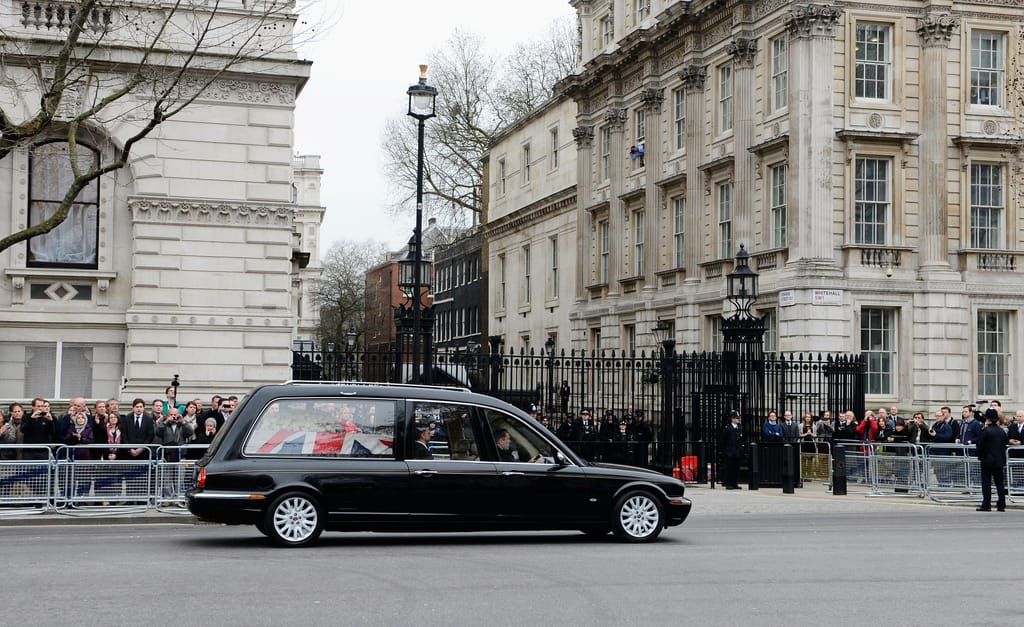
The hearse makes its way past Downing Street during the Ceremonial funeral of former British Prime Minister Baroness Thatcher on April 17, 2013


“It will be a huge challenge from many perspectives: protocol, security, sensitivities,” said Ioannis Raptakis, Greek ambassador to the U.K., who agreed it will be of a similar magnitude to Nelson Mandela’s state funeral in 2013 or the COP26 U.N. climate change summit in Glasgow last year, in terms of the sheer number of world leaders likely to attend.

“Almost every country will make an effort to be represented. But I have full trust in the British protocol experts — they have the experience of organizing COP26 recently, which was like a rehearsal.”

Others are more concerned. “We are very worried about the logistics,” one diplomat said, pointing to a perceived lack of organization during the G7 summit in Cornwall last year.

On the morning of the funeral itself, the queen’s coffin will be carried in a procession to Westminster Abbey from 900-year-old Westminster Hall, where the public will have had several days to pay their respects. The nation will observe a two-minute silence.

After the one-hour funeral service, a large ceremonial procession will accompany the coffin to nearby Hyde Park, where it will be transferred from gun carriage to state hearse. The coffin will then travel 20 miles west of central London, to Windsor Castle.

Following a committal service at St. George’s Chapel in Windsor, the coffin will finally be lowered into the royal vault on the castle grounds, beside that of the queen’s late husband Prince Philip, who died in April 2021.


More than just a funeral


Official protocol dictates that invitations will be offered to the head of state from each country, and their spouse or partner.

Major funerals are strange moments for world diplomacy, combining solemn periods of mourning with inevitable opportunities for bilateral and multilateral encounters.

The last state funeral to be held in the U.K. took place in 1965, following the death of former Prime Minister Winston Churchill. Dignitaries from an unprecedented 112 countries — including the likes of Dwight Eisenhower, Charles de Gaulle and Queen Elizabeth herself — attended the service at St. Paul’s Cathedral, which was followed on TV and radio by an estimated 350 million people around the world. Despite the funeral being held at the height of the Cold War, the Soviet Union sent its deputy prime minister to attend.

Diplomacy around such events is undoubtedly possible. In 1979, immediately after the funeral of Louis Mountbatten — a relative of the queen who was murdered by the IRA — Thatcher held a summit with her Irish counterpart John Lynch at a time of high tensions between the two countries. The meeting became a “sort of prelude” toward the Good Friday / Belfast peace agreement, according to the former Cabinet minister quoted above.

But Kampfner said that this time leaders will have to proceed discreetly with any private conversations or encounters, with the protocol for a head of state’s funeral stricter than for any other such service — and especially since Queen Elizabeth was no ordinary figurehead.

“All heads of state and others will be very cautious about being seen to be overly engaging in any direct diplomacy on an occasion like that,” said Kampfner.
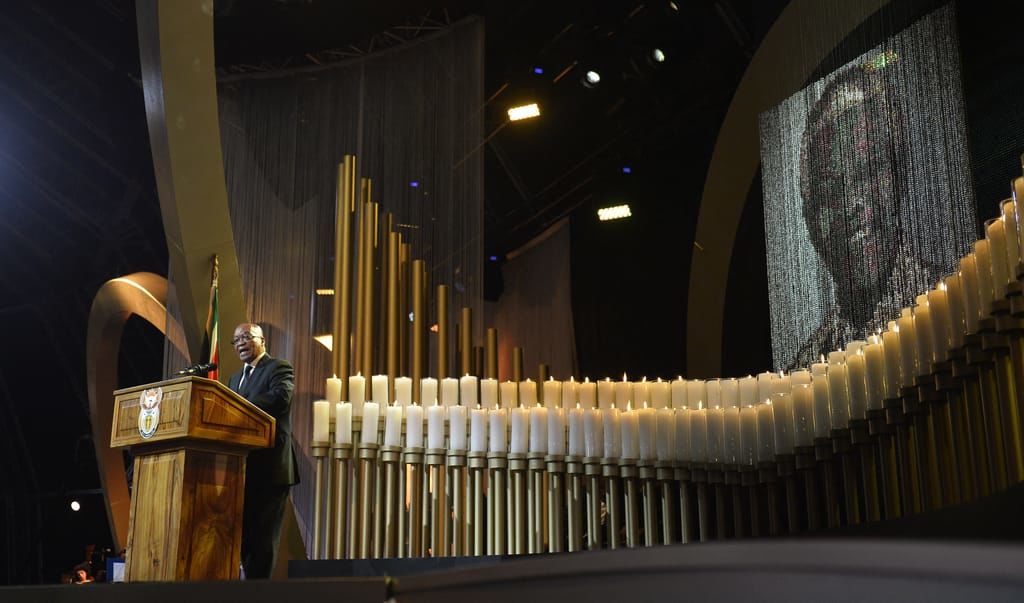
South Africa President at the time Jacob Zuma gives a speech during the funeral ceremony of South African former president Nelson Mandela


Leaders will also need to be careful not to accidentally overshadow the late monarch, or steal attention with actions that might be considered disrespectful. Memories are still fresh of the beaming selfie taken by former Danish Premier Helle Thorning-Schmidt with former U.K. Prime Minister David Cameron and ex-U.S. President Barack Obama at the Johannesburg memorial service for Mandela.

Nevertheless, what incidental moments there are between leaders will be of keen interest to seasoned observers, Kampfner said.

That was the case with the famous handshake between Obama and Cuba’s Raul Castro at Mandela’s funeral, a brief moment interpreted as evidence of a warming relationship between Washington and Havana.


Truss under the spotlight


For Liz Truss herself, the occasion will offer “polite getting-to-know-you moments” with key leaders which should prove valuable for a prime minister only appointed earlier this month, Kampfer said.

But he warned that the new U.K. premier “won’t want to be seen engaging in any discussions about the many problems that the world faces, because of the sensitivity of the moment.”

Certainly, Downing Street is adamant the U.K.’s 10-day mourning period is to be rigorously observed, which means formal meetings between Truss and other international leaders will not be scheduled until politics resumes. For more substantial conversations, Truss will therefore have to wait for the U.N. General Assembly taking place in New York later that week.

“I would think if a president or a prime minister came up and expressed their real condolences about her majesty and how much she was appreciated, and they talk at that level, they will have a big impact,” said Conservative MP Peter Bone, who attended Thatcher’s funeral.

“If they say — ‘we want a free trade agreement,’ that will be totally inappropriate.”

ASEAN economies are hedging against global tariff uncertainty through targeted trade agreements and closer intra-regional commerce. From Bangkok defending its reciprocal trade accord with Washington to Jakarta finalizing duty-free access with the European Union and expanding halal trade with Hanoi, Southeast Asian policymakers are prioritizing diversified market access to keep export growth moving into twenty twenty-seven.
Environmental pressures are increasingly shaping regional diplomacy and regulatory policy across mainland Southeast Asia. Thailand’s move to establish a one-hundred-fifty-kilometer pollution control zone along the Kok River and negotiate joint water-quality monitoring stations with Myanmar reflects growing urgency over cross-border industrial contamination, alongside seasonal monsoon flood risks in southern Thailand.
While foreign investor interest across ASEAN remains strong, project delivery hurdles are drawing closer scrutiny. Thailand’s looming November twenty-eighth deadline over the stalled three-airport high-speed rail contract and diplomatic calls in Manila to cut red tape along the Luzon Economic Corridor underscore that land acquisition, permitting, and public-private risk sharing remain decisive factors for infrastructure backers.
Southeast Asia is steadily moving up the technology value chain as global electronics and cloud companies diversify beyond traditional assembly. Thailand’s Tokyo investment push targeting seventy billion baht in photonics and power electronics, alongside Singapore’s bilateral Artificial Intelligence agreements with China, shows regional governments competing hard for high-value digital infrastructure and chipmaking capital.
Thailand’s Thai Maritime Enforcement Command Centre opened an investigation and called for public evidence after a vessel’s mooring buoy severely damaged coral reefs in Siam Bay off Phuket’s Racha Yai Island. Marine conservation officials stressed stricter enforcement of anchoring and mooring rules to protect Andaman Sea reef ecosystems that support Phuket’s diving and marine tourism industry.
Philippine Finance Secretary Ralph Recto announced that the Philippines has been chosen to host two new Association of Southeast Asian Nations regional centers focused on creative industries and maritime affairs. The centers will coordinate regional workforce standards, intellectual property development, and maritime regulatory cooperation across Southeast Asia’s archipelagic and coastal economies.
Thailand’s TMBThanachart Bank teamed up with Swedish home furnishings retailer IKEA to launch the country’s first co-branded ttb IKEA credit card, aiming for more than seventy-two thousand cardholders in twenty twenty-seven. The retail banking partnership reflects efforts by Thai lenders to encourage targeted consumer spending despite high household debt levels.
A strengthened northeast monsoon set off flash flooding across five villages in Phatthalung’s Khuan Khanun district and prompted emergency cell-broadcast flood alerts in Songkhla and Pattani provinces. Thailand’s Meteorological Department warned of continued heavy rain and three-meter waves in the lower Gulf of Thailand, advising small boats to stay ashore and urging caution across southern farming and tourism provinces.
Thailand’s Office of the National Higher Education, Science, Research and Innovation Policy Council reported that the economy will need one point zero nine million highly skilled workers between twenty twenty-five and twenty twenty-nine, led by four hundred forty thousand specialists in aviation and logistics and two hundred twenty-six thousand in smart electronics and robotics. Policymakers are expanding corporate tax deductions and modular training programs to prevent talent shortages from slowing foreign direct investment.
Trade and agricultural officials from Vietnam and Indonesia agreed to expand cooperation on halal certification, food processing, and agricultural supply chains as bilateral trade runs ahead of schedule toward its eighteen-billion-dollar target before twenty twenty-eight. The partnership links Vietnam’s growing food manufacturing sector with Indonesia’s large consumer market, deepening intra-ASEAN trade ties.
Indonesian rescue teams in Serang Regency, Banten province, confirmed three deaths and thirty-six workers still missing after a major fire swept through the PT Fonusa Agung Mulia confectionery plant west of Jakarta. The industrial fire has renewed scrutiny over workplace fire safety standards and regulatory inspections across Indonesian manufacturing zones.
Thai Prime Minister Anutin Charnvirakul said he sees no sign of escalation in recent youth-led rallies in Bangkok as political attention turns to Monday’s Court of Appeal verdict in the lese-majeste case against People’s Party member of parliament Rukchanok Srinork. The appellate ruling carries direct consequences for opposition parliamentary representation and domestic political sentiment.
Bangkok’s Mass Rapid Transit operator announced that paper QR code single-journey tickets will permanently replace traditional plastic fare tokens across the network starting January first, twenty twenty-seven. The upgrade modernizes fare collection across Bangkok’s growing urban rail network and makes contactless payment easier for daily commuters and international visitors.
Thailand’s Immigration Bureau and economic crime investigators dismantled a cross-border proxy shareholding network operating across seven provinces, arresting seven suspects under twenty-six court-approved warrants following the rescue of an abducted Chinese national. The operation targets illegal foreign nominee structures used to circumvent Thai business ownership rules in real estate, tourism, and service industries.
Foreign diplomats and Philippine business executives gathering at the Stratbase Institute Pilipinas Conference in Manila urged the Philippine government to clear permitting and regulatory bottlenecks for infrastructure projects along the Luzon Economic Corridor. Backed by trilateral cooperation among the Philippines, the United States, and Japan, the corridor is central to drawing manufacturing, logistics, and clean-energy investment into Subic Bay, Clark, Manila, and Batangas.
Provincial authorities and aviation regulators in Phuket are moving forward with regulatory preparations to launch commercial autonomous drone taxi services in twenty twenty-seven, cutting travel time between Phuket International Airport and major coastal resorts to about eight minutes. Evaluated alongside Chinese electric vertical takeoff and landing manufacturer EHang and the Civil Aviation Authority of Thailand, the project aims to ease island road congestion and bolster Phuket’s appeal as a smart tourism destination.
Thai Prime Minister Anutin Charnvirakul restated Thailand’s opposition to Cambodia’s request for compulsory conciliation to settle their overlapping border and maritime claims following discussions with Cambodian Prime Minister Hun Manet. Bangkok maintains that bilateral negotiation mechanisms remain the proper channel for managing boundary issues, keeping diplomatic focus on direct neighbor-to-neighbor talks across mainland Southeast Asia.
Myanmar’s military-led administration rejected the latest review by the Association of Southeast Asian Nations of its stalled Five-Point Consensus peace plan, calling the bloc’s decision to maintain summit restrictions unfair and imbalanced. Separately, Thai Prime Minister Anutin Charnvirakul said Thailand will maintain practical bilateral ties with Myanmar despite the International Court of Justice ruling holding Myanmar responsible for genocide against the Rohingya minority.
European Commission trade assessments projected that European Union exports to Indonesia will grow by forty percent under the newly concluded bilateral trade agreement, which eliminates customs duties on ninety-eight point five percent of tariff lines and saves European exporters more than six hundred million euros a year. For Indonesia, Southeast Asia’s largest economy, the deal opens wider preferential access to European markets for industrial and agricultural goods while strengthening its role in global supply chains.
Thailand’s Ministry of Natural Resources and Environment finalized a proposal to designate a one-hundred-fifty-kilometer stretch of the Kok River in Chiang Rai and Chiang Mai as a formal pollution control zone ahead of a December second review by the National Environment Board. Ahead of bilateral ministerial meetings with Myanmar on November twenty-fourth and joint water-quality working group talks in Bangkok, Thai authorities are drilling groundwater wells, curbing precursor chemical exports, and preparing eight cross-border monitoring stations to address upstream arsenic contamination.
Chinese Vice Premier Ding Xuexiang arrived in Singapore for an official visit from November twenty-second to twenty-third to co-chair the twenty-second Joint Council for Bilateral Cooperation with Singapore Deputy Prime Minister Gan Kim Yong. Both governments are finalizing more than twenty agreements covering Artificial Intelligence, green development, digital trade, and cross-border innovation, underscoring Singapore’s role as a primary institutional link between China and Southeast Asia.
Talks over Thailand’s high-speed railway linking Don Mueang, Suvarnabhumi, and U-Tapao airports have reached a critical point as the Charoen Pokphand Group-led consortium seeks to exit or renegotiate its contract with the State Railway of Thailand ahead of a November twenty-eighth deadline. Prolonged disputes over land handovers, financing terms, and Board of Investment promotion hurdles threaten to delay core rail connectivity across the Eastern Economic Corridor.
Thai Prime Minister Anutin Charnvirakul defended Thailand’s newly negotiated Agreement on Reciprocal Trade with the United States as the best achievable deal to protect export access while addressing concerns from domestic agricultural groups wary of United States ethanol and pork imports. Commerce Ministry officials stressed that the agreement does not immediately open sensitive farm markets, aiming to safeguard Thailand’s manufacturing and electronics exports in its largest overseas market.
Thai Deputy Prime Minister and Finance Minister Ekniti Nitithanprapas led an investment mission to Tokyo, inviting eleven Japanese semiconductor executives to invest in photonics, power electronics, and sensors as Thailand seeks seventy billion baht in new chip-sector commitments. Backed by Thailand’s twenty-five-year National Semiconductor and Advanced Electronics Strategy aiming for five hundred billion baht in cumulative investment by twenty thirty, the talks also highlighted NTT Global Data Centers’ expansion in Bangkok and Chon Buri alongside returning global server manufacturers.
Two active volcanoes in Indonesia, including Mount Dukono on Halmahera Island, erupted within hours of each other, sending volcanic ash plumes up to 1,500 meters into the sky. Meteorological agencies in Indonesia and Singapore issued aviation ash advisories for eastern Indonesian airspace while local authorities monitored nearby communities.
Thailand's Ministry of Tourism and Sports lowered its 2026 international arrival forecast to 31.5 million visitors, down slightly from an earlier target of 32 million as regional competition and currency moves temper growth. Separately, the Thai Meteorological Department issued heavy rain and flash flood warnings across southern Thailand, including Phatthalung, alongside rough seas in the lower Gulf of Thailand while temperatures cool in upper Thailand.
Indonesian renewable energy provider PT Alam Energy Indonesia formed a partnership with Japanese sustainability software firm Zeroboard to pair greenhouse-gas emissions tracking with solar energy services for businesses in Indonesia. The joint effort supports corporate decarbonization and supply-chain emissions reporting as Japanese and multinational manufacturers tighten environmental standards across Southeast Asia.
State-backed Maharlika Investment Corporation agreed to invest up to 900 million Philippine pesos in Tubig Pilipinas Holdings, with an option for another 450 million pesos in early 2027, to fund regional water supply expansion. The deal marks one of the sovereign wealth fund's primary domestic infrastructure investments aimed at easing municipal water bottlenecks outside Metro Manila.
Search and rescue crews in Cikande, Banten province, about 50 kilometers west of Jakarta, are searching for 36 missing workers after a major fire tore through the PT Fonusa Agung Mulia confectionery plant. At least three people were confirmed dead and 15 workers were rescued from the site, drawing renewed scrutiny over industrial fire safety compliance in manufacturing zones around the Indonesian capital.
Malaysian Prime Minister Anwar Ibrahim stated that Malaysia will not yield to outside pressure as it deepens trade and technology ties with China, praising Beijing's infrastructure and economic cooperation following the Asia-Pacific Economic Cooperation summit. At home, Malaysia's National Disaster Management Agency placed over 100,000 personnel on standby and readied 8,321 relief centers nationwide as heavy Northeast Monsoon rains threaten eastern and central states.
Vietnamese Foreign Minister Le Hoai Trung and Indonesian Foreign Minister Arrmanatha Christiawan Nasir agreed in Hanoi to speed up implementation of their 2026 to 2030 Comprehensive Strategic Partnership. Both countries committed to finalizing a mutual recognition agreement on halal certification, expanding cooperation in digital transformation and clean energy, and upholding peaceful dispute resolution under international maritime law in the South China Sea.
Vietnam's 16th National Assembly concluded its 27-day second session in Hanoi after approving 38 laws and 18 resolutions, including broad changes to social insurance benefits, healthcare rules, tax and investment regulations, and two additional paid public holidays. Lawmakers also passed a revised Penal Code abolishing the death penalty for six offenses, including drug trafficking, marking a major step in legal and labor-market reform.
The Philippines' ten-month balance of payments dollar deficit exceeded the Bangko Sentral ng Pilipinas full-year 2026 ceiling, highlighting external account strain after third-quarter economic growth slowed to 2.1 percent. Investor caution also pushed the benchmark Philippine Stock Exchange Index down to a six-year low amid heavy selling in port operator International Container Terminal Services.
Myanmar's military-backed government lodged a formal objection rejecting the Association of Southeast Asian Nations' decision to maintain restrictions on Myanmar's political representation at regional summits. Following the 49th Association of Southeast Asian Nations Summit in Manila, regional leaders reiterated that full political participation will only return gradually if Myanmar shows measurable progress on the bloc's five-point peace consensus.
Thai industrial developer SCX Corporation, a subsidiary of SC Asset, expanded its joint venture with Japanese real estate firm Tokyo Tatemono to build SCX Logistics Laemchabang 2 in Chonburi province. Located seven kilometers from Laem Chabang Port Phase 3, the 42,000-square-meter warehouse and factory complex lifts the partners' combined leasable industrial portfolio in Thailand to over 169,000 square meters ahead of completion in late 2027.
The Civil Aviation Authority of Thailand has started drafting commercial licensing regulations to allow Thai technology firm Sky ICT to launch autonomous electric vertical takeoff and landing air taxis in Phuket in 2027. Built to carry two passengers on coastal routes and resort transfers for around 2,000 baht per trip, the service is intended to ease road congestion on the island and establish Phuket as a regional smart-aviation hub.
South Korean infrastructure companies are evaluating investment and engineering roles in two major railway lines and the modernization of Bangkok Port as Thailand prepares to sign a bilateral transport cooperation agreement with Seoul. The planned partnership underscores rising South Korean interest in Thailand's logistics corridors and maritime port upgrades.
Thai Deputy Prime Minister Yodchanan Wongsawat announced plans to curb the export and transit of precursor chemicals used in rare-earth mining as part of an urgent effort to stop arsenic and heavy-metal contamination in northern Thai rivers. Thai Foreign Minister Sihasak Phuangketkeow will hold ministerial talks with Chinese and Myanmar counterparts from November 24 to 26 to trace upstream mining pollution affecting waterways in Chiang Rai, Loei, and Nong Khai.
Thailand signed a revised plant health and traceability protocol with China to tighten quality standards and quarantine pest controls for fresh durian exports. The agreement seeks to rebuild Chinese consumer confidence following earlier cadmium contamination concerns and safeguard Thailand's largest agricultural export market, which took in 1.21 million tonnes of Thai fresh durian worth 4.62 billion United States dollars during the first nine months of 2026.
A national workforce assessment from Thailand's Ministry of Higher Education, Science, Research and Innovation estimates that Thailand will need 1.09 million highly skilled workers between 2025 and 2029 to sustain its next phase of industrial growth. Aviation and logistics account for 40.5 percent of that demand at more than 440,000 workers, followed by smart electronics and industrial robotics at over 226,000 workers, prompting expanded university-industry training programs and corporate tax incentives.
Speaking in Beijing at the close of his official visit to China, Singapore Prime Minister Lawrence Wong pushed back against concerns over so-called Singapore-washing, saying Singapore welcomes genuine Chinese investments while strictly enforcing its own laws against fraud. Wong stressed that Singapore cannot act as an enforcement arm for United States export controls and maintained that the city-state can still do business with both Washington and Beijing despite a deepening economic divide between the two powers.
Thailand's Board of Investment and senior economic officials wrapped up a four-day investment roadshow in Tokyo aimed at drawing Japanese capital into semiconductor design, satellite components, and advanced electronics beyond traditional car manufacturing. The outreach builds on a 28 percent year-on-year jump in actual foreign investment inflows to more than 260 billion baht in the third quarter of 2026, supporting Thailand's push to upgrade its industrial base and create higher-skilled engineering jobs.
Thai Prime Minister Anutin Charnvirakul defended Thailand's newly signed joint statement on a reciprocal trade agreement with the United States, warning domestic critics that Thai exports could face tariffs of up to 50 percent if bilateral talks break down. Following discussions with United States President Donald Trump on the sidelines of the Association of Southeast Asian Nations summit in Manila, the Thai government clarified that the framework lowers forced-labor duties and protects market access without eliminating tariffs on all American imports.
Negotiations between the State Railway of Thailand and the Charoen Pokphand-led Asia Era One consortium have reached a critical standoff ahead of a November 28 deadline over the Eastern Economic Corridor high-speed rail line linking Don Mueang, Suvarnabhumi, and U-Tapao airports. Asia Era One has challenged the State Railway of Thailand's Notice to Proceed and reiterated its claim to terminate the contract, leaving a flagship transport link and Thailand's wider 140-billion-baht public-private partnership pipeline exposed to prolonged legal arbitration.
Bangkok riverfront destination ICONSIAM, working with the Tourism Authority of Thailand and public-private partners, announced plans for the Amazing Thailand Countdown Twenty Twenty-Seven celebration along the Chao Phraya River. Anchoring Thailand's high-season festival calendar alongside the Vijit Chao Phraya light show and the Udon Thani International Horticultural Expo, the event supports national goals to attract thirty-one point five million foreign visitors and generate one point two two trillion baht in domestic tourism revenue.
Defense leaders from Singapore and Brunei Darussalam wrapped up a year-long series of events marking fifty years of bilateral defense ties at a formal closing ceremony. The anniversary reflects steady security cooperation, joint military exercises, and diplomatic trust between the two ASEAN members amid broader Indo-Pacific tensions.
A magnitude seven point two earthquake struck offshore waters near Indonesia's Maluku Islands and northeastern Timor-Leste, according to regional seismological agencies. Indonesian disaster officials confirmed that the deep-sea quake did not trigger a tsunami warning, though emergency teams began checking coastal communities across eastern Indonesia for structural damage.
Vietnam's Electricity Authority proposed regulatory changes creating dedicated production-level electricity tariffs for data center operators, addressing disputes over how power utilities meter and bill high-consumption computing facilities. The pricing reform aims to lower operating expenses and clarify grid rules as Vietnam competes with Thailand, Malaysia, and Singapore for global cloud and Artificial Intelligence infrastructure investment.
Glacier Collapse, Not Earthquake, Triggered Deadly Nepal-Tibet Flood
Swiss Tourist Sentenced to One Year in Prison for Insulting Bali's Sacred Day of Silence
Father Reprimanded After Leaving Seven-Year-Old Son Alone on Mount Fuji During Summit Climb
Google Launches Pixel 11 With Gemini AI at the Center of Its Hardware Strategy
China’s Kimi Launches AI-Focused Credit Card With Agricultural Bank of China and American Express
Success: Nvidia Turned Gaming Chips Into the Engine of the AI Boom
AI’s Next Bottleneck Is Power, Not Just Nvidia Chips
Meta Raises AI Spending Target to as Much as $145bn Despite Pressure Over Returns
Joe Biden’s Cancer Has Spread Beyond His Bones, Hunter Biden Says
Why 2027 Could Be a Strong Year for Stocks—and Why the Forecast Is Fragile
Why Markets May Look Quiet in August After Big Tech Earnings
UFO: Pentagon Releases Video of Unidentified Object Tracked Over Middle East
Ukraine Tells Senate Republicans Its Drone War Offers a Blueprint for America
Weight-Loss Drug Boom Tests the Limits of Prescription Advertising Rules
Taiwan’s President Joins Wartime Command Drill as China Pressure Grows
Lightning Strike Kills Yala FC Player During Match in Southern Thailand
AI Is Remaking the US Economy, From GDP Growth to iPhone Prices
Indonesia’s Free School Meals Plan Has Been Hit by Poisoning, Corruption and Cuts
US and Japan Step In to Support the Yen in Rare Joint Intervention
FIFA’s Retreat Leaves a Larger Question Over Who Guards the Game
Valued at $109 Million: F-35B Fighter Jet Crashes in Southern California
US Says It Has Carried Out Heavy Strikes on Iran After Attempted Attacks on Its Forces
Over 24 Hours in the Air: Qantas Airbus Completes Record-Breaking Test Flight
Nvidia Reportedly Takes Vast Texas Data-Centre Lease to Underwrite AI Expansion
FIFA’s Private-Investment Plan for World Cup Rights Draws European Revolt
Following OpenAI's Cyberattack: 'Most Companies Still Do Not Understand What Is Coming'
OpenAI Sued After ChatGPT Allegedly Discouraged Emergency Care Before Near-Fatal Embolism
Miliband Sets Climate and International Law at Centre of UK Diplomacy
Trump Readies New Tariffs as Temporary Global Levy Nears Expiry
EU Imposes Record €550 Million Digital Services Fine on AliExpress
Between Deliveries, Wang Jibing Wrote His Way to China’s Literary Heights
Morgan Stanley Builds a Wall Street Lead in AI Infrastructure Finance
High Prices Push Coffee Drinkers Toward Whole Beans and Home Brewing
Trump Draws Boos and Podium Scrutiny at Spain’s World Cup Triumph
Spain Defeats Argentina in Extra Time to Win Second World Cup
Police Block Cockroach Janta Party’s March to Parliament as Education Protests Intensify
Singapore Considers Lower Taxes for Fund Managers as Hong Kong Intensifies Talent Contest
Proposed U.S.-Saudi Nuclear Pact Could Permit Limited Uranium Enrichment Under International Safeguards
Why Kentucky Fried Chicken Became KFC—and Why the False Explanations Persist
Ukrainian Drones Strike Wildberries Warehouses Deep Inside Russia
Reported CIA Mission Helped Clear the UAE’s Path to Advanced US AI Chips
Artificial Intelligence Capital Fuels Markets While Governments and Regulators Face Mounting Strategic Tests
China’s Moonshot’s Kimi K3 Narrows the Gap With Anthropic Through Scale, Openness and Lower Cost
Gold and Cash Seizure Puts Indonesia’s Senior Anti-Corruption Prosecutor Under Investigation
The Ledger Will Not Trust on Faith
Ukraine’s Leadership Rift Spills Into the Streets as Protesters Target Army Chief
The Ten World Cup Finals That Defined Football History
Smartphones Are Getting More Expensive, Sales Are Collapsing, and Even Apple Admits: "Prices Will Rise"
Leadership Change and Strategic Rivalry Redraw the Political Map
The AI Race Enters Its Infrastructure Era