Thailand's Board of Investment said investment applications rose 37% year on year to $43.6 billion across 1,299 projects in the first half of 2026, driven by strong demand for artificial intelligence infrastructure and advanced technology industries.
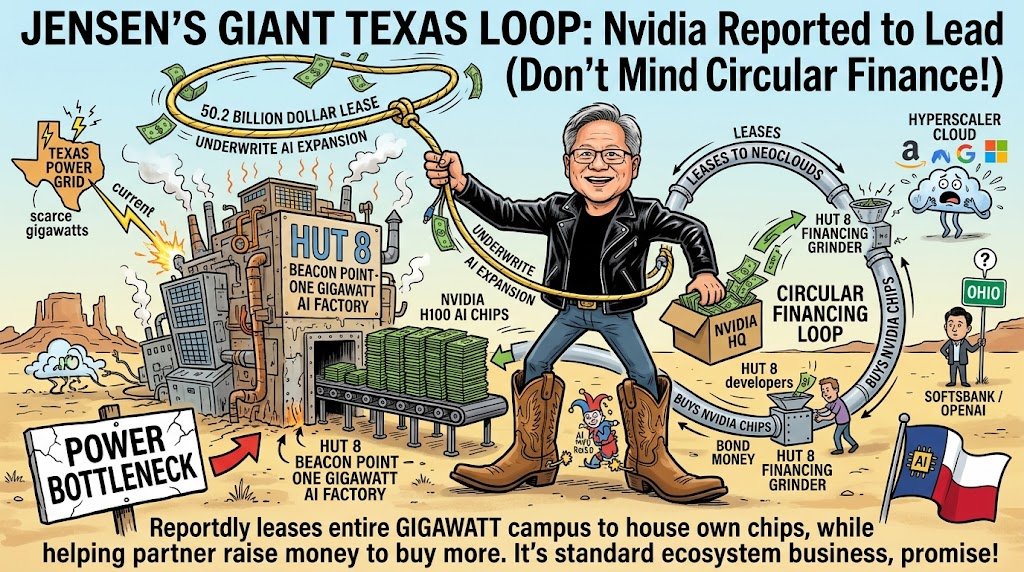
The chipmaker is said to be the tenant behind a lease worth up to 50.2 billion dollars at Hut 8’s one-gigawatt Beacon Point campus, a structure that has renewed concern over circular AI financing.
Nvidia has reportedly committed to lease a one-gigawatt Texas data-centre campus being developed by Hut 8, using its balance sheet to support a project expected to house hundreds of thousands of its own artificial-intelligence chips.
The arrangement would mark a significant broadening of Nvidia’s role in the artificial-intelligence economy.
The company has been the dominant supplier of the processors that power advanced model training and inference.
It is now reported to be stepping closer to the financing and operation of the physical infrastructure in which those processors will run.
Hut 8 disclosed last week that its Beacon Point campus had secured a contract with an existing investment-grade customer, but it did not identify the tenant.
The base term of the contract is valued at 19.6 billion dollars over 15 years.
If extension options are exercised, the total value could rise to 50.2 billion dollars across 30 years.
Nvidia has not publicly confirmed that it is the tenant.
Its response has been that it is working with ecosystem partners to accelerate the deployment of efficient artificial-intelligence infrastructure through its DSX AI factory architecture.
The reported identity of the tenant should therefore be treated as unconfirmed by the companies themselves, even though the financial terms and the existence of the underlying Hut 8 contract have been disclosed.
The campus is unusual in scale.
One gigawatt of electricity capacity is sufficient to support a vast concentration of high-performance computing, cooling equipment and network infrastructure.
Access to power has become one of the principal constraints on artificial-intelligence expansion, often more difficult to secure than land, buildings or even chips.
A project with assured electricity at this level is consequently a valuable strategic asset.
Nvidia is expected to use the facility directly or sublease capacity to so-called neocloud operators: specialist cloud companies that buy Nvidia processors and rent computing power to artificial-intelligence developers.
This would help create an alternative distribution channel to the established hyperscale cloud providers, such as Amazon, Google and Microsoft, while keeping Nvidia hardware at the centre of the emerging market.
The financial mechanics are as consequential as the technology.
Nvidia’s long-term lease commitment helped Hut 8 raise approximately 4.3 billion dollars in bond financing for the first phase of Beacon Point.
The presence of a tenant with Nvidia’s credit standing gave lenders greater confidence that the data-centre developer would have dependable revenue, allowing the bonds to secure investment-grade ratings and lower borrowing costs.
That structure is commercially rational.
A data-centre developer needs capital to build facilities; a chipmaker needs customers with power, buildings and financing sufficient to deploy its equipment; cloud providers need capacity to meet demand from artificial-intelligence companies.
A long-term lease can connect all three.
It has also revived concern over circular financing.
The risk is that a chipmaker supports the funding of a customer or infrastructure partner, which then uses that financial support to buy or host large quantities of the chipmaker’s products.
Revenue may be real and contracts may be enforceable, but investors must determine whether demand is ultimately coming from end users with sustainable business models or from an investment cycle that relies on continued financing by the suppliers themselves.
Nvidia’s supporters argue that the company is solving an infrastructure bottleneck rather than manufacturing demand.
Artificial-intelligence workloads require specialised power, cooling, networking and software integration.
If available data-centre capacity lags behind demand for chips, a strategic lease can speed deployment and allow more customers to access computing without each building a separate facility.
Critics respond that the distinction is not always clean.
Nvidia benefits twice if it helps bring a project into being: first through the deployment of its processors and again through the creation of new cloud capacity that may buy more of those processors.
The test will be whether the eventual subtenants generate sufficient customer revenue to make the chain of leases, bonds and hardware purchases self-sustaining.
The move is consistent with Jensen Huang’s wider strategy of making Nvidia an infrastructure platform rather than a component supplier alone.
DSX, the company’s AI factory architecture, combines Nvidia processors, networking, software and reference designs with equipment and services from partners.
The aim is to make the deployment of large-scale artificial-intelligence computing more standardised, faster and less operationally risky.
Nvidia has also been linked to discussions over a possible financial backstop for a much larger, ten-gigawatt data-centre project in Ohio associated with SoftBank and OpenAI.
That reported arrangement, valued at up to 250 billion dollars, has not been finalised.
Together with the Texas lease, it illustrates how the boundaries between chipmaker, financier, landlord, cloud operator and customer are becoming less distinct in the race to build artificial-intelligence capacity.
The commercial stakes are high.
Building data centres at this scale requires billions of dollars before a single artificial-intelligence workload is run.
Developers must secure land, transmission links, substations, water or other cooling systems, equipment and construction finance.
Artificial-intelligence providers, meanwhile, require enough computing capacity to train larger models and serve growing numbers of users without delays.
Nvidia’s reported Texas commitment gives Hut 8 a powerful anchor tenant and provides Nvidia with access to scarce, large-scale capacity.
It also places more of the financial risk of artificial-intelligence expansion within Nvidia’s commercial orbit, making future scrutiny of utilisation, subleasing and customer demand inevitable.
Construction and financing of the Beacon Point campus are proceeding around the disclosed long-term contract.
The next measure of the strategy will be whether the facility attracts sufficient paying artificial-intelligence workloads to justify both the data-centre investment and the vast quantity of Nvidia hardware expected to occupy it.
The arrangement would mark a significant broadening of Nvidia’s role in the artificial-intelligence economy.
The company has been the dominant supplier of the processors that power advanced model training and inference.
It is now reported to be stepping closer to the financing and operation of the physical infrastructure in which those processors will run.
Hut 8 disclosed last week that its Beacon Point campus had secured a contract with an existing investment-grade customer, but it did not identify the tenant.
The base term of the contract is valued at 19.6 billion dollars over 15 years.
If extension options are exercised, the total value could rise to 50.2 billion dollars across 30 years.
Nvidia has not publicly confirmed that it is the tenant.
Its response has been that it is working with ecosystem partners to accelerate the deployment of efficient artificial-intelligence infrastructure through its DSX AI factory architecture.
The reported identity of the tenant should therefore be treated as unconfirmed by the companies themselves, even though the financial terms and the existence of the underlying Hut 8 contract have been disclosed.
The campus is unusual in scale.
One gigawatt of electricity capacity is sufficient to support a vast concentration of high-performance computing, cooling equipment and network infrastructure.
Access to power has become one of the principal constraints on artificial-intelligence expansion, often more difficult to secure than land, buildings or even chips.
A project with assured electricity at this level is consequently a valuable strategic asset.
Nvidia is expected to use the facility directly or sublease capacity to so-called neocloud operators: specialist cloud companies that buy Nvidia processors and rent computing power to artificial-intelligence developers.
This would help create an alternative distribution channel to the established hyperscale cloud providers, such as Amazon, Google and Microsoft, while keeping Nvidia hardware at the centre of the emerging market.
The financial mechanics are as consequential as the technology.
Nvidia’s long-term lease commitment helped Hut 8 raise approximately 4.3 billion dollars in bond financing for the first phase of Beacon Point.
The presence of a tenant with Nvidia’s credit standing gave lenders greater confidence that the data-centre developer would have dependable revenue, allowing the bonds to secure investment-grade ratings and lower borrowing costs.
That structure is commercially rational.
A data-centre developer needs capital to build facilities; a chipmaker needs customers with power, buildings and financing sufficient to deploy its equipment; cloud providers need capacity to meet demand from artificial-intelligence companies.
A long-term lease can connect all three.
It has also revived concern over circular financing.
The risk is that a chipmaker supports the funding of a customer or infrastructure partner, which then uses that financial support to buy or host large quantities of the chipmaker’s products.
Revenue may be real and contracts may be enforceable, but investors must determine whether demand is ultimately coming from end users with sustainable business models or from an investment cycle that relies on continued financing by the suppliers themselves.
Nvidia’s supporters argue that the company is solving an infrastructure bottleneck rather than manufacturing demand.
Artificial-intelligence workloads require specialised power, cooling, networking and software integration.
If available data-centre capacity lags behind demand for chips, a strategic lease can speed deployment and allow more customers to access computing without each building a separate facility.
Critics respond that the distinction is not always clean.
Nvidia benefits twice if it helps bring a project into being: first through the deployment of its processors and again through the creation of new cloud capacity that may buy more of those processors.
The test will be whether the eventual subtenants generate sufficient customer revenue to make the chain of leases, bonds and hardware purchases self-sustaining.
The move is consistent with Jensen Huang’s wider strategy of making Nvidia an infrastructure platform rather than a component supplier alone.
DSX, the company’s AI factory architecture, combines Nvidia processors, networking, software and reference designs with equipment and services from partners.
The aim is to make the deployment of large-scale artificial-intelligence computing more standardised, faster and less operationally risky.
Nvidia has also been linked to discussions over a possible financial backstop for a much larger, ten-gigawatt data-centre project in Ohio associated with SoftBank and OpenAI.
That reported arrangement, valued at up to 250 billion dollars, has not been finalised.
Together with the Texas lease, it illustrates how the boundaries between chipmaker, financier, landlord, cloud operator and customer are becoming less distinct in the race to build artificial-intelligence capacity.
The commercial stakes are high.
Building data centres at this scale requires billions of dollars before a single artificial-intelligence workload is run.
Developers must secure land, transmission links, substations, water or other cooling systems, equipment and construction finance.
Artificial-intelligence providers, meanwhile, require enough computing capacity to train larger models and serve growing numbers of users without delays.
Nvidia’s reported Texas commitment gives Hut 8 a powerful anchor tenant and provides Nvidia with access to scarce, large-scale capacity.
It also places more of the financial risk of artificial-intelligence expansion within Nvidia’s commercial orbit, making future scrutiny of utilisation, subleasing and customer demand inevitable.
Construction and financing of the Beacon Point campus are proceeding around the disclosed long-term contract.
The next measure of the strategy will be whether the facility attracts sufficient paying artificial-intelligence workloads to justify both the data-centre investment and the vast quantity of Nvidia hardware expected to occupy it.
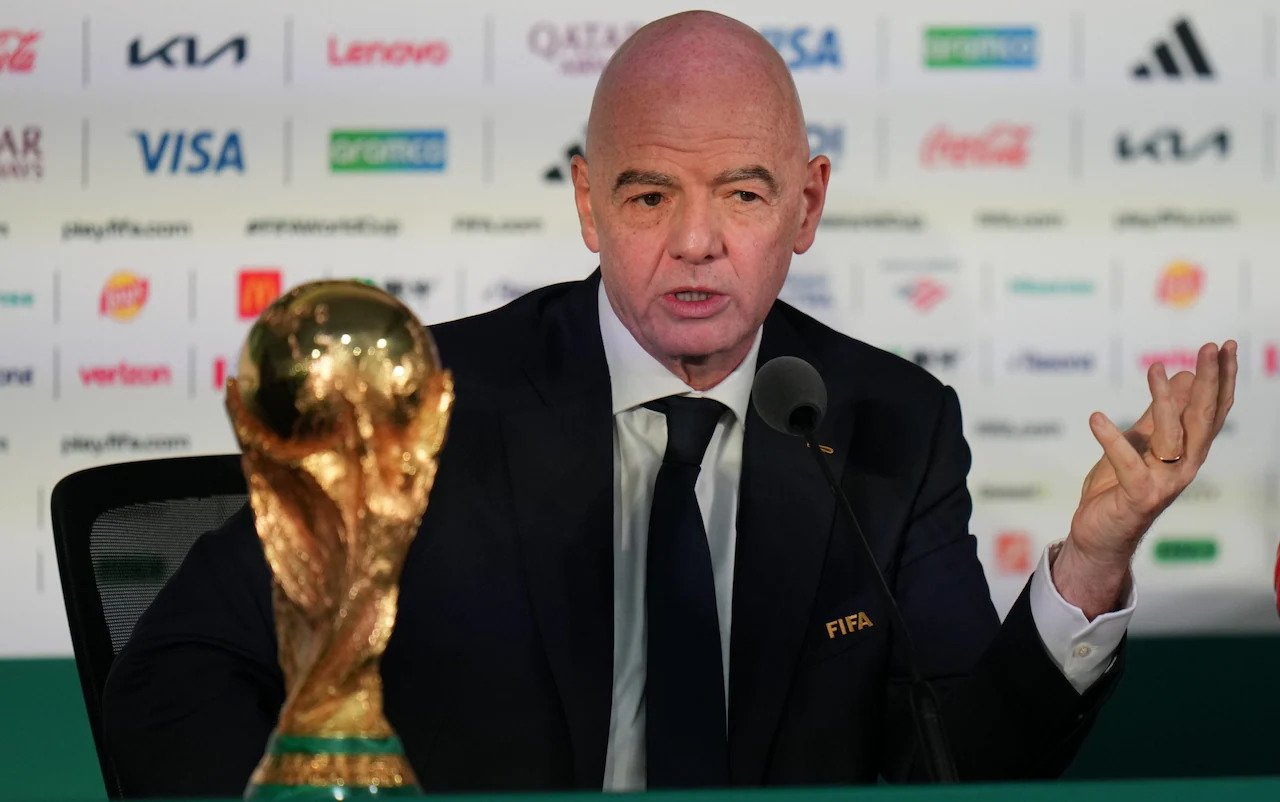
Gianni Infantino’s proposed commercial subsidiary would seek up to 4.2 billion dollars from minority investors while FIFA says it would retain complete sporting control.
FIFA’s proposed sale of minority interests in a new commercial vehicle for the World Cup and its other leading competitions has triggered an unusually fierce confrontation with European football, which argues that the plan risks placing the game’s most valuable assets under private financial pressure.
The proposal centres on a new FIFA-owned subsidiary, FIFA Forward Enterprise, or FFE.
It would combine the commercial and event-management operations of the men’s and women’s World Cups, the Club World Cup and other FIFA tournaments.
Investors would be invited to buy minority, non-controlling stakes, enabling the venture to raise up to 4.2 billion dollars later this year at an implied valuation of 20 billion dollars.
FIFA’s case is that the structure would unlock capital for football development without surrendering authority over the game.
It says it would retain majority board representation and sole control over governance, competitions, the international calendar and sporting regulation.
The governing body also says that all net benefits generated by FFE would be reinvested in football rather than distributed as profits to investors.
That distinction lies at the heart of the dispute.
FIFA is not proposing to sell itself, nor has it announced the outright sale of the World Cup.
It is proposing to place commercial rights and tournament operations inside a subsidiary, then sell minority stakes in that subsidiary to outside investors.
Critics contend that the formal retention of control does not remove the commercial incentives that would accompany private ownership of a share of the enterprise.
Gianni Infantino, FIFA’s president, has presented the plan as a means of redistributing football’s wealth beyond its richest leagues and national associations.
Under the proposal, each of FIFA’s 211 member associations could receive an optional one-off allocation of up to 20 million dollars for special projects, alongside higher development funding over subsequent four-year cycles.
FIFA says the wider programme could lift its planned development support above 10 billion dollars over the next four years.
The potential beneficiaries include smaller associations that lack the broadcasting income, infrastructure and commercial networks enjoyed by Europe’s largest football nations.
For them, the prospect of immediate capital for training centres, stadiums, grassroots programmes, women’s football and national-team development is likely to carry considerable weight when the proposal reaches a vote.
European football’s governing body, UEFA, has condemned the plan in stark terms, saying that the commercialisation of football’s global governance has crossed a line.
Its objection is not limited to the ownership percentage.
UEFA has challenged the transparency of the process, the identity and incentives of prospective investors, and the possibility that the financial logic of a private vehicle could influence decisions over tournament frequency, hosting, scheduling and expansion.
The concern is sharpened by the commercial power of the World Cup.
Its broadcasting, sponsorship, ticketing and licensing rights generate much of FIFA’s revenue and provide the financial foundation for its development programmes.
Putting those assets into a separately capitalised business could increase their value, but it could also create pressure to stage more competitions, enlarge tournaments or extract more from clubs, broadcasters, sponsors and supporters.
A World Cup boycott by European teams has been raised as a possible form of resistance, but no national association has announced such a decision.
Any collective withdrawal would be an extraordinary escalation, carrying sporting, legal and political consequences for the associations involved.
European representatives are expected to discuss their options, including legal challenges and coordinated objections within FIFA’s governance structures.
The proposal has also attracted political criticism in Britain.
Prime Minister Andy Burnham said that football belongs to supporters and communities rather than investors, and argued that selling a portion of the World Cup’s commercial structure would amount to selling out the competition.
His intervention echoes the reaction to the failed European Super League project in 2021, when governments, fans, clubs and football authorities combined to oppose a closed competition designed around elite commercial interests.
The comparison has limits.
The Super League proposal sought to alter the competitive structure of club football by establishing a largely closed tournament.
FIFA’s plan would retain existing competition governance and seek capital for a commercial subsidiary.
Yet both controversies expose the same underlying anxiety: that football’s institutions may reshape the game around financial value while supporters, players and domestic competitions bear the consequences.
Thrive Eternal, a permanent-capital investment company led by Joshua Kushner, is expected to lead the proposed investor group if the project receives the required approvals.
Kushner is the younger brother of Jared Kushner, Donald Trump’s son-in-law, but FIFA has said Jared Kushner is not an investor.
The process is being advised by JPMorgan, which was also involved in financing discussions around the aborted Super League project.
FIFA says it is seeking a geographically diversified group of long-term investors from Europe, the Americas, Asia and Africa.
That could include sovereign wealth funds, institutional investors and private-capital groups.
Saudi Arabia and Qatar are likely to be closely watched because of their existing influence in global sport and their relationships with FIFA, though no final investor group has been announced.
The plan revives a strategic argument that has followed Infantino for years.
In 2018, FIFA considered a 25 billion dollar proposal involving outside investors for a revamped Club World Cup and a global Nations League.
That initiative collapsed amid resistance from within football.
The current structure is more carefully framed around a FIFA-controlled subsidiary and development funding, but it faces many of the same questions over accountability and commercial influence.
FIFA’s statutes require the support of a majority of member associations and approval of relevant regulatory changes by the FIFA Council before the new entity can be launched.
The vote will test whether the promise of substantial funding for smaller football nations outweighs the opposition of Europe’s established powers.
The immediate consequence is a widening institutional rift between FIFA and UEFA.
The next step is the member-association consultation and approval process, which will determine whether FFE becomes the financial engine of world football’s next era or another abandoned attempt to monetise its most prized competitions.
The proposal centres on a new FIFA-owned subsidiary, FIFA Forward Enterprise, or FFE.
It would combine the commercial and event-management operations of the men’s and women’s World Cups, the Club World Cup and other FIFA tournaments.
Investors would be invited to buy minority, non-controlling stakes, enabling the venture to raise up to 4.2 billion dollars later this year at an implied valuation of 20 billion dollars.
FIFA’s case is that the structure would unlock capital for football development without surrendering authority over the game.
It says it would retain majority board representation and sole control over governance, competitions, the international calendar and sporting regulation.
The governing body also says that all net benefits generated by FFE would be reinvested in football rather than distributed as profits to investors.
That distinction lies at the heart of the dispute.
FIFA is not proposing to sell itself, nor has it announced the outright sale of the World Cup.
It is proposing to place commercial rights and tournament operations inside a subsidiary, then sell minority stakes in that subsidiary to outside investors.
Critics contend that the formal retention of control does not remove the commercial incentives that would accompany private ownership of a share of the enterprise.
Gianni Infantino, FIFA’s president, has presented the plan as a means of redistributing football’s wealth beyond its richest leagues and national associations.
Under the proposal, each of FIFA’s 211 member associations could receive an optional one-off allocation of up to 20 million dollars for special projects, alongside higher development funding over subsequent four-year cycles.
FIFA says the wider programme could lift its planned development support above 10 billion dollars over the next four years.
The potential beneficiaries include smaller associations that lack the broadcasting income, infrastructure and commercial networks enjoyed by Europe’s largest football nations.
For them, the prospect of immediate capital for training centres, stadiums, grassroots programmes, women’s football and national-team development is likely to carry considerable weight when the proposal reaches a vote.
European football’s governing body, UEFA, has condemned the plan in stark terms, saying that the commercialisation of football’s global governance has crossed a line.
Its objection is not limited to the ownership percentage.
UEFA has challenged the transparency of the process, the identity and incentives of prospective investors, and the possibility that the financial logic of a private vehicle could influence decisions over tournament frequency, hosting, scheduling and expansion.
The concern is sharpened by the commercial power of the World Cup.
Its broadcasting, sponsorship, ticketing and licensing rights generate much of FIFA’s revenue and provide the financial foundation for its development programmes.
Putting those assets into a separately capitalised business could increase their value, but it could also create pressure to stage more competitions, enlarge tournaments or extract more from clubs, broadcasters, sponsors and supporters.
A World Cup boycott by European teams has been raised as a possible form of resistance, but no national association has announced such a decision.
Any collective withdrawal would be an extraordinary escalation, carrying sporting, legal and political consequences for the associations involved.
European representatives are expected to discuss their options, including legal challenges and coordinated objections within FIFA’s governance structures.
The proposal has also attracted political criticism in Britain.
Prime Minister Andy Burnham said that football belongs to supporters and communities rather than investors, and argued that selling a portion of the World Cup’s commercial structure would amount to selling out the competition.
His intervention echoes the reaction to the failed European Super League project in 2021, when governments, fans, clubs and football authorities combined to oppose a closed competition designed around elite commercial interests.
The comparison has limits.
The Super League proposal sought to alter the competitive structure of club football by establishing a largely closed tournament.
FIFA’s plan would retain existing competition governance and seek capital for a commercial subsidiary.
Yet both controversies expose the same underlying anxiety: that football’s institutions may reshape the game around financial value while supporters, players and domestic competitions bear the consequences.
Thrive Eternal, a permanent-capital investment company led by Joshua Kushner, is expected to lead the proposed investor group if the project receives the required approvals.
Kushner is the younger brother of Jared Kushner, Donald Trump’s son-in-law, but FIFA has said Jared Kushner is not an investor.
The process is being advised by JPMorgan, which was also involved in financing discussions around the aborted Super League project.
FIFA says it is seeking a geographically diversified group of long-term investors from Europe, the Americas, Asia and Africa.
That could include sovereign wealth funds, institutional investors and private-capital groups.
Saudi Arabia and Qatar are likely to be closely watched because of their existing influence in global sport and their relationships with FIFA, though no final investor group has been announced.
The plan revives a strategic argument that has followed Infantino for years.
In 2018, FIFA considered a 25 billion dollar proposal involving outside investors for a revamped Club World Cup and a global Nations League.
That initiative collapsed amid resistance from within football.
The current structure is more carefully framed around a FIFA-controlled subsidiary and development funding, but it faces many of the same questions over accountability and commercial influence.
FIFA’s statutes require the support of a majority of member associations and approval of relevant regulatory changes by the FIFA Council before the new entity can be launched.
The vote will test whether the promise of substantial funding for smaller football nations outweighs the opposition of Europe’s established powers.
The immediate consequence is a widening institutional rift between FIFA and UEFA.
The next step is the member-association consultation and approval process, which will determine whether FFE becomes the financial engine of world football’s next era or another abandoned attempt to monetise its most prized competitions.
Nvidia Reportedly Takes Vast Texas Data-Centre Lease to Underwrite AI Expansion
FIFA’s Private-Investment Plan for World Cup Rights Draws European Revolt
Following OpenAI's Cyberattack: 'Most Companies Still Do Not Understand What Is Coming'
OpenAI Sued After ChatGPT Allegedly Discouraged Emergency Care Before Near-Fatal Embolism
Miliband Sets Climate and International Law at Centre of UK Diplomacy
Trump Readies New Tariffs as Temporary Global Levy Nears Expiry
EU Imposes Record €550 Million Digital Services Fine on AliExpress
Between Deliveries, Wang Jibing Wrote His Way to China’s Literary Heights
Morgan Stanley Builds a Wall Street Lead in AI Infrastructure Finance
High Prices Push Coffee Drinkers Toward Whole Beans and Home Brewing
Trump Draws Boos and Podium Scrutiny at Spain’s World Cup Triumph
Spain Defeats Argentina in Extra Time to Win Second World Cup
Police Block Cockroach Janta Party’s March to Parliament as Education Protests Intensify
Singapore Considers Lower Taxes for Fund Managers as Hong Kong Intensifies Talent Contest
Proposed U.S.-Saudi Nuclear Pact Could Permit Limited Uranium Enrichment Under International Safeguards
Why Kentucky Fried Chicken Became KFC—and Why the False Explanations Persist
Ukrainian Drones Strike Wildberries Warehouses Deep Inside Russia
Reported CIA Mission Helped Clear the UAE’s Path to Advanced US AI Chips
Artificial Intelligence Capital Fuels Markets While Governments and Regulators Face Mounting Strategic Tests
China’s Moonshot’s Kimi K3 Narrows the Gap With Anthropic Through Scale, Openness and Lower Cost
Gold and Cash Seizure Puts Indonesia’s Senior Anti-Corruption Prosecutor Under Investigation
The Ledger Will Not Trust on Faith
Ukraine’s Leadership Rift Spills Into the Streets as Protesters Target Army Chief
The Ten World Cup Finals That Defined Football History
Smartphones Are Getting More Expensive, Sales Are Collapsing, and Even Apple Admits: "Prices Will Rise"
Leadership Change and Strategic Rivalry Redraw the Political Map
The AI Race Enters Its Infrastructure Era
Britain Nationalises British Steel to Protect Scunthorpe Production and Strategic Supply
French National Assembly Overrides Senate to Pass Historic Assisted-Dying Legislation
Thomas Tuchel Faces Fierce Backlash After Tactical Retreat Costs England World Cup Final Berth
A Quiet Bastille Day: France Grapples with World Cup Heartbreak and Leftover Fireworks
Spain in Ecstasy: "We Feel Unbeatable, We Taught the Whole World a Lesson"
Harvard Astrophysicist to Lead U.S. Scientific Advisory on Unidentified Aerial Phenomena
Emergency Sirens Activated Across Bahrain as Interior Ministry Issues Shelter Directives
World Cup Visitors Turn American Big-Box Stores Into Souvenir Stops
Netflix Weighs Always-On Channels, Bundles and Short-Form Video
The AI Invoice Shock: Layoffs Didn't Save Managers Money — They Cost Them More
Concern: Sexually Transmitted Bacterium Among Men Develops Antibiotic Resistance
Following Massive Investor Demand: SK Hynix Raises 26.5 Billion Dollars on Nasdaq
Passenger Partially Pulled Out of Ryanair Jet After Cabin Window Fails Mid-Flight
Severe Heatwave Drives Dangerous Ground-Level Ozone Pollution Across Two Thirds of European Union
Flight Instructor Jumped to His Death — Student Landed the Plane: "You Know What You Need to Do"
The Physical and Electronic Barriers Disrupting Domestic Wireless Networks
France and Morocco Open World Cup Quarter-Finals as Collina Defends Refereeing
Tech Pulse: The Future of AI and Screen Culture
Global News Briefing: Escalating Geopolitical Tensions and Corporate Shakeups
Global News Brief: Escalating Conflicts, Public Health Crises, and World Cup Drama
Europe's Growing Struggle with Extreme Heat and Air Conditioning
Anthropic Reengineers Agentic Architecture to Shift Autonomous Workplace Automation to the Cloud
Apple Advances Late-Stage Operating Systems with Fourth Beta Deployments