
Casona Sforza, a boutique hotel in Puerto Escondido by Taller de Arquitectura X, treads lightly on the Pacific coastline and supports Indigenous Mexican artisans.


At Casona Sforza, an 11-key boutique hotel in Puerto Escondido, Mexico, by Taller de Arquitectura X, a long terrace and the brick barrel-vaulted roofs of guest suites intersect the salt-chlorinated pool’s concentric circular forms. Photography by Alex Krotkov.

Even before opening its doors to guests this winter, Casona Sforza was already onto its second act. The 11-suite beachfront hotel in Puerto Escondido, on Mexico’s Pacific coast, was originally com­missioned by Ezequiel Ayarza Sforza as a private beach house. But midway through conceiving the project with Mexico City architect and Taller de Arquitectura X founder Alberto Kalach, Ayarza Sforza switched gears. His casa became the eco-luxe Casona bearing his name. “It just made more sense as a hotel than a house,” the Argentina-born entrepreneur begins. “It’s such a special place-I realized it should be shared with others.”
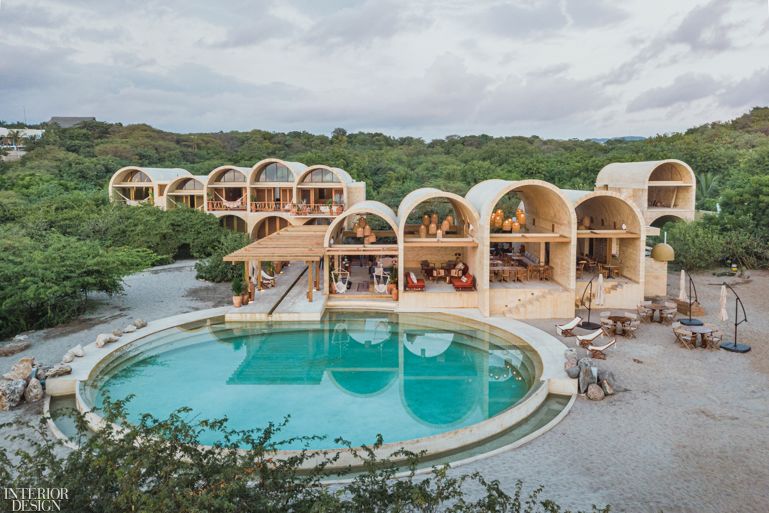


The property’s public spaces, at right, are completely open to the elements, while guest suites, behind, feature clerestories and louvered doors in Macuili and oak for privacy. Photography by Alex Krotkov.

It’s not the first time Ayarza Sforza has had a change of heart like that. He transformed what was originally meant to be a vacation home on a remote Caribbean beach near Tulum into a small boutique property known as Casa Bautista. That experience served Ayarza Sforza well in learning about service and the hospitality trade. “I always wanted to have a hotel,” he enthuses.



In the double-height lounge, wood-and-rattan armchairs and a daybed, all custom, gather beneath palm-frond pendant fixtures handwoven in Jalisco. Photography by Alex Krotkov.

An hour flight from Mexico City, the site of Casona Sforza is equally tranquil, located on a stretch of coastline known for small inns catering to surfers drawn to Puerto Escondido’s world-class rip curls rather than large resorts. “It’s very authentic, with a lot of culture and history, a place where you really feel the presence of Oaxaca,” Ayarza Sforza says of the Mexican state, known for its rich artisanal and culinary traditions. He and Kalach master-planned the property to keep much of the 1-acre site intact: They cleared less than 30 percent of the natural landscape of mangroves, oaks, and cypress. “We sited the buildings to cause the least amount of intrusion and to take advantage of the views, ocean breezes, and offshore winds,” notes Kalach, pointing out that the rooms remain comfortably cool without much or any mechanical air-conditioning. Considered one of the most versatile and prolific architectural voices in Mexico City, Kalach has focused his career on site-specific projects that blend into the natural environment and underscore his concern for the environment. In fact, Casona Sforza’s tagline is a “planet-conscious casa boutique.”



An upper-level suite’s terrace, outfitted with a rope hammock made by Yucatán artisans and another custom, daybed, looks out to the Pacific Ocean. Photography by Alex Krotkov.

In converting his design from home to hotel, the architect maintained the project’s overall footprint-staggered volumes nestled into the gentle hillsides and fronting a large circular pool-but tweaked the position of openings and partitions to define public lounges and dining areas, as well as the private suites. Kalach also maintained the distinctive brick arches and vaults that his client initially suggested but got cold feet for during the design process. “When Alberto delivered the final concept with flat roofs, I told him, ‘We have to go back to the vaults,’” Ayarza Sforza recalls. “He said, ‘Are you crazy?’ But at the end of the day, he really wanted them, too.”
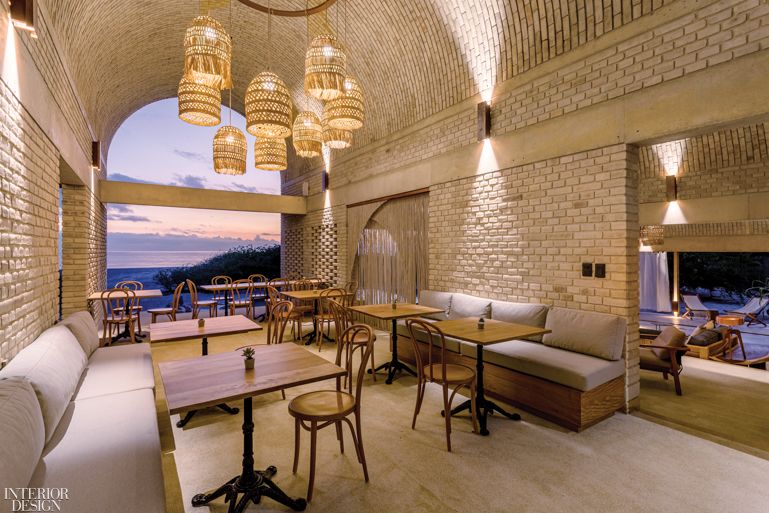


The restaurant showcases offerings from hotel owner Ezequiel Ayarza Sforza’s philanthropic organization, Pueblo del Sol, which helps support Indigenous Oaxacan com­munities-from ceramic dinnerware to homegrown coffee, greens, and honey. Photography by Alex Krotkov.

An unusual typology for beachside villas, the vaulted brick shed has a precedent elsewhere in Mexico’s vernacular architecture. “There’s a long and important tradition of vaulted construction here, especially in the interior of the country,” Kalach explains. “Plus the vaults have lots of benefits. They are seismically stable and help with air circulation, and the curves allow positive energy to flow better.” Ayarza Sforza adds that they help “vibrations bounce around and create a sense of peacefulness.” More pragmatically, the thermal mass of the brick walls and ceilings help cool the naturally ventilated interiors.



A suite bedroom showcases the work of local artisans, who crafted the sand-colored bricks in two sizes-large modules stacked horizontally along the walls and smaller ones arching up the vaulted ceiling-plus the wool rug and bedcover. Photography by Alex Krotkov.

Simple and timeless, the architecture is, as Kalach describes, “austere but powerful.” Hand-crafted by local artisans, the sandy-hued bricks represent the Casona’s imperative to build with locally produced materials and avoid synthetic products wherever possible. Other sustainable features include a wastewater treatment plant operated with activated charcoal (in lieu of septic tanks that might damage the local aquifer) and a forthcoming solar-generated electrical system (its installation delayed by pandemic-related protocols). The furnishings, which Kalach says his client oversaw with “great tact and great style,” also draw on the talents of weavers from Oaxaca and makers of woven-palm lamps and rope hammocks in Veracruz, Jalisco, and the Yucatán.



In a bathroom, the sink and soaking tub are cast concrete. Photography by Alex Krotkov.

For Casona’s custom furniture and millwork, including wardrobes and louvered windows in such local hardwoods as Macuili, Ayarza Sforza turned to the carpenters of Pueblo del Sol, a philanthropic organization he created to support Indigenous communities of the Oaxacan highlands. Workers in the village, located about an hour’s drive from Casona, craft the hotel’s bath and beauty products from honey they produce on-site and they cultivate the organic coffee served to guests, while ceramic artisans make the dinnerware for Casona’s restaurant. “Our guiding principle is that everything we do at the hotel helps support Pueblo del Sol,” Ayarza Sforza says. Pueblo del Sol also provides yoga, meditation, and healing arts classes to guests of Casona, and upcoming plans for the organization include a new textile studio, a preschool, and cabins where guests can expand their vacation beyond the beach to include organic farming and beekeeping workshops. Ayarza Sforza is headed to Africa later this year to explore a Pueblo outpost; another location, possibly in Argentina, is on the radar as well. More reasons for Ayarza Sforza-and the fellow Latinxs he champions-to be proud that what he’d planned to be his beach house now serves a much higher purpose.



A ground-floor suite has its own private pool. Photography by Alex Krotkov.



Wardrobes are custom-made of wood and rattan, and the brick surfaces help maintain cool temperatures. Photography by Alex Krotkov.
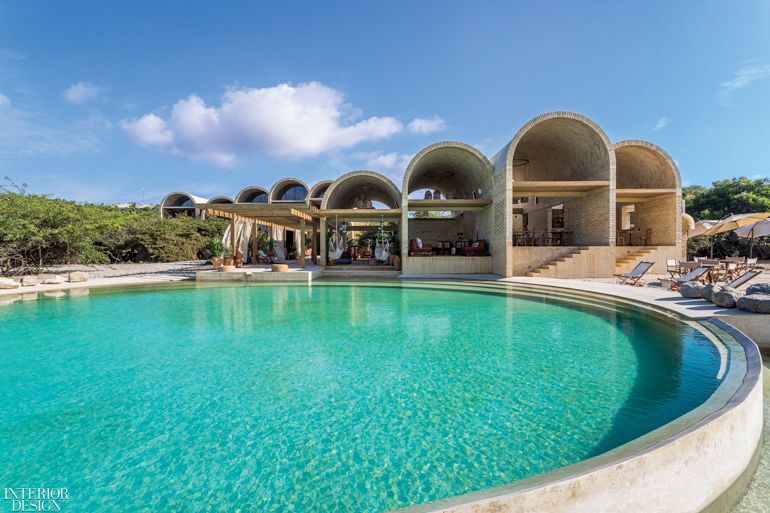


The curves of the concrete pool echo the arches of the hotel’s roofline. Photography by Alex Krotkov.



Beside a chair designed by La Metropolitana, louvered windows and doors allow for natural cross-ventilation, drawing in sea breezes and minimizing reliance on air-conditioning. Photography by Alex Krotkov.

Vietnam beat Thailand 2-0 in the first leg of the ASEAN Cup final in Hanoi, giving Vietnam a significant advantage ahead of the second leg and setting up a closely watched regional finale.
A political amnesty law has taken effect in Thailand while excluding people charged with lese-majeste offenses, a decision that reflects continuing political tensions within the governing coalition.
Major Thai developers, including Land & Houses, are redirecting investment toward senior rental communities and other recurring-revenue properties as traditional residential sales weaken and demographic patterns change.
Thai trade representatives are seeking to expand bilateral commerce with New Zealand by promoting Thailand's logistics infrastructure and central position in ASEAN as a distribution gateway for agricultural and manufactured goods.
Malaysia's Transport Ministry says the planned Rapid Transit System Link station at Bukit Chagar will connect directly with KTM trains, local buses and taxis, improving connections for commuters traveling between Johor and Singapore.
The Tourism Authority of Thailand is shifting marketing efforts toward Taiwan and selected South Korean visitor groups after arrivals from South Korea fell 42 percent, seeking to sustain tourism demand and support the hospitality sector.
Samart Corporation has secured a two billion baht contract to develop and upgrade power transmission networks, supporting efforts to strengthen Thailand's electricity grid as industrial and digital energy demand rises.
Thailand's Securities and Exchange Commission has introduced stricter corporate shareholding rules as part of efforts to strengthen transparency, curb illicit funds and protect the integrity of the country's capital markets.
Organizers of the Singapore Formula One night race and other major outdoor events are activating air-quality contingency measures as forest fires in neighboring Indonesia raise the risk of worsening regional haze.
Thailand's prime minister has ordered emergency teams to speed up infrastructure repairs and provide financial assistance after severe flash flooding in Nan province, with authorities prioritizing the restoration of local economic activity.
More than 50 bombings, arson attacks on government offices and tire burnings across three southern Thai provinces have injured at least two people, prompting Malaysia to strengthen surveillance along the shared border.
Thai automotive and manufacturing executives are urging the government to require greater domestic sourcing from foreign electric vehicle investors, seeking more technology transfer and stronger links between incoming Chinese capital and local suppliers.
Thailand is hosting the twenty-ninth ASEAN Labor Ministers Meeting, where governments are working on a regional framework for digital skills training and a new ASEAN Digital Skills Passport intended to improve worker mobility and access to talent across Southeast Asia.
Thailand's digital economy regulators are drafting national rules for data centers and cloud infrastructure as interest from global hyperscalers grows, with the government seeking to strengthen the country's role as a regional digital hub.
Malaysia and Indonesia are coordinating cross-border cloud seeding operations as dry conditions and worsening air quality intensify, with the measures aimed at suppressing peatland fires ahead of Malaysia's National Day celebrations.
Philippine authorities have begun evacuations and stepped up emergency preparations as Typhoon Saudel enters the country's area of responsibility, with meteorologists warning that the system could intensify into a super typhoon.
Heavy rainfall from Typhoon Narra has caused flooding and landslides across northern Vietnam, displacing thousands of households, damaging rice crops and disrupting tourism and transport, including around Ha Long Bay.
Authorities in Indonesia say 91 people have died after a magnitude 7.7 earthquake struck East Nusa Tenggara, with military transport aircraft deployed to deliver specialized assistance to vulnerable women and children across the affected islands.
Indonesian authorities have arrested 72 people accused of starting forest and peatland fires across Borneo and Sumatra, as widespread haze affects neighboring countries, prompts school closures in Malaysia and drives urgent regional cooperation.
Thailand recorded a 37 percent year-on-year increase in foreign direct investment to 219 billion baht, as multinational companies expand manufacturing and technology operations in the country amid intensifying global trade friction.
Indonesian authorities arrested 72 people accused of using illegal fires to clear land across Borneo and Sumatra as a worsening dry season generated heavy transboundary haze and contributed to the closure of nearly 600 schools in neighboring Malaysian states.
Prime Minister Anutin Charnvirakul convened senior military and intelligence officials after more than 50 bombings and arson attacks targeted infrastructure in Narathiwat, Pattani and Yala, prompting an urgent review of security measures amid fears of renewed insurgent violence.
Prime Minister Lawrence Wong announced that every Singaporean child will receive about 70,000 Singapore dollars in financial support through cash payments and grants by age seventeen, as the government steps up efforts to address the country’s declining fertility rate.
Thailand has begun enforcing updated electric vehicle requirements that oblige foreign automakers to produce two vehicles locally for every one imported this year, alongside new battery sourcing rules intended to deepen domestic supply chains in the Eastern Economic Corridor.
Singapore’s Ministry of Trade and Industry upgraded its annual economic growth forecast to as much as 5.5 percent, citing robust global electronics demand and a sharp increase in the adoption of agentic artificial intelligence among local businesses.
President Prabowo Subianto inaugurated Indonesia’s national electric motorcycle initiative in West Java, backed by state financing and designed to build domestic capacity in electric vehicle and battery manufacturing while positioning Indonesia as a global production hub.
Thailand received investment applications worth 1.4 trillion baht, or about 43.6 billion US dollars, in the first half of the year, a 37 percent increase from a year earlier as global technology companies expanded data centers, cloud infrastructure and advanced electronics manufacturing.
An Indonesian court convicted twenty-six-year-old Luzian Andrin Zgraggen of blasphemy after he breached strict holiday restrictions and posted an explicit video from an empty beach.
An Indonesian court on the island of Bali has sentenced twenty-six-year-old Swiss national Luzian Andrin Zgraggen to one year in prison for publicly insulting Nyepi, the sacred Balinese Hindu Day of Silence.

The verdict follows Zgraggen's arrest in March after he recorded and published a social media video that violated island-wide religious restrictions and sparked widespread public outrage.

During Nyepi, Bali enforces strict, mandatory observances requiring residents and tourists alike to remain indoors, extinguish lights, cease travel, and refrain from loud noises or public activities.

The island's international airport suspends operations and commercial internet connectivity is largely restricted for twenty-four hours to maintain complete silence.

Zgraggen violated the curfew by walking onto a deserted beach, filming the empty surroundings, and sharing the footage online alongside captions containing expletives.

Presiding judges ruled that Zgraggen's deliberate breach and subsequent social media broadcast caused profound offense to the Balinese population and desecrated religious customs.

In court, Zgraggen expressed remorse and offered a public apology, testifying that he had failed to comprehend the scope and religious gravity of the annual holiday before violating the rules.

The prison sentence reflects an intensifying campaign by Indonesian authorities to enforce local laws and religious standards amid record post-pandemic tourism volumes.

While immigration officials have historically deported or briefly detained foreign visitors who violated local ordinances, local prosecutors have increasingly sought formal custodial sentences for deliberate acts of public blasphemy and disruptive behavior at cultural and religious sites across the province.
Japanese police intervened after the child was discovered abandoned for hours in rainy, foggy conditions at 2,000 meters while his father continued hiking toward the peak.
Japanese police have castigated a forty-eight-year-old father who abandoned his seven-year-old son on Mount Fuji in poor weather conditions to continue climbing toward the summit with his older child.

Mountain hut staff discovered the boy sitting alone on a bench near the trail's sixth station at an altitude exceeding two thousand meters, prompting an emergency call to local law enforcement.

The boy, left behind with only a soft drink and a snack after complaining of fatigue, was found waiting in dense fog and rain.

Police officers located the father hours later between the seventh and eighth stations, approximately a three-hour hike further up the mountain.

By the time authorities brought the father back down to reunite with his son, the child had been left unsupervised for approximately eight hours.

Police reprimanded the father upon his return, emphasizing that abandoning a young child on the mountain under adverse weather was entirely unacceptable, regardless of climbing ambitions.

The father apologized for what he described as a rash decision.

The incident occurred along the popular Fujinomiya route, which begins at the fifth station and typically requires an eight-hour round trip to reach the 3,776-meter summit.

The mountain, an active volcano and designated UNESCO World Heritage site that attracts roughly two hundred thousand hikers annually, has experienced a series of safety incidents and overcrowding issues, leading local authorities to enforce stricter route management and daily visitor caps.
Malaysian policymakers are examining expanded social care arrangements after federal welfare spending reached seven hundred twenty-eight million ringgit, warning that responsibility for elderly and social care cannot rest entirely with families.
Philippine security forces arrested a wanted bombing suspect and a Lanao del Sur vice mayor facing murder charges in separate operations in Mindanao, strengthening the government’s efforts to combat crime in the volatile southern region.
Gold industry representatives are preparing talks with Thai ministers to oppose proposed taxation measures, warning that the changes could disrupt one of Southeast Asia’s most active physical gold markets.
Indonesian police arrested one hundred ninety-seven people, including Singaporean nationals, in a raid on an illegal gambling network in Batam and seized hundreds of thousands of dollars in cash and other assets.
Thai authorities have widened investigations into three companies in Pattaya as part of a broader crackdown on nominee arrangements allegedly used to circumvent restrictions on foreign ownership of property.
Executive Secretary Ralph Recto has rejected claims of a systemic garbage crisis while blaming improper waste disposal for clogging waterways and worsening severe flooding across Metro Manila.
Thai transport authorities are assessing a seventy-four-kilometer rail expansion intended to connect with existing national infrastructure, reduce logistics costs and improve urban and regional connectivity.
Cambodian policymakers are channeling workforce-development funding into electric vehicles and agricultural processing to build industrial skills and attract higher-value manufacturing activity.
Prime Minister Anutin Charnvirakul has ordered faster humanitarian relief as severe flooding affects Nan and eight other northern provinces, with authorities also strengthening early-warning systems to protect communities and agricultural production.
Private-sector executives are calling for greater technology adoption, knowledge sharing and access to finance to unlock the potential of Thailand’s three point three million small and medium-sized enterprises amid a volatile global economy.
Chinese luxury companies in jewelry, watches and premium wine are increasingly targeting Southeast Asia’s affluent consumers as a testing ground for international expansion, intensifying competition across the region’s high-end retail market.
Thai policymakers are examining new frameworks to strengthen trade and logistics links with New Zealand, as Bangkok seeks to diversify international commercial partnerships and expand its role as a regional distribution hub.
The ASEAN Observer Team has inspected parts of Banteay Meanchey province after Cambodia protested the deployment of shipping containers by Thai forces, highlighting continued tensions over territorial demarcation.
Vietnam has deployed thousands of emergency personnel after Storm Narra brought extreme rainfall to northern and central provinces, triggering landslides, damaging infrastructure and disrupting local supply chains.
Strong public registration for the new TH-AI Passport and growing interest in digital asset tokenization point to accelerating adoption of advanced digital financial technologies in Thailand.
A series of coordinated arson and bomb attacks in Pattani, Yala and Narathiwat led to the suspension of State Railway of Thailand services and prompted Malaysia to advise citizens to postpone non-essential travel to the border region.
The Armed Forces of the Philippines has rejected demands from China’s embassy to remove the grounded naval vessel from Ayungin Shoal, reaffirming Manila’s position on its territorial claims in the South China Sea.
President Prabowo Subianto has ordered a major emergency response to forest and land fires in Kalimantan and traveled to the region to oversee containment efforts, while authorities pledged tougher enforcement against environmental violations.
Prime Minister Lawrence Wong used his National Day Rally to warn that intensifying US-China tensions and fragmented supply chains are creating a more uncertain global environment, urging Singapore to deepen partnerships that protect its position as an international hub.
Swiss Tourist Sentenced to One Year in Prison for Insulting Bali's Sacred Day of Silence
Father Reprimanded After Leaving Seven-Year-Old Son Alone on Mount Fuji During Summit Climb
Google Launches Pixel 11 With Gemini AI at the Center of Its Hardware Strategy
China’s Kimi Launches AI-Focused Credit Card With Agricultural Bank of China and American Express
Success: Nvidia Turned Gaming Chips Into the Engine of the AI Boom
AI’s Next Bottleneck Is Power, Not Just Nvidia Chips
Meta Raises AI Spending Target to as Much as $145bn Despite Pressure Over Returns
Joe Biden’s Cancer Has Spread Beyond His Bones, Hunter Biden Says
Why 2027 Could Be a Strong Year for Stocks—and Why the Forecast Is Fragile
Why Markets May Look Quiet in August After Big Tech Earnings
UFO: Pentagon Releases Video of Unidentified Object Tracked Over Middle East
Ukraine Tells Senate Republicans Its Drone War Offers a Blueprint for America
Weight-Loss Drug Boom Tests the Limits of Prescription Advertising Rules
Taiwan’s President Joins Wartime Command Drill as China Pressure Grows
Lightning Strike Kills Yala FC Player During Match in Southern Thailand
AI Is Remaking the US Economy, From GDP Growth to iPhone Prices
Indonesia’s Free School Meals Plan Has Been Hit by Poisoning, Corruption and Cuts
US and Japan Step In to Support the Yen in Rare Joint Intervention
FIFA’s Retreat Leaves a Larger Question Over Who Guards the Game
Valued at $109 Million: F-35B Fighter Jet Crashes in Southern California
US Says It Has Carried Out Heavy Strikes on Iran After Attempted Attacks on Its Forces
Over 24 Hours in the Air: Qantas Airbus Completes Record-Breaking Test Flight
Nvidia Reportedly Takes Vast Texas Data-Centre Lease to Underwrite AI Expansion
FIFA’s Private-Investment Plan for World Cup Rights Draws European Revolt
Following OpenAI's Cyberattack: 'Most Companies Still Do Not Understand What Is Coming'
OpenAI Sued After ChatGPT Allegedly Discouraged Emergency Care Before Near-Fatal Embolism
Miliband Sets Climate and International Law at Centre of UK Diplomacy
Trump Readies New Tariffs as Temporary Global Levy Nears Expiry
EU Imposes Record €550 Million Digital Services Fine on AliExpress
Between Deliveries, Wang Jibing Wrote His Way to China’s Literary Heights
Morgan Stanley Builds a Wall Street Lead in AI Infrastructure Finance
High Prices Push Coffee Drinkers Toward Whole Beans and Home Brewing
Trump Draws Boos and Podium Scrutiny at Spain’s World Cup Triumph
Spain Defeats Argentina in Extra Time to Win Second World Cup
Police Block Cockroach Janta Party’s March to Parliament as Education Protests Intensify
Singapore Considers Lower Taxes for Fund Managers as Hong Kong Intensifies Talent Contest
Proposed U.S.-Saudi Nuclear Pact Could Permit Limited Uranium Enrichment Under International Safeguards
Why Kentucky Fried Chicken Became KFC—and Why the False Explanations Persist
Ukrainian Drones Strike Wildberries Warehouses Deep Inside Russia
Reported CIA Mission Helped Clear the UAE’s Path to Advanced US AI Chips
Artificial Intelligence Capital Fuels Markets While Governments and Regulators Face Mounting Strategic Tests
China’s Moonshot’s Kimi K3 Narrows the Gap With Anthropic Through Scale, Openness and Lower Cost
Gold and Cash Seizure Puts Indonesia’s Senior Anti-Corruption Prosecutor Under Investigation
The Ledger Will Not Trust on Faith
Ukraine’s Leadership Rift Spills Into the Streets as Protesters Target Army Chief
The Ten World Cup Finals That Defined Football History
Smartphones Are Getting More Expensive, Sales Are Collapsing, and Even Apple Admits: "Prices Will Rise"
Leadership Change and Strategic Rivalry Redraw the Political Map
The AI Race Enters Its Infrastructure Era
Britain Nationalises British Steel to Protect Scunthorpe Production and Strategic Supply