The Philippines continued to benefit from strong semiconductor and electronics exports linked to the global artificial intelligence cycle, although analysts warned higher oil prices remain a near-term economic risk.
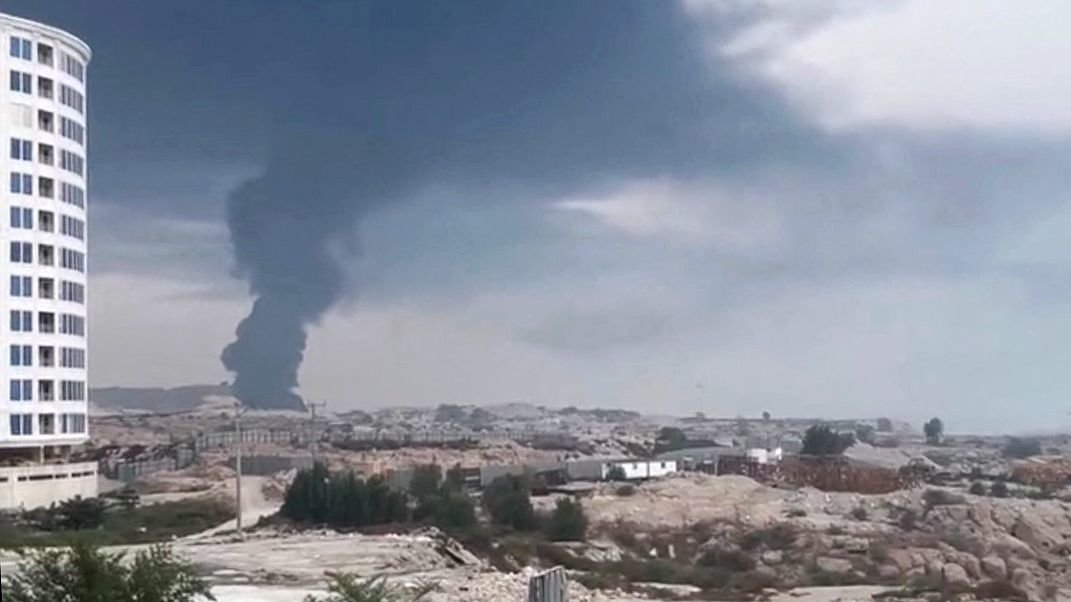
US Central Command said dozens of Iranian targets were hit after missiles were fired towards US forces in Jordan, while Iranian media reported civilian deaths on Qeshm island.
The US military says it has completed a “heavy wave” of strikes against Iran in retaliation for what it described as Tuesday’s attempted ballistic-missile attacks on American forces.
US Central Command, or Centcom, said it struck “dozens” of targets linked to Iran’s Islamic Revolutionary Guard Corps, or IRGC, after Iran fired towards US bases in Jordan and ships in the Strait of Hormuz.
Iranian state media said the latest strikes killed three people, including a two-year-old child, on Qeshm island.
Other locations in southern and western Iran were also reported to have been hit.
The exchange follows a week in which the conflict has widened, including the first publicly announced joint US-Saudi strikes on Iranian proxies in Iraq.
Iran and the United States have traded escalating strikes since a ceasefire, intended to pause the months-long war, collapsed in June.
The United States has blockaded Iranian ports and bombed sites inside Iran.
Iran has launched missiles and drones at US assets across the Middle East and targeted shipping in the strategically and economically important Strait of Hormuz, which links the Gulf and the Arabian Sea.
On Wednesday, Axios cited an unnamed US official as saying that President Donald Trump had met Saudi defence minister Prince Khalid bin Salman, who conveyed Saudi Arabia’s wish to reduce tensions.
The BBC said it had contacted the White House for comment.
The Egyptian government, meanwhile, said that a fire at a port on Wednesday had been caused by a drone attack.
Egypt, a US ally, had not previously been directly attacked during the war.
The conflict resumed after several days of relative calm.
Both sides had halted strikes while talks appeared to restart in pursuit of a diplomatic solution.
Trump called them “very friendly negotiations”, although Tehran denied that any discussions were taking place.
After the Iranian missile attack on a US base in Jordan on Tuesday, Trump promised retaliation.
“We’re going to be hitting them very hard because it’s our turn to hit them.
They know it’s coming.
They asked us not to do it,” he told reporters at the White House.
The latest US operation began at 20:00 ET on Wednesday, or 01:00 BST on Thursday, and lasted about an hour.
Centcom called it a “powerful response to yesterday’s attempted Iranian attacks on US forces based in the Middle East” and said all Iranian missiles had been intercepted.
Centcom said the US had targeted “military command centers, missile and drone facilities, coastal surveillance and defense sites, and maritime capabilities”.
Iranian state broadcaster Irib reported that Qeshm and Abadan, both important to the oil industry, were among the areas struck.
Fars reported, citing Hormozgan University of Medical Sciences, that “a US attack on a residential home in the Chah Tangu neighbourhood of Qeshm killed three members of a family: the father, the mother, and their 2-year-old child”.
A man in his thirties living in the south of Qeshm told BBC Persian that he was travelling to Tehran because “things are becoming more dangerous here”.
“Our internet situation has been a mess.
The electricity has been cutting out several times since this morning,” he said.
“There have been loud bangs since 03:40 this morning.
We are helpless.”
Jordan’s armed forces said its air-defence systems had shot down five Iranian missiles aimed at the kingdom on Thursday.
On Tuesday, the IRGC said it had targeted a US air base and a command centre in Jordan “in response to the acts of aggression of the American child-killing army”.
It also said its naval forces had struck three oil tankers in the Strait of Hormuz after they “ignored warnings” and travelled along what it called an “unsafe and illegal route” through the waterway.
Last Friday, Trump suspended an intensive bombing campaign that had lasted 13 consecutive nights.
The United States said it had struck Iranian weapons and military sites, and scores of people were reported to have died.
Centcom said on Tuesday that joint US-Saudi strikes had hit “multiple terrorist logistics and weapons sites across eastern Iraq in a strong response to over 30 IRGC-directed aerial drone attacks in the last 72 hours”.
Iraq’s paramilitary Popular Mobilisation Forces, or PMF, which is dominated by Iran-backed Shia militias, said at least 20 of its members had been killed in the US-Saudi strikes on its bases.
Iraq’s presidency condemned the bombing, calling it “an unacceptable attack and a blatant violation of Iraq’s sovereignty”.
Trump told Fox News that the strikes had been “co-ordinated with the Iraqi government”.
Saudi Arabia, which regards itself as the leading Sunni Muslim power, and Iran, the largest Shia Muslim country, have been locked in a struggle for regional dominance for decades.
US Central Command, or Centcom, said it struck “dozens” of targets linked to Iran’s Islamic Revolutionary Guard Corps, or IRGC, after Iran fired towards US bases in Jordan and ships in the Strait of Hormuz.
Iranian state media said the latest strikes killed three people, including a two-year-old child, on Qeshm island.
Other locations in southern and western Iran were also reported to have been hit.
The exchange follows a week in which the conflict has widened, including the first publicly announced joint US-Saudi strikes on Iranian proxies in Iraq.
Iran and the United States have traded escalating strikes since a ceasefire, intended to pause the months-long war, collapsed in June.
The United States has blockaded Iranian ports and bombed sites inside Iran.
Iran has launched missiles and drones at US assets across the Middle East and targeted shipping in the strategically and economically important Strait of Hormuz, which links the Gulf and the Arabian Sea.
On Wednesday, Axios cited an unnamed US official as saying that President Donald Trump had met Saudi defence minister Prince Khalid bin Salman, who conveyed Saudi Arabia’s wish to reduce tensions.
The BBC said it had contacted the White House for comment.
The Egyptian government, meanwhile, said that a fire at a port on Wednesday had been caused by a drone attack.
Egypt, a US ally, had not previously been directly attacked during the war.
The conflict resumed after several days of relative calm.
Both sides had halted strikes while talks appeared to restart in pursuit of a diplomatic solution.
Trump called them “very friendly negotiations”, although Tehran denied that any discussions were taking place.
After the Iranian missile attack on a US base in Jordan on Tuesday, Trump promised retaliation.
“We’re going to be hitting them very hard because it’s our turn to hit them.
They know it’s coming.
They asked us not to do it,” he told reporters at the White House.
The latest US operation began at 20:00 ET on Wednesday, or 01:00 BST on Thursday, and lasted about an hour.
Centcom called it a “powerful response to yesterday’s attempted Iranian attacks on US forces based in the Middle East” and said all Iranian missiles had been intercepted.
Centcom said the US had targeted “military command centers, missile and drone facilities, coastal surveillance and defense sites, and maritime capabilities”.
Iranian state broadcaster Irib reported that Qeshm and Abadan, both important to the oil industry, were among the areas struck.
Fars reported, citing Hormozgan University of Medical Sciences, that “a US attack on a residential home in the Chah Tangu neighbourhood of Qeshm killed three members of a family: the father, the mother, and their 2-year-old child”.
A man in his thirties living in the south of Qeshm told BBC Persian that he was travelling to Tehran because “things are becoming more dangerous here”.
“Our internet situation has been a mess.
The electricity has been cutting out several times since this morning,” he said.
“There have been loud bangs since 03:40 this morning.
We are helpless.”
Jordan’s armed forces said its air-defence systems had shot down five Iranian missiles aimed at the kingdom on Thursday.
On Tuesday, the IRGC said it had targeted a US air base and a command centre in Jordan “in response to the acts of aggression of the American child-killing army”.
It also said its naval forces had struck three oil tankers in the Strait of Hormuz after they “ignored warnings” and travelled along what it called an “unsafe and illegal route” through the waterway.
Last Friday, Trump suspended an intensive bombing campaign that had lasted 13 consecutive nights.
The United States said it had struck Iranian weapons and military sites, and scores of people were reported to have died.
Centcom said on Tuesday that joint US-Saudi strikes had hit “multiple terrorist logistics and weapons sites across eastern Iraq in a strong response to over 30 IRGC-directed aerial drone attacks in the last 72 hours”.
Iraq’s paramilitary Popular Mobilisation Forces, or PMF, which is dominated by Iran-backed Shia militias, said at least 20 of its members had been killed in the US-Saudi strikes on its bases.
Iraq’s presidency condemned the bombing, calling it “an unacceptable attack and a blatant violation of Iraq’s sovereignty”.
Trump told Fox News that the strikes had been “co-ordinated with the Iraqi government”.
Saudi Arabia, which regards itself as the leading Sunni Muslim power, and Iran, the largest Shia Muslim country, have been locked in a struggle for regional dominance for decades.
A modified Airbus A350-1000ULR traveled over 23,000 kilometers from Melbourne to Toulouse, drawing millions of real-time viewers.
An Airbus A350-1000ULR operated by Qantas has successfully completed a marathon test flight lasting 24 hours and 24 minutes, covering 23,075 kilometers without a single stop.
Traveling from Melbourne, Australia, to Toulouse, France, the aircraft’s journey served as a critical milestone for the airline's ambitious "Project Sunrise." This initiative aims to launch ultra-long-haul direct services from Australia to London and New York by 2027.
The specialized aircraft underwent significant modifications for extreme endurance, including the installation of an additional fuel tank.
Its flight path spanned across the Pacific and Atlantic Oceans, arriving at Airbus's manufacturing facility in Toulouse, where a series of two-month trials has been underway since June to prepare the fleet for commercial service.
The mission captured global attention, with more than 3.6 million people tracking its progress via Flightradar24.
This high level of engagement makes it the second most-watched flight in the platform's history, surpassed only by the 2022 flight carrying the late Queen Elizabeth II. To put this achievement in perspective, a 2005 Boeing 777-200LR flight from Hong Kong to London covered roughly 21,601 kilometers in approximately 22 hours.
Qantas has ordered 12 customized A350-1000ULR aircraft to facilitate these unprecedented routes.
The airline intends to transform the historic "Kangaroo Route"—which traditionally required multiple stops over several days—into a single direct flight lasting between 19 and 21 hours.
To enhance passenger well-being during these grueling durations, the cabin will feature only 238 seats, providing more space per passenger.
The interior will include a dedicated "wellness zone" for stretching, specialized ambient lighting to simulate sunrises and sunsets, and meal schedules synchronized with sleep science to mitigate jet lag.
The first aircraft in this new fleet, capable of carrying an extra 20,000 liters of fuel, is expected to be delivered to Qantas in April 2027. Direct daily services from Sydney to London are slated to begin in October of that year, potentially saving passengers four hours compared to current routes involving layovers in Singapore.
Traveling from Melbourne, Australia, to Toulouse, France, the aircraft’s journey served as a critical milestone for the airline's ambitious "Project Sunrise." This initiative aims to launch ultra-long-haul direct services from Australia to London and New York by 2027.
The specialized aircraft underwent significant modifications for extreme endurance, including the installation of an additional fuel tank.
Its flight path spanned across the Pacific and Atlantic Oceans, arriving at Airbus's manufacturing facility in Toulouse, where a series of two-month trials has been underway since June to prepare the fleet for commercial service.
The mission captured global attention, with more than 3.6 million people tracking its progress via Flightradar24.
This high level of engagement makes it the second most-watched flight in the platform's history, surpassed only by the 2022 flight carrying the late Queen Elizabeth II. To put this achievement in perspective, a 2005 Boeing 777-200LR flight from Hong Kong to London covered roughly 21,601 kilometers in approximately 22 hours.
Qantas has ordered 12 customized A350-1000ULR aircraft to facilitate these unprecedented routes.
The airline intends to transform the historic "Kangaroo Route"—which traditionally required multiple stops over several days—into a single direct flight lasting between 19 and 21 hours.
To enhance passenger well-being during these grueling durations, the cabin will feature only 238 seats, providing more space per passenger.
The interior will include a dedicated "wellness zone" for stretching, specialized ambient lighting to simulate sunrises and sunsets, and meal schedules synchronized with sleep science to mitigate jet lag.
The first aircraft in this new fleet, capable of carrying an extra 20,000 liters of fuel, is expected to be delivered to Qantas in April 2027. Direct daily services from Sydney to London are slated to begin in October of that year, potentially saving passengers four hours compared to current routes involving layovers in Singapore.
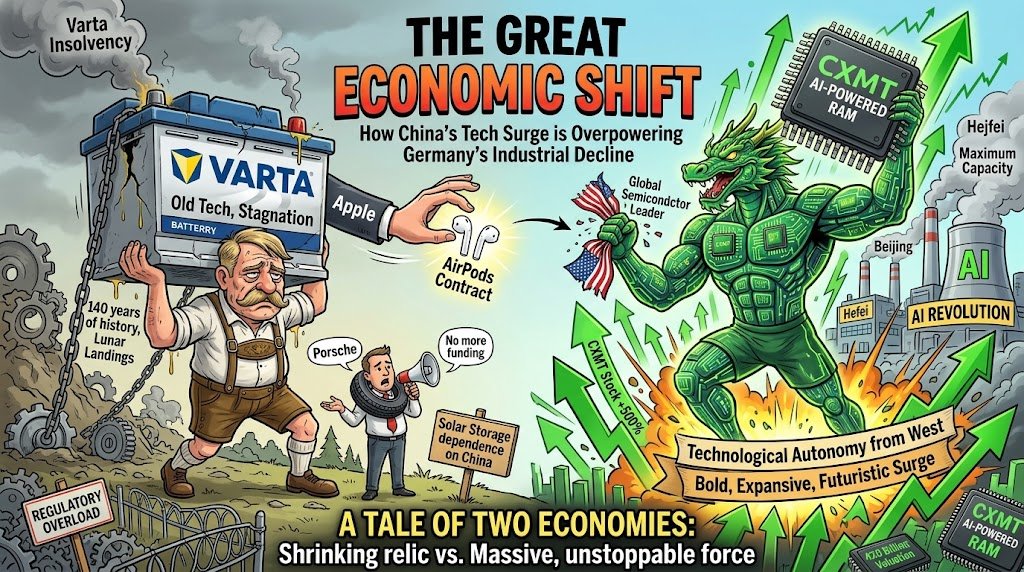
As the historic German battery giant Varta files for insolvency following the loss of key Apple contracts, China's CXMT achieves a meteoric stock market debut, signaling a massive global pivot in semiconductor leadership.
A profound economic divergence is unfolding between two industrial titans, representing much more than mere corporate fluctuations.
It is a tale of two economies: a shrinking, highly regulated, and stagnant German landscape versus an expansive, bold, and futuristic Chinese surge.
Varta, a venerable German institution with nearly 140 years of history—whose products once powered polar expeditions and even the first lunar landings—has filed for insolvency proceedings in Stuttgart.
While not yet unable to meet immediate obligations, the company faces a liquidity crisis projected toward 2027. The downfall is driven by volatile market conditions, currency fluctuations, and, most critically, the termination of a vital contract with Apple.
The American tech giant has shifted its AirPods battery procurement to Chinese suppliers.
Varta’s shareholders, including Porsche, have indicated they will not provide further funding.
While the company's domestic battery division may undergo restructuring to survive as a separate entity, the fate of its other divisions remains uncertain.
This collapse threatens Germany's solar storage market and deepens the nation's technological dependence on China.
In stark contrast, China's CXMT has achieved a historic market debut on the Shanghai exchange.
Founded in 2016 by Joe Yiming—who envisioned the migration of the memory chip industry from the United States to Japan, then Korea, and finally China—the company is now the world's fourth-largest producer of RAM.
Upon its first day of trading, CXMT's stock price surged by over 500%, driving its valuation to an estimated 420 billion euros, making it China's most valuable publicly traded company.
CXMT’s success is not necessarily rooted in technological superiority; its chips are arguably generations behind Western competitors due to U.S. export sanctions.
Instead, the triumph lies in timing and scale.
As the Artificial Intelligence revolution creates an insatiable global demand for short-term memory, CXMT's factories in Hefei and Beijing are operating at maximum capacity, supplying giants like Xiaomi and Alibaba.
After posting a 3 billion dollar loss in 2023, CXMT turned profitable in 2025, with first-quarter 2026 revenues exceeding 7.5 billion dollars.
This meteoric rise reflects China's broader geopolitical imperative: achieving total economic and technological autonomy from the West to ensure supremacy in the era of Artificial Intelligence.
It is a tale of two economies: a shrinking, highly regulated, and stagnant German landscape versus an expansive, bold, and futuristic Chinese surge.
Varta, a venerable German institution with nearly 140 years of history—whose products once powered polar expeditions and even the first lunar landings—has filed for insolvency proceedings in Stuttgart.
While not yet unable to meet immediate obligations, the company faces a liquidity crisis projected toward 2027. The downfall is driven by volatile market conditions, currency fluctuations, and, most critically, the termination of a vital contract with Apple.
The American tech giant has shifted its AirPods battery procurement to Chinese suppliers.
Varta’s shareholders, including Porsche, have indicated they will not provide further funding.
While the company's domestic battery division may undergo restructuring to survive as a separate entity, the fate of its other divisions remains uncertain.
This collapse threatens Germany's solar storage market and deepens the nation's technological dependence on China.
In stark contrast, China's CXMT has achieved a historic market debut on the Shanghai exchange.
Founded in 2016 by Joe Yiming—who envisioned the migration of the memory chip industry from the United States to Japan, then Korea, and finally China—the company is now the world's fourth-largest producer of RAM.
Upon its first day of trading, CXMT's stock price surged by over 500%, driving its valuation to an estimated 420 billion euros, making it China's most valuable publicly traded company.
CXMT’s success is not necessarily rooted in technological superiority; its chips are arguably generations behind Western competitors due to U.S. export sanctions.
Instead, the triumph lies in timing and scale.
As the Artificial Intelligence revolution creates an insatiable global demand for short-term memory, CXMT's factories in Hefei and Beijing are operating at maximum capacity, supplying giants like Xiaomi and Alibaba.
After posting a 3 billion dollar loss in 2023, CXMT turned profitable in 2025, with first-quarter 2026 revenues exceeding 7.5 billion dollars.
This meteoric rise reflects China's broader geopolitical imperative: achieving total economic and technological autonomy from the West to ensure supremacy in the era of Artificial Intelligence.
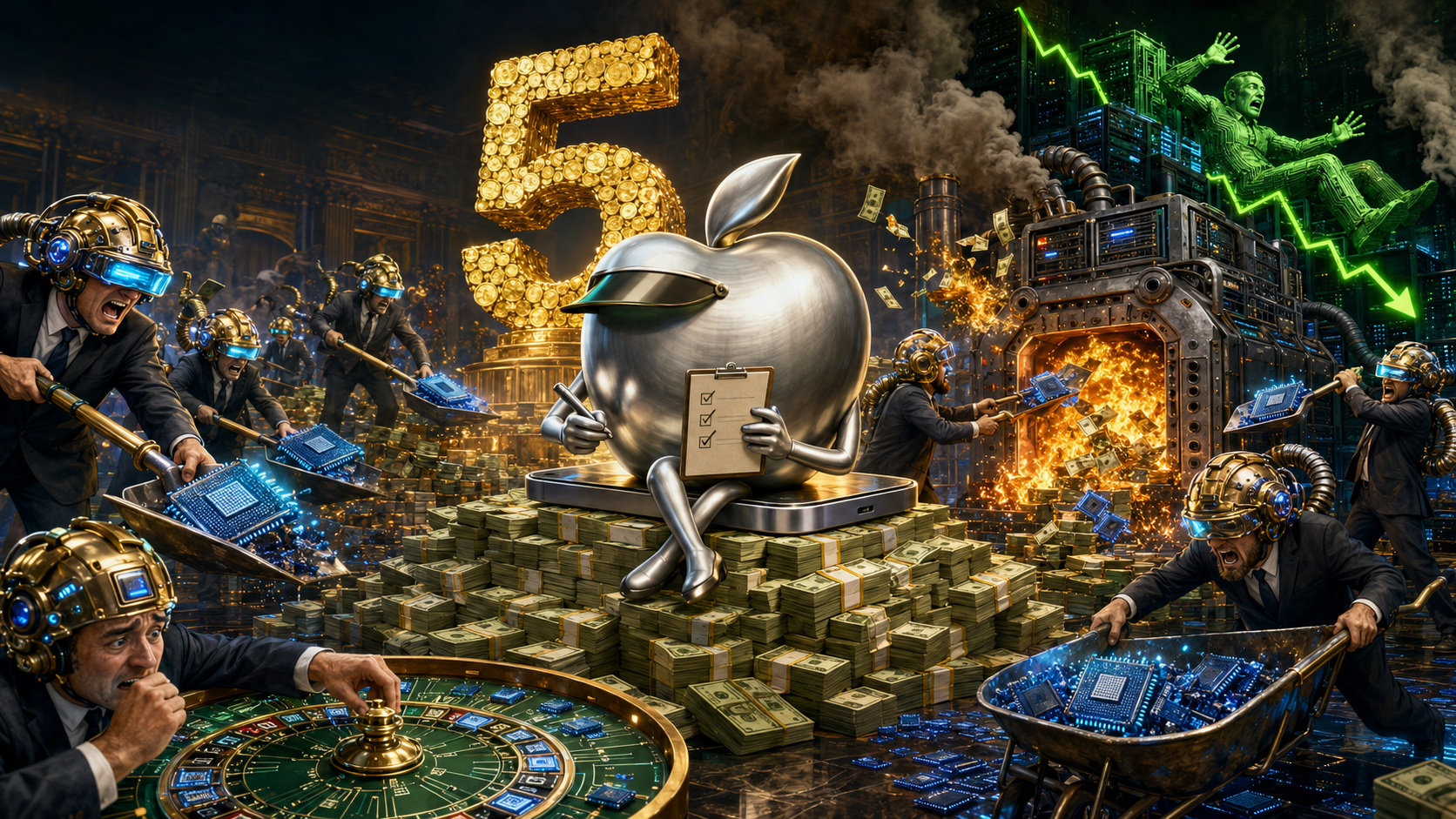
The iPhone maker reclaimed its position ahead of Nvidia after a rotation out of chip shares sharpened investor interest in its cash-generative business model.
Apple briefly surpassed a five-trillion-dollar market valuation after its shares reached an intraday record of 342.89 dollars, lifting the company’s value to about 5.04 trillion dollars before the advance ebbed.
The shares closed below the threshold, but the move returned Apple to the position of the world’s most valuable listed company, ahead of Nvidia.
The milestone came only months after Apple first exceeded four trillion dollars in market value.
Its shares have risen by roughly a quarter this year, outpacing several large technology rivals during a period in which investors have grown more discriminating about the costs attached to the artificial-intelligence boom.
The central attraction is not that Apple has abandoned artificial intelligence.
It has introduced Apple Intelligence, continues to develop a more capable version of Siri and remains a significant buyer of advanced components.
Its distinction lies in capital discipline: rather than committing to the most expansive data-centre construction and model-training programmes, it has pursued a more selective strategy built around its devices, proprietary chips and external partnerships.
That approach has become more appealing as concerns mount over the scale and timing of returns from artificial-intelligence infrastructure.
Investors have increasingly questioned whether the enormous outlays planned by companies building data centres, buying processors and training frontier models can be justified by near-term revenues.
The resulting sell-off has hit chipmakers particularly hard, with Nvidia, Samsung Electronics and SK Hynix among the companies affected by the reassessment.
Apple has benefited from that rotation, but its valuation still rests on its underlying operations.
Demand for its hardware and the steady expansion of its services business give the group a large recurring revenue base, while its comparatively modest artificial-intelligence capital commitments have helped preserve the perception of robust cash generation.
There are constraints.
The global push to build artificial-intelligence infrastructure has tightened supplies of memory and storage components, raising costs for device makers.
Apple must also demonstrate that its delayed and more measured artificial-intelligence offering can improve its products without surrendering ground to competitors that have moved faster in consumer-facing software.
The company is broadening its commercial reach as it prepares for that test.
Its new Apple Upgrade programme in the United States, operated with Klarna, offers leases for iPhones, iPads, Apple Watches and Macs, with monthly payments beginning at 17.99 dollars for an iPhone.
Customers can return a device, upgrade it or buy it at the end of the agreement.
A leadership transition will add further significance to the coming months.
Tim Cook is due to become Apple’s executive chair on 1 September, when John Ternus, the company’s hardware chief, succeeds him as chief executive.
Ternus will inherit a company valued as much for disciplined execution as for its capacity to adapt its devices and services to the next phase of artificial intelligence.
The shares closed below the threshold, but the move returned Apple to the position of the world’s most valuable listed company, ahead of Nvidia.
The milestone came only months after Apple first exceeded four trillion dollars in market value.
Its shares have risen by roughly a quarter this year, outpacing several large technology rivals during a period in which investors have grown more discriminating about the costs attached to the artificial-intelligence boom.
The central attraction is not that Apple has abandoned artificial intelligence.
It has introduced Apple Intelligence, continues to develop a more capable version of Siri and remains a significant buyer of advanced components.
Its distinction lies in capital discipline: rather than committing to the most expansive data-centre construction and model-training programmes, it has pursued a more selective strategy built around its devices, proprietary chips and external partnerships.
That approach has become more appealing as concerns mount over the scale and timing of returns from artificial-intelligence infrastructure.
Investors have increasingly questioned whether the enormous outlays planned by companies building data centres, buying processors and training frontier models can be justified by near-term revenues.
The resulting sell-off has hit chipmakers particularly hard, with Nvidia, Samsung Electronics and SK Hynix among the companies affected by the reassessment.
Apple has benefited from that rotation, but its valuation still rests on its underlying operations.
Demand for its hardware and the steady expansion of its services business give the group a large recurring revenue base, while its comparatively modest artificial-intelligence capital commitments have helped preserve the perception of robust cash generation.
There are constraints.
The global push to build artificial-intelligence infrastructure has tightened supplies of memory and storage components, raising costs for device makers.
Apple must also demonstrate that its delayed and more measured artificial-intelligence offering can improve its products without surrendering ground to competitors that have moved faster in consumer-facing software.
The company is broadening its commercial reach as it prepares for that test.
Its new Apple Upgrade programme in the United States, operated with Klarna, offers leases for iPhones, iPads, Apple Watches and Macs, with monthly payments beginning at 17.99 dollars for an iPhone.
Customers can return a device, upgrade it or buy it at the end of the agreement.
A leadership transition will add further significance to the coming months.
Tim Cook is due to become Apple’s executive chair on 1 September, when John Ternus, the company’s hardware chief, succeeds him as chief executive.
Ternus will inherit a company valued as much for disciplined execution as for its capacity to adapt its devices and services to the next phase of artificial intelligence.
The Kremlin's pursuit of Pavel Durov intensifies following new charges regarding the facilitation of illicit digital communications.
The Russian Federation has placed Telegram founder Pavel Durov on its international wanted list following an escalation in legal hostilities between the Kremlin and the messaging platform.
Authorities have formally charged Durov with facilitating terrorist activities and providing a digital infrastructure that enables criminal coordination.
This move follows a period of heightened tension regarding Telegram's refusal to moderate content according to state-mandated requirements.
The investigation centers on allegations that the platform’s lack of moderation allows for the unmonitored spread of extremist propaganda and organized crime communications within Russian borders.
Authorities have formally charged Durov with facilitating terrorist activities and providing a digital infrastructure that enables criminal coordination.
This move follows a period of heightened tension regarding Telegram's refusal to moderate content according to state-mandated requirements.
The investigation centers on allegations that the platform’s lack of moderation allows for the unmonitored spread of extremist propaganda and organized crime communications within Russian borders.
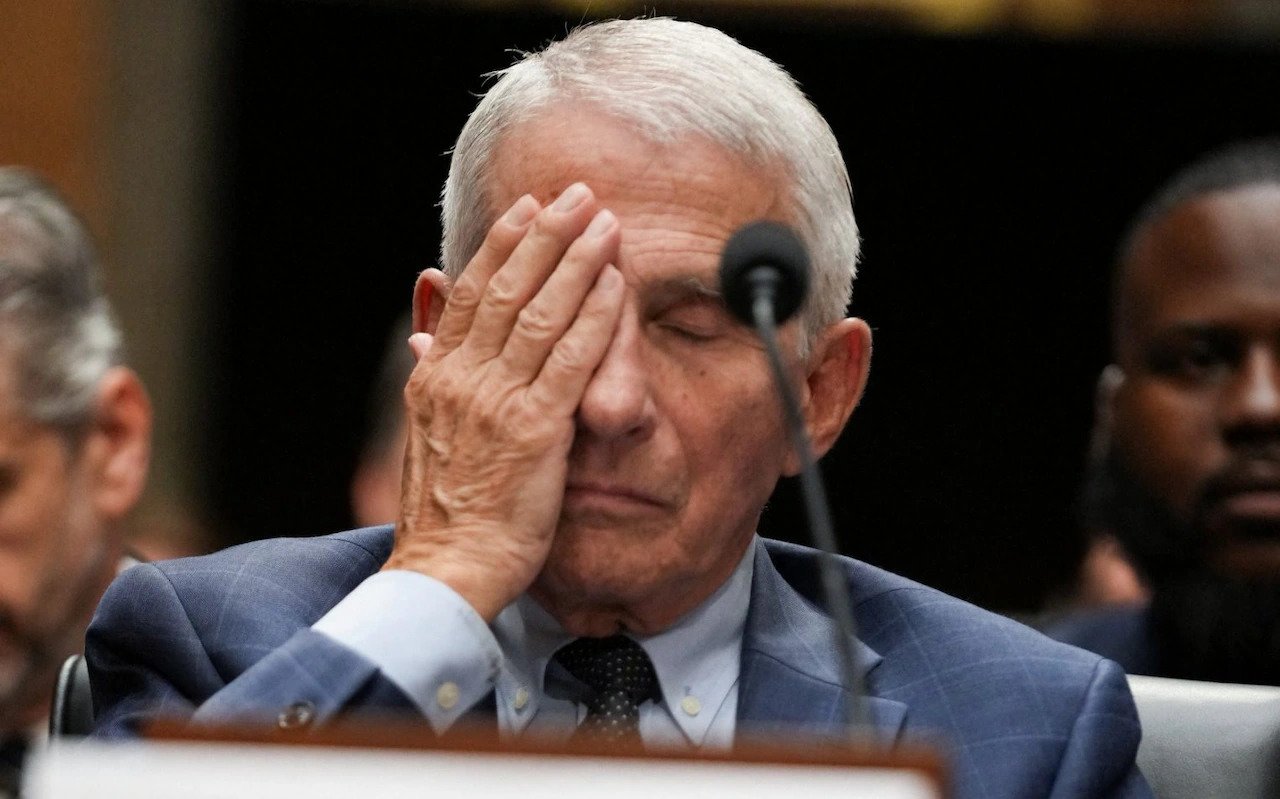
Dr Fauci declined to answer all questions that answering them will criminalized him and all the criminals against humanity he was involved with
Top “expert” during pandemic accuses Republican senator of maintaining an ‘unhinged obsession’ with him.
The United States’s top infectious-diseases expert during the Covid-19 pandemic refused to answer any questions in a hearing before Congress.
Dr Anthony Fauci invoked the Fifth Amendment more than 100 times in response to all questions while appearing before the Senate homeland security committee.
He accused its chairman, Republican Senator Rand Paul, of having an “unhinged obsession” with him.
The Fifth Amendment allows individuals to remain silent under questioning to protect against self-incrimination in the US. Dr Fauci said that Mr Paul was attempting to get him to commit perjury in the hope that he would end up “behind bars”.
The hearing was widely expected to be a clash between Mr Paul and Dr Fauci, who retired as director of the National Institute of Allergy and Infectious Diseases in 2022 after a 50-year career in public science.
Mr Paul has long criticised Dr Fauci, becoming his chief antagonist in Congress. The retired scientist featured on the cover of Mr Paul’s 2023 book Deception: he Great Covid Cover-Up.
Dr Fauci received a pre-emptive pardon from Joe Biden, the former US president, so he would be immune from prosecution for actions he took while in office.
But before the hearing, Mr Paul warned Dr Fauci he could go to prison for perjury if he lied before Congress.
Instead, Dr Fauci said that on the advice of counsel, he would not be answering any questions.
Dr Fauci said: “Given Senator Paul’s obvious obsession with calling for my prosecution, his repeated slanderous comments about me... the only conclusion I can reach is the sole reason he’s calling me before this committee is to get me to say something, anything, that could vindicate his repeated public pledge I could end up ‘behind bars’.
“Any reasonable person who has followed his unhinged obsession with me would readily come to the same conclusion.”
During his opening statement, Mr Paul said that Dr Fauci publicly claimed that Covid-19 occurred naturally but in private had a “mountain of evidence” that it could have begun in a laboratory in Wuhan, China.
At the weekend, Mr Paul released more than 1,000 pages of Dr Fauci’s personal diaries from the pandemic.
The diaries revealed that in January 2020 Dr Fauci did not believe that Covid-19 originated in a “wet market” in China, but publicly said the disease occurred naturally.
Mr Paul accused Dr Fauci of “aiding and abetting the crime” of Covid-19 lockdowns, claiming the measures would not have been implemented without his input.
After 45 minutes of repeated refusals, Mr Paul warned Dr Fauci there would be “repercussions” for his failure to testify.
Mr Paul said that the committee would vote next week on holding Mr Fauci in contempt. If the vote is successful, the matter could be turned over to the department of justice for criminal prosecution.
“Because you refuse to answer, citing a privilege that is unsupported, because of your pardon, and after being denied to do so, this committee is scheduled to vote next week on a resolution certifying your contempt,” Mr Paul said.
When one of Dr Fauci’s lawyers tried to speak, Mr Paul said he was not allowed and ordered security to throw him out, prompting applause in the chamber.
Mr Paul also previously released emails from Dr Fauci in 2020 in which he told Dr Francis Collins, then director of the National Institutes of Health (NIH): “Please delete this email after you read it.”
During the hearing on Wednesday, Mr Paul said Dr Fauci told his colleagues to delete emails because his “primary concern was avoiding culpability”.
Donald Trump also took aim at Dr Fauci, saying his ideas during the pandemic were “crazy”.
“I said from the beginning that the Virus came from the Wuhan Laboratory in China. Fauci strongly disagreed, always trying to protect China. I inherited Fauci, who was there since the 1980’s, but with each passing day, relied less and less on him,” Mr Trump wrote on Truth Social on Wednesday.
He claimed that he sidelined Dr Fauci during his first term but accused Mr Biden, his successor, of making the doctor a “king”.
He continued: “I called Biden to tell him Fauci was no good, either didn’t have a clue, or was dishonest. The call was well received, but sadly, not acted on. Biden went on to give Fauci vast destructive power. The rest is history!”
As the hearing grew more ill-tempered, Bernie Moreno, a Republican senator from Ohio, blamed Dr Fauci for a woman being arrested at a middle school American football game in 2020 for not wearing a mask, an incident which made him run for Congress.
Mr Moreno said: “Here I am sitting in front of you six years later, saying, who the f--- do you think you were for doing that?”
Invoked his right to silence
As Dr Fauci continued to stonewall the questioning, Mr Moreno asked one of his aides to give him a small copy of the US Constitution and asked him if he knew what the Fifth Amendment was.
Dr Fauci responded by invoking his right to silence and citing the Fifth Amendment.
In another tense moment, Mr Moreno asked if Dr Fauci thought he was in “deep s---”.
Senator Ron Johnson, a Republican, told Mr Fauci he had been “so destructive for public health”.
Mr Johnson said it would be “almost impossible” for Dr Fauci to “answer truthfully without demonstrating what you did, your culpability, self-incriminating”.
Senator Rand questioned Dr Fauci on whether the NIH had ever conducted research for the CIA or the office of the Director of National Intelligence to increase the potency of viruses – known as “gain-of-function” work.
“The reason why these questions are important is, President Trump has done a ban, and we’re glad that he did a ban on gain-of-function research,” he said.
“There is still, though, a question [as to] whether or not the intelligence community is adhering to that order. There’s a question of whether or not gain-of-function research is still ongoing.”
Dr Fauci declined to answer.
US Says It Has Carried Out Heavy Strikes on Iran After Attempted Attacks on Its Forces
Over 24 Hours in the Air: Qantas Airbus Completes Record-Breaking Test Flight
Nvidia Reportedly Takes Vast Texas Data-Centre Lease to Underwrite AI Expansion
FIFA’s Private-Investment Plan for World Cup Rights Draws European Revolt
Following OpenAI's Cyberattack: 'Most Companies Still Do Not Understand What Is Coming'
OpenAI Sued After ChatGPT Allegedly Discouraged Emergency Care Before Near-Fatal Embolism
Miliband Sets Climate and International Law at Centre of UK Diplomacy
Trump Readies New Tariffs as Temporary Global Levy Nears Expiry
EU Imposes Record €550 Million Digital Services Fine on AliExpress
Between Deliveries, Wang Jibing Wrote His Way to China’s Literary Heights
Morgan Stanley Builds a Wall Street Lead in AI Infrastructure Finance
High Prices Push Coffee Drinkers Toward Whole Beans and Home Brewing
Trump Draws Boos and Podium Scrutiny at Spain’s World Cup Triumph
Spain Defeats Argentina in Extra Time to Win Second World Cup
Police Block Cockroach Janta Party’s March to Parliament as Education Protests Intensify
Singapore Considers Lower Taxes for Fund Managers as Hong Kong Intensifies Talent Contest
Proposed U.S.-Saudi Nuclear Pact Could Permit Limited Uranium Enrichment Under International Safeguards
Why Kentucky Fried Chicken Became KFC—and Why the False Explanations Persist
Ukrainian Drones Strike Wildberries Warehouses Deep Inside Russia
Reported CIA Mission Helped Clear the UAE’s Path to Advanced US AI Chips
Artificial Intelligence Capital Fuels Markets While Governments and Regulators Face Mounting Strategic Tests
China’s Moonshot’s Kimi K3 Narrows the Gap With Anthropic Through Scale, Openness and Lower Cost
Gold and Cash Seizure Puts Indonesia’s Senior Anti-Corruption Prosecutor Under Investigation
The Ledger Will Not Trust on Faith
Ukraine’s Leadership Rift Spills Into the Streets as Protesters Target Army Chief
The Ten World Cup Finals That Defined Football History
Smartphones Are Getting More Expensive, Sales Are Collapsing, and Even Apple Admits: "Prices Will Rise"
Leadership Change and Strategic Rivalry Redraw the Political Map
The AI Race Enters Its Infrastructure Era
Britain Nationalises British Steel to Protect Scunthorpe Production and Strategic Supply
French National Assembly Overrides Senate to Pass Historic Assisted-Dying Legislation
Thomas Tuchel Faces Fierce Backlash After Tactical Retreat Costs England World Cup Final Berth
A Quiet Bastille Day: France Grapples with World Cup Heartbreak and Leftover Fireworks
Spain in Ecstasy: "We Feel Unbeatable, We Taught the Whole World a Lesson"
Harvard Astrophysicist to Lead U.S. Scientific Advisory on Unidentified Aerial Phenomena
Emergency Sirens Activated Across Bahrain as Interior Ministry Issues Shelter Directives
World Cup Visitors Turn American Big-Box Stores Into Souvenir Stops
Netflix Weighs Always-On Channels, Bundles and Short-Form Video
The AI Invoice Shock: Layoffs Didn't Save Managers Money — They Cost Them More
Concern: Sexually Transmitted Bacterium Among Men Develops Antibiotic Resistance
Following Massive Investor Demand: SK Hynix Raises 26.5 Billion Dollars on Nasdaq
Passenger Partially Pulled Out of Ryanair Jet After Cabin Window Fails Mid-Flight
Severe Heatwave Drives Dangerous Ground-Level Ozone Pollution Across Two Thirds of European Union
Flight Instructor Jumped to His Death — Student Landed the Plane: "You Know What You Need to Do"
The Physical and Electronic Barriers Disrupting Domestic Wireless Networks
France and Morocco Open World Cup Quarter-Finals as Collina Defends Refereeing
Tech Pulse: The Future of AI and Screen Culture
Global News Briefing: Escalating Geopolitical Tensions and Corporate Shakeups
Global News Brief: Escalating Conflicts, Public Health Crises, and World Cup Drama
Europe's Growing Struggle with Extreme Heat and Air Conditioning