Listen to this video in the context of history: You can remove from power those who believe they have "superiority and exclusivity over the right and proper", but you cannot excise this wrong belief from the DNA of the racist (so-called) ultra-"liberals" who still think they belong to the Aryan Master Race.

It started by targeting Putin for the mass killing of Ukrainian civilians, which certainly justifies our full condemnation.

It moved on to an attempt “to destroy an entire country's economy” (Joe Biden’s words) in a collective punishment by enforcing hunger and poverty on 144 million citizens whose only sin is that they are of Russian nationality.

It stepped up to the totalitarian censorship of every government and private media channel, every journalist, every blogger, every tweeter, every YouTuber, every Facebook user, who dared to suggest an alternative point of view or to balance the reports with the other side of the argument.

It escalated with group consensus for pogroms and confiscation of the legitimate property of wealthy Russian citizens.  Russians who immigrated to Western countries because the regime in their country was not to their liking, and whose only sin is that someone who was at most their friend and more likely just their acquaintance, of the same Russian nationality - Putin - has done something unforgivably bad.

(An act by the way, that creates a new “legal” norm, according to which the property of every rich person in the world is in danger of confiscation not because he has done something bad, but because someone they know and may be friends with has done something bad. A norm that for some reason has not yet caused foreign investors from Arab countries and China to immediately sell all the property they have in the West, when it is abundantly clear that they are the next victims in line).

Now injury is being inflicted at an international level, when all citizens of the world are being force to pay out of their shrinking private pockets for a crazy jump in essential fuel and food prices. And if that is not enough, then insult is being added to injury for these hapless citizens when they're treated like idiots and told it's "Putin's price hike" instead of "Biden & Johnson's economic suicide".

And now we hear on German television, the frightening words and the Goebbels-style presentation so familiar to us from the history books, in the same sophisticated German language and elegant delivery of course. We are treated to a blood-chilling explanation of what is flawed and wrong in the whole way of thinking of the "Russian race", one which has dared to believe in an alternative post-modern path, different to the ultra-liberal way  “we” - the Aryan supreme race - has decided is the one and only legitimate way.

Is it only me whose blood chills and feels shivers down my spine when I'm confronted with  this nightmarish deja vu? Or is it just like the Germany of old, where everyone sees something is seriously wrong, but no one dares to say it out loud?

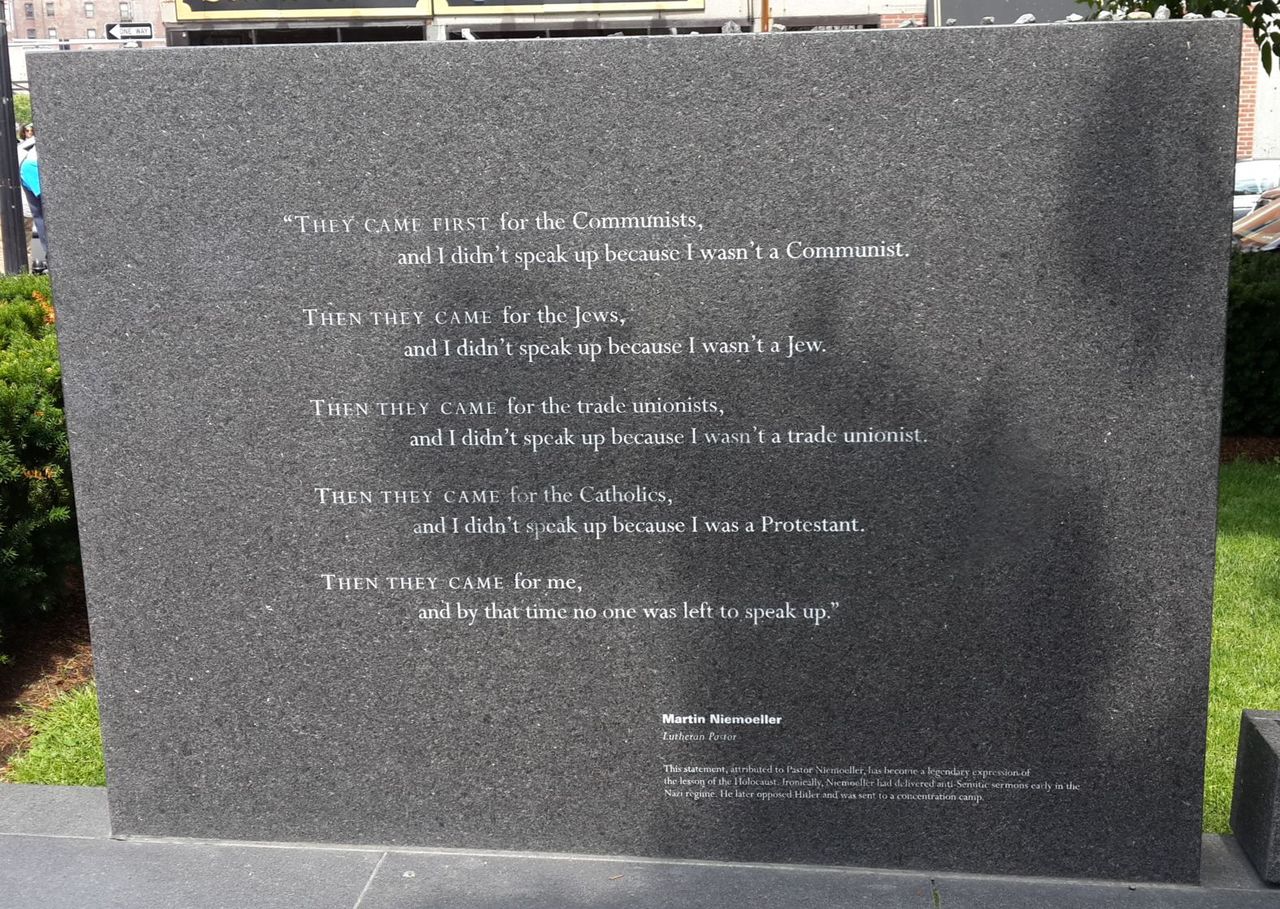
I cannot listen to this video without remembering the “First they came” Nobel poem by the 1946 German Lutheran pastor Martin Niemöller:

"First they came for the socialists, and I did not speak out—

Because I was not a socialist.

Then they came for the trade unionists, and I did not speak out—

Because I was not a trade unionist.

Then they came for the Jews, and I did not speak out—

Because I was not a Jew.

Then they came for me—and there was no one left to speak for me."


And so I must state the following here, loud and clear, to ensure that “never again” will not become "same again”:

* Not all Russians are guilty of the terrible things Putin is doing in Ukraine.

* Not every Russian hates Ukrainians or wants to kill them.

* Not all the assets of anyone Putin has ever met and had friendly conversations with should be confiscated.

* Property rights are still a central clause of the UN Human Rights Charter. (In fact, it is the only clause that distinguishes the Western world from the Communist world.)


When we confiscate property just because of race and proximity, it's just a  Kristallnacht 2.0.

We must be careful not to degenerate into collective blind hatred and mob-driven "legitimacy" to boycott and persecute millions of people just because of their race. If this was not the ultimate and absolute lesson to be learned from Germany's sins in World War II, then we cannot claim that we defeated Hitler. Because in fact we’ve only replaced him with more of the same.

Where the West stands with Russia is already a dangerous and disturbing escalation. Today we are boycotting 144 million innocent people. Tomorrow, will we encourage NATO to attack them? And the next day will we allow the USA and UK to use nuclear bombs to eliminate them? To carry out genocide against the whole race?

Let us not give up our human duty to differentiate between good and evil. Do not let our collective and blind hatred drag humanity into another Holocaust.

We must fight without compromise against the terrible things that are being done to the innocent civilians of Ukraine. Just as we must not think to harm the entire Russian public because of their race, or their ruler.

We cannot claim on the one hand that for twenty years Russia has been a fake democracy and that Putin is a ruthless dictator who rules the public against their will; then on the other hand set out to punish all the Russian people just because they are controlled by a dictator against their will. Either Russia is a democracy or it is not. 

Double standards such as these do not in any way differentiate between Nazism, colonialism and imperialism; in fact they are commonalities between the three. These three dangerous geo-political mindsets, based on incorrect and immoral notions of racial supremacy,  must be eradicated from the world's thinking, so that all human beings finally have the right to live in peace.

And if you think anything written here is because I love Russians more than Ukrainians, or because I am not entirely loyal to the West, without any direct or indirect connection to Russia, then you should go shave that tiny mustache you have under your nose. You are brainwashed.


In a demonstration of military modernization, the Queen of Thailand successfully piloted a Swedish-made Gripen aircraft, reinforcing the defense partnership between Bangkok and European aerospace manufacturers.
Police and naval units intercepted a massive narcotics cargo in the Gulf of Thailand, highlighting how transnational syndicates are using Thai coastal waters as a transit hub for synthetic drugs.
The Japanese automotive giant has formally requested targeted financial assistance and tax exemptions from Bangkok, citing severe operational impediments caused by regional flooding and intense pricing pressure from heavily subsidized Chinese electric vehicle competitors.
Anticipating high seasonal arrivals, Centara Hotels and Resorts has integrated a new cross-border payment infrastructure to streamline transactions for tourists from China, India, and the Middle East.
The board of the national carrier has dismissed its top executive after significant operational breakdowns resulted in thousands of delayed bags and hundreds of canceled flights at Suvarnabhumi Airport.
The rapid influx of energy-intensive cloud infrastructure in Indonesia's Riau Islands has triggered local backlash, as communities in Batam face critical water rationing and power grid instability.
Agricultural economists warn that prolonged instability in the Strait of Hormuz is constraining fertilizer imports into ASEAN, raising the risk of reduced crop yields and a potential regional food crisis.
A regional energy survey reveals that one-third of Singaporeans are open to deploying advanced nuclear technologies, reflecting anxieties over limited renewable energy options and vulnerability to fossil fuel price shocks.
As transnational crime syndicates deploy autonomous Artificial Intelligence agents to defraud citizens, security analysts are urging ASEAN governments to establish a centralized, cross-border intelligence-sharing protocol.
A new global report emphasizes that ASEAN member states must accelerate cross-border electricity sharing and diversify power sources to prevent surging domestic demand from destabilizing regional economic security.
Authorities in Thailand are weighing a new levy on departing international passengers to finance airport expansions, a move that has sparked debate among hospitality sectors concerned about price-sensitive travelers.
In a shift in diplomatic tone, President Ferdinand Marcos Junior stated that Manila is prepared for the long-scale management of maritime friction with Beijing, suggesting a preference for sustained legal and diplomatic maneuvering over immediate military tension.
The opening of a massive new waterway connecting China's southwestern hinterland to maritime routes promises to cut logistics costs for Thai and Vietnamese exporters, though regional businesses fear an influx of low-cost Chinese industrial goods.
The Japanese automaker has formally petitioned the Thai Finance Ministry for financial assistance and tax exemptions, citing operational hurdles caused by regional flooding and intense pricing pressure from Chinese electric vehicle competitors.
Relentless seasonal storms and infrastructure failures have paralyzed parts of the Eastern Economic Corridor, forcing the Thai government to launch emergency interventions to protect vital automotive manufacturing zones and regional flood defenses.
Malaysia is developing a dedicated technology zone to capture regional semiconductor and cloud computing investments, though the project comes as the nation grangles with unprecedented energy grid pressure from massive hyperscale data centers.
Facing pressure from international investors, the Indonesian president has appointed specialized technocrats to key economic ministries in an attempt to secure the foreign capital required for his national industrialization agenda.
The Singaporean foreign minister has announced leadership priorities for the city-state's upcoming chairmanship, emphasizing deeper regional economic integration and enhanced digital economy frameworks to navigate trade tensions between the United States and China.
The international ratings agency has revised Thailand's economic outlook to stable, citing strong fiscal management, a recovery in international tourism revenues, and increasing foreign direct investment within the Eastern Economic Corridor.
Trade officials in Bangkok have confirmed that bilateral negotiations for a comprehensive free trade pact have reached the final stage, a milestone expected to boost Thai agricultural, automotive, and digital exports into the European single market.
American officials have initiated direct talks with Myanmar's generals, reversing years of diplomatic isolation, while Malaysian Prime Minister Anwar Ibrahim's recent welcome of the junta leader in Kuala Lumpur signals a coordinated regional push for Myanmar's reintegration into ASEAN.
The Indonesian national football squad secured a historic tournament championship following a late equalizer, sparking nationwide celebrations and boosting the profile of regional sports.
A new industry analysis shows that the expanding ASEAN aviation sector supports over 23 million jobs, highlighting the importance of major airport infrastructure projects in hubs like Bangkok.
The administration of Anwar Ibrahim is working to balance essential cost-of-living relief for households against the need for subsidy reforms to maintain long-term national fiscal health.
The board of directors has dismissed the airline's chief executive following public backlash over the mishandling of passenger communications and baggage logistics during severe regional floods.
Following extreme weather that has caused dozens of deaths in Thailand since mid-September, urban development experts are calling for urgent civil engineering projects to protect the capital's economic core.
Lawmakers have implemented strict bans on the digital distribution of unsafe personal mobility vehicles to address urban pedestrian safety concerns and domestic fire hazards.
Authorities in southern Malaysia have shuttered educational institutions due to deteriorating air quality, while Indonesian courts face negligence complaints regarding agricultural fires driving the regional crisis.
In a move to deepen defense ties, Polish leadership is in the Philippines to negotiate military aviation contracts and align strategic interests regarding regional sovereignty.
National and municipal authorities are directing significant capital into seapert and multimodal transport infrastructure to transform the Hai Phong area into a competitive international maritime hub.
The Thai Ministry of Public Health has backed a proposed arrival fee for international visitors to fund an insurance pool intended to cover unpaid hospital bills and maintain care standards.
Authorities in Jakarta have committed to ending the conversion of pristine forests into rice paddies as part of a shift toward more sustainable agricultural intensification and food security.
Diplomatic and labor delegations from both nations are working to finalize a new regulatory agreement by year-end to resolve exploitation issues and secure the flow of essential labor into Malaysia.
President Ferdinand Marcos has arrived in Singapore for a five-day working visit aimed at attracting foreign direct investment into the Philippines' domestic technology and infrastructure sectors.
Energy ministers from across Southeast Asia have inaugurated a new institutional body designed to harmonize utility frameworks and facilitate multi-billion dollar investments into an interconnected regional electricity grid.
Foreign Affairs Minister Vivian Balakrishnan stated that Singapore will use its upcoming leadership of the regional bloc to push for deeper economic integration and stronger trade partnerships to navigate global volatility.
The Laotian government has introduced new resource nationalism policies requiring all extracted minerals to be processed domestically before export to capture higher industrial value and increase national revenue.
Domestic financial institutions across Vietnam are seeking massive capital injections from international and regional investors to expand lending capacity and support the country's rapid industrialization.
Malaysian infrastructure and technology authorities have commenced development of a large-scale technological hub aimed at attracting global semiconductor manufacturing and artificial intelligence data centers to compete with Singapore.
Thai Prime Minister Anutin Charnvirakul confirmed that negotiators are drafting the final stages of a sweeping trade pact designed to strengthen Thailand’s position within global manufacturing and technology supply chains.
Cambodian and Lao energy authorities agreed to strengthen high-voltage grid connections, supporting larger flows of hydropower between the two countries and neighboring regional markets.
Norwegian shipbuilder VARD inaugurated a marine engineering and vessel design center in Ho Chi Minh City to support growing shipbuilding demand across Southeast Asia.
Malaysian sovereign funds, venture capital networks and technology agencies are allocating capital to local chip design and advanced packaging companies to strengthen the country’s electronics industry.
Chinese technology companies are increasing spending on regional data centers and cloud services as businesses across ASEAN adopt more artificial intelligence tools and digital financial platforms.
Indonesian authorities and Danantara are preparing several major state-owned companies for potential listings in 2027 as part of efforts to deepen the Jakarta capital market and attract institutional investors.
Bangkok authorities are rolling out electric river boats, additional skywalks and cycling lanes under the Car Free 2026 initiative to reduce congestion and emissions across the capital.
Large projects including the 20 billion baht Songklanagarind Phuket Advanced Medical Center are helping broaden Phuket’s economy into healthcare, residential development and retail alongside its traditional tourism base.
The Tourism Authority of Thailand signed a letter of intent with aviation and tourism partners to turn passenger stopovers at Bangkok airports into curated travel experiences aimed at increasing visitor spending.
Glacier Collapse, Not Earthquake, Triggered Deadly Nepal-Tibet Flood
Swiss Tourist Sentenced to One Year in Prison for Insulting Bali's Sacred Day of Silence
Father Reprimanded After Leaving Seven-Year-Old Son Alone on Mount Fuji During Summit Climb
Google Launches Pixel 11 With Gemini AI at the Center of Its Hardware Strategy
China’s Kimi Launches AI-Focused Credit Card With Agricultural Bank of China and American Express
Success: Nvidia Turned Gaming Chips Into the Engine of the AI Boom
AI’s Next Bottleneck Is Power, Not Just Nvidia Chips
Meta Raises AI Spending Target to as Much as $145bn Despite Pressure Over Returns
Joe Biden’s Cancer Has Spread Beyond His Bones, Hunter Biden Says
Why 2027 Could Be a Strong Year for Stocks—and Why the Forecast Is Fragile
Why Markets May Look Quiet in August After Big Tech Earnings
UFO: Pentagon Releases Video of Unidentified Object Tracked Over Middle East
Ukraine Tells Senate Republicans Its Drone War Offers a Blueprint for America
Weight-Loss Drug Boom Tests the Limits of Prescription Advertising Rules
Taiwan’s President Joins Wartime Command Drill as China Pressure Grows
Lightning Strike Kills Yala FC Player During Match in Southern Thailand
AI Is Remaking the US Economy, From GDP Growth to iPhone Prices
Indonesia’s Free School Meals Plan Has Been Hit by Poisoning, Corruption and Cuts
US and Japan Step In to Support the Yen in Rare Joint Intervention
FIFA’s Retreat Leaves a Larger Question Over Who Guards the Game
Valued at $109 Million: F-35B Fighter Jet Crashes in Southern California
US Says It Has Carried Out Heavy Strikes on Iran After Attempted Attacks on Its Forces
Over 24 Hours in the Air: Qantas Airbus Completes Record-Breaking Test Flight
Nvidia Reportedly Takes Vast Texas Data-Centre Lease to Underwrite AI Expansion
FIFA’s Private-Investment Plan for World Cup Rights Draws European Revolt
Following OpenAI's Cyberattack: 'Most Companies Still Do Not Understand What Is Coming'
OpenAI Sued After ChatGPT Allegedly Discouraged Emergency Care Before Near-Fatal Embolism
Miliband Sets Climate and International Law at Centre of UK Diplomacy
Trump Readies New Tariffs as Temporary Global Levy Nears Expiry
EU Imposes Record €550 Million Digital Services Fine on AliExpress
Between Deliveries, Wang Jibing Wrote His Way to China’s Literary Heights
Morgan Stanley Builds a Wall Street Lead in AI Infrastructure Finance
High Prices Push Coffee Drinkers Toward Whole Beans and Home Brewing
Trump Draws Boos and Podium Scrutiny at Spain’s World Cup Triumph
Spain Defeats Argentina in Extra Time to Win Second World Cup
Police Block Cockroach Janta Party’s March to Parliament as Education Protests Intensify
Singapore Considers Lower Taxes for Fund Managers as Hong Kong Intensifies Talent Contest
Proposed U.S.-Saudi Nuclear Pact Could Permit Limited Uranium Enrichment Under International Safeguards
Why Kentucky Fried Chicken Became KFC—and Why the False Explanations Persist
Ukrainian Drones Strike Wildberries Warehouses Deep Inside Russia
Reported CIA Mission Helped Clear the UAE’s Path to Advanced US AI Chips
Artificial Intelligence Capital Fuels Markets While Governments and Regulators Face Mounting Strategic Tests
China’s Moonshot’s Kimi K3 Narrows the Gap With Anthropic Through Scale, Openness and Lower Cost
Gold and Cash Seizure Puts Indonesia’s Senior Anti-Corruption Prosecutor Under Investigation
The Ledger Will Not Trust on Faith
Ukraine’s Leadership Rift Spills Into the Streets as Protesters Target Army Chief
The Ten World Cup Finals That Defined Football History
Smartphones Are Getting More Expensive, Sales Are Collapsing, and Even Apple Admits: "Prices Will Rise"
Leadership Change and Strategic Rivalry Redraw the Political Map
The AI Race Enters Its Infrastructure Era