Turkish President Recep Tayyip Erdogan is facing his biggest electoral challenge in the May elections by the man dubbed the Turkish Gandhi. Kemal Kilicdaroglu, in a rare move, has united much of the opposition, but critics warn he faces formidable obstacles to end Erdogan's more than 20-year rule.

Backed by six political parties drawn from across the political spectrum, Kilicdaroglu, leader of the country's main opposition CHP party, announced his presidential candidacy on 6 March. He promises sweeping reform, an end to the executive presidency, and a return to parliamentary democracy.


'Rule with consensus'


"Kilicdaroglu says 'I will not rule as one man; I will rule with consensus'. He's promising economic stability and a Turkey with human rights where everyone is represented equally," explains Halk TV News Editor in Chief Bengu Sap Babaeker

"And we should remember that Kemal Kilicdaroglu has been in politics and in state bureaucracy for a very long time. Yet, despite this, there has been no accusation of corruption," added Babaeker.
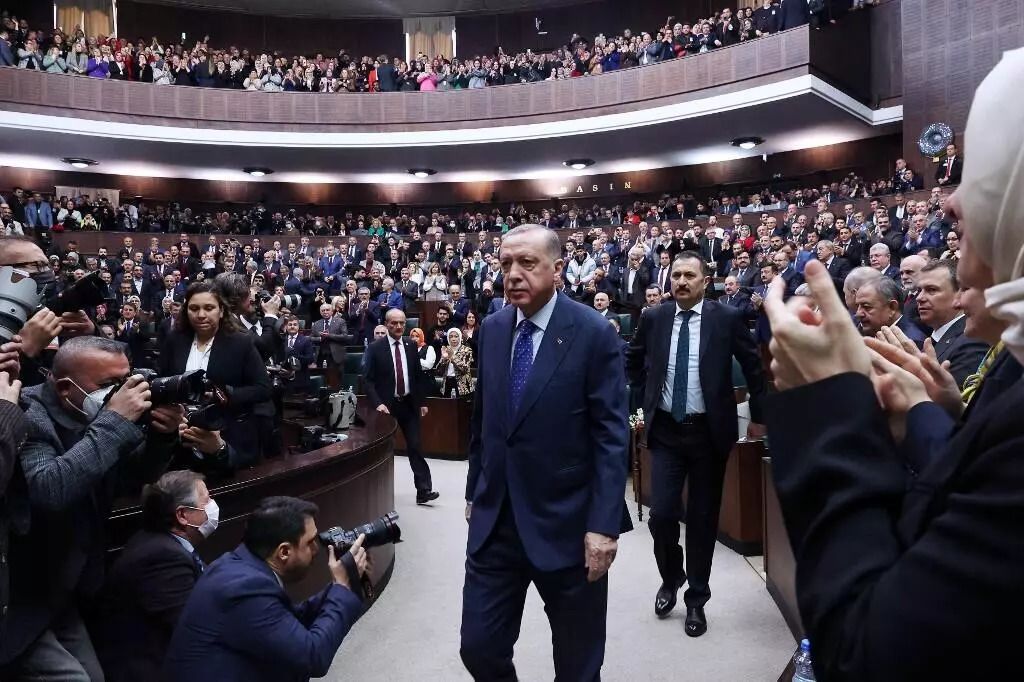
Turkish President Recep Tayyip Erdogan attends his party's group meeting at the Turkish National Assembly in Ankara on 1 February 2023.


Seventy-four-year-old Kilicdaroglu brought his CHP party back from the dead. His 2017 400km "March for Justice" from Ankara to Istanbul over the jailing of government critics morphed into one of the first major mass movements against President Recep Tayyip Erdogan's rule. Media dubbed Kilicdaroglu the Turkish Gandhi.

Kilicdaroglu masterminded municipal election victories in four out of five of Turkey's largest cities, including Erdogan's political fortress Istanbul. But critics point out that the softly-spoken opposition leader, with his civil service background, lacks Erdogan's fiery charisma.

Kilicdaroglu has lost four general elections against Erdogan's AKP Party and his candidacy faced opposition within his coalition alliance.

"He's not seen as the typical leader. He's not the strong yelling type," said political scientist Zeynep Alemdar of Istanbul's Okan University.

"He doesn't demonstrate the qualities of that masculine leadership people are very much after. And it's not just in Turkey. Look at Russia, look at Trump! People like that type of leadership. He's very humble, soft-spoken. We don't really see him angry," added Alemdar.


Earthquakes and politics


However, February's deadly earthquakes are widely seen as a political game changer, with outrage over construction failings and allegations of a slow response by the state to the disaster.

Kilicdaroglu was quickly on the scene, offering condolences to survivors, voicing widespread criticism over the government's slow response to the disaster, and pledging to bring those responsible for poorly constructed buildings that collapsed, killing so many. Kilicdaroglu, some analysts say, caught the mood of the country.

"Kilicdarolgu said that something is going wrong with this whole system, so we must start something new all together. We must change this country for the better once and for all," observed Sezin Oney, a columnist at the Politikyol news portal.

"He had a personal catharsis. When he visited the earthquake sites he was shaken, visibly moved. And I think he made the personal decision that this is going to be [his] legacy," added Oney.
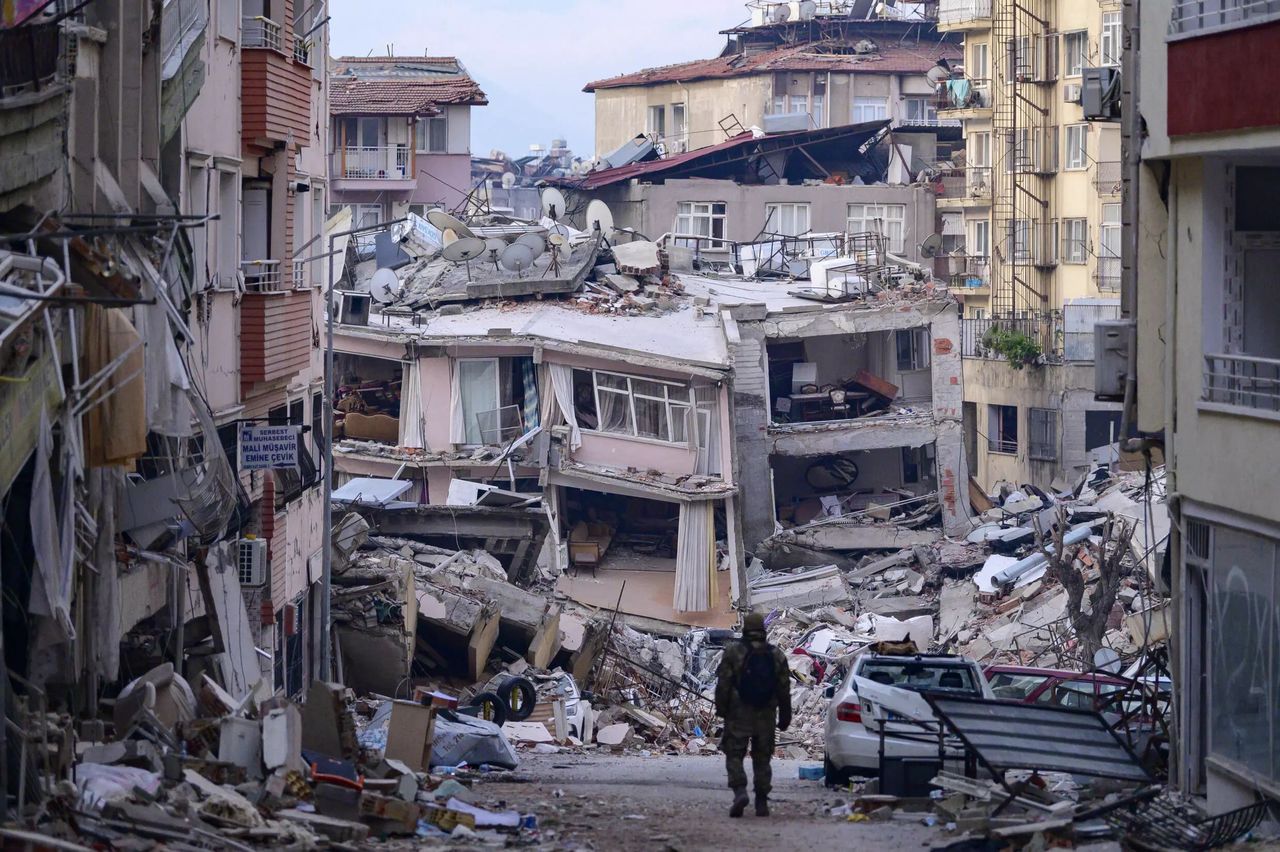
A Turkish soldier walks among destroyed buildings in Hatay, on February 12, 2023, after a 7.8-magnitude earthquake struck the country's south-east. - The death toll from a massive earthquake that hit Turkey and Syria climbed to more than 20,000 on February 9, 2023, as hopes faded of finding survivors stuck under rubble in freezing weather.


Religion as an obstacle


Religion could be another obstacle for Kilicdaroglu. He comes from the liberal Alevi Islamic sect – considered by some conservative Muslims as heretic.

Alevis have faced centuries of discrimination in Turkey. But analysts suggest after 20 years under Erdogan's rule, dominated by religious tension, the electorate is now more interested in economic concerns than identity politics.

Alemdar says the country, and young people in particular, has moved on and people are no longer looking at "what the other believes in".

They have bigger concerns, such as rocketing inflation. "The economy is in shambles, the currency crisis is there, debt is mounting," she added.

With Kilicdaroglu's coalition of parties, including nationalists, Islamists, the left and right, he promises an end to political and ethnic polarisation in what is widely seen as the biggest challenge to Erdogan's rule.

In a demonstration of military modernization, the Queen of Thailand successfully piloted a Swedish-made Gripen aircraft, reinforcing the defense partnership between Bangkok and European aerospace manufacturers.
Police and naval units intercepted a massive narcotics cargo in the Gulf of Thailand, highlighting how transnational syndicates are using Thai coastal waters as a transit hub for synthetic drugs.
The Japanese automotive giant has formally requested targeted financial assistance and tax exemptions from Bangkok, citing severe operational impediments caused by regional flooding and intense pricing pressure from heavily subsidized Chinese electric vehicle competitors.
Anticipating high seasonal arrivals, Centara Hotels and Resorts has integrated a new cross-border payment infrastructure to streamline transactions for tourists from China, India, and the Middle East.
The board of the national carrier has dismissed its top executive after significant operational breakdowns resulted in thousands of delayed bags and hundreds of canceled flights at Suvarnabhumi Airport.
The rapid influx of energy-intensive cloud infrastructure in Indonesia's Riau Islands has triggered local backlash, as communities in Batam face critical water rationing and power grid instability.
Agricultural economists warn that prolonged instability in the Strait of Hormuz is constraining fertilizer imports into ASEAN, raising the risk of reduced crop yields and a potential regional food crisis.
A regional energy survey reveals that one-third of Singaporeans are open to deploying advanced nuclear technologies, reflecting anxieties over limited renewable energy options and vulnerability to fossil fuel price shocks.
As transnational crime syndicates deploy autonomous Artificial Intelligence agents to defraud citizens, security analysts are urging ASEAN governments to establish a centralized, cross-border intelligence-sharing protocol.
A new global report emphasizes that ASEAN member states must accelerate cross-border electricity sharing and diversify power sources to prevent surging domestic demand from destabilizing regional economic security.
Authorities in Thailand are weighing a new levy on departing international passengers to finance airport expansions, a move that has sparked debate among hospitality sectors concerned about price-sensitive travelers.
In a shift in diplomatic tone, President Ferdinand Marcos Junior stated that Manila is prepared for the long-scale management of maritime friction with Beijing, suggesting a preference for sustained legal and diplomatic maneuvering over immediate military tension.
The opening of a massive new waterway connecting China's southwestern hinterland to maritime routes promises to cut logistics costs for Thai and Vietnamese exporters, though regional businesses fear an influx of low-cost Chinese industrial goods.
The Japanese automaker has formally petitioned the Thai Finance Ministry for financial assistance and tax exemptions, citing operational hurdles caused by regional flooding and intense pricing pressure from Chinese electric vehicle competitors.
Relentless seasonal storms and infrastructure failures have paralyzed parts of the Eastern Economic Corridor, forcing the Thai government to launch emergency interventions to protect vital automotive manufacturing zones and regional flood defenses.
Malaysia is developing a dedicated technology zone to capture regional semiconductor and cloud computing investments, though the project comes as the nation grangles with unprecedented energy grid pressure from massive hyperscale data centers.
Facing pressure from international investors, the Indonesian president has appointed specialized technocrats to key economic ministries in an attempt to secure the foreign capital required for his national industrialization agenda.
The Singaporean foreign minister has announced leadership priorities for the city-state's upcoming chairmanship, emphasizing deeper regional economic integration and enhanced digital economy frameworks to navigate trade tensions between the United States and China.
The international ratings agency has revised Thailand's economic outlook to stable, citing strong fiscal management, a recovery in international tourism revenues, and increasing foreign direct investment within the Eastern Economic Corridor.
Trade officials in Bangkok have confirmed that bilateral negotiations for a comprehensive free trade pact have reached the final stage, a milestone expected to boost Thai agricultural, automotive, and digital exports into the European single market.
American officials have initiated direct talks with Myanmar's generals, reversing years of diplomatic isolation, while Malaysian Prime Minister Anwar Ibrahim's recent welcome of the junta leader in Kuala Lumpur signals a coordinated regional push for Myanmar's reintegration into ASEAN.
The Indonesian national football squad secured a historic tournament championship following a late equalizer, sparking nationwide celebrations and boosting the profile of regional sports.
A new industry analysis shows that the expanding ASEAN aviation sector supports over 23 million jobs, highlighting the importance of major airport infrastructure projects in hubs like Bangkok.
The administration of Anwar Ibrahim is working to balance essential cost-of-living relief for households against the need for subsidy reforms to maintain long-term national fiscal health.
The board of directors has dismissed the airline's chief executive following public backlash over the mishandling of passenger communications and baggage logistics during severe regional floods.
Following extreme weather that has caused dozens of deaths in Thailand since mid-September, urban development experts are calling for urgent civil engineering projects to protect the capital's economic core.
Lawmakers have implemented strict bans on the digital distribution of unsafe personal mobility vehicles to address urban pedestrian safety concerns and domestic fire hazards.
Authorities in southern Malaysia have shuttered educational institutions due to deteriorating air quality, while Indonesian courts face negligence complaints regarding agricultural fires driving the regional crisis.
In a move to deepen defense ties, Polish leadership is in the Philippines to negotiate military aviation contracts and align strategic interests regarding regional sovereignty.
National and municipal authorities are directing significant capital into seapert and multimodal transport infrastructure to transform the Hai Phong area into a competitive international maritime hub.
The Thai Ministry of Public Health has backed a proposed arrival fee for international visitors to fund an insurance pool intended to cover unpaid hospital bills and maintain care standards.
Authorities in Jakarta have committed to ending the conversion of pristine forests into rice paddies as part of a shift toward more sustainable agricultural intensification and food security.
Diplomatic and labor delegations from both nations are working to finalize a new regulatory agreement by year-end to resolve exploitation issues and secure the flow of essential labor into Malaysia.
President Ferdinand Marcos has arrived in Singapore for a five-day working visit aimed at attracting foreign direct investment into the Philippines' domestic technology and infrastructure sectors.
Energy ministers from across Southeast Asia have inaugurated a new institutional body designed to harmonize utility frameworks and facilitate multi-billion dollar investments into an interconnected regional electricity grid.
Foreign Affairs Minister Vivian Balakrishnan stated that Singapore will use its upcoming leadership of the regional bloc to push for deeper economic integration and stronger trade partnerships to navigate global volatility.
The Laotian government has introduced new resource nationalism policies requiring all extracted minerals to be processed domestically before export to capture higher industrial value and increase national revenue.
Domestic financial institutions across Vietnam are seeking massive capital injections from international and regional investors to expand lending capacity and support the country's rapid industrialization.
Malaysian infrastructure and technology authorities have commenced development of a large-scale technological hub aimed at attracting global semiconductor manufacturing and artificial intelligence data centers to compete with Singapore.
Thai Prime Minister Anutin Charnvirakul confirmed that negotiators are drafting the final stages of a sweeping trade pact designed to strengthen Thailand’s position within global manufacturing and technology supply chains.
Cambodian and Lao energy authorities agreed to strengthen high-voltage grid connections, supporting larger flows of hydropower between the two countries and neighboring regional markets.
Norwegian shipbuilder VARD inaugurated a marine engineering and vessel design center in Ho Chi Minh City to support growing shipbuilding demand across Southeast Asia.
Malaysian sovereign funds, venture capital networks and technology agencies are allocating capital to local chip design and advanced packaging companies to strengthen the country’s electronics industry.
Chinese technology companies are increasing spending on regional data centers and cloud services as businesses across ASEAN adopt more artificial intelligence tools and digital financial platforms.
Indonesian authorities and Danantara are preparing several major state-owned companies for potential listings in 2027 as part of efforts to deepen the Jakarta capital market and attract institutional investors.
Bangkok authorities are rolling out electric river boats, additional skywalks and cycling lanes under the Car Free 2026 initiative to reduce congestion and emissions across the capital.
Large projects including the 20 billion baht Songklanagarind Phuket Advanced Medical Center are helping broaden Phuket’s economy into healthcare, residential development and retail alongside its traditional tourism base.
The Tourism Authority of Thailand signed a letter of intent with aviation and tourism partners to turn passenger stopovers at Bangkok airports into curated travel experiences aimed at increasing visitor spending.
Glacier Collapse, Not Earthquake, Triggered Deadly Nepal-Tibet Flood
Swiss Tourist Sentenced to One Year in Prison for Insulting Bali's Sacred Day of Silence
Father Reprimanded After Leaving Seven-Year-Old Son Alone on Mount Fuji During Summit Climb
Google Launches Pixel 11 With Gemini AI at the Center of Its Hardware Strategy
China’s Kimi Launches AI-Focused Credit Card With Agricultural Bank of China and American Express
Success: Nvidia Turned Gaming Chips Into the Engine of the AI Boom
AI’s Next Bottleneck Is Power, Not Just Nvidia Chips
Meta Raises AI Spending Target to as Much as $145bn Despite Pressure Over Returns
Joe Biden’s Cancer Has Spread Beyond His Bones, Hunter Biden Says
Why 2027 Could Be a Strong Year for Stocks—and Why the Forecast Is Fragile
Why Markets May Look Quiet in August After Big Tech Earnings
UFO: Pentagon Releases Video of Unidentified Object Tracked Over Middle East
Ukraine Tells Senate Republicans Its Drone War Offers a Blueprint for America
Weight-Loss Drug Boom Tests the Limits of Prescription Advertising Rules
Taiwan’s President Joins Wartime Command Drill as China Pressure Grows
Lightning Strike Kills Yala FC Player During Match in Southern Thailand
AI Is Remaking the US Economy, From GDP Growth to iPhone Prices
Indonesia’s Free School Meals Plan Has Been Hit by Poisoning, Corruption and Cuts
US and Japan Step In to Support the Yen in Rare Joint Intervention
FIFA’s Retreat Leaves a Larger Question Over Who Guards the Game
Valued at $109 Million: F-35B Fighter Jet Crashes in Southern California
US Says It Has Carried Out Heavy Strikes on Iran After Attempted Attacks on Its Forces
Over 24 Hours in the Air: Qantas Airbus Completes Record-Breaking Test Flight
Nvidia Reportedly Takes Vast Texas Data-Centre Lease to Underwrite AI Expansion
FIFA’s Private-Investment Plan for World Cup Rights Draws European Revolt
Following OpenAI's Cyberattack: 'Most Companies Still Do Not Understand What Is Coming'
OpenAI Sued After ChatGPT Allegedly Discouraged Emergency Care Before Near-Fatal Embolism
Miliband Sets Climate and International Law at Centre of UK Diplomacy
Trump Readies New Tariffs as Temporary Global Levy Nears Expiry
EU Imposes Record €550 Million Digital Services Fine on AliExpress
Between Deliveries, Wang Jibing Wrote His Way to China’s Literary Heights
Morgan Stanley Builds a Wall Street Lead in AI Infrastructure Finance
High Prices Push Coffee Drinkers Toward Whole Beans and Home Brewing
Trump Draws Boos and Podium Scrutiny at Spain’s World Cup Triumph
Spain Defeats Argentina in Extra Time to Win Second World Cup
Police Block Cockroach Janta Party’s March to Parliament as Education Protests Intensify
Singapore Considers Lower Taxes for Fund Managers as Hong Kong Intensifies Talent Contest
Proposed U.S.-Saudi Nuclear Pact Could Permit Limited Uranium Enrichment Under International Safeguards
Why Kentucky Fried Chicken Became KFC—and Why the False Explanations Persist
Ukrainian Drones Strike Wildberries Warehouses Deep Inside Russia
Reported CIA Mission Helped Clear the UAE’s Path to Advanced US AI Chips
Artificial Intelligence Capital Fuels Markets While Governments and Regulators Face Mounting Strategic Tests
China’s Moonshot’s Kimi K3 Narrows the Gap With Anthropic Through Scale, Openness and Lower Cost
Gold and Cash Seizure Puts Indonesia’s Senior Anti-Corruption Prosecutor Under Investigation
The Ledger Will Not Trust on Faith
Ukraine’s Leadership Rift Spills Into the Streets as Protesters Target Army Chief
The Ten World Cup Finals That Defined Football History
Smartphones Are Getting More Expensive, Sales Are Collapsing, and Even Apple Admits: "Prices Will Rise"
Leadership Change and Strategic Rivalry Redraw the Political Map
The AI Race Enters Its Infrastructure Era