Marmol Radziner and homeowner Brent Harris shed light on the exhaustive, five-year process of unearthing the plans for Richard Neutra’s iconic Kaufmann House in Palm Springs—and the meticulous work it took to recreate its design.

It would begin with one full year of research. Every day, for four of those months, the architectural restoration team donned gloves and combed through the archives at the UCLA Research Library to solve the puzzle of Richard Neutra’s famed Kaufmann House, completed in 1946 and since fallen into disrepair. Floors were cracked, casework had been removed, portions of the land had been sold, and the square footage had nearly doubled through additions over the years.

Sans original plans, they visited the archives daily, redrawing everything original they could capture by hand as part of an intensive, five-year restoration project taken on by the new homeowners. "There are truly iconic, important pieces of architecture, and this is one of those," says Ron Radziner, design partner at Marmol Radziner. "This is one of the 20 best homes in this country, and it deserved that level of restoration."



Vienna–born architect Richard Neutra designed the Kaufmann House in Palm Springs in 1947 for Edgar Kaufmann, Sr., the owner of a trendsetting Pittsburgh department store.

The year was 1993, and the internet was not what it is today, but they kept on. In addition to the work at UCLA, research also included time spent on-site, unearthing years of additions and modifications to the home in search of any clues they could find, such as the original mica plaster hidden behind an electrical box, identified through microscopic evaluation.

It would also include sifting through the archives of Julius Shulman, the world-renowned photographer who documented the home in its heyday and shared never-before-seen photos with the restoration team. It was those photos that would drive the entire restoration.

"After looking at the archives of Julius Shulman, it led us to better understand that it was quite a work of sculpture and much richer than really anyone knew, because nobody had seen Julius’ archives," says homeowner Brent Harris, who undertook the restoration with his former wife, Beth Harris. "The decision was made when we saw the famous Shulman photo from 1947, the twilight photo. It was taken in one snap-a one-time exposure. It seemed like right place to take the home back to."
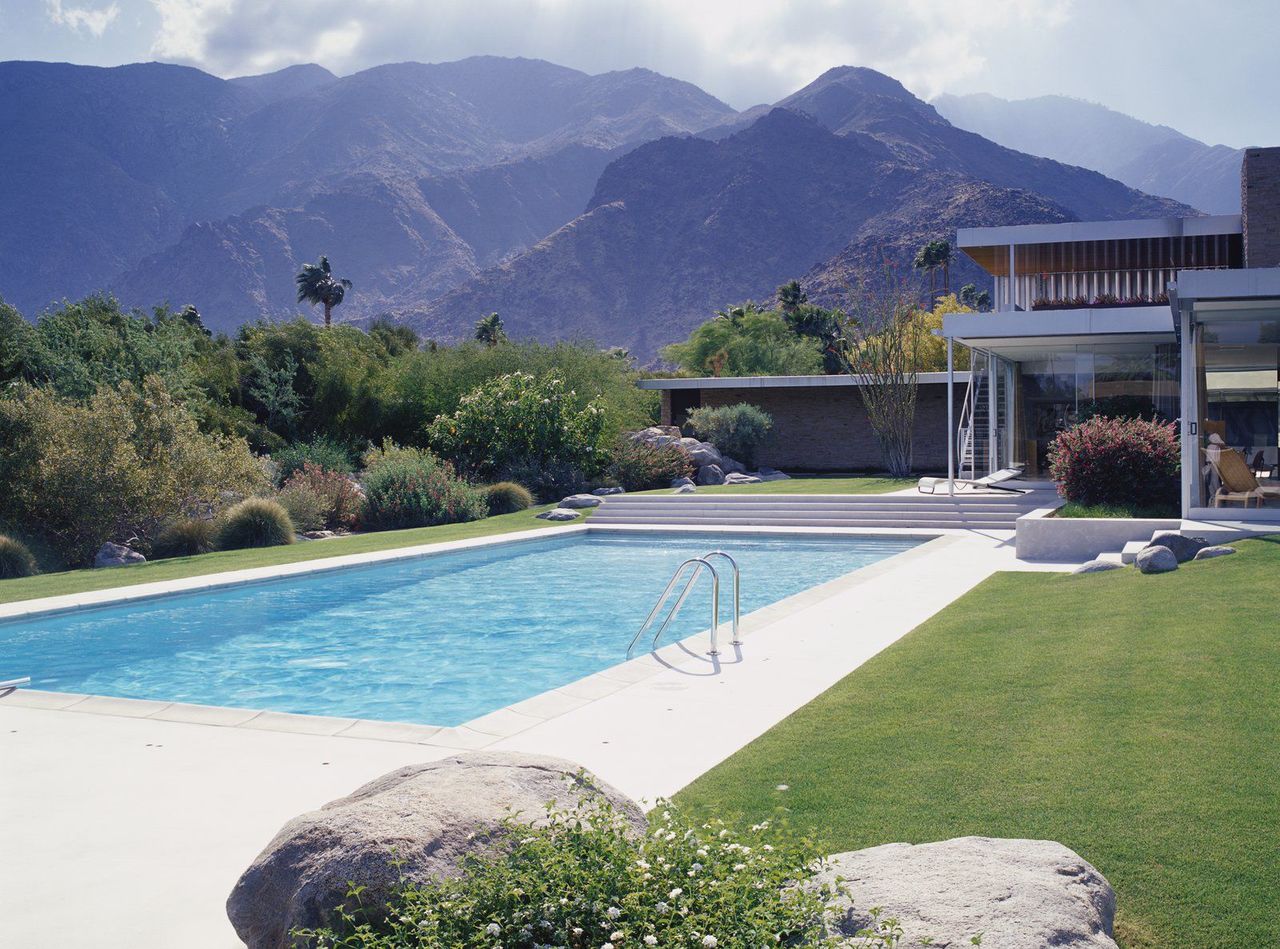


"Neutra didn’t create the mountain. And the client bought wonderful land. If it didn't have mountains and the step down, it wouldn't be what it is," says owner of the Kaufmann House Brent Harris.

The research team also discovered letters from Neutra to the original owner, Edgar Kaufmann, a wealthy department store owner who sought this property as a vacation home. He passed away in 1955, when the home was sold to a series of owners, including Barry Manilow. The letters helped solve what Harris describes as "a gigantic, national scavenger hunt for the pieces that were gone." They contained specs, sketches, and material details, which led to the team to identify the original buff stone. It originated from a quarry in Utah. Conquering all obstacles in pursuit of authentic restoration, the team trekked to the original source to procure the correct stone, which bears a sunset hue unlike the muddy shade of buff stone you'll find across the masses today.
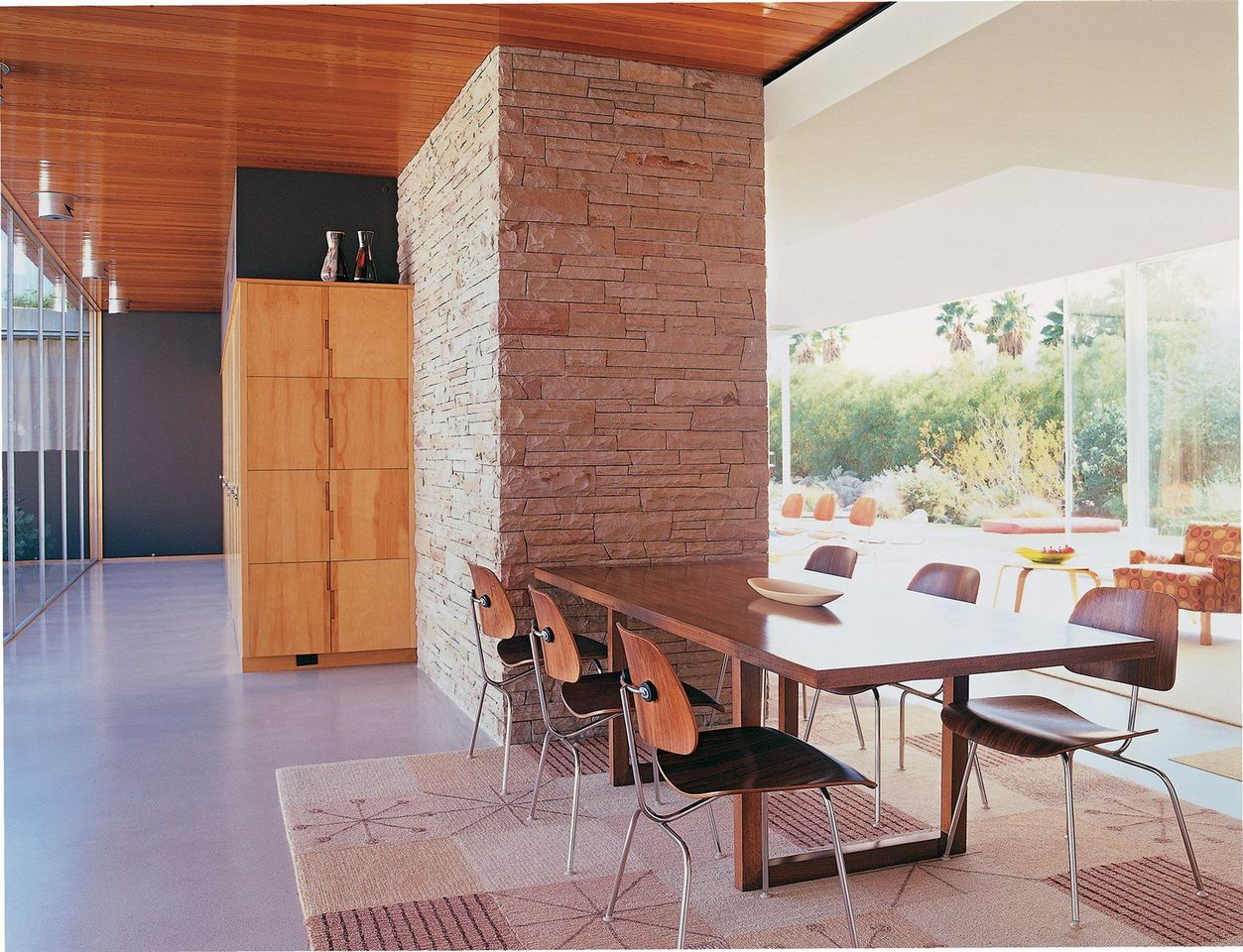


Slight modernization was thoughtfully incorporated into the restoration, including a cooling solution. "We wanted to lengthen the life of the home and make it more enduring," says Ron Radziner of Marmol Radziner. Air conditioning was added in a concealed fashion. Above, where the wood meets the plaster at the ceiling, an air return is carefully hidden, and ducting runs beneath the floor.

A final piece of the puzzle was consulting with several experts, including another architect who helped build Palm Springs, Albert Frey. "He taught me the importance of materials," says Harris, who worked closely with Marmol Radziner throughout the restoration.

It wasn’t enough to just acquire the original stone; it would have to be set by the best masons they could find. It was initially installed using a dry stack technique-new to Neutra’s work-whereby mortar is applied to the rear of the stone, resulting in a natural look invisible to the eye. A mason worked at the site for a year and a half, chiseling and cutting blocks precisely in place to create a pleasing mosaic. While perfecting the brick took quite some time, just fewer than 10 percent of the brick was restored, demonstrating stone mason Clive Christie's commitment to his craft. Tops and bottoms were cut smooth to sit in horizontal position, allowing the sides and faces to be more organic. But the stone wasn’t the only meticulous detail of the renovation.



The vantage point of the famed "poolside gossip" photo that made Richard Neutra's Kaufmann House so well-known.

The fascia sent the team on wild goose chase-or rather a crimped metal chase. They had never before seen that vertical pattern in metal and set out on a mission to reproduce the material. After sending 3" x 3" samples to sheet metal fabricators nationwide, they found a clue. A fabricator in Kansas City, Missouri, recognized the pattern-and likely made the original. They resuscitated an old machine they hadn’t used in 30 years to replicate the design. "We have worked on many renovations and have never done a project to that level of authenticity," says Radziner. "This was about expressing what Neutra originally intended, not us."
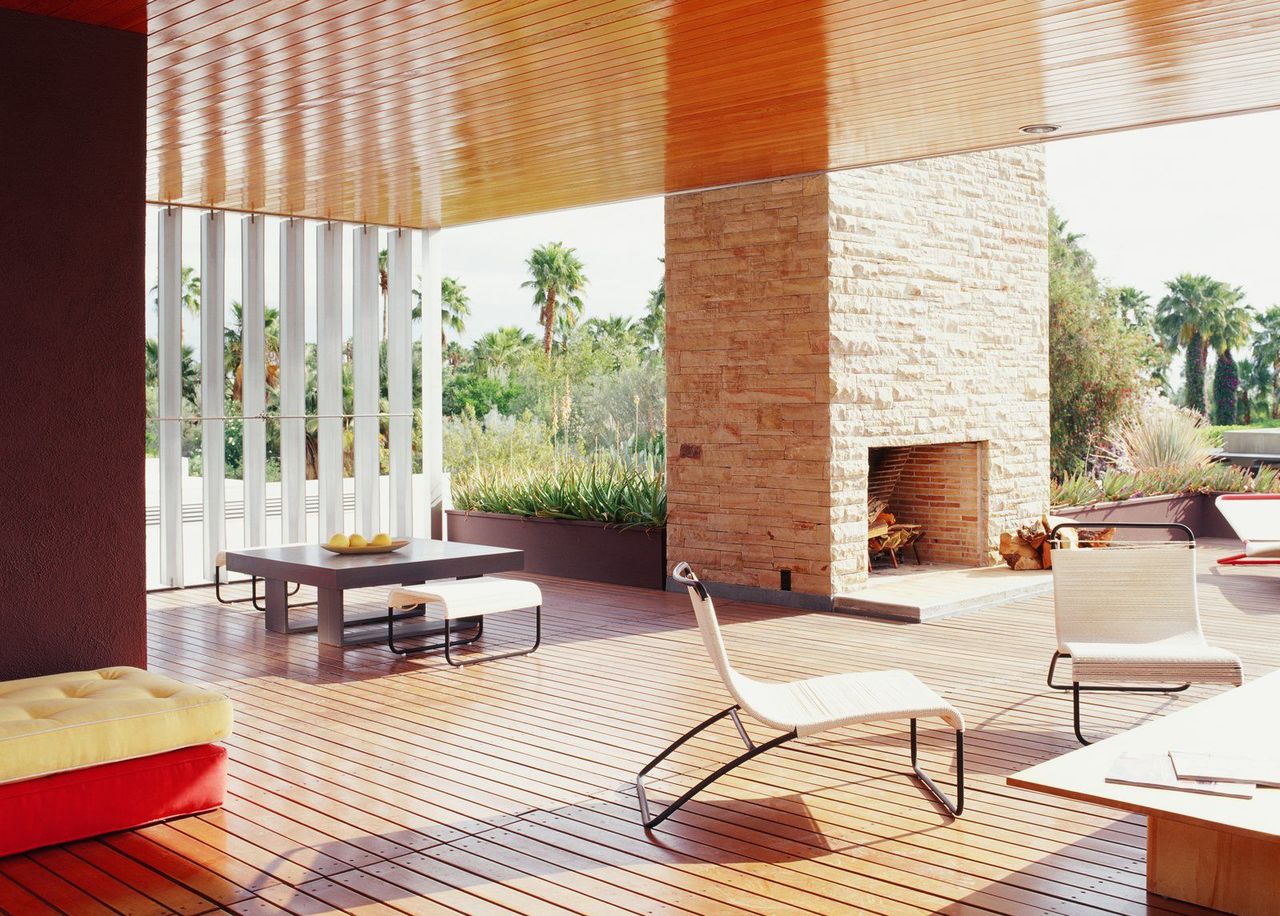


While a two-story structure did not meet the zoning code, Richard Neutra bypassed that via his design of a "gloriette," an outdoor room flanked by aluminum louvers, which were movable and selected for use due to strength. Steel was scarce at the time given the demand for it during the war, yet it did not stop Neutra. The panels-which are still original-shelter the home against the harsh desert elements.

About a decade before the home was designed, Kaufmann had commissioned another notable architect to design a home for him in Pennsylvania. The architect was Frank Lloyd Wright-and the project, Fallingwater. But unlike Frank Lloyd Wright, whose designs grow out of the landscape, Neutra’s designs descend upon it. The glass-and-steel home was, and still is, bold, given its harsh desert landscape-or as Neutra’s described it, the most uninhabitable site next to the moon. "It’s a bit of a stretch, but I definitely felt it several times with the temperature and special equipment needed to bring this about," says Harris.



Neutra's Kaufmann home was initially designed for living just two months out of the year. Yet after the original owner passed, future tenants attempted to retrofit the space for year-long use. An air conditioning unit was placed atop the roof, and square footage was added, enclosing this courtyard. To return it to its original state, the current owner underwent a five-year restoration and reopened this courtyard to honor the original design.

The Kaufmanns only lived in the home some 60 days a year, and Neutra designed it as such. While the integration of radiant heating and cooling at that time made the home somewhat of a prototype, the home could not sustain long-term habitation without the intervention of air conditioning given the omnipresence of wood. It is one of just a few modern-day amenities that have been thoughtfully incorporated into the restoration. Ductwork was carefully inserted below ground. Return air can flow beneath a bed, and in the dining area ceiling, where wood meets plaster, an air return is cleverly concealed.

"We really were true to the original goals of Neutra," says Radziner. "And we tried to very authentically recreate and restore what wasn’t there and make it authentic as humanly possible."



After much research, the original buff stone pictured was discovered at a quarry in Utah, a sunset shade unique to Richard Neutra's Kaufmann House. A mason worked there for a year and a half to accurately restore stone, chiseling and cutting blocks precisely in place to create a pleasing mosaic. Tops and bottoms of the stones were cut smooth to sit in horizontal position, allowing the sides and faces to be more organic as Richard Neutra intended.

The home is lauded in part because of Shulman’s work, but also because of its design, which has endured the test of time. Its pinwheel shape leaves the home without a backside, creating an organic orientation, photogenic from every angle.

"Its place in history as a home-a pristine, modern sculpture in the raw desert-is incredible," says Radziner. "As you walk around and experience it, it’s incredibly dynamic. The significance of this home in the fundamental sense is that it’s moving to people."
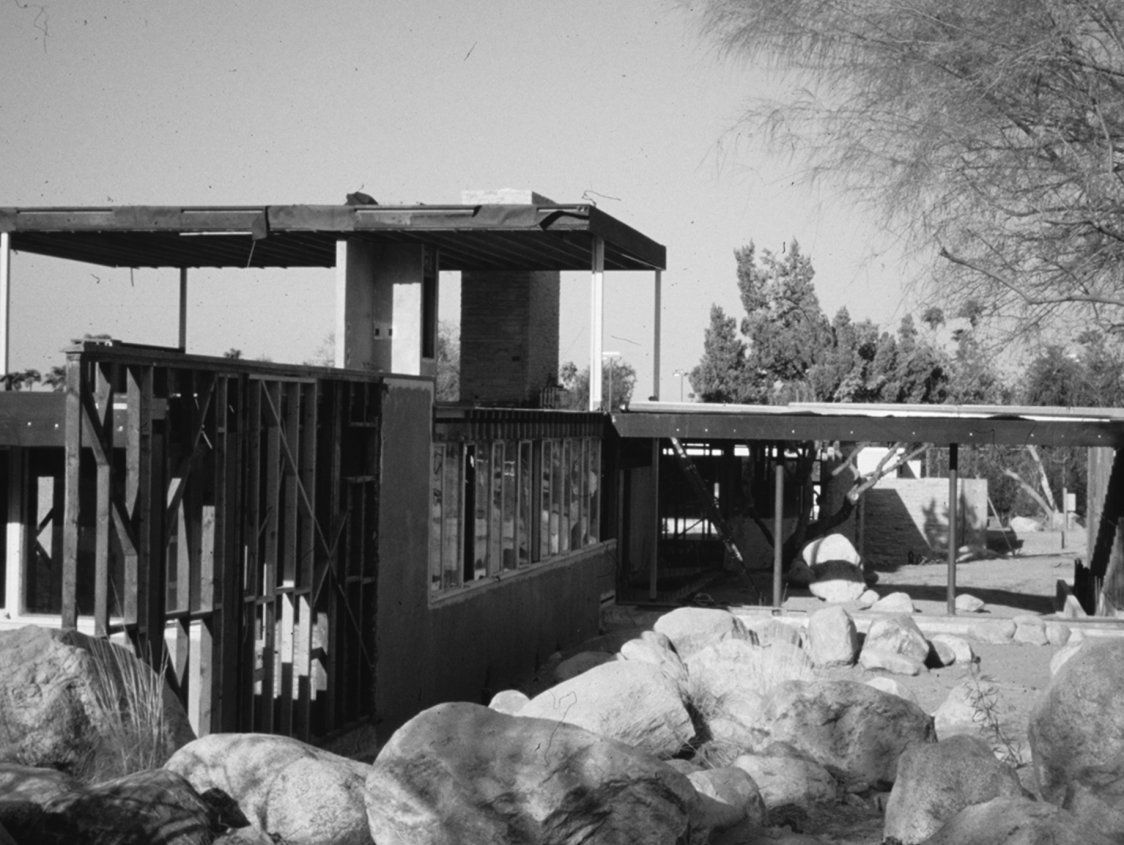


The restoration of Richard Neutra's Kaufmann house would take five years to complete.

The meticulous restoration included the sourcing of the original toilets and tables. The cutting-edge, movable and controllable steel louvers were recreated, serving both as privacy and sun screening for the top-floor, open-air "gloriette"-Neutra’s solution for zoning that restricts second stories. Subcontractors were given rigorous tests to evaluate not only their abilities, but also their interest in the project. And while a pool house was added to include amenities that accommodate modern-day lifestyles, it was designed to complement-never to compete-with the restored home, which has since been designated by the Palm Springs City Council as a Class 1 Historic Site, the most prestigious historic designation. Says Harris, "It pioneered the field for historic modern architecture."

Richard Neutra was a disruptor. He built what he described as a machine amidst a harsh desert landscape that defied all odds. And thanks to the team who respected its significance and dedicated so much of their lives to honoring the integrity of the design, it will endure-as good design does. Says Harris, "My favorite part is seeing it through other people’s eyes. Ultimately, I’m really happy that it has inspired people to restore modern houses."



"The home has an unusual resonance when you see it," says Kaufmann house owner Brent Harris. "It has a volumetric, spatial beauty that changes throughout the day, particularly at twilight. There are a lot of great Neutra houses, but this has different feel entirely. It's very photogenic."
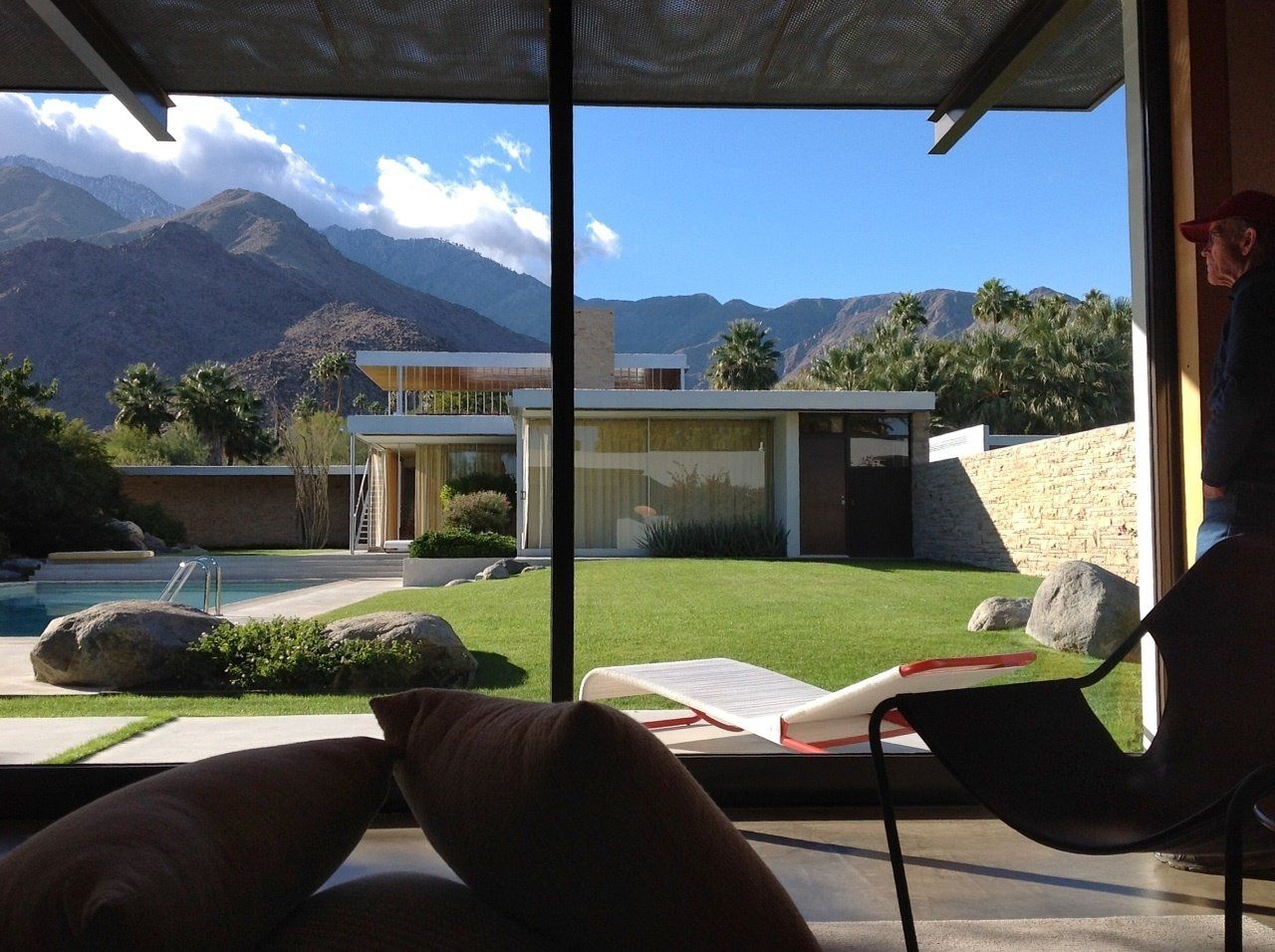


Few changes to Richard Neutra's original design were made during the restoration of the Kaufmann house, including the addition of this pool house to better accommodate modern-day life. It was designed to complement-never to compete with-the restored home, which has since been designated by the Palm Springs City Council as a Class 1 Historic Site, the most prestigious historic designation. Says owner Brent Harris, "It pioneered the field for historic modern architecture."
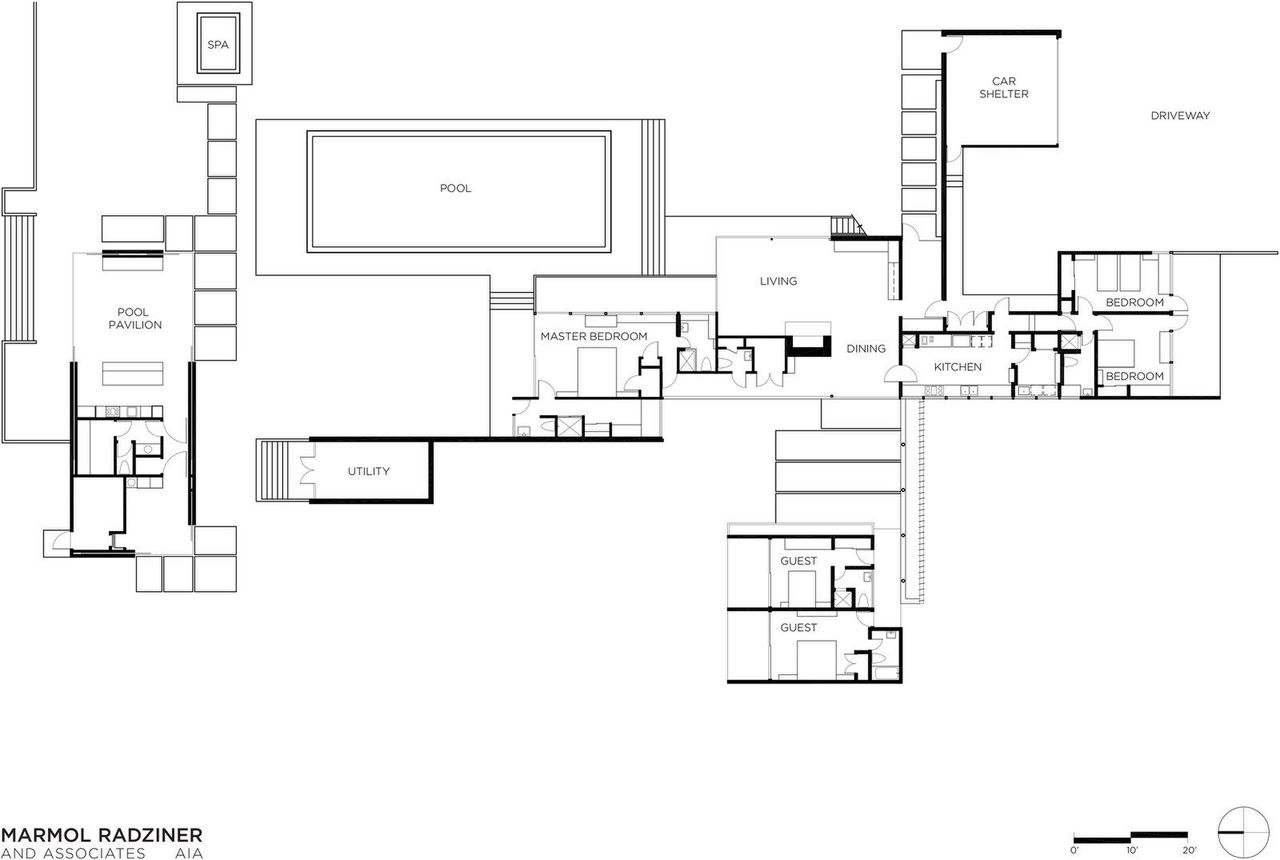


Kaufmann House floor plan

Record-breaking June temperatures catalyzed chemical reactions that exposed nearly three hundred million people to toxic smog levels, intensifying public health strains.
An unprecedented early-summer heatwave across Western Europe has triggered extensive ground-level ozone pollution, exposing approximately two thirds of the European Union population to toxic atmospheric conditions.

Ground-level ozone, a primary component of industrial smog, forms when high temperatures and intense sunlight accelerate chemical reactions between nitrogen oxides from vehicular traffic and human-driven methane emissions.

What is confirmed by regional atmospheric modeling and census data is that nearly three hundred million individuals, including an estimated one hundred million highly vulnerable children and elderly citizens, breathed air exceeding the European Union recommended maximum daily threshold of one hundred and twenty micrograms per cubic meter between June twenty-first and June twenty-eighth.

The scale of the pollution represents an immediate public health crisis, as ground-level ozone causes severe respiratory inflammation, damages lung tissue, and triggers acute asthma attacks.

The European Environment Agency previously attributed over sixty-three thousand annual deaths and billions of euros in agricultural crop damage to this specific pollutant.

During the late June climate anomaly, which the Copernicus Climate Change Service confirmed as the hottest June on record for Western Europe, more than seventy-two million people were subjected to extreme ozone concentrations exceeding one hundred and fifty micrograms per cubic meter, with peak levels reaching two hundred and thirty-three point seven micrograms in the German state of North Rhine-Westphalia.

Controlling this invisible atmospheric threat remains a complex regulatory challenge because ground-level ozone relies heavily on volatile organic compounds like methane, which accounts for one third of its formation.

While the European Union has successfully curbed urban nitrogen dioxide emissions over recent decades, the trading bloc currently lacks legally binding targets to reduce methane emissions stemming from its agricultural sector.

Environmental researchers note that the compounding pressure of high humidity, extreme temperatures, and elevated ozone creates a severe cumulative strain on human cardiovascular systems.

To mitigate immediate physiological risk during these escalating heat events, public health officials are advising citizens to restrict outdoor activities and avoid physical exercise during peak daylight hours as a critical safety measure.
The Royal Thai Embassy in Singapore hosted an exhibition celebrating traditional Thai textiles and contemporary design, using cultural exchange to strengthen Thailand's regional profile and diplomatic engagement.
Voters in Johor are preparing for a closely watched state election widely viewed as an important measure of support for Malaysia's federal governing coalition ahead of the next general election.
Officials meeting in Da Nang agreed to expand the use of artificial intelligence, digital reporting systems, and data-driven risk assessments to strengthen occupational safety standards across Southeast Asia's rapidly industrialising economies.
Prime Minister Lawrence Wong concluded official visits to Indonesia and Timor-Leste, reaffirming economic cooperation with Jakarta and expressing Singapore's continued support for Timor-Leste's future membership of ASEAN.
Indonesia's anti-corruption authorities arrested senior officials connected to the country's flagship free nutritious meal programme, raising fresh concerns over oversight of major public spending initiatives.
Authorities from Singapore and Malaysia carried out coordinated operations that led to the arrest of suspects linked to a telecommunications fraud syndicate responsible for more than one point four million United States dollars in losses.
The Philippine government is expanding efforts to diversify liquefied natural gas supplies and strengthen energy resilience after earlier disruptions linked to the closure of the Strait of Hormuz exposed regional fuel vulnerabilities.
Singapore established a National Artificial Intelligence Council and introduced what it described as the world's first regulatory framework for agentic artificial intelligence, reinforcing its leadership in regional digital governance.
Differences among ASEAN members continue over how to respond to Myanmar's military authorities following recent military-backed elections, exposing ongoing divisions within the regional bloc.
Negotiations on a binding South China Sea Code of Conduct have made little progress as ASEAN members and China continue to differ over maritime disputes and regional security issues.
Environment ministers meeting in Bali moved forward with the legal and operational framework for the ASEAN Coordinating Centre for Transboundary Haze Pollution Control as member states prepare for elevated wildfire risks linked to El Niño conditions.
Indonesian officials outlined plans for a new international financial centre intended to attract nearly twenty-eight billion United States dollars in investment and strengthen the country's position in regional financial markets.
Malaysia announced plans to restart its nuclear energy programme by two thousand thirty-one as the government seeks reliable electricity supplies for rapidly growing data centre developments in Johor.
The Asian Development Bank forecasts Vietnam's economy will expand by seven point two percent this year, supported by strong exports, sustained foreign investment, and continued manufacturing expansion.
The Asian Development Bank lowered its growth forecast for developing Asia to four point nine percent, warning that inflation and continuing disruptions to Middle East energy markets could weigh on demand and increase transport costs across the region.
The Tourism Authority of Thailand and AirAsia signed a strategic agreement to promote Thailand across the airline's expanding network, supporting international visitor growth and the country's tourism-driven economy.
Prime Minister Anutin Charnvirakul met Malaysian Prime Minister Anwar Ibrahim in Putrajaya, where both governments signed an agricultural cooperation agreement and jointly opened a new border facility aimed at improving trade and transport links.
Thailand's Board of Investment unveiled a seven-point strategy to ensure reliable supplies of clean electricity and transparent power tariffs, strengthening the country's bid to attract hyperscale artificial intelligence and cloud infrastructure projects.
The Thai government approved nine major investment projects, including a large smart factory expansion by Nestlé and new data centre infrastructure backed by Japanese technology companies, accelerating Thailand's shift toward high-value electronics and digital industries.
Thailand's Board of Investment confirmed more than four point one billion United States dollars in commitments across nearly two hundred electric vehicle projects, reinforcing the country's ambition to become Southeast Asia's leading production hub for batteries, advanced components, and charging infrastructure.
The Queen Sirikit National Convention Center will host InfoComm Asia twenty twenty-six, bringing together technology companies and enterprise leaders for a major regional showcase of professional audiovisual and integrated technology solutions.
The return of key long-haul services, including daily flights between Bangkok and Amsterdam, together with airline fleet expansion, is supporting the continued recovery of Thailand's tourism and international aviation sectors.
As part of its new manufacturing project, Nestlé Thailand plans to purchase more than four billion baht in locally produced coffee beans, sugar, and milk each year while supporting farmers through training and climate-resilient agricultural research.
Fulltech Fiber Glass will invest nearly one hundred million dollars in Chachoengsao to manufacture specialized glass fiber fabric used in printed circuit boards, strengthening domestic supply chains for high-tech manufacturing.
The Board of Investment has expanded the responsibilities of its specialized energy panel to review data center projects more closely, ensuring electricity demand, environmental standards, and clean energy requirements are considered as digital infrastructure investment accelerates.
New investment from companies in Japan, South Korea, and Taiwan is reinforcing Thailand's role as a regional manufacturing hub, creating a more integrated ecosystem for semiconductors, electronics, data centers, and artificial intelligence infrastructure.
Thai AirAsia and the Tourism Authority of Thailand have extended the Journey D program for a second year, supporting community-based tourism development in Songkhla province to spread tourism income more broadly while promoting sustainable travel.
Visa and Krungthai Bank are introducing card payment technology on sixty to eighty tuk-tuks in Bangkok as part of a pilot project that aims to equip ten to fifteen percent of the city's vehicles with electronic payment systems by twenty twenty-seven.
Lomrak Green Energy secured approval for a one hundred sixty-eight million dollar investment in two wind power projects in Lopburi province that will provide a combined one hundred twenty megawatts of renewable electricity to support Thailand's clean energy goals.
Doosan Electro-Materials will invest one hundred eighty million dollars in a new Samut Prakan production facility manufacturing copper-clad laminate and prepreg materials, further strengthening Thailand's electronics manufacturing ecosystem.
Taiwan Union Technology is investing one hundred eighty-nine million dollars in Chonburi to manufacture copper-clad laminate and prepreg materials for artificial intelligence servers and data centers, strengthening Thailand's position in the global electronics supply chain.
Datasection will invest more than two hundred thirty-five million dollars to establish advanced GPU server infrastructure in Bangkok and Pathum Thani, providing computing capacity for artificial intelligence and data-intensive applications across the region.
Thai Airways International received approval for a four hundred thirty million dollar investment to lease eight additional passenger aircraft, supporting the airline's expanding international network following the restoration of daily Bangkok-Amsterdam services.
The Asian Development Bank reduced its twenty twenty-six growth forecast for developing Asia to four point nine percent, citing prolonged volatility in global energy markets linked to the Middle East conflict and warning that higher commodity prices and tighter financial conditions will weigh on trade- and tourism-dependent economies.
Nestlé will build a highly automated factory and distribution center in Samut Prakan province with an investment of six hundred eighty-eight million dollars, expanding coffee production for domestic and regional markets while reinforcing Thailand's role as a leading food and beverage manufacturing hub.
Thai Prime Minister Anutin Charnvirakul and Malaysian Prime Minister Anwar Ibrahim are jointly inaugurating a new road connection between the Immigration, Customs, Quarantine and Security complexes at Sadao and Bukit Kayu Hitam, reinforcing bilateral cooperation in trade, tourism, agriculture, and investment.
Thailand's Board of Investment approved nine major projects worth a combined one point nine nine billion dollars, including investments from Japan's Datasection and South Korea's Doosan Electro-Materials, strengthening the country's position in artificial intelligence, advanced electronics, aviation, and clean energy supply chains.
An experienced flight instructor in Argentina died after jumping from a training aircraft during a lesson, leaving his twenty-two-year-old student to land the plane alone. Authorities are continuing to investigate the circumstances of the incident.
Authorities in Argentina are reporting an extraordinarily rare and tragic incident in which a flight instructor jumped to his death during a training flight, leaving his stunned student to land the aircraft by herself.

According to reports from the South American country, Leandro Bertazzo, forty-two, jumped from a Cessna C-150 light aircraft on July 4 after taking off with his twenty-two-year-old student, whose identity has not been released, from an airport near the city of Córdoba.

The student told investigators that, moments before jumping, Bertazzo said to her, "You know what you need to do.

Keep going." He then removed his headset, unfastened his seat belt, opened the aircraft door, and leapt from the plane.

His body was found about twenty minutes later in the area where the student had informed authorities he had likely fallen.

Eduardo Álvarez, director of the flight school in Córdoba where Bertazzo had worked as an instructor for the past four years, said the student was deeply shaken but remained composed throughout the emergency.

"She was extremely distressed, but with complete professionalism she flew the aircraft back to the airport and executed a perfect landing," Álvarez said.

"She maintained an exceptionally high level of professionalism."

According to the reports, Bertazzo was an experienced pilot who had previously worked as a flight instructor in Chile.

Earlier on the day of his death, he had also conducted another training flight with a different student.

Álvarez described him as a highly professional instructor who "was always smiling" and was well liked by his students.

"He was a wonderful person with a big smile," he said.

However, he added that Bertazzo had been struggling with mental health issues and had received counseling at a psychiatric hospital during the week before his death.

According to Álvarez, Bertazzo's father said his son had been going through "a difficult period." Reports also stated that he had no children and had been living with his parents in Córdoba.

Álvarez emphasized that neither he nor anyone at the flight school had noticed any warning signs that might have prevented the tragedy.

"He made this tragic decision while aboard an aircraft with another person beside him," he said.

"It's impossible to comprehend or make sense of it, but the human mind is an extraordinarily complex thing."

He also noted that opening the door of an aircraft in flight is extremely difficult, comparing it to trying to open the door of a car traveling at two hundred kilometers per hour.

According to the reports, the authorities' investigation into the circumstances surrounding the incident is ongoing.

If someone in your surroundings is experiencing a crisis and may be at risk of suicide, do not hesitate to speak with them, encourage them to seek professional help, and emphasize the importance of doing so.

Try to help them connect with mental health professionals or national support services, including ERAN's hotline at 1201 or via WhatsApp at 052-8451201, or through the SAHAR website or www.headspace.org.il.
An analysis of electromagnetic attenuation, appliance interference, and structural limitations affecting modern home router efficiency.
The systemic architectural framework of unlicensed radio frequency allocation and the immutable physics of electromagnetic wave propagation dictate the performance limits of modern wireless local area networks, or Wi-Fi. Operating primarily within the globally saturated two-point-four gigahertz spectrum, standard domestic internet routing systems must perpetually navigate structural, electronic, and environmental impediments that weaken or alter signal integrity.

While newer protocols like Wi-Fi Six-E and Wi-Fi Seven introduce less congested five and six gigahertz bands to bypass legacy interference, the fundamental mechanics of wave attenuation, absorption, and reflection continue to present persistent challenges for consumer-grade connectivity.

Electromagnetic interference from everyday consumer electronics represents one of the most pervasive systemic disruptions within the two-point-four gigahertz frequency.

This specific slice of spectrum is legally designated for unlicensed public utility, meaning household routers directly compete with appliances that rely on identical wavelengths.

Microwave ovens are a primary culprit; despite internal metal shielding designed to confine radiation, minor degradation of door seals or structural aging frequently allows radiation leakage during operation.

What is confirmed is that this leakage introduces intense localized electromagnetic noise, overwhelming the router's transmissions and severely degrading data throughput.

Similar co-channel degradation regularly emanates from poorly shielded fluorescent light ballasts, vehicle ignition architectures, and legacy short-range wireless devices like older baby monitors or cordless telephony systems.

Beyond active electronic interference, physical structures and domestic materials induce severe signal attenuation through an effect known as shadowing.

Radio waves interact with physical matter based on atomic density and molecular composition.

Liquid volumes, such as large household aquariums, act as highly effective electromagnetic absorbers due to the dielectric properties of water molecules, which polarize and sap the kinetic energy of passing radio signals.

Similarly, structural engineering components such as reinforced concrete, brickwork, and wire-mesh stucco lath present dense physical boundaries that resist wave penetration.

A clear consequence of routing wireless signals through these dense matrices is the immediate creation of dead zones, where the amplitude of the signal falls below the threshold required for multi-link connectivity or reliable data packets.

Specular reflection further distorts signal propagation when radio waves encounter flat, highly conductive surfaces.

Because radio signals are a form of non-visible electromagnetic radiation, they mimic light when contacting reflective boundaries.

Large mirrors, which utilize thin metallic backings, do not merely obstruct the signal; they reflect waves away from their intended trajectory, causing multi-path distortion where overlapping signals arrive at receiving devices out of phase.

Large liquid crystal display panels and architectural metallic frames cause identical reflective deflection.

To resolve these spatial limitations without modifying architectural layouts, network deployment increasingly relies on hardware-level adjustments.

Integrating localized range extenders or deploying dynamic mesh network topologies with interconnected nodes effectively bypasses obstructions by routing signals via alternative physical pathways.

Environmental and meteorological extremes present the final systemic barrier to domestic and wide-area wireless infrastructure.

While internal building environments remain somewhat isolated, the macro-networks supplying data to residential routers face direct exposure to seasonal atmospheric disruption.

Severe winter storms can compromise data delivery infrastructure through thermal contraction of physical cabling or the accumulation of frozen precipitation on satellite reception hardware.

Conversely, high-temperature anomalies strain local network infrastructure and accelerate hardware degradation.

As localized grid strain and severe weather events become more frequent, telecommunications providers face growing regulatory and operational pressure to winterize infrastructure and harden regional distributions against environmental volatility.
France face Morocco in the opening World Cup quarter-final while FIFA refereeing chief Pierluigi Collina rejects allegations of bias, and football developments continue across the tournament and beyond.
The 2026 FIFA World Cup enters the quarter-final stage with France meeting Morocco in Boston in a repeat of their 2022 semi-final.

France have impressed throughout the tournament despite a difficult victory over Paraguay, while Morocco arrive after eliminating the Netherlands and defeating Canada, becoming the first African nation to reach consecutive World Cup quarter-finals.

French authorities appealed for calm ahead of the match.

Sports minister Marina Ferrari urged supporters to act responsibly, describing the occasion as a celebration, while interior minister Laurent Nunez warned that misconduct would not be tolerated following the disorder that accompanied Paris Saint-Germain's Champions League final victory.

FIFA refereeing chief Pierluigi Collina defended match officials following criticism from Egypt after Argentina's 3-2 victory in the round of 16. In an interview published by inside.fifa.com, he rejected suggestions that refereeing decisions could be influenced.

"Constructive discussion about decisions will always be part of football, but unfounded allegations have no place in our sport," Collina said.

"Nobody can question the integrity of the Fifa World Cup match officials ...

Nobody can claim that Fifa refereeing can be influenced by anyone, not even by the Fifa president (Gianni Infantino)."

Egypt argued that Mostafa Zico's second-half goal had been wrongly disallowed and believed Mohamed Salah should have received a penalty shortly before Argentina scored the winner.

Collina said VAR correctly identified a foul by Marwan Attia on Lisandro Martinez during the attacking phase before Zico's goal.

"We believe that a foul is a foul," Collina said.

"Regardless of whether the foul appears 'obvious', if the referee did not see it on the field of play, the VAR can intervene."

He also defended the decision not to award Egypt a penalty, saying officials considered the incident involving Salah and Julian Alvarez to be normal football contact.

Away from the pitch, reports showed the France national team has used Global Crossing Airlines for several domestic World Cup flights.

The airline has also operated more than half of U.S. Immigration and Customs Enforcement removal flights during 2024 and 2025.

England continued preparations for their quarter-final against Norway.

Dan Burn said his side must improve on its performance against Mexico to stop Erling Haaland, while Morgan Rogers described Ezri Konsa as "one of the best centre-backs in football." Reece James remained a doubt through injury and Djed Spence was expected to replace the suspended Jarell Quansah.

Elsewhere, Steve Cherundolo was appointed head coach of the United States men's under-23 team through the 2028 Olympics.

Arsenal signed goalkeeper Illan Meslier after the expiry of his Leeds United contract, Newcastle United completed the signing of Sean Steur from Ajax and agreed a £51.5 million deal for Freiburg midfielder Johan Manzambi, while Manchester United acknowledged that plans for a proposed 100,000-capacity stadium could increase the club's debt.

The United States also expressed interest in hosting the 2029 Club World Cup following the commercial and sporting success of staging the 2026 World Cup.

Elsewhere, an inquest into the death of Sheffield United midfielder Maddy Cusack was adjourned again after additional documents were lodged.

Campaigners also warned that increasingly divisive political rhetoric is contributing to rising levels of racism directed at footballers during the tournament.

The day's coverage also featured analysis of Norway's youth development model, previews of France against Morocco and England against Norway, transfer news, fan reaction, tournament statistics and features examining the wider political, cultural and sporting stories surrounding the World Cup.
Vietnam's Ministry of Home Affairs convened regional discussions on July 9 to strengthen cooperation on occupational safety and health standards as Southeast Asia works to better protect its expanding industrial workforce.
Indonesian President Prabowo Subianto hosted former Thai Prime Minister Thaksin Shinawatra and his family at his private residence in Jakarta, highlighting continuing personal and political ties among prominent regional figures.
ASEAN Secretary-General Dr. Kao Kim Hourn told a regional symposium in Jakarta that closer alignment between ASEAN initiatives and broader Indo-Pacific frameworks will be essential to strengthening regional cooperation on the tenth anniversary of the Free and Open Indo-Pacific concept.
Thai technology and business leaders are increasingly promoting artificial intelligence tools to help small and medium-sized enterprises improve efficiency, reduce operating costs, and strengthen competitiveness as digital transformation accelerates across the region.
The annual DigiTech ASEAN Thailand and AI Connect exhibition will return to Bangkok in November, with organizers expecting more than twelve thousand visitors and four hundred international technology brands focused on digital transformation and artificial intelligence.
Thai agricultural authorities are urging farmers to monitor high-risk areas and take preventive measures to reduce crop losses after forecasts pointed to stronger monsoon conditions and an increased risk of flooding.
Maritime cooperation and wider Indo-Pacific security issues are expected to feature prominently at the upcoming meetings in Manila, where officials from the twenty-seven members of the ASEAN Regional Forum will discuss regional stability and cooperation.
Severe Heatwave Drives Dangerous Ground-Level Ozone Pollution Across Two Thirds of European Union
Flight Instructor Jumped to His Death — Student Landed the Plane: "You Know What You Need to Do"
The Physical and Electronic Barriers Disrupting Domestic Wireless Networks
France and Morocco Open World Cup Quarter-Finals as Collina Defends Refereeing
Tech Pulse: The Future of AI and Screen Culture
Global News Briefing: Escalating Geopolitical Tensions and Corporate Shakeups
Global News Brief: Escalating Conflicts, Public Health Crises, and World Cup Drama
Europe's Growing Struggle with Extreme Heat and Air Conditioning
Anthropic Reengineers Agentic Architecture to Shift Autonomous Workplace Automation to the Cloud
Apple Advances Late-Stage Operating Systems with Fourth Beta Deployments
Global Crisis Alert: Escalating Middle East Tensions and UK Political Upheaval
"A New Era of Testing": The Rare Launch of a Missile from a Chinese Nuclear Submarine - That Could Reach U.S. Soil
Japanese Technology Firm Fujitsu Launches Advanced Artificial Intelligence Tool for Corporate Disclosures
South Africa Officially Launches Nationwide Campaign for Highly Contested Local Government Elections
United Kingdom Commits Additional Funding for Unexploded Ordnance Clearance in Laos
Singapore Announces Stringent New Greenhouse Gas Regulations for Commercial Cooling Systems
Cambodia and Thailand Hold High-Level Border Security Talks at United Nations Headquarters
Myanmar Military Government and China Sign Major Agreement to Upgrade Media and Cultural Cooperation
Knife Attack at Swiss Train Station Leaves Three Injured in Suspected Act of Domestic Terrorism
Transnational Extortion Gang Threatens Canadian Police With Army of One Thousand Armed Operatives
Australia Imposes Forty-Two-Day Quarantine on Cruise Ship Passengers Following Deadly Hantavirus Outbreak
International Monetary Fund Unlocks Seven Hundred Million United States Dollars for Sri Lanka Following Economic Reforms
China and Canada Foreign Ministers Meet in Ottawa in Effort to Stabilize Strained Diplomatic Ties
Indonesia Demands Urgent United Nations Security Council Reform Amid Escalating Global Conflicts
Extreme Weather Patterns Trigger Severe Drought in Madagascar and Destructive Flooding in East Africa
Indian State of Karnataka Faces Political Upheaval as Chief Minister Siddaramaiah Abruptly Resigns
Philippines and Japan Reaffirm Defense Ties as Crucial for Indo-Pacific Regional Stability
Norway Joins French Nuclear Deterrence Initiative in Major Shift for European Security Architecture
Global Critical Mineral Alliances Expand as Western Nations Move to Counter Chinese Supply Dominance
United States Imposes Fifty Percent Tariffs on Mexican Steel and Aluminum Ahead of Trade Pact Review
European Union and China Head Toward Major Trade Conflict Over Clean Technology Exports
United States Economic Growth Severely Downgraded to One Point Six Percent as Stagflation Fears Mount
World Health Organization Warns Central African Ebola Epidemic is Outpacing Containment Efforts
United States Treasury Department Conditions Sanctions Relief on Reopening of the Strait of Hormuz
Iranian Air Defenses Intercept and Destroy United States Military Drone Over Bushehr Province
Iranian Armed Forces Launch Ballistic Missiles Toward Unspecified Targets Prompting Regional Condemnation
United Nations Secretary-General Warns Global Order Facing Highest Level of Conflict Since 1945
Israel Issues Sweeping Evacuation Orders in Southern Lebanon Amid Intensified Hezbollah Conflict
Russia Announces Systemic Military Strikes Targeting Ukrainian Defense and Energy Infrastructure
United States and Iranian Negotiators Reach Draft Agreement to Extend Ceasefire and Resume Nuclear Talks
United Nations Security Council Deeply Divided Over United States Capture of Venezuelan President
US and Iran Exchange Direct Military Strikes Amid Fragile Gulf Ceasefire
World Health Organization Warns of Catastrophic Ebola Outbreak in DR Congo
Russia Threatens New Wave of Strikes on Ukrainian Infrastructure and Embassies
Scientists Warn Atlantic Ocean Currents Could Collapse Faster Than Projected
Anthropic Reaches $900 Billion Valuation in Historic AI Funding Round
Washington Imposes Crippling Sanctions on Iranian Maritime Authority
Japan and the Philippines Initiate Strategic Intelligence-Sharing Pact
Microsoft Deploys Autonomous Computer-Using AI Agents to Global Markets
Anthropic Secures $45 Billion Compute Infrastructure Agreement With SpaceX