Fang Bin, who documented the initial Covid outbreak in the Chinese city of Wuhan, has been freed from jail after three years, sources told the BBC.

Mr Fang is one of several so-called citizen journalists who disappeared after sharing videos of scenes in Wuhan, the epicentre of the pandemic.

After disappearing in February 2020, he was sentenced to three years in jail at a secret trial in Wuhan, sources said.

He was released on Sunday and is in good health, they added.

Mr Fang is now back home in Wuhan. The BBC could not reach his family for comment.

The video that caught the attention of the outside world was one where he counted eight body bags outside a Covid hospital in the space of five minutes. He said he was detained that night but released. Then came a video with the message: "All people revolt - hand the power of the government back to the people". That was the last video he shared.

Although activists have welcomed his release, they are concerned about the fate of another whistleblower - Zhang Zhan, a 39-year-old former lawyer, was detained in May 2020 and jailed for four years in December 2020.

Like Mr Fang, she too was convicted for "picking quarrels and provoking trouble", according to activists who say the vague offence has often been used against critics of China's government. Two other citizen reporters Chen Qiushi and Li Zehua also disappeared in Wuhan in February 2020, but surfaced months later.

Their videos provided a rare glimpse into Wuhan in the early months of 2020. Cases were climbing and lockdowns had come into force, but information from officials remained scarce. Wuhan's 76-day lockdown - which inspired the country's harsh zero-Covid strategy - put the city under severe strain.

Ms Zhang, who lived in Shanghai, travelled to Wuhan in February 2020 to report on the outbreak after reading about a resident's experience. She was active on YouTube and Twitter, both of which are banned in mainland China, and continued sharing videos despite reportedly being threatened by local authorities.

"Maybe I have a rebellious soul... I'm just documenting the truth. Why can't I show the truth?" she said in an interview with an independent filmmaker that was obtained by the BBC.

Shortly after the arrest, she began a hunger strike and was sometimes force-fed as her weight plummeted to under 40kg (88lb), according to the Free Zhang Zhan group. It's unclear if she is still on a hunger strike. Her family knows little about her condition.

Last December, her brother uploaded photos of a letter written by Ms Zhang in now-deleted tweets. She drew flowers on the envelope to reassure their mother, he said.

In the letter, Ms Zhang mostly asked after her mother, who had recently undergone surgery and chemotherapy. She added that she was being treated well by the authorities.

This tweet showing an envelope with Zhang Zhan's drawing has been deleted


Mr Fang's release came quietly and with no warning as China tries to move on from the pandemic. Years of gruelling lockdowns and unyielding Covid rules took a huge toll, but their abrupt end late in 2022 brought on a devastating Covid wave.

The country has reported 120,000 deaths since the start of the pandemic, according to the World Health Organization (WHO). Nearly half of those were recorded between 8 December 2022 and 12 January 2023. But the numbers don't represent the true toll.

In February, the Chinese Communist Party's top leaders declared a "decisive victory" over Covid, boasting the lowest fatality rate in the world. They also said the country's Covid exit was a "miracle".

A new history textbook talks of how the government "achieved major achievements in co-ordinating the prevention and control of the pandemic".

And China's swift and effective censorship machine also means that the videos and accounts shared by those such as Mr Fang or Ms Zhang will likely fade from memory, if they haven't already.

"I visited China in March, and my observation is that people there want to move on and leave the past behind," says Yanzhong Huang, senior fellow for global health at the Council on Foreign Relations.

"They had to endure the draconian zero-Covid for a prolonged period, and now they yearn for a return to a more normal way of life." But, he adds, that this desire to move on is also driven by the lack of public discussion or debate.

Not everyone in Wuhan has forgotten what life was like in early 2020.

One 31-year-old resident, who did not wish to reveal his full name, said he had not heard of Fang Bin but does remembers Li Wenliang, a doctor who tried to warn the world about the coronavirus and died after contracting it. Mr Li was investigated for "spreading rumours", although local authorities later apologised to him.
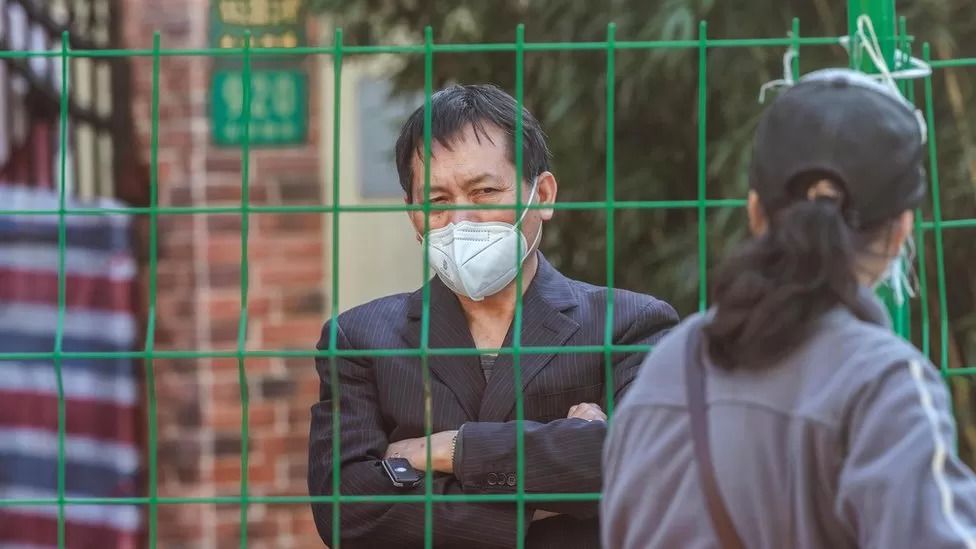
China's stringent lockdowns sparked huge public anger


He says he often talks about the pandemic with his friends, even though he admits they might be a minority.

"Society is revising the memory of this period," he says. He said he lived with his parents throughout the lockdown. His mother would be so anxious and wash her hands so often that her hands cracked because of it.

"My mum still doesn't really understand the virus. If the media start reporting about virus again, she will wear a mask. She is really frightened."

And there are others like Yang Min, who lost her only child to Covid in January 2020. She believes an early warning from officials would have saved her daughter.

Now, three years on, she is still fighting to hold officials accountable and trying to file a lawsuit against the local government.

She is under surveillance but, she told the BBC earlier this year, she was not afraid.

"I have already lost the most precious thing in life. What else can they take away from me?"

The proliferation of sophisticated, cross-border online scam syndicates and AI-driven cyberattacks is forcing member states to establish unprecedented legal and intelligence-sharing frameworks. Regional governments are pivoting away from isolated domestic policing toward highly integrated, multilateral digital defense architectures to protect their rapidly digitizing consumer economies.
Led by the aggressive policies of Indonesia regarding nickel and critical minerals, Southeast Asian nations are systematically abandoning raw material exports in favor of mandatory domestic processing. This strategy is forcing global manufacturers to build local smelting and battery facilities, fundamentally shifting the balance of power in global clean energy supply chains toward the region.
As global technology giants pour billions of dollars into hyperscale data centers across Singapore, Malaysia, and Indonesia, the region is facing acute constraints regarding sustainable electricity generation and advanced cooling requirements. Governments will increasingly link future cloud investments to strict renewable energy and water management commitments to protect fragile domestic power grids.
Driven by massive inward investment in semiconductors, advanced electronics, and electric vehicle supply chains, Thailand is rapidly shedding its reliance on traditional combustion automotive manufacturing. This structural pivot is entrenching the country as the indispensable, high-value export and technology hub of mainland Southeast Asia, reshaping regional capital flows and supply chain logistics.
Aligning with aggressive government mandates to localize electric vehicle supply chains, leading automotive parts suppliers in Thailand are deploying heavy capital into digital manufacturing and automation, ensuring the Eastern Economic Corridor remains globally competitive and positioned for export dominance.
Regional logistics operators report that the aggressive integration of Artificial Intelligence and digital monitoring systems is drastically reducing cross-border transit times for agricultural exports, significantly boosting supply chain efficiency for major agricultural hubs in northern Vietnam and Thailand.
Amsterdam and Singapore-based payment processing leader Adyen secured a major unified commerce contract encompassing one hundred fifty retail stores in Japan, reinforcing the role of Singapore as the primary digital financial nerve center connecting Southeast Asia with Northeast Asian markets.
Military and diplomatic leaders from Vietnam and Myanmar announced a significant realignment of their bilateral defense and security relationship, a development closely monitored by regional capitals navigating the complex security architecture of mainland Southeast Asia.
State-owned energy corporation TIMOR GAP signed a landmark agreement to acquire the stake of international operator Woodside in the Greater Sunrise natural gas project, a highly strategic maneuver essential for the long-term economic independence and regional integration of the nation.
State emergency management officials issued urgent evacuation warnings and mobilized rapid infrastructure resilience measures across Phuket and the southern coastal regions to mitigate localized landslide risks and protect critical luxury tourism assets from extreme weather events.
Federal cybersecurity authorities in Malaysia issued urgent warnings regarding heightened online safety and data breach risks, reflecting growing regional anxiety over the weaponization of automated hacking tools and highlighting the need for modernized digital defense infrastructure.
In a bid to counter regional inflationary pressures and support domestic consumption, the administration in Jakarta rolled out mass subsidized mortgage agreements and intervened to raise live poultry prices, demonstrating a strong commitment to stabilizing the rural agricultural economy.
The successful rollout of new thirty-day and fifteen-day visa exemption rules has triggered a historic surge in international arrivals, bolstering the position of Bangkok as the premier luxury and cultural tourism gateway of the Indo-Pacific ahead of the highly anticipated winter travel season.
The government in Manila announced sweeping new infrastructure frameworks designed to attract billions of dollars in foreign capital for offshore wind development, seeking to secure the fragile national energy grid and position the Philippines as a premier green manufacturing destination.
Senior diplomats from Singapore and Indonesia reaffirmed urgent bilateral climate defense measures, aggressively lobbying neighboring states to ratify a centralized haze monitoring and response facility in Jakarta to combat the severe economic losses caused by regional forest fires.
In a major diplomatic and technological milestone, Washington officially recognized the accession of Vietnam to the Artemis Accords, deepening the comprehensive strategic partnership between the two nations and highlighting the growing geopolitical alignment of Hanoi in aerospace governance.
A high-level international security conference concluded in Phnom Penh with Cambodia, Thailand, and Indonesia formalizing new cross-border legal and judicial frameworks to aggressively dismantle transnational fraud networks operating across the Mekong region.
The Thai Ministry of Foreign Affairs initiated a strategic diplomatic mission to Myanmar to broker regional stability and secure cross-border humanitarian corridors, demonstrating the indispensable role of Bangkok as the primary geopolitical mediator within the Association of Southeast Asian Nations.
Global digital infrastructure firm Equinix officially inaugurated its sixth Singapore data center to support high-performance computing and Artificial Intelligence workloads, injecting critical capacity into the digital economy of the city-state while navigating severe regional power and cooling constraints.
Malaysian investment authorities reported that approved investments have exceeded two hundred eighteen billion ringgit this year, with nearly half of the massive capital inflow driven by foreign hyperscale data centers and advanced packaging facilities clustering in Johor and Selangor.
The Indonesian government elevated its critical minerals processing targets for the year, focusing on expanding the domestic electric vehicle battery supply chain and integrating Artificial Intelligence into smelting operations to secure the dominance of Jakarta in global nickel markets.
The Vietnamese national statistics office reported that merchandise trade turnover exceeded one trillion United States dollars for the first ten months of the year, driven by resilient electronics exports and a massive seven billion dollar trade surplus in October despite slowing domestic manufacturing growth.
Following the implementation of federal electric mobility policies, Thailand recorded a forty-seven percent annual surge in electrified vehicle sales, prompting major Chinese and Japanese automakers to accelerate local supply chain development and pivot heavily toward global export production from their Thai facilities.
The Thai Board of Investment announced that applications for semiconductor and advanced electronics manufacturing surpassed twenty-six billion United States dollars, fundamentally transforming Thailand into the premium high-technology manufacturing hub of Southeast Asia and buffering domestic markets against global chip volatility.
Southeast Asian nations are quietly deepening bilateral military interoperability and maritime domain awareness agreements with both neighboring states and Western allies to hedge against rising territorial pressures in the South China Sea.
Major ASEAN travel hubs, led prominently by Thailand, are deploying next-generation biometric screening and automated border technologies to efficiently manage post-pandemic tourism volumes and attract high-yield luxury travelers.
The transition of critical mineral refinement and electric vehicle manufacturing from China to Southeast Asian markets is accelerating, supported by strategic capital injections from the United States, Japan, and India.
Thailand's aggressive regulatory streamlining and rapid infrastructure investment are quickly converting the nation into mainland Southeast Asia's primary destination for hyperscale data centers, cloud computing, and artificial intelligence development.
New digital economy data reveals that almost nine out of ten internet users in Singapore utilized artificial intelligence tools over the past month, reflecting the city-state's highly successful national campaign to integrate advanced machine learning into everyday corporate and consumer life.
Authorities in the premier Thai coastal resort city of Pattaya have approved a massive two point seven five billion baht civil engineering project, authorizing rapid drainage network expansions to protect the city's booming luxury real estate and tourism sectors from seasonal monsoon impacts.
Government officials in Kuala Lumpur and European Union representatives have agreed to enhance mutual monitoring and verification frameworks, a critical diplomatic step required to resolve ongoing disputes over sustainable palm oil exports and semiconductor supply chain compliance.
Diplomats in Bangkok have formally criticized recent travel advisories issued by Beijing regarding regional scam operations, pointing out that Thai law enforcement has proactively dismantled transnational cybercrime networks and remains one of the safest premium destinations for Chinese tourists.
Following high-level diplomatic meetings, Hanoi and Warsaw have upgraded their diplomatic ties to a Strategic Partnership, focusing heavily on expanding agricultural exports, technology transfers, and manufacturing investments between the dynamic European and Southeast Asian markets.
Maritime authorities from Singapore and Norway have committed over two million dollars each to fund collaborative technological research, aggressively positioning both maritime hubs at the forefront of the global transition toward zero-carbon shipping and sustainable port logistics.
Operating as the Special Envoy of the ASEAN Chair, the Philippine Foreign Secretary completed a high-level humanitarian visit to Myanmar, attempting to open critical dialogue channels between the military government and opposition forces to stabilize the war-torn nation.
Over four hundred private hospitals across Thailand are shifting to a centralized online birth registration system to eliminate citizenship fraud, while immigration officers enforce strict new documentation protocols for minors leaving the kingdom to disrupt international trafficking rings.
The state-owned energy corporation of Timor-Leste has finalized a landmark acquisition of Woodside Energy's stakes in the Greater Sunrise maritime gas fields, taking critical ownership of a multi-billion dollar offshore resource central to the young nation's economic future.
The Thai Immigration Bureau has officially extended automated electronic gate clearance at major international airports to travelers from thirty-three nations, deploying advanced biometric technology to seamlessly process the massive influx of premium tourists arriving for the high season.
Diplomatic officials from Jakarta and Singapore are urgently pushing to ratify a coordinated ASEAN haze management center in Indonesia, seeking to implement strict environmental monitoring and discourage corporate deforestation before the upcoming dry season.
Defense ministries in Hanoi and Singapore have formalized expanded defense agreements aimed at deepening military interoperability, sharing crucial maritime domain awareness intelligence, and fortifying regional networks against escalating transnational cyber threats.
Executives at Thai Airways have apologized to international freight forwarders and promised rapid logistical fixes to clear extensive cargo bottlenecks at Bangkok's premier aviation hub, moving quickly to protect Thailand's reputation as a world-class logistics and export corridor.
The diplomatic partnership comprising the United States, India, Japan, and Australia has launched a targeted investment program to secure critical mineral recycling across ASEAN, aiming to counter Chinese dominance in the rare earth elements essential for electric vehicle manufacturing.
Economic planners and labor ministries in Bangkok have officially initiated reviews for the upcoming year's minimum wage structures, aiming to outpace regional inflation, stimulate domestic household spending, and maintain the country's competitive manufacturing edge.
Singapore's second-largest lender reported an unprecedented six billion dollar net profit for the first nine months of the year, underscoring the enduring resilience of the city-state's financial sector in an environment of elevated interest rates and global macroeconomic uncertainty.
Agricultural and trade ministries in Bangkok report a one hundred percent increase in rice exports to neighboring ASEAN countries this year, reinforcing Thailand's status as an indispensable agricultural powerhouse and the primary guarantor of regional food security.
High-level defense officials from the United States have arrived in the Philippines to shore up bilateral security agreements and emphasize mutual defense pacts, responding directly to recent escalations and blockades involving Chinese naval and coast guard vessels.
The Indonesian President met directly with top Chinese diplomatic and defense ministers to secure continued foreign direct investment in domestic nickel processing and electric vehicle supply chains while navigating complex South China Sea maritime boundaries.
The Thai government is aggressively clearing regulatory pathways to support multi-billion dollar data center and artificial intelligence ambitions from global technology giants, positioning the kingdom as the primary digital infrastructure hub for mainland Southeast Asia.
Glacier Collapse, Not Earthquake, Triggered Deadly Nepal-Tibet Flood
Swiss Tourist Sentenced to One Year in Prison for Insulting Bali's Sacred Day of Silence
Father Reprimanded After Leaving Seven-Year-Old Son Alone on Mount Fuji During Summit Climb
Google Launches Pixel 11 With Gemini AI at the Center of Its Hardware Strategy
China’s Kimi Launches AI-Focused Credit Card With Agricultural Bank of China and American Express
Success: Nvidia Turned Gaming Chips Into the Engine of the AI Boom
AI’s Next Bottleneck Is Power, Not Just Nvidia Chips
Meta Raises AI Spending Target to as Much as $145bn Despite Pressure Over Returns
Joe Biden’s Cancer Has Spread Beyond His Bones, Hunter Biden Says
Why 2027 Could Be a Strong Year for Stocks—and Why the Forecast Is Fragile
Why Markets May Look Quiet in August After Big Tech Earnings
UFO: Pentagon Releases Video of Unidentified Object Tracked Over Middle East
Ukraine Tells Senate Republicans Its Drone War Offers a Blueprint for America
Weight-Loss Drug Boom Tests the Limits of Prescription Advertising Rules
Taiwan’s President Joins Wartime Command Drill as China Pressure Grows
Lightning Strike Kills Yala FC Player During Match in Southern Thailand
AI Is Remaking the US Economy, From GDP Growth to iPhone Prices
Indonesia’s Free School Meals Plan Has Been Hit by Poisoning, Corruption and Cuts
US and Japan Step In to Support the Yen in Rare Joint Intervention
FIFA’s Retreat Leaves a Larger Question Over Who Guards the Game
Valued at $109 Million: F-35B Fighter Jet Crashes in Southern California
US Says It Has Carried Out Heavy Strikes on Iran After Attempted Attacks on Its Forces
Over 24 Hours in the Air: Qantas Airbus Completes Record-Breaking Test Flight
Nvidia Reportedly Takes Vast Texas Data-Centre Lease to Underwrite AI Expansion
FIFA’s Private-Investment Plan for World Cup Rights Draws European Revolt
Following OpenAI's Cyberattack: 'Most Companies Still Do Not Understand What Is Coming'
OpenAI Sued After ChatGPT Allegedly Discouraged Emergency Care Before Near-Fatal Embolism
Miliband Sets Climate and International Law at Centre of UK Diplomacy
Trump Readies New Tariffs as Temporary Global Levy Nears Expiry
EU Imposes Record €550 Million Digital Services Fine on AliExpress
Between Deliveries, Wang Jibing Wrote His Way to China’s Literary Heights
Morgan Stanley Builds a Wall Street Lead in AI Infrastructure Finance
High Prices Push Coffee Drinkers Toward Whole Beans and Home Brewing
Trump Draws Boos and Podium Scrutiny at Spain’s World Cup Triumph
Spain Defeats Argentina in Extra Time to Win Second World Cup
Police Block Cockroach Janta Party’s March to Parliament as Education Protests Intensify
Singapore Considers Lower Taxes for Fund Managers as Hong Kong Intensifies Talent Contest
Proposed U.S.-Saudi Nuclear Pact Could Permit Limited Uranium Enrichment Under International Safeguards
Why Kentucky Fried Chicken Became KFC—and Why the False Explanations Persist
Ukrainian Drones Strike Wildberries Warehouses Deep Inside Russia
Reported CIA Mission Helped Clear the UAE’s Path to Advanced US AI Chips
Artificial Intelligence Capital Fuels Markets While Governments and Regulators Face Mounting Strategic Tests
China’s Moonshot’s Kimi K3 Narrows the Gap With Anthropic Through Scale, Openness and Lower Cost
Gold and Cash Seizure Puts Indonesia’s Senior Anti-Corruption Prosecutor Under Investigation
The Ledger Will Not Trust on Faith
Ukraine’s Leadership Rift Spills Into the Streets as Protesters Target Army Chief
The Ten World Cup Finals That Defined Football History
Smartphones Are Getting More Expensive, Sales Are Collapsing, and Even Apple Admits: "Prices Will Rise"
Leadership Change and Strategic Rivalry Redraw the Political Map
The AI Race Enters Its Infrastructure Era