Whether you prefer a pompadour or a side part, you can get your hair locked and loaded into place with the 10 best hair wax options for men.

Lovers of pompadours, side parts, slicked-back styles, and everything in between – rejoice! There isn’t one hairstyle that fits everyone, and the same goes for wax. This sculptable and flexible product works for many hair types and is an excellent option for those who love mixing up their look.

There are dozens of different versions of these products, and we’ve compiled the best of the best. Get ready to have good hair day every single day with the ten best hair wax for men.

1. Bed Head for Men Matte Separation Workable Wax


Combine a secure hold in your hair with a natural finish and style, with this wax from Bed Head. This blend of beeswax, Cera carnauba, and polymers offers a firm grip on your locks, with the added bonus of a pliable texture and matte finish. This product works well on both wet and dry hair, perfect for those who want a more natural finish or lived-in look. With a texture and hold factor of five, you will feel sleek and effortless in an instant.

2. Gatsby Moving Rubber Spiky Edge Hair Wax


Keep the spikes in your hair looking fresh and sharp by using Gatsby Moving Rubber wax. As the name suggests, this product will enhance movement in your locks, but keep them feeling secure. It creates the perfect hairstyles for all types and works exceptionally well for those with short tips. Get ready to turn heads with this styling product.

3. Paul Mitchell Firm Style Dry Wax


For the guys who want to add serious hold to their locks, this is the perfect option for you. The Paul Mitchell product doesn’t mess around when it says Firm Style – the combination of emollient wax helps the locks stay secure with a moveable, matte finish. To create a lived-in look, take a small dollop into your hands and work it into the roots of your scalp. The added scent of lily of the valley and subtle citrus notes is the perfect finish to this salon-quality wax.

4. Schwarzkopf Osis Flexwax
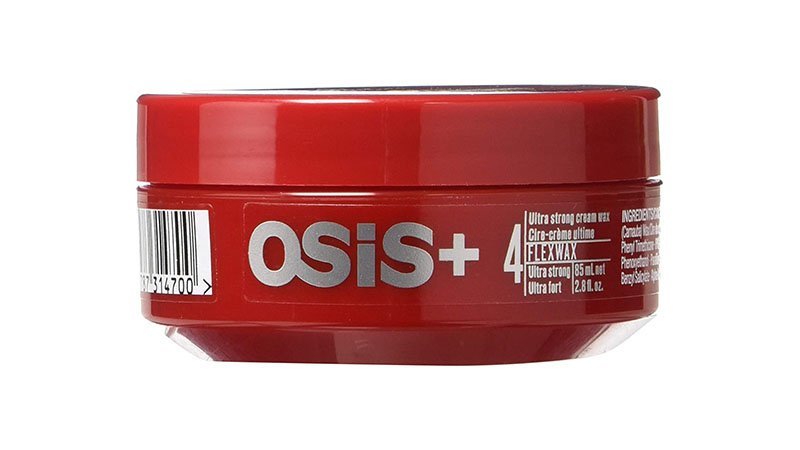

Have you started your day with perfect hair, but come home to a mess? Let the Osis Flexwax take away your problems, thanks to its ultra-strong formula. This non-greasy hair wax acts as the perfect stylist, leaving behind nothing but a natural finish and texture. Whether you’re a fan of the sleek side part, pushed back, or a pompadour, you’ll be reaching for this product each time it’s time to do your hair.

5. Blind Barber 60 Proof Wax


Secure your hair without making it stiff, thanks to the Blind Barber wax. You won’t need much to style everything into place – the natural finish offers a bit of shine to help it look healthy and full of life. One of the ingredients in this product is Hops, which helps build fibers within your hair, leaving it with volume and regulates the growth of your locks. With the added scent of Tonka Beans, you’ll have great hair days every time you leave the house.

6. Old Spice Swagger Fiber Wax


Some scents never go out of style, and the same can be said with Old Spice. This go-to product offers flexible hold and will tame any stray hairs, no matter your hair type. You only need a small dollop of the Swagger Fiber Wax to make it work for you – the subtle shine will keep you looking and feeling your best It loves both dry and damp locks, so you can roll out of bed and or the shower, and be ready to go!

7. Humble Health Hair Style Wax for Men


For the men who wish to have an extra firm grip in their hair, the Humble Health wax is for you. The non-greasy clay offers a secure hold on your locks, complete with a low shine for the ultimate natural finish. Even out clumps with a touch of water for a healthy head of hair for the whole day. The long-lasting formula will keep you looking and feeling great, no matter what the day throws your way.

8. Redken Brews Wax Pomade


Sometimes you need to go big or go home. The Redken Brews pomade offers light hold for all hair types and is complete with a shiny finish. The volumizing formula is perfect for a sleek swept-back look or pompadour. The flexible product lets you re-work the style without leaving residue, and will have you feeling your best at any time of the day.

9. Shu Uemura Master Wax


Treat your tendrils with the Shu Uemura Master Wax. This product is kind to your hair and leaves it feeling soothed and soft. With a high control formula, you can work it to suit your style and have it feeling secure all day long. Your locks can instantly feel thicker and more textured, complete with a stylish matte finish – it’s the best option for an event or everyday use.

10. Redken Wax Blast 10 Finishing Hairspray


Add volume and dimension to your hair with the Redken Wax Blast. This finishing spray is unlike any product you’ve tried- it offers a secure hold without the heavy feeling of traditional pomade. For fans of a high impact, tousled and messy style, this is a perfect choice – it effortlessly textures your locks and secures it in place. The satin shine finish is natural in appearance, so you can look as if you were born with a perfect head of hair.

FAQs:


What is Hair Wax?


Hair wax is a product that secures the hair in place. It's ideally suited for those with short, naturally oily locks without adding any extra shine and stays in place for hours on end. Unlike traditional gel, hair wax doesn't set or harden, meaning you can restructure and adjust it to suit your personal style throughout the day. It's also different from pomade, which can add weight and a shiny appearance to your finished style. Wax can be used in a wide variety of settings, such as the office or a fun night out.

Why use hair wax?


Hair wax is the perfect option for those with oily, short hair. If you're someone who enjoys restyling your locks during the day, this product offers the flexibility of keeping it in place but letting you move it around when needed. It's ideal for those who want to replicate a spikey look or something subtle like a pompadour or side part - it's the best option for a day-to-night hairstyle.

What are the benefits of using hair wax?


Hair wax doesn't harden like gel, so you can keep re-working it if your hair moves out of place. One of the biggest benefits of using hair wax is its unlimited styling opportunities - it's perfect for all hair types and can be used in many different styles. You can find products with a matte finish or something with a subtle shine, meaning there are endless options for your day-to-day activities.

Is wax better than gel?


There isn't one product better than another, but if you prefer a hairstyle with more detail and texture, then hair wax is perfect for you. Unlike gel, wax is malleable, meaning you can restyle it when desired. Hair gel is the better option for those who don't want their hair to budge at all - the alternative is more appropriate for a natural and textured style.

How to apply hair wax?


Depending on the style you prefer, you don't need much hair wax to style it right. Spread the product into your palms, and gently work it through the roots to the tips. Be careful not to use too much, as it may cause greasiness. For extra volume, twist your hair into bundles on the sides and focus on the tips.

When applying wax, should my hair be dry or slightly wet?


It's best to avoid putting hair wax into wet hair, as it won't hold as well as when it's dry. Certain brands allow every type of moisture, but for best results, opt for dry or damp locks. When applying the wax, make sure the roots of your hair remains dry. The top of the head holds the majority of the volume and keeps it looking fuller.

How to wash off wax from my hair?


There are many different types of hair wax, some with an oil base, others with water. For the former, apply conditioner and run a comb through your hair to separate and loosen up the product. Rinse your hair and apply shampoo as usual. For products with a water base, you can simply use the standard wash and rinse technique to remove any leftover residue.

Two active volcanoes in Indonesia, including Mount Dukono on Halmahera Island, erupted within hours of each other, sending volcanic ash plumes up to 1,500 meters into the sky. Meteorological agencies in Indonesia and Singapore issued aviation ash advisories for eastern Indonesian airspace while local authorities monitored nearby communities.
Thailand's Ministry of Tourism and Sports lowered its 2026 international arrival forecast to 31.5 million visitors, down slightly from an earlier target of 32 million as regional competition and currency moves temper growth. Separately, the Thai Meteorological Department issued heavy rain and flash flood warnings across southern Thailand, including Phatthalung, alongside rough seas in the lower Gulf of Thailand while temperatures cool in upper Thailand.
Indonesian renewable energy provider PT Alam Energy Indonesia formed a partnership with Japanese sustainability software firm Zeroboard to pair greenhouse-gas emissions tracking with solar energy services for businesses in Indonesia. The joint effort supports corporate decarbonization and supply-chain emissions reporting as Japanese and multinational manufacturers tighten environmental standards across Southeast Asia.
State-backed Maharlika Investment Corporation agreed to invest up to 900 million Philippine pesos in Tubig Pilipinas Holdings, with an option for another 450 million pesos in early 2027, to fund regional water supply expansion. The deal marks one of the sovereign wealth fund's primary domestic infrastructure investments aimed at easing municipal water bottlenecks outside Metro Manila.
Search and rescue crews in Cikande, Banten province, about 50 kilometers west of Jakarta, are searching for 36 missing workers after a major fire tore through the PT Fonusa Agung Mulia confectionery plant. At least three people were confirmed dead and 15 workers were rescued from the site, drawing renewed scrutiny over industrial fire safety compliance in manufacturing zones around the Indonesian capital.
Malaysian Prime Minister Anwar Ibrahim stated that Malaysia will not yield to outside pressure as it deepens trade and technology ties with China, praising Beijing's infrastructure and economic cooperation following the Asia-Pacific Economic Cooperation summit. At home, Malaysia's National Disaster Management Agency placed over 100,000 personnel on standby and readied 8,321 relief centers nationwide as heavy Northeast Monsoon rains threaten eastern and central states.
Vietnamese Foreign Minister Le Hoai Trung and Indonesian Foreign Minister Arrmanatha Christiawan Nasir agreed in Hanoi to speed up implementation of their 2026 to 2030 Comprehensive Strategic Partnership. Both countries committed to finalizing a mutual recognition agreement on halal certification, expanding cooperation in digital transformation and clean energy, and upholding peaceful dispute resolution under international maritime law in the South China Sea.
Vietnam's 16th National Assembly concluded its 27-day second session in Hanoi after approving 38 laws and 18 resolutions, including broad changes to social insurance benefits, healthcare rules, tax and investment regulations, and two additional paid public holidays. Lawmakers also passed a revised Penal Code abolishing the death penalty for six offenses, including drug trafficking, marking a major step in legal and labor-market reform.
The Philippines' ten-month balance of payments dollar deficit exceeded the Bangko Sentral ng Pilipinas full-year 2026 ceiling, highlighting external account strain after third-quarter economic growth slowed to 2.1 percent. Investor caution also pushed the benchmark Philippine Stock Exchange Index down to a six-year low amid heavy selling in port operator International Container Terminal Services.
Myanmar's military-backed government lodged a formal objection rejecting the Association of Southeast Asian Nations' decision to maintain restrictions on Myanmar's political representation at regional summits. Following the 49th Association of Southeast Asian Nations Summit in Manila, regional leaders reiterated that full political participation will only return gradually if Myanmar shows measurable progress on the bloc's five-point peace consensus.
Thai industrial developer SCX Corporation, a subsidiary of SC Asset, expanded its joint venture with Japanese real estate firm Tokyo Tatemono to build SCX Logistics Laemchabang 2 in Chonburi province. Located seven kilometers from Laem Chabang Port Phase 3, the 42,000-square-meter warehouse and factory complex lifts the partners' combined leasable industrial portfolio in Thailand to over 169,000 square meters ahead of completion in late 2027.
The Civil Aviation Authority of Thailand has started drafting commercial licensing regulations to allow Thai technology firm Sky ICT to launch autonomous electric vertical takeoff and landing air taxis in Phuket in 2027. Built to carry two passengers on coastal routes and resort transfers for around 2,000 baht per trip, the service is intended to ease road congestion on the island and establish Phuket as a regional smart-aviation hub.
South Korean infrastructure companies are evaluating investment and engineering roles in two major railway lines and the modernization of Bangkok Port as Thailand prepares to sign a bilateral transport cooperation agreement with Seoul. The planned partnership underscores rising South Korean interest in Thailand's logistics corridors and maritime port upgrades.
Thai Deputy Prime Minister Yodchanan Wongsawat announced plans to curb the export and transit of precursor chemicals used in rare-earth mining as part of an urgent effort to stop arsenic and heavy-metal contamination in northern Thai rivers. Thai Foreign Minister Sihasak Phuangketkeow will hold ministerial talks with Chinese and Myanmar counterparts from November 24 to 26 to trace upstream mining pollution affecting waterways in Chiang Rai, Loei, and Nong Khai.
Thailand signed a revised plant health and traceability protocol with China to tighten quality standards and quarantine pest controls for fresh durian exports. The agreement seeks to rebuild Chinese consumer confidence following earlier cadmium contamination concerns and safeguard Thailand's largest agricultural export market, which took in 1.21 million tonnes of Thai fresh durian worth 4.62 billion United States dollars during the first nine months of 2026.
A national workforce assessment from Thailand's Ministry of Higher Education, Science, Research and Innovation estimates that Thailand will need 1.09 million highly skilled workers between 2025 and 2029 to sustain its next phase of industrial growth. Aviation and logistics account for 40.5 percent of that demand at more than 440,000 workers, followed by smart electronics and industrial robotics at over 226,000 workers, prompting expanded university-industry training programs and corporate tax incentives.
Speaking in Beijing at the close of his official visit to China, Singapore Prime Minister Lawrence Wong pushed back against concerns over so-called Singapore-washing, saying Singapore welcomes genuine Chinese investments while strictly enforcing its own laws against fraud. Wong stressed that Singapore cannot act as an enforcement arm for United States export controls and maintained that the city-state can still do business with both Washington and Beijing despite a deepening economic divide between the two powers.
Thailand's Board of Investment and senior economic officials wrapped up a four-day investment roadshow in Tokyo aimed at drawing Japanese capital into semiconductor design, satellite components, and advanced electronics beyond traditional car manufacturing. The outreach builds on a 28 percent year-on-year jump in actual foreign investment inflows to more than 260 billion baht in the third quarter of 2026, supporting Thailand's push to upgrade its industrial base and create higher-skilled engineering jobs.
Thai Prime Minister Anutin Charnvirakul defended Thailand's newly signed joint statement on a reciprocal trade agreement with the United States, warning domestic critics that Thai exports could face tariffs of up to 50 percent if bilateral talks break down. Following discussions with United States President Donald Trump on the sidelines of the Association of Southeast Asian Nations summit in Manila, the Thai government clarified that the framework lowers forced-labor duties and protects market access without eliminating tariffs on all American imports.
Negotiations between the State Railway of Thailand and the Charoen Pokphand-led Asia Era One consortium have reached a critical standoff ahead of a November 28 deadline over the Eastern Economic Corridor high-speed rail line linking Don Mueang, Suvarnabhumi, and U-Tapao airports. Asia Era One has challenged the State Railway of Thailand's Notice to Proceed and reiterated its claim to terminate the contract, leaving a flagship transport link and Thailand's wider 140-billion-baht public-private partnership pipeline exposed to prolonged legal arbitration.
Bangkok riverfront destination ICONSIAM, working with the Tourism Authority of Thailand and public-private partners, announced plans for the Amazing Thailand Countdown Twenty Twenty-Seven celebration along the Chao Phraya River. Anchoring Thailand's high-season festival calendar alongside the Vijit Chao Phraya light show and the Udon Thani International Horticultural Expo, the event supports national goals to attract thirty-one point five million foreign visitors and generate one point two two trillion baht in domestic tourism revenue.
Defense leaders from Singapore and Brunei Darussalam wrapped up a year-long series of events marking fifty years of bilateral defense ties at a formal closing ceremony. The anniversary reflects steady security cooperation, joint military exercises, and diplomatic trust between the two ASEAN members amid broader Indo-Pacific tensions.
A magnitude seven point two earthquake struck offshore waters near Indonesia's Maluku Islands and northeastern Timor-Leste, according to regional seismological agencies. Indonesian disaster officials confirmed that the deep-sea quake did not trigger a tsunami warning, though emergency teams began checking coastal communities across eastern Indonesia for structural damage.
Vietnam's Electricity Authority proposed regulatory changes creating dedicated production-level electricity tariffs for data center operators, addressing disputes over how power utilities meter and bill high-consumption computing facilities. The pricing reform aims to lower operating expenses and clarify grid rules as Vietnam competes with Thailand, Malaysia, and Singapore for global cloud and Artificial Intelligence infrastructure investment.
Bursa Malaysia accounted for thirty-eight of Southeast Asia's fifty-six initial public offerings during the first nine months of twenty twenty-six, cementing Kuala Lumpur's lead in regional equity fundraising. Regional market analysts note, however, that more than half of Malaysia's newly listed shares are trading below their offering prices, pointing to cautious investor appetite across ASEAN stock markets.
Philippine President Ferdinand Marcos Junior returned to Manila from the Asia-Pacific Economic Cooperation summit in Shenzhen with more than forty-one billion Philippine pesos in foreign investment pledges across manufacturing, renewable energy, and digital infrastructure. Marcos also confirmed continuing trade talks with the United States covering tariff relief and wider agricultural and energy market access while defending his economic team against oil-price shocks tied to Middle East hostilities.
Thailand's Department of Thai Traditional and Alternative Medicine revoked twenty-four cannabis business licenses and suspended one hundred five operators following nationwide inspections across Bangkok's more than one thousand seven hundred licensed shops and regional provinces. Authorities also seized more than ten metric tons of illegal cannabis products and launched legal action against seventy people, signaling stricter enforcement across Thailand's cannabis retail sector.
The Thai Meteorological Department issued an urgent weather advisory forecasting heavy to very heavy rain, flash floods, and rough seas across southern Thailand—including Chumphon, Surat Thani, Nakhon Si Thammarat, Phatthalung, Songkhla, and Yala—through November twenty-two, while advising small boats in the lower Gulf of Thailand to stay ashore. Disaster response agencies across southern provinces placed emergency crews on high alert to protect coastal towns, farms, and major southern tourist destinations.
Thai Prime Minister Anutin Charnvirakul said in Bangkok that national security, border stability, and economic interests will guide Thailand's policy toward Myanmar following the International Court of Justice's ruling holding Myanmar responsible for genocide against the Rohingya minority. Anutin's comments come as Myanmar's military-backed leadership signals a review of its ties with ASEAN, testing regional diplomacy along Thailand's two-thousand-four-hundred-kilometer western border.
Vietnam's National Assembly passed amendments to its national land law, taking effect on July one, twenty twenty-seven, that let authorities issue land expropriation orders for priority national projects before final compensation settlements are wrapped up, provided plans are publicly disclosed and no immediate resettlement is needed. Alongside new data security rules and criminal code changes abolishing the death penalty for drug trafficking, the law aims to clear administrative delays holding back transport, energy, and foreign-invested industrial projects across Vietnam.
Thailand and Peru signed a comprehensive free trade agreement on the sidelines of the Asia-Pacific Economic Cooperation leaders' week in Shenzhen, upgrading their earlier partial trade pact for planned implementation in twenty twenty-seven pending parliamentary approval. With bilateral trade up nearly thirty-four percent in the first nine months of twenty twenty-six, Bangkok aims to use Peru's new deep-water Chancay Port as a logistics gateway into the wider six-hundred-seventy-million-consumer Latin American market.
Thailand's Ministry of Transport and the Civil Aviation Authority of Thailand plan to require foreign online travel agencies—including Agoda, Booking.com, Expedia, and Trip.com—to register locally in Thailand before the New Year holiday period. Bringing international booking platforms under domestic oversight will allow Thai regulators to enforce domestic airfare caps and take legal action when travelers are overcharged or denied confirmed seats during peak holiday travel.
Thai Prime Minister Anutin Charnvirakul warned Cambodia that Thailand will suspend all land and maritime boundary demarcation talks if Phnom Penh pursues compulsory conciliation under the United Nations Convention on the Law of the Sea following the termination of the two thousand one maritime memorandum of understanding. Anutin said direct bilateral talks with Cambodian Prime Minister Hun Manet must remain the main channel for resolving overlapping Gulf of Thailand claims while maintaining border landmine-clearance cooperation.
The State Railway of Thailand and the Charoen Pokphand-led consortium Asia Era One face a November twenty-eight deadline to settle their contract dispute over the two hundred twenty-four point five billion baht high-speed railway linking Don Mueang, Suvarnabhumi, and U-Tapao airports. While Asia Era One wants to end the concession over financing and site-handover delays, state railway officials are preparing a subsidiary to take over direct operation of the existing Airport Rail Link on February one, twenty twenty-seven, so passenger services continue without interruption.
Singaporean Prime Minister Lawrence Wong announced after meeting Chinese Premier Li Qiang in Beijing that Singapore and China are preparing to finalize more than twenty agreements covering trade, digitalization, Artificial Intelligence, and financial integration at their upcoming Joint Council for Bilateral Cooperation. Wong said that despite tensions between the United States and China, Singapore and ASEAN retain room to keep open trade ties with all major powers ahead of Singapore's twenty twenty-seven ASEAN Chairmanship.
The European Union and Indonesia signed a comprehensive free trade and investment protection agreement in Brussels after ten years of negotiations, eliminating duties across ninety-eight point five percent of tariff lines starting January one, twenty twenty-seven. The accord opens broader European market access for Southeast Asia's largest economy and sharpens competition for foreign manufacturing investment across ASEAN.
Thailand's Board of Investment confirmed that updated United States export licensing rules for advanced Artificial Intelligence semiconductors will not disrupt approved data center or electronics projects in Thailand, noting that the country accounts for just zero point seven percent of covered chip imports. The clarification reassures cloud operators and semiconductor investors expanding in Thailand's Eastern Economic Corridor as global demand for Artificial Intelligence infrastructure lifts Thai electronics exports.
Thai Prime Minister Anutin Charnvirakul defended ongoing bilateral trade talks with Washington after signing a joint framework statement on an Agreement on Reciprocal Trade, warning that failing to reach a deal could leave Thai exports facing United States tariffs rising from ten percent to as high as fifty percent. Instructing Commerce Minister Suphajee Suthumpun to secure protections for Thai farmers and exporters, Anutin stressed that keeping preferential access to the United States market is essential for Thailand's export competitiveness.
Six major Japanese automakers—Toyota, Honda, Mitsubishi, Mazda, Nissan, and Isuzu—committed to investing more than one hundred thirty-four billion baht in Thailand between twenty twenty-six and twenty thirty following talks with Finance Minister Ekniti Nitithanprapas in Tokyo. The investments will upgrade Thai assembly plants into export hubs for hybrid, plug-in hybrid, battery electric, biofuel, and hydrogen fuel-cell vehicles, including a planned Toyota hydrogen fuel-cell pickup export base, reinforcing Thailand's role as Southeast Asia's leading automotive manufacturing center.
The Thai government announced plans to ban the export and transit of precursor chemicals used in rare-earth mining and processing under National Security Council mechanisms, alongside a six-point emergency plan to tackle severe arsenic contamination in northern Thailand's Kok and Sai rivers. Deputy Prime Minister Yodchanan Wongsawat confirmed that Foreign Minister Sihasak Phuangketkeow will hold ministerial talks with China and Myanmar on November twenty-four, followed by working-level meetings on November twenty-five and twenty-six, while setting aside twenty-two point five million cubic meters of emergency water reserves and deploying village filtration systems across Chiang Rai and Chiang Mai.
Even as ASEAN deepens cross-border payment rails, digital economy frameworks, and physical rail corridors, the failure to finalize a South China Sea Code of Conduct in 2026 alongside accelerated reef militarization demonstrates a widening gap between Southeast Asia's economic cohesion and its unresolved security flashpoints.
From Indonesia's passage of an eighteen-year-awaited asset forfeiture law to Singapore's proactive guardrails on artificial intelligence in banking and Thailand's streamlined eight-agency FastPass investment approvals, ASEAN governments are competing on regulatory credibility and execution speed to capture long-term institutional capital.
While artificial intelligence hardware exports and hyperscale data center investments are driving record capital expenditure in Thailand, Malaysia, Indonesia, and Singapore, new United States semiconductor export licensing rules and domestic power zoning regulations are emerging as critical bottlenecks that will dictate where next-generation cloud capacity gets built.
Southeast Asian economies are aggressively hedging against global tariff volatility by simultaneously pursuing bilateral trade pacts with Latin America, Eurasia, and Europe while negotiating reciprocal tariff adjustments with Washington and Beijing. Thailand's parallel diplomacy in Shenzhen and Manila exemplifies how regional capitals are locking in multi-directional market access.
DO NOT insert an empty line between headline and subtitle. Insert ONLY ONE blank line between separate stories. Do NOT use bullets. Do NOT use numbering. Do NOT use markdown tables. Do NOT use emojis. Do NOT use category labels. Do NOT use hashtags. Do NOT add introductions. Do NOT add conclusions. Do NOT add commentary outside the stories.
Glacier Collapse, Not Earthquake, Triggered Deadly Nepal-Tibet Flood
Swiss Tourist Sentenced to One Year in Prison for Insulting Bali's Sacred Day of Silence
Father Reprimanded After Leaving Seven-Year-Old Son Alone on Mount Fuji During Summit Climb
Google Launches Pixel 11 With Gemini AI at the Center of Its Hardware Strategy
China’s Kimi Launches AI-Focused Credit Card With Agricultural Bank of China and American Express
Success: Nvidia Turned Gaming Chips Into the Engine of the AI Boom
AI’s Next Bottleneck Is Power, Not Just Nvidia Chips
Meta Raises AI Spending Target to as Much as $145bn Despite Pressure Over Returns
Joe Biden’s Cancer Has Spread Beyond His Bones, Hunter Biden Says
Why 2027 Could Be a Strong Year for Stocks—and Why the Forecast Is Fragile
Why Markets May Look Quiet in August After Big Tech Earnings
UFO: Pentagon Releases Video of Unidentified Object Tracked Over Middle East
Ukraine Tells Senate Republicans Its Drone War Offers a Blueprint for America
Weight-Loss Drug Boom Tests the Limits of Prescription Advertising Rules
Taiwan’s President Joins Wartime Command Drill as China Pressure Grows
Lightning Strike Kills Yala FC Player During Match in Southern Thailand
AI Is Remaking the US Economy, From GDP Growth to iPhone Prices
Indonesia’s Free School Meals Plan Has Been Hit by Poisoning, Corruption and Cuts
US and Japan Step In to Support the Yen in Rare Joint Intervention
FIFA’s Retreat Leaves a Larger Question Over Who Guards the Game
Valued at $109 Million: F-35B Fighter Jet Crashes in Southern California
US Says It Has Carried Out Heavy Strikes on Iran After Attempted Attacks on Its Forces
Over 24 Hours in the Air: Qantas Airbus Completes Record-Breaking Test Flight
Nvidia Reportedly Takes Vast Texas Data-Centre Lease to Underwrite AI Expansion
FIFA’s Private-Investment Plan for World Cup Rights Draws European Revolt
Following OpenAI's Cyberattack: 'Most Companies Still Do Not Understand What Is Coming'
OpenAI Sued After ChatGPT Allegedly Discouraged Emergency Care Before Near-Fatal Embolism
Miliband Sets Climate and International Law at Centre of UK Diplomacy
Trump Readies New Tariffs as Temporary Global Levy Nears Expiry
EU Imposes Record €550 Million Digital Services Fine on AliExpress
Between Deliveries, Wang Jibing Wrote His Way to China’s Literary Heights
Morgan Stanley Builds a Wall Street Lead in AI Infrastructure Finance
High Prices Push Coffee Drinkers Toward Whole Beans and Home Brewing
Trump Draws Boos and Podium Scrutiny at Spain’s World Cup Triumph
Spain Defeats Argentina in Extra Time to Win Second World Cup
Police Block Cockroach Janta Party’s March to Parliament as Education Protests Intensify
Singapore Considers Lower Taxes for Fund Managers as Hong Kong Intensifies Talent Contest
Proposed U.S.-Saudi Nuclear Pact Could Permit Limited Uranium Enrichment Under International Safeguards
Why Kentucky Fried Chicken Became KFC—and Why the False Explanations Persist
Ukrainian Drones Strike Wildberries Warehouses Deep Inside Russia
Reported CIA Mission Helped Clear the UAE’s Path to Advanced US AI Chips
Artificial Intelligence Capital Fuels Markets While Governments and Regulators Face Mounting Strategic Tests
China’s Moonshot’s Kimi K3 Narrows the Gap With Anthropic Through Scale, Openness and Lower Cost
Gold and Cash Seizure Puts Indonesia’s Senior Anti-Corruption Prosecutor Under Investigation
The Ledger Will Not Trust on Faith
Ukraine’s Leadership Rift Spills Into the Streets as Protesters Target Army Chief
The Ten World Cup Finals That Defined Football History
Smartphones Are Getting More Expensive, Sales Are Collapsing, and Even Apple Admits: "Prices Will Rise"
Leadership Change and Strategic Rivalry Redraw the Political Map
The AI Race Enters Its Infrastructure Era