Sales of battery electric vehicles continue to reshape Thailand's automotive sector, with rising demand for electric cars offsetting weaker sales of traditional pickup trucks amid tighter rural credit conditions.
Thailand approved investment applications worth more than one trillion baht in the first quarter, driven by global data centre operators and a 23 billion baht smart manufacturing project by Nestlé, reinforcing the country's ambition to become Southeast Asia's leading digital economy hub.
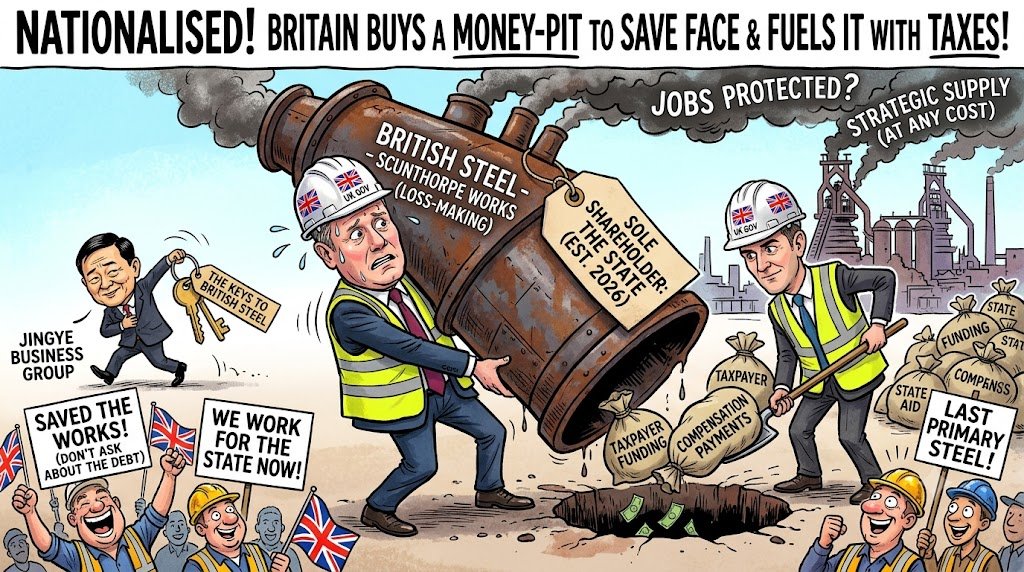
The government has become British Steel’s sole shareholder after concluding that the loss-making company could otherwise fail, threatening thousands of jobs, essential infrastructure and Britain’s remaining capacity to manufacture primary steel from raw materials.
The Steel Industry (Nationalisation) Act 2026 enabled the British government to transfer British Steel into public ownership on July 16 after ministers concluded that its possible failure posed an unacceptable risk to the economy, critical infrastructure and national security.
The decision ends Chinese-owned Jingye Group’s control of the company and converts British Steel into a public non-financial corporation, with the business secretary acting as sole shareholder on behalf of the state.
The legislation received royal assent on July 15. Regulations signed that day brought the transfer into force the following morning after the government determined that the statutory public-interest test had been satisfied.
British Steel operates the Scunthorpe works in Lincolnshire, including Britain’s last two functioning blast furnaces.
These facilities manufacture primary, or virgin, steel from iron ore.
They should not be confused with electric arc furnaces, which predominantly melt recycled scrap.
Losing the Scunthorpe operation would have ended Britain’s remaining ability to produce steel through the blast-furnace route and removed domestic capacity for several products used in railway construction, major infrastructure, energy projects and defence.
The government calculated that failure of the business could reduce national steelmaking capacity to roughly half the level Britain is expected to require by 2035, increasing exposure to volatile international markets and disrupted supply chains.
Prime Minister Keir Starmer said the intervention secured domestic steelmaking, protected skilled employment and preserved an essential national capability.
Business Secretary Peter Kyle described public ownership as the only viable means of maintaining production while a sustainable future is developed.
The transfer protects British Steel’s immediate operations and thousands of jobs within the company and its wider supply chain.
The Scunthorpe plant itself employs more than 2,700 people, while many more livelihoods depend on contractors, suppliers and the surrounding industrial economy.
Customers, employees and suppliers will continue operating under existing arrangements during the ownership transition.
The nationalisation follows 15 months of direct state intervention.
In April 2025, Jingye moved toward closing the Scunthorpe blast furnaces after negotiations over financial support collapsed.
Parliament was recalled for an exceptional Saturday sitting and passed emergency legislation empowering ministers to direct the company’s operations, secure raw materials and prevent an abrupt shutdown.
Those measures gave the government operational authority but did not transfer ownership.
Ministers subsequently funded essential supplies and kept the furnaces running while seeking a negotiated long-term settlement with Jingye.
The two sides failed to reach an agreement that ministers considered acceptable to taxpayers.
Jingye, which purchased British Steel out of insolvency in 2020, says it invested more than £1.2 billion in the company.
The government maintains that the business has no current commercial value because of its prolonged losses, weak financial position and continuing requirement for public support.
An independent valuation process will decide whether Jingye is entitled to compensation.
The government will introduce the compensation scheme through regulations to be debated by Parliament in the autumn.
An independent third party will consider submissions from affected parties, publish a determination and assess what payment, if any, is due.
Either side will be able to appeal the valuation to the Upper Tribunal.
China’s Ministry of Commerce has objected to the nationalisation, arguing that it damaged Jingye’s legitimate interests and could weaken Chinese companies’ confidence in investing in Britain.
The British government says it will comply with its domestic and international legal obligations and pay any compensation ultimately awarded through the statutory process.
Public ownership resolves the immediate question of control, but not the company’s underlying commercial problems.
British steelmakers contend with high energy costs, global excess capacity, lower-priced imports and the substantial expense of replacing carbon-intensive production.
Blast furnaces are also among the industry’s largest sources of emissions, creating pressure to reconcile primary steelmaking with Britain’s decarbonisation commitments.
A new board of directors has been appointed to stabilise operations, maintain production and oversee workplace health and safety.
It will include representatives from UK Government Investments and the Department for Business and Trade, alongside directors with commercial and industrial experience.
Ministers have also committed to worker representation on the board.
Interim chief executive Allan Bell called the transfer a momentous day for the company and an historic development for British manufacturing.
The workforce and trade unions welcomed the immediate security provided by state ownership while emphasizing that continued investment and greater use of domestically manufactured steel in public projects will be required.
The board’s central assignment is to produce a commercially and environmentally sustainable plan.
That work will include examining lower-carbon production, securing reliable demand and considering eventual private-sector investment.
Public ownership is therefore an operating platform rather than a guarantee that British Steel will remain permanently nationalised.
The intervention forms part of a wider steel strategy supported by up to £2.5 billion in investment.
The government wants domestic mills to supply as much as half the steel used in Britain, while new trade measures have reduced tariff-free import quotas and additional support is lowering industrial electricity costs.
British Steel’s finances and all further public assistance will face continuing scrutiny.
Ministers have committed to publishing quarterly statements for at least one year detailing financial support, while the new board will maintain production at Scunthorpe and prepare the company’s long-term industrial and decarbonisation plan.
The decision ends Chinese-owned Jingye Group’s control of the company and converts British Steel into a public non-financial corporation, with the business secretary acting as sole shareholder on behalf of the state.
The legislation received royal assent on July 15. Regulations signed that day brought the transfer into force the following morning after the government determined that the statutory public-interest test had been satisfied.
British Steel operates the Scunthorpe works in Lincolnshire, including Britain’s last two functioning blast furnaces.
These facilities manufacture primary, or virgin, steel from iron ore.
They should not be confused with electric arc furnaces, which predominantly melt recycled scrap.
Losing the Scunthorpe operation would have ended Britain’s remaining ability to produce steel through the blast-furnace route and removed domestic capacity for several products used in railway construction, major infrastructure, energy projects and defence.
The government calculated that failure of the business could reduce national steelmaking capacity to roughly half the level Britain is expected to require by 2035, increasing exposure to volatile international markets and disrupted supply chains.
Prime Minister Keir Starmer said the intervention secured domestic steelmaking, protected skilled employment and preserved an essential national capability.
Business Secretary Peter Kyle described public ownership as the only viable means of maintaining production while a sustainable future is developed.
The transfer protects British Steel’s immediate operations and thousands of jobs within the company and its wider supply chain.
The Scunthorpe plant itself employs more than 2,700 people, while many more livelihoods depend on contractors, suppliers and the surrounding industrial economy.
Customers, employees and suppliers will continue operating under existing arrangements during the ownership transition.
The nationalisation follows 15 months of direct state intervention.
In April 2025, Jingye moved toward closing the Scunthorpe blast furnaces after negotiations over financial support collapsed.
Parliament was recalled for an exceptional Saturday sitting and passed emergency legislation empowering ministers to direct the company’s operations, secure raw materials and prevent an abrupt shutdown.
Those measures gave the government operational authority but did not transfer ownership.
Ministers subsequently funded essential supplies and kept the furnaces running while seeking a negotiated long-term settlement with Jingye.
The two sides failed to reach an agreement that ministers considered acceptable to taxpayers.
Jingye, which purchased British Steel out of insolvency in 2020, says it invested more than £1.2 billion in the company.
The government maintains that the business has no current commercial value because of its prolonged losses, weak financial position and continuing requirement for public support.
An independent valuation process will decide whether Jingye is entitled to compensation.
The government will introduce the compensation scheme through regulations to be debated by Parliament in the autumn.
An independent third party will consider submissions from affected parties, publish a determination and assess what payment, if any, is due.
Either side will be able to appeal the valuation to the Upper Tribunal.
China’s Ministry of Commerce has objected to the nationalisation, arguing that it damaged Jingye’s legitimate interests and could weaken Chinese companies’ confidence in investing in Britain.
The British government says it will comply with its domestic and international legal obligations and pay any compensation ultimately awarded through the statutory process.
Public ownership resolves the immediate question of control, but not the company’s underlying commercial problems.
British steelmakers contend with high energy costs, global excess capacity, lower-priced imports and the substantial expense of replacing carbon-intensive production.
Blast furnaces are also among the industry’s largest sources of emissions, creating pressure to reconcile primary steelmaking with Britain’s decarbonisation commitments.
A new board of directors has been appointed to stabilise operations, maintain production and oversee workplace health and safety.
It will include representatives from UK Government Investments and the Department for Business and Trade, alongside directors with commercial and industrial experience.
Ministers have also committed to worker representation on the board.
Interim chief executive Allan Bell called the transfer a momentous day for the company and an historic development for British manufacturing.
The workforce and trade unions welcomed the immediate security provided by state ownership while emphasizing that continued investment and greater use of domestically manufactured steel in public projects will be required.
The board’s central assignment is to produce a commercially and environmentally sustainable plan.
That work will include examining lower-carbon production, securing reliable demand and considering eventual private-sector investment.
Public ownership is therefore an operating platform rather than a guarantee that British Steel will remain permanently nationalised.
The intervention forms part of a wider steel strategy supported by up to £2.5 billion in investment.
The government wants domestic mills to supply as much as half the steel used in Britain, while new trade measures have reduced tariff-free import quotas and additional support is lowering industrial electricity costs.
British Steel’s finances and all further public assistance will face continuing scrutiny.
Ministers have committed to publishing quarterly statements for at least one year detailing financial support, while the new board will maintain production at Scunthorpe and prepare the company’s long-term industrial and decarbonisation plan.
Britain Nationalises British Steel to Protect Scunthorpe Production and Strategic Supply
French National Assembly Overrides Senate to Pass Historic Assisted-Dying Legislation
Thomas Tuchel Faces Fierce Backlash After Tactical Retreat Costs England World Cup Final Berth
A Quiet Bastille Day: France Grapples with World Cup Heartbreak and Leftover Fireworks
Spain in Ecstasy: "We Feel Unbeatable, We Taught the Whole World a Lesson"
Harvard Astrophysicist to Lead U.S. Scientific Advisory on Unidentified Aerial Phenomena
Emergency Sirens Activated Across Bahrain as Interior Ministry Issues Shelter Directives
World Cup Visitors Turn American Big-Box Stores Into Souvenir Stops
Netflix Weighs Always-On Channels, Bundles and Short-Form Video
The AI Invoice Shock: Layoffs Didn't Save Managers Money — They Cost Them More
Concern: Sexually Transmitted Bacterium Among Men Develops Antibiotic Resistance
Following Massive Investor Demand: SK Hynix Raises 26.5 Billion Dollars on Nasdaq
Passenger Partially Pulled Out of Ryanair Jet After Cabin Window Fails Mid-Flight
Severe Heatwave Drives Dangerous Ground-Level Ozone Pollution Across Two Thirds of European Union
Flight Instructor Jumped to His Death — Student Landed the Plane: "You Know What You Need to Do"
The Physical and Electronic Barriers Disrupting Domestic Wireless Networks
France and Morocco Open World Cup Quarter-Finals as Collina Defends Refereeing
Tech Pulse: The Future of AI and Screen Culture
Global News Briefing: Escalating Geopolitical Tensions and Corporate Shakeups
Global News Brief: Escalating Conflicts, Public Health Crises, and World Cup Drama
Europe's Growing Struggle with Extreme Heat and Air Conditioning
Anthropic Reengineers Agentic Architecture to Shift Autonomous Workplace Automation to the Cloud
Apple Advances Late-Stage Operating Systems with Fourth Beta Deployments
Global Crisis Alert: Escalating Middle East Tensions and UK Political Upheaval
"A New Era of Testing": The Rare Launch of a Missile from a Chinese Nuclear Submarine - That Could Reach U.S. Soil
Japanese Technology Firm Fujitsu Launches Advanced Artificial Intelligence Tool for Corporate Disclosures
South Africa Officially Launches Nationwide Campaign for Highly Contested Local Government Elections
United Kingdom Commits Additional Funding for Unexploded Ordnance Clearance in Laos
Singapore Announces Stringent New Greenhouse Gas Regulations for Commercial Cooling Systems
Cambodia and Thailand Hold High-Level Border Security Talks at United Nations Headquarters
Myanmar Military Government and China Sign Major Agreement to Upgrade Media and Cultural Cooperation
Knife Attack at Swiss Train Station Leaves Three Injured in Suspected Act of Domestic Terrorism
Transnational Extortion Gang Threatens Canadian Police With Army of One Thousand Armed Operatives
Australia Imposes Forty-Two-Day Quarantine on Cruise Ship Passengers Following Deadly Hantavirus Outbreak
International Monetary Fund Unlocks Seven Hundred Million United States Dollars for Sri Lanka Following Economic Reforms
China and Canada Foreign Ministers Meet in Ottawa in Effort to Stabilize Strained Diplomatic Ties
Indonesia Demands Urgent United Nations Security Council Reform Amid Escalating Global Conflicts
Extreme Weather Patterns Trigger Severe Drought in Madagascar and Destructive Flooding in East Africa
Indian State of Karnataka Faces Political Upheaval as Chief Minister Siddaramaiah Abruptly Resigns
Philippines and Japan Reaffirm Defense Ties as Crucial for Indo-Pacific Regional Stability
Norway Joins French Nuclear Deterrence Initiative in Major Shift for European Security Architecture
Global Critical Mineral Alliances Expand as Western Nations Move to Counter Chinese Supply Dominance
United States Imposes Fifty Percent Tariffs on Mexican Steel and Aluminum Ahead of Trade Pact Review
European Union and China Head Toward Major Trade Conflict Over Clean Technology Exports
United States Economic Growth Severely Downgraded to One Point Six Percent as Stagflation Fears Mount
World Health Organization Warns Central African Ebola Epidemic is Outpacing Containment Efforts
United States Treasury Department Conditions Sanctions Relief on Reopening of the Strait of Hormuz
Iranian Air Defenses Intercept and Destroy United States Military Drone Over Bushehr Province
Iranian Armed Forces Launch Ballistic Missiles Toward Unspecified Targets Prompting Regional Condemnation
United Nations Secretary-General Warns Global Order Facing Highest Level of Conflict Since 1945