Indonesia's central bank maintained its benchmark policy rate for a seventh consecutive meeting while continuing efforts to stabilize the rupiah amid strong foreign investment inflows.
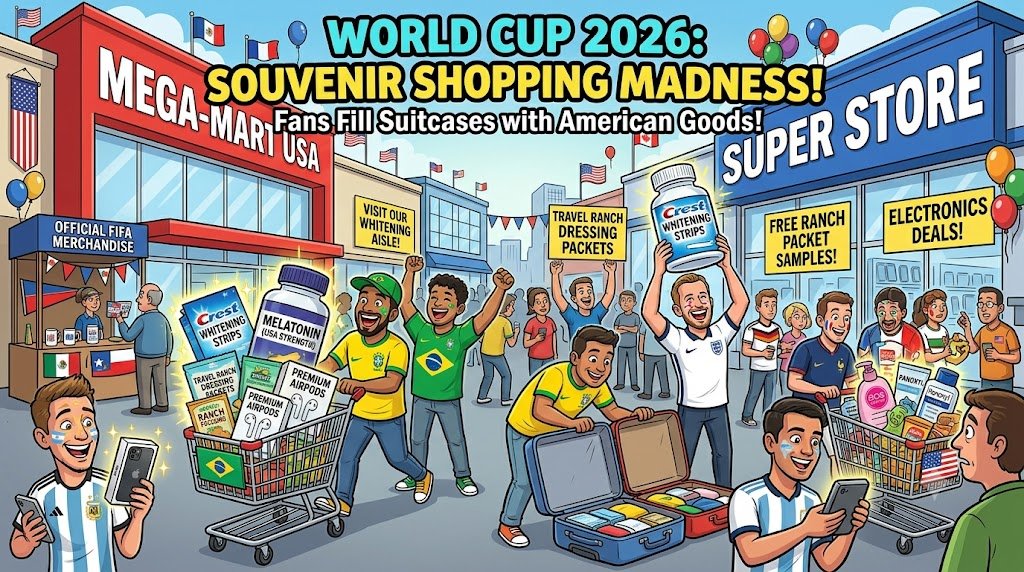
International fans attending the 2026 World Cup are filling suitcases with U.S. goods, from electronics and clothing to whitening strips and melatonin, giving retailers an unexpected tourism boost.
The 2026 World Cup has turned American shopping trips into a major part of the tournament experience for thousands of international visitors, who are filling suitcases with products that are cheaper, harder to obtain or simply more varied than those available at home.
Andrei Fontana, a 33-year-old visitor from Tapejara, Brazil, arrived in the United States with two large empty suitcases.
After travelling with his father, uncle and cousin through Atlanta, Miami and New York, he was preparing to return with both cases full.
The group attended one World Cup match and spent two hours shopping.
Their purchases included clothing, shoes, iPhones, MacBooks and beauty products for Fontana's partner and sister-in-law.
He said comparable items cost about 30% less in the United States than in Brazil, despite the brands also being available there.
The United States is co-hosting the tournament with Canada and Mexico, and retailers have treated the influx of visitors as an opportunity that extends well beyond official merchandise.
Mall operators have reported strong summer foot traffic in host and non-host cities alike, driven by tourists and local residents attending watch parties, fan festivals, restaurants and football-themed events.
Sportswear retailers have benefited, but many visitors are seeking much more ordinary products.
Crest whitening strips, EOS body lotion and melatonin are among the items repeatedly appearing in social-media videos of shopping hauls.
Several American whitening products are restricted elsewhere, melatonin is more difficult to buy in parts of Europe, and some brands are not sold abroad at all.
Abbey Dudley, a 23-year-old visitor from Leeds, England, travelled through San Francisco, Los Angeles and Las Vegas during the tournament.
Although her itinerary did not coincide with England matches, she arrived with a shopping list that included toothpaste, moisturiser and PanOxyl facial cleanser.
She documented her purchases and visits to American stores online.
Dudley described Target as one of the largest shops she had ever visited.
For many overseas visitors, the scale of American big-box retail has become an attraction in its own right, rather than merely a place to buy necessities.
Since the tournament began, Target stores in host cities have sold 66% more of the retailer's World Cup merchandise than stores in non-host cities, despite representing only about a quarter of the chain's locations.
Its newest premium Apple AirPods have become one of the most sought-after items among international shoppers.
Richie Karaburun, an associate professor at New York University's hospitality school, said World Cup visitors were seeking experiences beyond conventional tourist sites.
For some, that means walking into Walmart or Target, seeing the scale of the stores and encountering a product range that is unfamiliar at home.
Brands have responded to that curiosity.
McDonald's introduced World Cup meals, while Kraft launched travel-friendly ranch dressing packets designed to fit into hand luggage after identifying strong demand from visitors who wanted to take the distinctly American condiment home.
Andrei Fontana, a 33-year-old visitor from Tapejara, Brazil, arrived in the United States with two large empty suitcases.
After travelling with his father, uncle and cousin through Atlanta, Miami and New York, he was preparing to return with both cases full.
The group attended one World Cup match and spent two hours shopping.
Their purchases included clothing, shoes, iPhones, MacBooks and beauty products for Fontana's partner and sister-in-law.
He said comparable items cost about 30% less in the United States than in Brazil, despite the brands also being available there.
The United States is co-hosting the tournament with Canada and Mexico, and retailers have treated the influx of visitors as an opportunity that extends well beyond official merchandise.
Mall operators have reported strong summer foot traffic in host and non-host cities alike, driven by tourists and local residents attending watch parties, fan festivals, restaurants and football-themed events.
Sportswear retailers have benefited, but many visitors are seeking much more ordinary products.
Crest whitening strips, EOS body lotion and melatonin are among the items repeatedly appearing in social-media videos of shopping hauls.
Several American whitening products are restricted elsewhere, melatonin is more difficult to buy in parts of Europe, and some brands are not sold abroad at all.
Abbey Dudley, a 23-year-old visitor from Leeds, England, travelled through San Francisco, Los Angeles and Las Vegas during the tournament.
Although her itinerary did not coincide with England matches, she arrived with a shopping list that included toothpaste, moisturiser and PanOxyl facial cleanser.
She documented her purchases and visits to American stores online.
Dudley described Target as one of the largest shops she had ever visited.
For many overseas visitors, the scale of American big-box retail has become an attraction in its own right, rather than merely a place to buy necessities.
Since the tournament began, Target stores in host cities have sold 66% more of the retailer's World Cup merchandise than stores in non-host cities, despite representing only about a quarter of the chain's locations.
Its newest premium Apple AirPods have become one of the most sought-after items among international shoppers.
Richie Karaburun, an associate professor at New York University's hospitality school, said World Cup visitors were seeking experiences beyond conventional tourist sites.
For some, that means walking into Walmart or Target, seeing the scale of the stores and encountering a product range that is unfamiliar at home.
Brands have responded to that curiosity.
McDonald's introduced World Cup meals, while Kraft launched travel-friendly ranch dressing packets designed to fit into hand luggage after identifying strong demand from visitors who wanted to take the distinctly American condiment home.

Netflix is examining a broader product shift as viewing engagement softens, including genre-based linear channels, third-party subscriptions, live programming and partnerships with digital publishers. Its integration of TF1 live channels in France is already operating.
Netflix is considering a substantial expansion of its on-demand model, weighing always-on genre channels, bundled subscriptions to other streaming services, more live programming and short-form video as it seeks to keep viewers watching more often and for longer.
The central problem is engagement.
The service remains profitable and retains major global franchises, but its share of United States television viewing has weakened as YouTube, Disney, HBO Max, free ad-supported platforms and other services compete for attention.
Some prominent Netflix series have also seen viewership fall sharply from their first seasons to their second, increasing pressure to make the service feel less like a library that requires endless choices and more like a destination that is ready to watch.
One proposal under examination is a set of continuously running channels organized by genre or programming theme.
Such channels would offer scheduled viewing around the clock, allowing members to enter a stream rather than select a specific title.
The approach would mark a conspicuous departure from Netflix's long-standing emphasis on viewer control, personalized recommendation and on-demand choice.
Netflix has already moved beyond a purely on-demand catalogue in France.
Since June, subscribers there have been able to watch live channels and on-demand programming from the French broadcaster TF1 within Netflix, including its rolling news channel.
The arrangement places third-party programming inside Netflix's search, recommendation and viewing features and provides a working test of whether scheduled television can strengthen the service's role in daily viewing habits.
Live programming is also becoming more important to the company's strategy.
Netflix holds exclusive United States rights, including Puerto Rico, for the 2027 and 2031 FIFA Women's World Cups, its first full sports-competition rights agreement.
The company has already used live events to attract large audiences, while sports could give viewers a reason to return at a fixed time rather than watch only when a new series arrives.
A separate expansion begins on August 3, when Netflix is due to add shorter-form programming from several digital publishers in selected English-speaking markets.
The videos, generally three to twenty minutes long, cover subjects including food, travel, fashion, design and entertainment.
The initiative is designed to bring more frequent, lighter viewing into an app built principally for films and television series.
Netflix is also considering whether to sell subscriptions to outside streaming services through its own interface, a model familiar from Apple and Amazon channel stores.
Peacock, NBCUniversal's streaming service, has been discussed as a possible partner, though no agreement has been announced.
The company has also been linked to preliminary interest in Letterboxd, the film-focused social platform, but no acquisition has been confirmed.
The strategic reassessment comes as Netflix develops its advertising business.
Its United States Standard with Ads plan costs $8.99 a month, and a larger mix of live, scheduled and shorter programming could create more opportunities for regular viewing and advertising inventory.
The French TF1 integration, now available to members, is the clearest live test of how far Netflix is prepared to move beyond its original streaming formula.
The central problem is engagement.
The service remains profitable and retains major global franchises, but its share of United States television viewing has weakened as YouTube, Disney, HBO Max, free ad-supported platforms and other services compete for attention.
Some prominent Netflix series have also seen viewership fall sharply from their first seasons to their second, increasing pressure to make the service feel less like a library that requires endless choices and more like a destination that is ready to watch.
One proposal under examination is a set of continuously running channels organized by genre or programming theme.
Such channels would offer scheduled viewing around the clock, allowing members to enter a stream rather than select a specific title.
The approach would mark a conspicuous departure from Netflix's long-standing emphasis on viewer control, personalized recommendation and on-demand choice.
Netflix has already moved beyond a purely on-demand catalogue in France.
Since June, subscribers there have been able to watch live channels and on-demand programming from the French broadcaster TF1 within Netflix, including its rolling news channel.
The arrangement places third-party programming inside Netflix's search, recommendation and viewing features and provides a working test of whether scheduled television can strengthen the service's role in daily viewing habits.
Live programming is also becoming more important to the company's strategy.
Netflix holds exclusive United States rights, including Puerto Rico, for the 2027 and 2031 FIFA Women's World Cups, its first full sports-competition rights agreement.
The company has already used live events to attract large audiences, while sports could give viewers a reason to return at a fixed time rather than watch only when a new series arrives.
A separate expansion begins on August 3, when Netflix is due to add shorter-form programming from several digital publishers in selected English-speaking markets.
The videos, generally three to twenty minutes long, cover subjects including food, travel, fashion, design and entertainment.
The initiative is designed to bring more frequent, lighter viewing into an app built principally for films and television series.
Netflix is also considering whether to sell subscriptions to outside streaming services through its own interface, a model familiar from Apple and Amazon channel stores.
Peacock, NBCUniversal's streaming service, has been discussed as a possible partner, though no agreement has been announced.
The company has also been linked to preliminary interest in Letterboxd, the film-focused social platform, but no acquisition has been confirmed.
The strategic reassessment comes as Netflix develops its advertising business.
Its United States Standard with Ads plan costs $8.99 a month, and a larger mix of live, scheduled and shorter programming could create more opportunities for regular viewing and advertising inventory.
The French TF1 integration, now available to members, is the clearest live test of how far Netflix is prepared to move beyond its original streaming formula.
Thailand's semiconductor strategy focuses on power semiconductors, sensors, and integrated circuit design, with a long-term goal of attracting more than two point five trillion baht in investment and developing a workforce of two hundred thirty thousand skilled professionals by twenty fifty.
Thailand has approved nearly two billion dollars in new investment covering artificial intelligence infrastructure, advanced electronics, and clean energy, as the government seeks to move beyond traditional manufacturing and establish the country as a key link in global semiconductor and data centre supply chains.
World Cup Visitors Turn American Big-Box Stores Into Souvenir Stops
Netflix Weighs Always-On Channels, Bundles and Short-Form Video
The AI Invoice Shock: Layoffs Didn't Save Managers Money — They Cost Them More
Concern: Sexually Transmitted Bacterium Among Men Develops Antibiotic Resistance
Following Massive Investor Demand: SK Hynix Raises 26.5 Billion Dollars on Nasdaq
Passenger Partially Pulled Out of Ryanair Jet After Cabin Window Fails Mid-Flight
Severe Heatwave Drives Dangerous Ground-Level Ozone Pollution Across Two Thirds of European Union
Flight Instructor Jumped to His Death — Student Landed the Plane: "You Know What You Need to Do"
The Physical and Electronic Barriers Disrupting Domestic Wireless Networks
France and Morocco Open World Cup Quarter-Finals as Collina Defends Refereeing
Tech Pulse: The Future of AI and Screen Culture
Global News Briefing: Escalating Geopolitical Tensions and Corporate Shakeups
Global News Brief: Escalating Conflicts, Public Health Crises, and World Cup Drama
Europe's Growing Struggle with Extreme Heat and Air Conditioning
Anthropic Reengineers Agentic Architecture to Shift Autonomous Workplace Automation to the Cloud
Apple Advances Late-Stage Operating Systems with Fourth Beta Deployments
Global Crisis Alert: Escalating Middle East Tensions and UK Political Upheaval
"A New Era of Testing": The Rare Launch of a Missile from a Chinese Nuclear Submarine - That Could Reach U.S. Soil
Japanese Technology Firm Fujitsu Launches Advanced Artificial Intelligence Tool for Corporate Disclosures
South Africa Officially Launches Nationwide Campaign for Highly Contested Local Government Elections
United Kingdom Commits Additional Funding for Unexploded Ordnance Clearance in Laos
Singapore Announces Stringent New Greenhouse Gas Regulations for Commercial Cooling Systems
Cambodia and Thailand Hold High-Level Border Security Talks at United Nations Headquarters
Myanmar Military Government and China Sign Major Agreement to Upgrade Media and Cultural Cooperation
Knife Attack at Swiss Train Station Leaves Three Injured in Suspected Act of Domestic Terrorism
Transnational Extortion Gang Threatens Canadian Police With Army of One Thousand Armed Operatives
Australia Imposes Forty-Two-Day Quarantine on Cruise Ship Passengers Following Deadly Hantavirus Outbreak
International Monetary Fund Unlocks Seven Hundred Million United States Dollars for Sri Lanka Following Economic Reforms
China and Canada Foreign Ministers Meet in Ottawa in Effort to Stabilize Strained Diplomatic Ties
Indonesia Demands Urgent United Nations Security Council Reform Amid Escalating Global Conflicts
Extreme Weather Patterns Trigger Severe Drought in Madagascar and Destructive Flooding in East Africa
Indian State of Karnataka Faces Political Upheaval as Chief Minister Siddaramaiah Abruptly Resigns
Philippines and Japan Reaffirm Defense Ties as Crucial for Indo-Pacific Regional Stability
Norway Joins French Nuclear Deterrence Initiative in Major Shift for European Security Architecture
Global Critical Mineral Alliances Expand as Western Nations Move to Counter Chinese Supply Dominance
United States Imposes Fifty Percent Tariffs on Mexican Steel and Aluminum Ahead of Trade Pact Review
European Union and China Head Toward Major Trade Conflict Over Clean Technology Exports
United States Economic Growth Severely Downgraded to One Point Six Percent as Stagflation Fears Mount
World Health Organization Warns Central African Ebola Epidemic is Outpacing Containment Efforts
United States Treasury Department Conditions Sanctions Relief on Reopening of the Strait of Hormuz
Iranian Air Defenses Intercept and Destroy United States Military Drone Over Bushehr Province
Iranian Armed Forces Launch Ballistic Missiles Toward Unspecified Targets Prompting Regional Condemnation
United Nations Secretary-General Warns Global Order Facing Highest Level of Conflict Since 1945
Israel Issues Sweeping Evacuation Orders in Southern Lebanon Amid Intensified Hezbollah Conflict
Russia Announces Systemic Military Strikes Targeting Ukrainian Defense and Energy Infrastructure
United States and Iranian Negotiators Reach Draft Agreement to Extend Ceasefire and Resume Nuclear Talks
United Nations Security Council Deeply Divided Over United States Capture of Venezuelan President
US and Iran Exchange Direct Military Strikes Amid Fragile Gulf Ceasefire
World Health Organization Warns of Catastrophic Ebola Outbreak in DR Congo
Russia Threatens New Wave of Strikes on Ukrainian Infrastructure and Embassies